Japan and Mexico launch economic dialogue to protect auto chains
The bilateral framework aims to shield over 1,600 Japanese manufacturers in Mexico from trade shifts along North American manufacturing corridors.
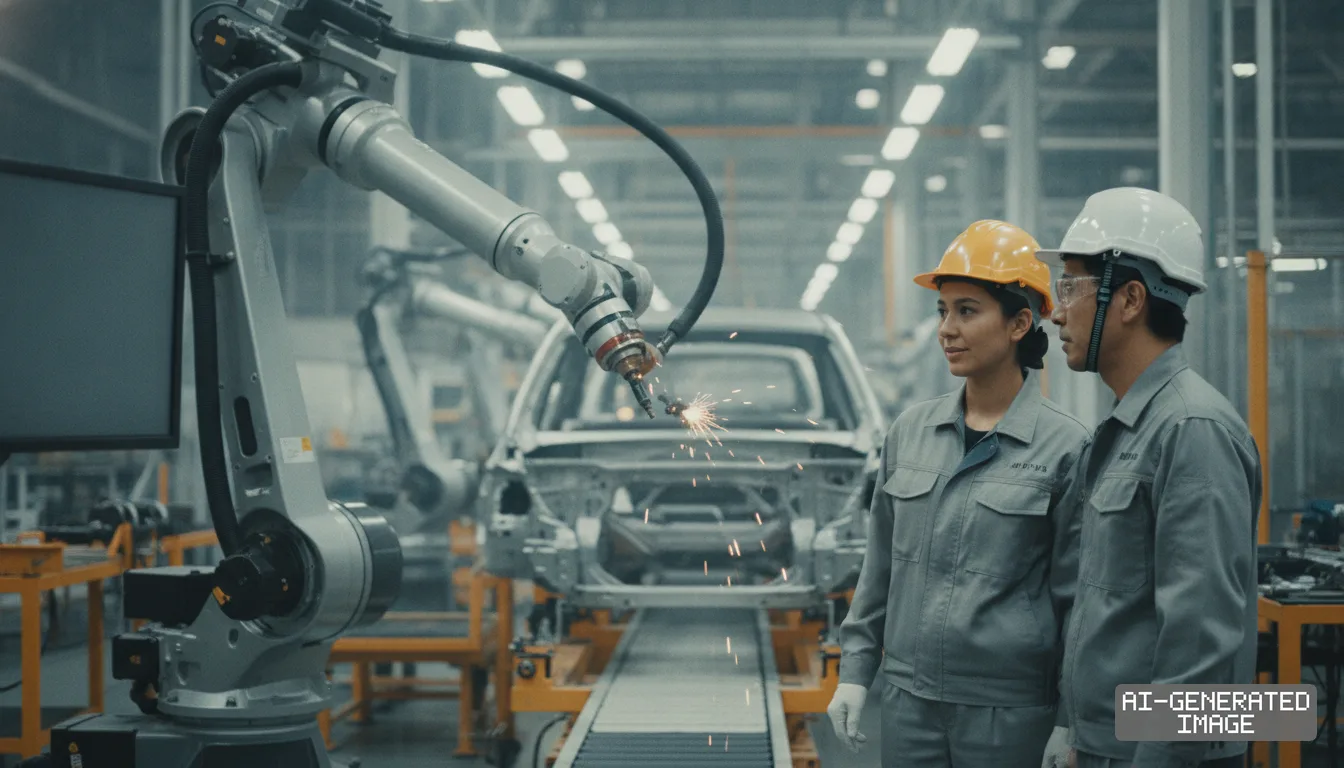
Japan and Mexico agreed on Nov. 13, 2026 to coordinate supply chain resilience and convene their first high-level economic dialogue to shield critical manufacturing from global trade disruptions.
The agreement targets industrial coordination across automotive and component networks. Bilateral goods trade between the two nations reached $9.9 billion from January through May 2026, an increase of 4% from a year earlier.
More than 1,600 Japanese companies currently operate production and distribution facilities in Mexico. Most of those facilities feed North American assembly lines governed by regional value-content rules.
Foreign Minister Toshimitsu Motegi and Mexican Foreign Secretary Roberto Velasco Álvarez concluded the pact during bilateral meetings in Tokyo. The talks established a formal channel to align industrial policies ahead of regional trade reviews.
The initiative connects Japan's 17 strategic industrial categories with Plan México, the domestic development blueprint overseen by Mexican President Claudia Sheinbaum. The framework focuses on logistics corridors, energy supply, clean tech and critical manufacturing inputs.
Velasco met separately with Chief Cabinet Secretary Minoru Kihara on Friday. Both officials confirmed plans to accelerate intergovernmental talks aimed at securing uninterrupted parts deliveries during shipping bottlenecks and trade disputes.
Velasco also met with Kei Takagi, state minister of economy, trade and industry. Takagi pressed Mexico to resolve customs clearance bottlenecks affecting imported steel products essential for local manufacturing plants.
Automotive assemblers in Mexico rely heavily on imported specialized flat-rolled steel and electronic subassemblies. Tariff friction and customs audits have slowed border flows for intermediate parts used in assembly operations.
Nissan Motor operates three assembly plants in Aguascalientes and Cuernavaca. The plants produce roughly 600,000 vehicles per year, representing about 17% of total Mexican light-vehicle output.
Nissan exports over 60% of those Mexican-built passenger cars and crossover vehicles to the United States and Canada. Meeting strict regional value content rules requires deeper local supply networks for high-grade components.
Toyota Motor manufactures mid-size Tacoma pickup trucks at assembly facilities in Baja California and Guanajuato. Those two plants hold a combined annual production capacity of roughly 280,000 vehicles.
Toyota supplies nearly all of its Mexican pickup truck output to North American dealers. The company faces increasing scrutiny over the origin of raw metals, wire harnesses and microcontrollers.
Honda Motor operates an assembly facility in Celaya with an annual capacity of 200,000 compact crossover vehicles. The plant ships roughly 80% of its vehicle assemblies across the northern border.
Under the United States-Mexico-Canada Agreement, passenger vehicles must achieve a 75% regional value content threshold to enter the United States tariff-free. Core parts, including engines and transmissions, face identical 75% requirements.
Automakers must also certify that at least 70% of their annual steel and aluminum purchases originate in North America. Stricter interpretations threaten vehicles that rely on Asian smelted slabs or imported intermediate coils.
Japanese parts makers have expanded operations across central Mexico to replace imported components with locally formed substitutes. Denso, Aisin and Yazaki operate dozens of wiring, transmission and sensor facilities across the country.
Japanese component suppliers in Mexico remain vulnerable to upstream feedstock shortages. Many facilities still import specialized resin compounds, silicon wafers and electronic control modules from production hubs in Japan and Southeast Asia.
Rising logistics costs and potential tariff penalties have pushed Japanese manufacturers to seek bilateral government guarantees. The Tokyo talks seek to lower administrative hurdles for equipment imports and specialized raw materials.
Motegi said Japan intends to expand cooperation in energy procurement, including crude oil supply agreements with Mexico. Japanese refiners seek broader Pacific crude sourcing to diversify away from Middle Eastern export routes.
The two governments also agreed to form the Japan-Mexico Commission, an advisory body of academic and industrial experts. The commission will present long-term economic security recommendations directly to both heads of government.
The first formal session of the Japan-Mexico High-Level Economic Dialogue will convene in early 2027, ahead of the March 31 close of the Japanese fiscal year. Working-level officials will finalize agenda priorities in December.
The official notices do not state whether the governments agreed on binding origin rules or local content thresholds, and neither ministry published a standalone bilateral economic security agreement.
Impact map
How this development propagates across the region and out to global buyers.
| Event | Korea | China | Japan | Global impact |
|---|---|---|---|---|
| Japan-Mexico economic dialogue | Hyundai and Kia face parallel 75% USMCA origin pressure in Pesquería | intermediate component exports face tightened North American origin screening | over 1,600 manufacturing units seek steel customs clearance relief in Mexico | auto supply chains accelerate local stamping to shield North American exports |
In this story
- Companies
- Nissan MotorToyota MotorHonda Motor
- Tickers
- 7201.T7203.T7267.T
- Exposed
- DensoAisin
- Policy
- StandardsProcurement Rules
- Impact
- Supply ChainComplianceCost Structure
Track every Standards development → Track every Procurement Rules development →
Related briefings
- KOTRA Flags Japan Auto Supply Shift as Keiretsu Ties Weaken Also on Aisin, Nissan Motor, Honda Motor
- Air Liquide invests €170M to expand Japan chip gas capacity Also on Denso, Cost Structure
- ASML expands Japan workforce to 700 to support Rapidus 2nm and TSMC fabs Also on Denso, Cost Structure
- Japanese automakers standardize prismatic battery cold tests as EV timelines advance Also on Nissan Motor, Honda Motor, Toyota Motor
Sources
Primary documents
Reporting
Confidence: high — how we grade this
The documents behind this briefing are linked above. East Asia Brief produces its English text with AI assistance under human editorial review, and does not translate or republish other outlets' articles. See our methodology and AI policy. Spotted an error? Tell us.
The Morning Brief
What changed in Korean, Chinese and Japanese industry overnight — and what it means for your supply chain. One email, weekday mornings, US time. Free.
The Morning Brief is in preparation. Leave your address and we will write to you once — when the first issue is ready. Nothing before that.