In $150M duty fight, India asks court to dismiss Xiaomi appeals
Tax authorities cite 6.53 billion rupees in unpaid component duties between 2017 and 2020 after the companies concealed royalty licensing fees.
The Indian government asked the Supreme Court on Nov. 17, 2026 to dismiss appeals by Xiaomi Technology India and contract assembler Flextronics over an alleged tariff evasion scheme.
The dispute centers on 6.53 billion rupees ($72 million) in unpaid customs duties between April 2017 and June 2020. With statutory penalties and interest, total claims against the smartphone vendor now exceed $150 million.
Court filings submitted on Sept. 21 said Xiaomi and Flextronics Technologies India concealed licensing agreements from customs valuation officers. Tax authorities claimed neither company disclosed royalty fees ranging from 2% to 5% until investigators intervened.
The Directorate of Revenue Intelligence found that Xiaomi India remitted intellectual property fees to Qualcomm and Beijing Xiaomi Mobile Software. The agency determined those payments directly increased the assessable value of imported mobile parts.
The Customs, Excise and Service Tax Appellate Tribunal in Chennai ruled on Nov. 14, 2025 that Xiaomi acted as beneficial owner. The appellate panel held that contract assemblers maintained no unfettered control over imported phone kits.
The tribunal sustained confiscation orders and penalties against contract manufacturing partners. The ruling rejected assembler arguments that third-party factories bear no legal liability for independent software royalties settled between foreign intellectual property owners and brand principals.
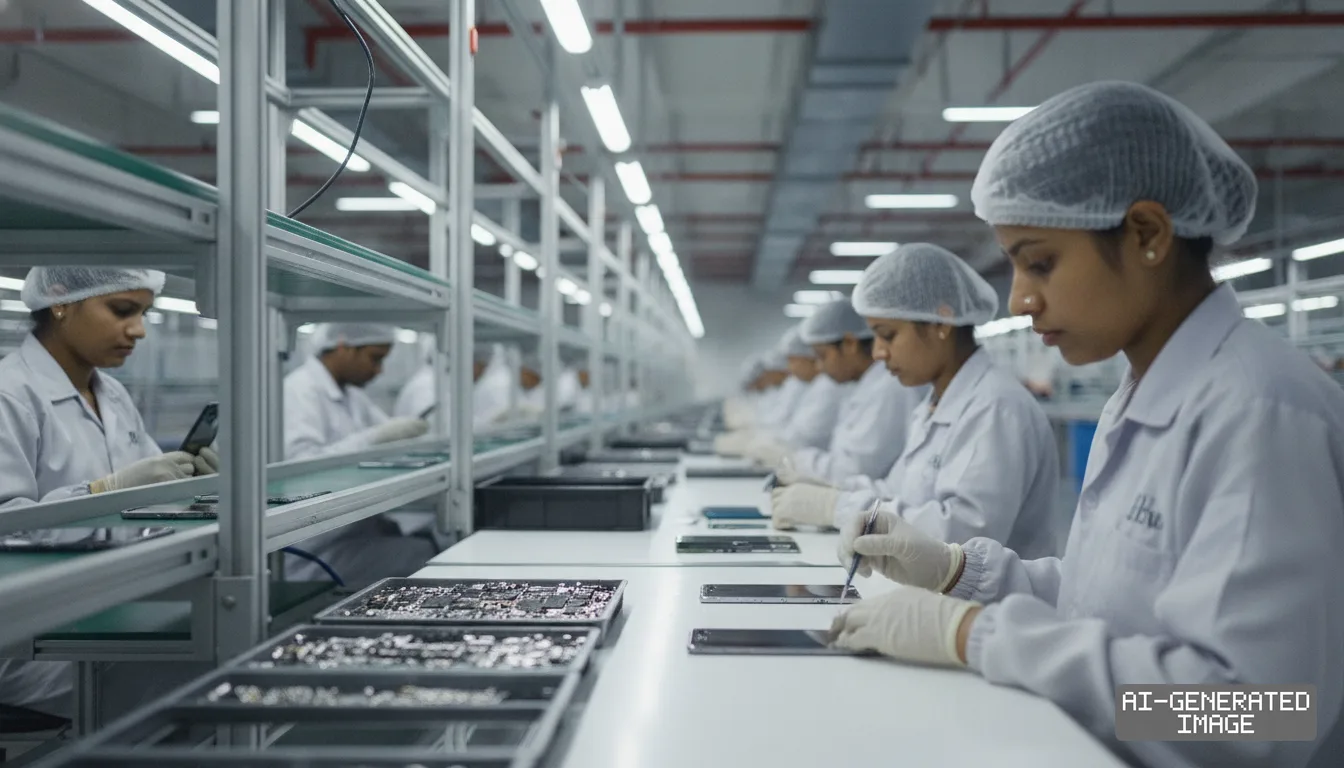
Flextronics Technologies India, a domestic subsidiary of U.S.-listed Flex, challenged the appellate verdict before the Supreme Court in January 2026. The contract manufacturer operated assembly lines in Tamil Nadu that turned out millions of Xiaomi devices.
Flex stated in court filings that the customs order destabilizes operating norms across India's electronics manufacturing services sector. The company argued that independent assemblers cannot audit private technology licensing agreements signed by external brand owners.
The tariff enforcement also touches Rising Stars Mobile India, an assembly unit of Taiwan's Foxconn Technology Group. Rising Stars manufactured Xiaomi-branded smartphones across multiple industrial sites under contractual arrangements identical to those signed with Flex.
The case creates direct fiscal friction for global manufacturers expanding assembly operations across India. Foreign electronics assemblers have invested billions of dollars in Indian capacity under New Delhi's $4.5 billion production-linked incentive program.
Indian customs authorities relied on Rule 10 of the Customs Valuation Rules of 2007. The provision requires importers to add license fees to transaction values when the import of components depends on those proprietary rights.
Investigators maintained that imported mobile chipsets could not function without Qualcomm patents and proprietary software. Because finished phones were sold exclusively to Xiaomi India, customs officials treated the brand owner as the real importing buyer.
Electronics manufacturing service companies operate on tight net operating margins between 1.5% and 3.5%. Imposing joint customs liability for brand-level patent royalties threatens to wipe out multiyear assembly profits across Indian contract plants.
Tax analysts warned that an adverse top court ruling will trigger similar customs revaluations beyond telecommunications hardware. Audits could spread across automotive electronics, industrial automation equipment and medical devices where contract manufacturing models dominate assembly.
Xiaomi held approximately 18% of the Indian smartphone shipment market during the investigated periods. The Beijing-headquartered vendor achieved scale by relying almost entirely on outsourced assembly lines rather than developing captive Indian manufacturing facilities.
The customs case compounds earlier enforcement actions against the Chinese smartphone vendor. India's Enforcement Directorate previously froze roughly $670 million in Xiaomi India bank accounts, alleging illegal foreign exchange remittances disguised as royalty disbursements.
A Supreme Court bench comprising Justice P. S. Narasimha and Justice Alok Aradhe issued notice on the petitions on Feb. 23, 2026. The judges instructed customs authorities to explain their valuation formula and statutory standing against assemblers.
The Supreme Court scheduled the consolidated appeals for substantive hearing on Dec. 8, 2026. The top court will review whether contract assemblers qualify as co-conspirators when brands structure offshore royalty payments.
The Supreme Court has not published the full text of the government's Sept. 21 counter-affidavit. Representatives for Xiaomi India and Flextronics Technologies India declined to comment on the filing.
Customs commissionerates in Chennai and Bengaluru have kept assessment orders provisional for subsequent shipments processed after July 2020. Enforcement officers are holding differential duty calculations open pending the Supreme Court verdict.
Impact map
How this development propagates across the region and out to global buyers.
| Event | Korea | China | Japan | Global impact |
|---|---|---|---|---|
| India EMS customs revaluation | Samsung operates captive plants in Noida, shielding production from contract royalty liabilities | Xiaomi faces $150M in duties and fines, squeezing margins across its 18% market share | Component suppliers face heightened audit exposure on bundled IP licensing agreements | Contract assemblers with 2% margins absorb compliance risks as customs reclassifies embedded software |
| India EMS customs revaluation | Samsung operates captive plants in Noida, shielding production from contract royalty liabilities | Xiaomi faces | — | — |
| India EMS customs revaluation | Samsung operates captive plants in Noida, shielding production from contract royalty liabilities | Xiaomi faces $150M in duties and fines, squeezing margins across its 18% market share | Component suppliers face heightened audit exposure on bundled IP licensing agreements | Contract assemblers with 2% margins absorb compliance risks as customs reclassifies embedded software |
In this story
- Companies
- Xiaomi Technology IndiaFlextronics Technologies India
- Tickers
- 1810.HKFLEX
- Exposed
- QualcommFoxconn Technology Group
- Policy
- Tariffs
- Impact
- ComplianceSupply ChainCost Structure
Track every Tariffs development →
Related briefings
- Samsung starts Exynos 2700 production, lifting run size 10% Also on Qualcomm, Cost Structure
- TSMC plans to lift wafer foundry prices by 3% to 6% from 2027 Also on Qualcomm, Cost Structure
- Taiwan clears $50 billion TSMC transfer to US fab and offshore unit Also on Qualcomm
- Qualcomm taps Samsung for automotive memory as vehicle sales jump Also on Qualcomm
Sources
Reporting
Confidence: medium — how we grade this
The documents behind this briefing are linked above. East Asia Brief produces its English text with AI assistance under human editorial review, and does not translate or republish other outlets' articles. See our methodology and AI policy. Spotted an error? Tell us.
The Morning Brief
What changed in Korean, Chinese and Japanese industry overnight — and what it means for your supply chain. One email, weekday mornings, US time. Free.
The Morning Brief is in preparation. Leave your address and we will write to you once — when the first issue is ready. Nothing before that.