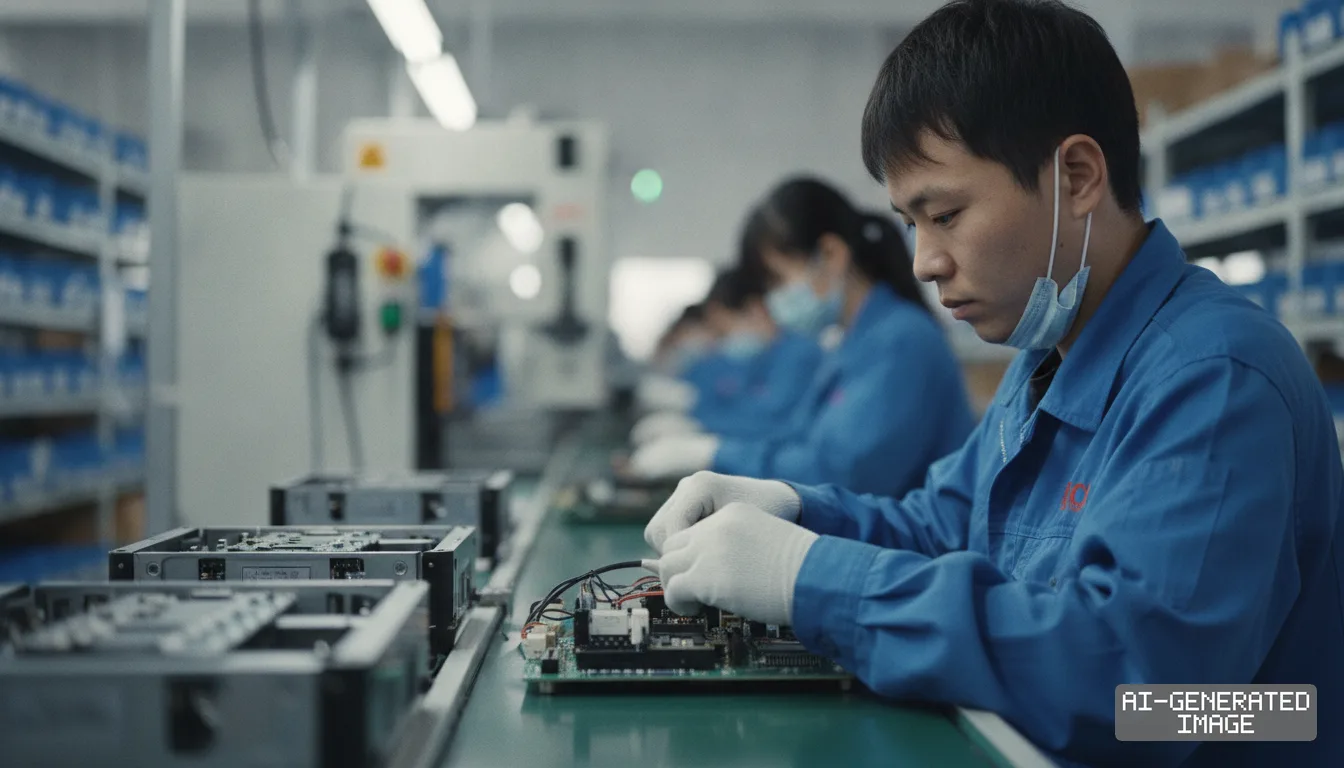
China orders 17 automakers to pay auto suppliers within 60 days
Audits backed by the industry ministry require carmakers to settle SME component invoices entirely in cash or bank transfers to curb price-war stress.
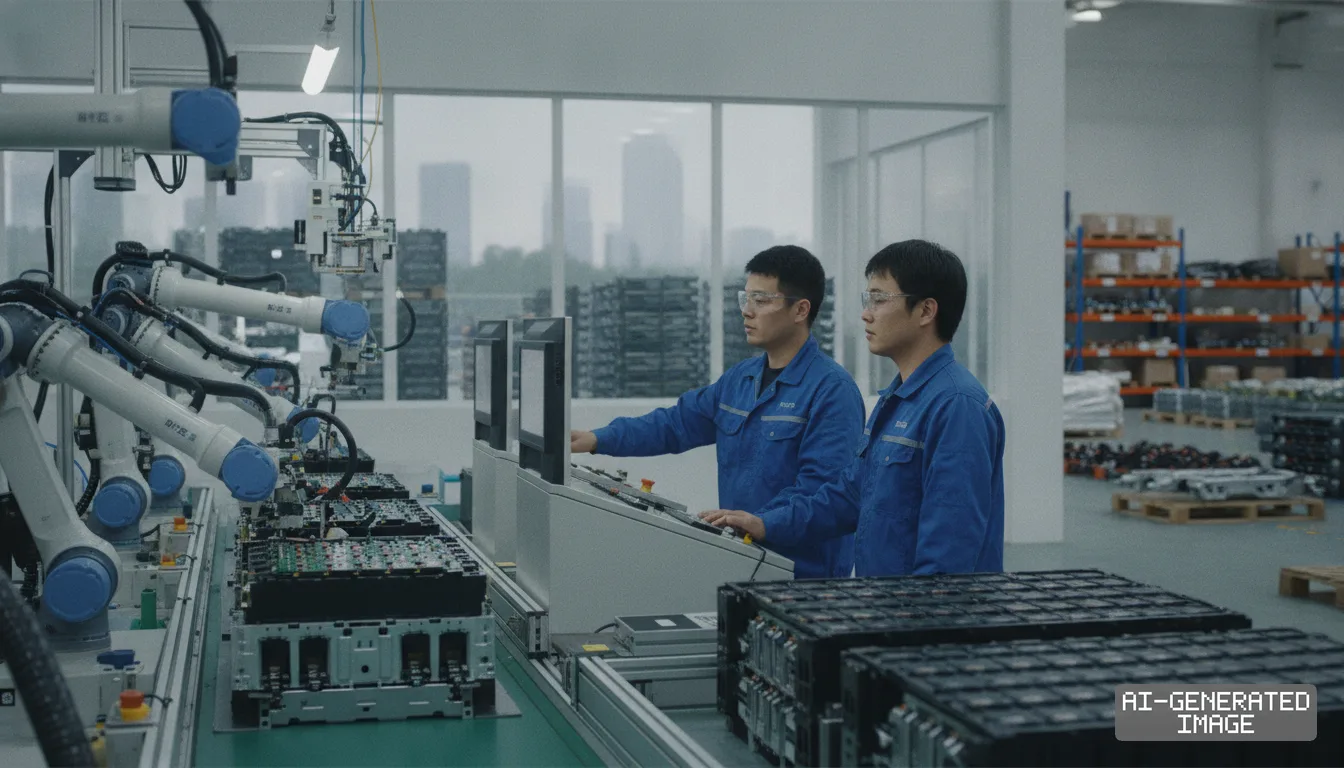
The China Association of Automobile Manufacturers launched mandatory audits on Nov. 16, 2026, ordering 17 domestic carmakers to cap supplier payment cycles at 60 days and settle bills in cash.
The group acts under instructions from the Ministry of Industry and Information Technology, which oversees domestic vehicle manufacturing regulations. The measure targets commercial distress across component makers caught in China's automotive price war.
Under the directive, assemblers must pay small and medium suppliers within 60 days of parts passing inspection. Every payment to smaller vendors must consist entirely of direct cash transfers or electronic bank remittances.
Contracts with larger, non-SME component vendors also fall under the 60-day ceiling. Carmakers must settle at least 80% of those invoices through cash or commercial bank acceptance drafts, restricting unbacked IOUs.
The cohort under review covers 17 major groups representing the bulk of domestic vehicle production. Electric vehicle builders BYD, Nio, Xiaomi, Li Auto, XPeng, Seres and Leapmotor are included in the inspection roster.
State-owned and legacy manufacturers make up the rest of the list. State giants FAW Group, SAIC Motor, Dongfeng Motor, Changan Automobile, GAC Group, BAIC Group, Chery Automobile, JAC Motors, Great Wall Motor and Geely Auto face identical scrutiny.
The intervention follows a voluntary industry pact signed in June 2025, where the same 17 companies pledged 60-day caps. Most manufacturers bypassed that commitment by delaying quality sign-offs and prolonging annual price talks, the association said.
Assembly plants routinely took months to confirm incoming shipments, resetting the payment clock. Regulators addressed the loophole in September by ordering inspection sign-offs within three business days for standard components.
Complex subsystems that require full-vehicle testing must receive formal acceptance within five business days. The Monday notice converts those operating guidelines into an enforced, permanent audit program.
For tier-one and tier-two suppliers, prolonged receivables have drained operating liquidity. Upstream suppliers absorbed vehicle price cuts of 10% to 20% over the past two years while financing inventory through extended commercial paper.
The audit system introduces unannounced verification procedures. The association will randomly extract at least 15 component suppliers per automaker every year to cross-check accounting ledgers against vehicle assembly filings.
Auditors will inspect whether digital enterprise systems log arrival timestamps accurately. Investigators will cross-examine bank remittance slips against contracts to ensure buyers did not force suppliers into discounted factoring arrangements.
Automakers that stretch cycles or coerce suppliers into accepting illiquid commercial notes face joint ministry summonses. Regulators plan to publish compliance scorecards annually, publicly naming delinquent original equipment manufacturers.
The liquidity shift lands directly on balance sheets at high-volume electric vehicle producers. Working capital cycles that relied on supplier credit to fund retail discounting will contract rapidly.
BYD carried 398 billion yuan ($55 billion) in trade payables and bills at the end of June 2026. Compressing vendor terms into 60-day cash settlements will accelerate operating cash outflows across upcoming quarters.
SAIC Motor booked 246 billion yuan ($34 billion) in notes and accounts payable over the same period. State-owned manufacturers that carry multi-tiered supplier tiers face immediate internal auditing overhauls.
Private electric vehicle makers operating near cash breakeven face tighter treasury discipline. Xiaomi and Nio must fund working capital through operating cash flows or credit lines rather than deferred payables.
Component suppliers gain immediate legal backing to collect overdue balances. Battery manufacturers, stamping firms and wiring harness makers will recover receivables faster, reducing borrowing costs tied to private debt markets.
The regulation also restricts price renegotiation tactics. If an automaker and a parts maker enter dispute talks over annual contract markdowns, the buyer must still advance at least 90% of the previous contract rate during continuous delivery cycles.
That mechanism prevents vehicle assemblers from freezing supplier payments entirely while demanding unilateral price concessions. Non-continuous suppliers must receive an advance payment of at least 70% based on benchmark project bids.
Manufacturers must file their first comprehensive annual compliance report covering payment performance by Jan. 31, 2027. Semiannual audits will recur every July 31 under ministry oversight.
The notice does not state whether failure to rectify payment delays will result in vehicle type approval suspensions or fixed statutory fines. The ministry has not published penalty schedules beyond administrative interviews and public reprimands.
Impact map
How this development propagates across the region and out to global buyers.
| Event | Korea | China | Japan | Global impact |
|---|---|---|---|---|
| China auto supplier payment mandate | Battery cathode and separator exporters to Chinese EV plants see billing cycles shorten from 120 days to 60 days | BYD and SAIC face faster cash outflows, while tier-one suppliers regain operating cash flow | Auto electronics and sensor makers supplying joint ventures in China reduce credit risk and factoring costs | Global auto parts margins stabilize as China eliminates deferred commercial paper discounts |
In this story
- Companies
- BYDSAIC MotorGeely AutoNioXiaomi
- Tickers
- 002594.SZ600104.SS0175.HK9866.HK1810.HK
- Policy
- Procurement Rules
- Impact
- Cost StructureSupply ChainCompliance
Track every Procurement Rules development →
Related briefings
- BYD cuts entry EV price below $10,000 with new five-seat Seagull Also on Geely Auto, BYD, Cost Structure
- BYD widens Seagull hatchback to five seats for export drive Also on Geely Auto, BYD
- CATL warns China EV price war triggers batch battery defects and safety hazards Also on Geely Auto, Compliance, Cost Structure
- Li Auto and EV rivals drop CATL to build in-house batteries Also on Xiaomi, BYD, Cost Structure
Sources
Reporting
Confidence: medium — how we grade this
The documents behind this briefing are linked above. East Asia Brief produces its English text with AI assistance under human editorial review, and does not translate or republish other outlets' articles. See our methodology and AI policy. Spotted an error? Tell us.
The Morning Brief
What changed in Korean, Chinese and Japanese industry overnight — and what it means for your supply chain. One email, weekday mornings, US time. Free.
The Morning Brief is in preparation. Leave your address and we will write to you once — when the first issue is ready. Nothing before that.