Moonshot AI taps European cloud for 8,000 Blackwell chips
Data-center operators demand upfront premiums of 30% to 50% as the Beijing-based Kimi developer navigates American trade rules on cutting-edge hardware.
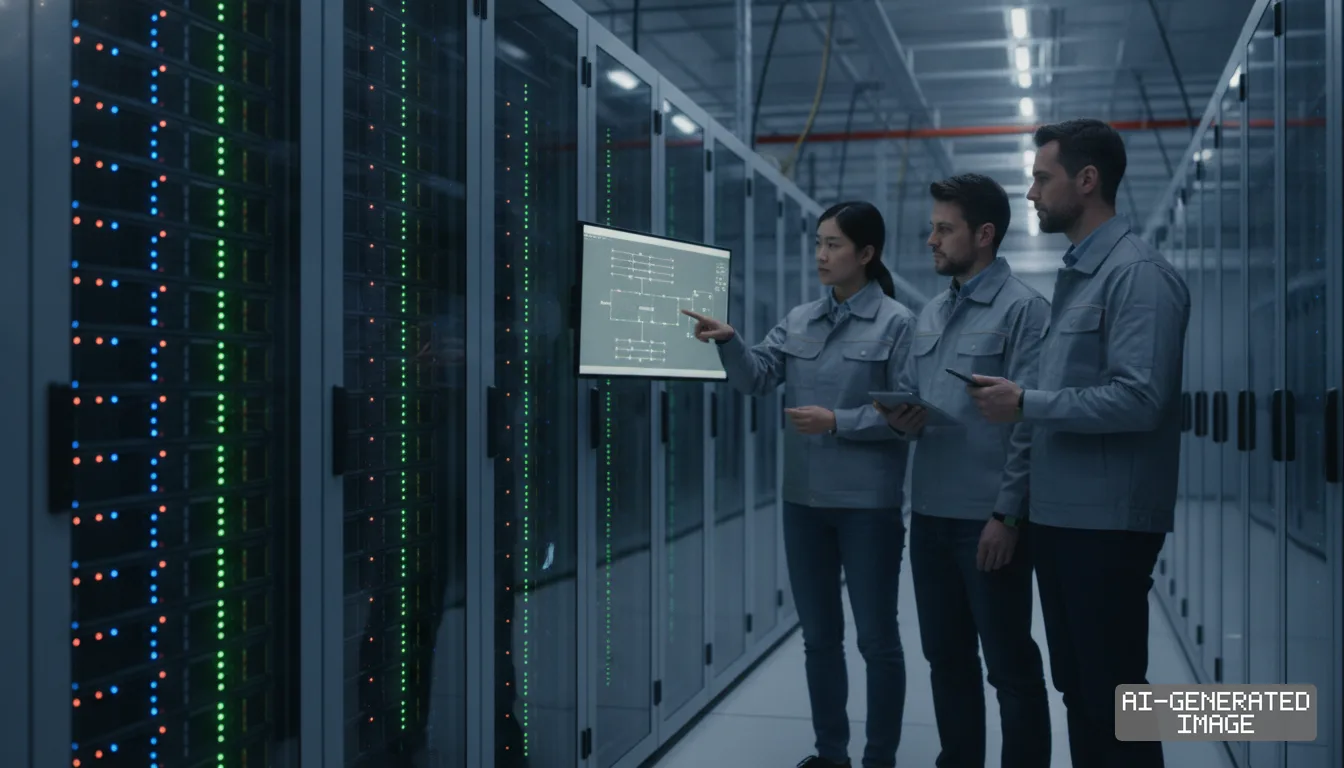
Moonshot AI held talks to lease European cloud clusters containing more than 8,000 Nvidia Blackwell processors on Nov. 5, 2026, navigating United States export controls barring direct hardware shipments.
The Beijing-based developer builds the Kimi large language model family. Current American trade regulations prohibit shipping cutting-edge accelerators directly to China, but rules do not restrict foreign entities from renting computing capacity hosted abroad.
The discussed arrangement covers clusters with at least 8,000 Blackwell processors, according to private negotiations reported by CNBC. European data-center operators and lenders requested upfront payments 30% to 50% higher than standard non-Chinese commercial rates.
The steep financial surcharge reflects lenders' concerns over regulatory uncertainty. Data-center operators seek early returns to protect balance sheets in case Western trade authorities move to block cross-border compute access before leases expire.
Moonshot AI pursued the European capacity primarily to handle model inference workloads, which execute live user queries on deployed models. The lab also explored securing computing resources for model training, though discussions centered on inference tasks.
The push for overseas infrastructure follows surging domestic usage. Moonshot AI released its Kimi K3 reasoning model earlier this year and temporarily halted new user registrations to preserve GPU capacity for existing accounts.
The European discussions follow scrutiny from Washington over similar offshore arrangements. The White House Office of Science and Technology Policy stated in July that Moonshot AI had accessed Blackwell GB300 systems through a data center in Thailand.
Moonshot AI continued exploring European infrastructure options after the White House statement, according to individuals familiar with the talks. The effort shows how Chinese artificial intelligence developers remain determined to secure top-tier compute abroad.
United States lawmakers have attempted to close the offshore cloud loophole through federal statute. The House of Representatives passed the Remote Access Security Act by a 369–22 vote on Jan. 12, 2026.
The legislation amends the Export Control Reform Act of 2018. It grants the Commerce Department's Bureau of Industry and Security statutory authority to regulate remote foreign access to controlled technologies over cloud platforms.
Under existing statute, the Bureau of Industry and Security regulates physical shipments, re-exports and in-country transfers. The agency lacks explicit statutory authority to control remote internet access when hardware remains physically outside Chinese borders.
The proposed measure specifically targets remote compute access by entities from countries of concern, including China and Russia. The bill now awaits action in the Senate Banking, Housing, and Urban Affairs Committee.
The measure remains pending before the Senate committee, leaving the regulatory perimeter around cross-border computing unresolved. Congressional deliberations have slowed amid debate over the compliance burden on American cloud service providers.
Nvidia has also taken steps to manage commercial exposure to offshore leasing channels. The chipmaker advised data-center partners to ensure non-Chinese customers account for at least 51% of their operational cloud computing capacity.
Independent European cloud operators, known as neoclouds, have purchased large volumes of Blackwell accelerators using debt financing. These providers face heavy interest obligations, making high-margin contracts with overseas artificial intelligence labs financially tempting.
The upfront premiums demanded by European operators demonstrate how market participants price geopolitical risk. Chinese artificial intelligence developers must absorb higher capital expenditures to secure access to cutting-edge Western computing power.
Relying on offshore facilities creates complex cross-border jurisdiction questions for American regulators. Washington can penalize hardware shipments directly, but asserting export jurisdiction over foreign servers leased to foreign users lacks clear international precedent.
European governments have not aligned their domestic trade control frameworks with American cloud restrictions. Absent local legislation in Europe, European cloud operators operate under domestic commercial laws that do not ban renting server cycles to Chinese firms.
Chinese artificial intelligence firms face computing bottlenecks at home. Domestic alternatives manufactured by Huawei Technologies and local design firms remain constrained by advanced foundry access, leaving developers eager for Nvidia's Blackwell architecture.
Moonshot AI and Nvidia did not comment on the reported European negotiations. The White House and the Department of Commerce declined to address the specific discussions when asked by reporters.
The reporting does not identify the European neocloud operators involved, and Moonshot AI has not confirmed whether any commercial contract was signed.
The Senate Banking Committee has scheduled committee hearings through late November, while existing export guidelines continue to allow overseas cloud rentals.
Impact map
How this development propagates across the region and out to global buyers.
| Event | Korea | China | Japan | Global impact |
|---|---|---|---|---|
| European cloud compute lease talks | no direct exposure, domestic cloud providers operate under enterprise compliance agreements | Moonshot AI faces 30% to 50% upfront premiums to rent 8,000 Blackwell GPUs abroad | domestic datacenters prioritize compute capacity for Japanese language models | European neoclouds balance high-margin Chinese leases against pending U.S. regulatory scrutiny |
In this story
- Companies
- Moonshot AINvidia
- Tickers
- NVDA
- Policy
- Export Controls
- Impact
- ComplianceCapexSupply Chain
Track every Export Controls development →
Related briefings
- Nvidia halts H200 chip lines, shifting TSMC output to Rubin Also on Nvidia, Export Controls, Compliance
- OpenAI abandons China chip curbs as Nvidia protects exports Also on Nvidia, Export Controls, Compliance
- Korean battery makers secure non-FEOC LFP supply contracts Also on Nvidia, Export Controls, Compliance
- China Tightens Connected Vehicle Data Rules With Mandatory Local Sensor Scrubbing Also on Nvidia, Export Controls, Compliance
Sources
Reporting
Confidence: medium — how we grade this
The documents behind this briefing are linked above. East Asia Brief produces its English text with AI assistance under human editorial review, and does not translate or republish other outlets' articles. See our methodology and AI policy. Spotted an error? Tell us.
The Morning Brief
What changed in Korean, Chinese and Japanese industry overnight — and what it means for your supply chain. One email, weekday mornings, US time. Free.
The Morning Brief is in preparation. Leave your address and we will write to you once — when the first issue is ready. Nothing before that.