HD Hyundai wins DNV approval on 271,000 cbm LNG hull design
The twin-skeg hull matches Qatar's Q-Max scale while preserving canal transit access, challenging China's monopoly in ultra-large gas transport.
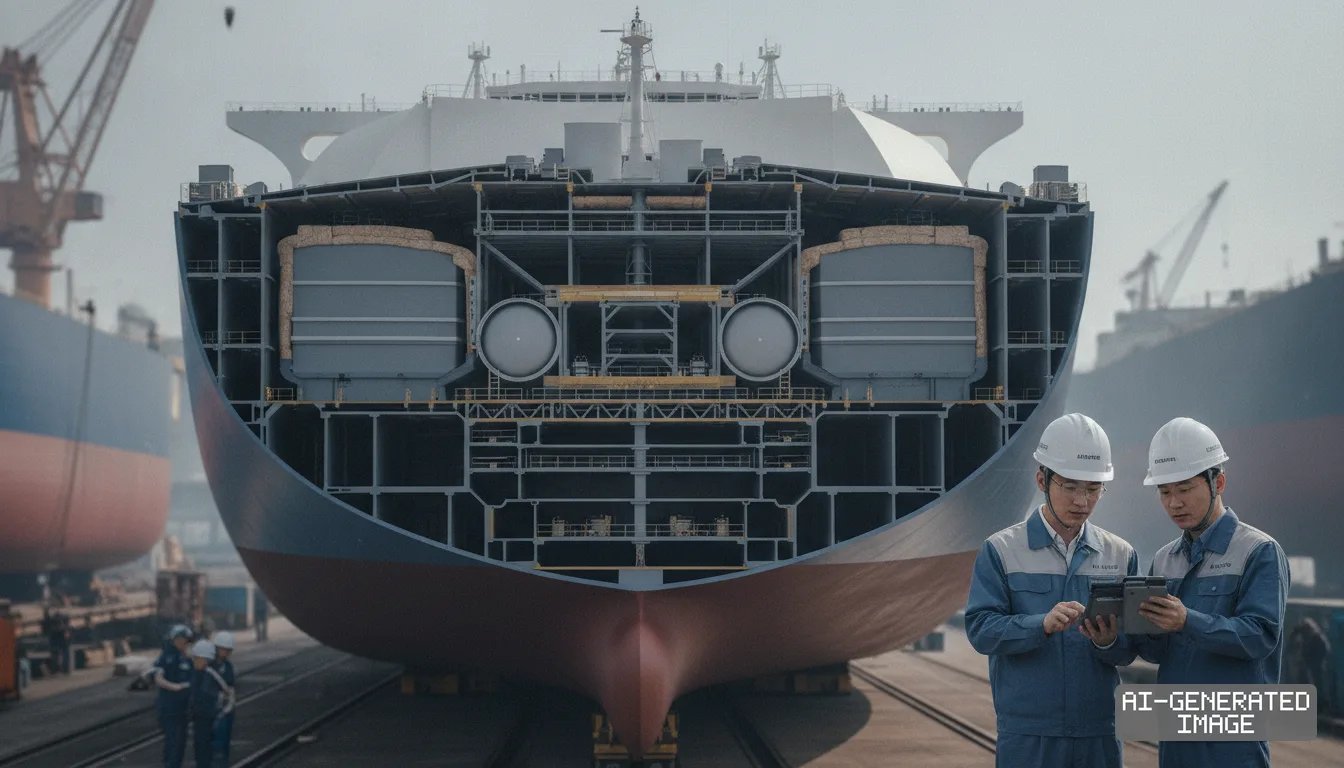
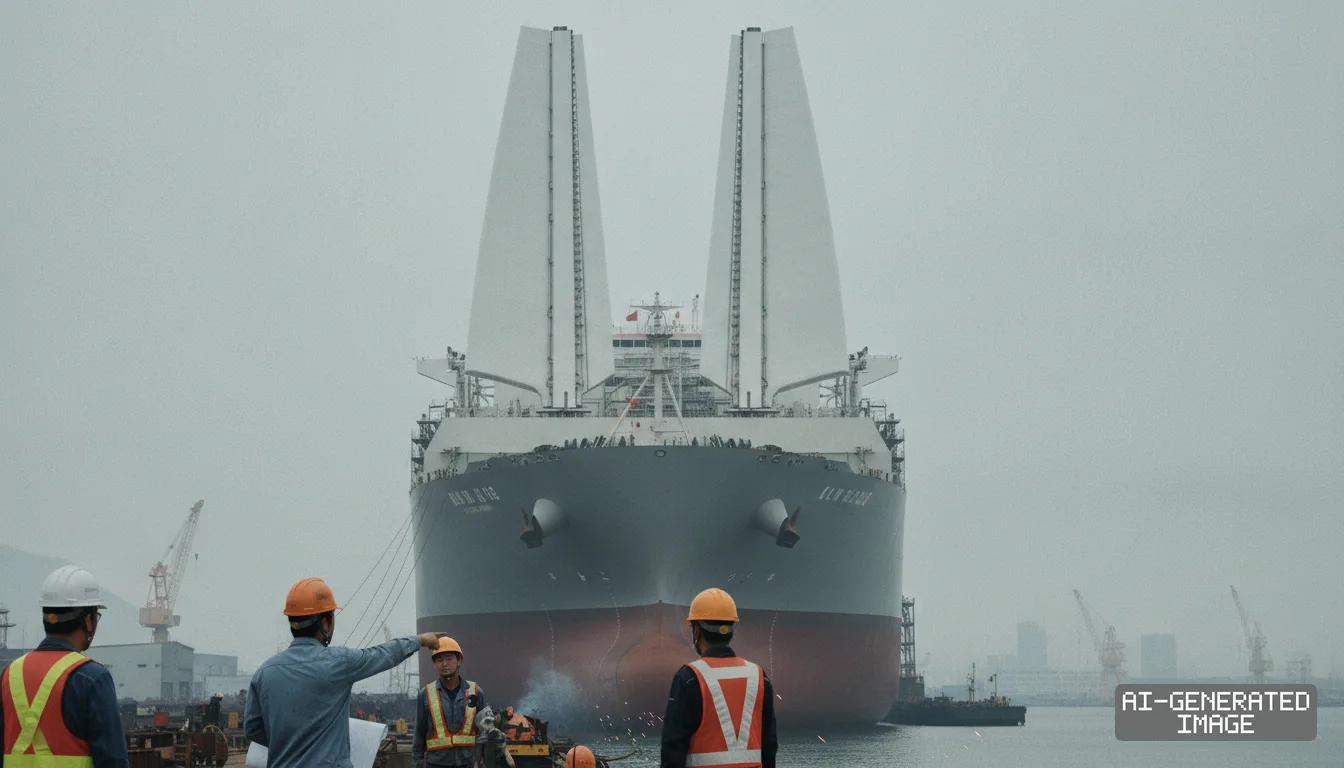
HD Hyundai Heavy Industries received design approval from classification society DNV on Sept. 16 for a 271,000 cubic meter liquefied natural gas carrier, the shipbuilder's largest gas vessel design to date.
The approval in principle verifies the technical feasibility of the twin-skeg hull structure. Senior Executive Vice President Hong Ryeul Ryu accepted the certificate during the Gastech 2026 conference in Milan, DNV said.
The design expands cargo tank capacity by roughly 55% over the standard 174,000 cubic meter vessels that dominate South Korean orderbooks. It matches the capacity of Q-Max carriers operating from Ras Laffan in Qatar.
HD Hyundai Heavy Industries optimized the vessel dimensions to permit passage through the Suez and Panama canals. Standard Q-Max vessels cannot transit the expanded Panama Canal because their breadth exceeds lock limits.
The twin-skeg hull form splits the stern into two distinct skegs to house twin propellers and rudders. This configuration improves hydrodynamic efficiency across wide vessel breadths without increasing operating draft, naval architects said.
The carrier uses five membrane-type cargo tanks rather than the four tanks common on smaller vessels. This arrangement distributes cryogenic cargo loads more evenly along the lengthened hull, according to the classification society.
HD Hyundai Heavy Industries fitted the design with a dual-fuel propulsion system meeting International Maritime Organization Tier III nitrogen oxide emission limits. The machinery runs on boil-off gas or conventional marine fuel.
An onboard reliquefaction unit reliquefies excess boil-off gas and returns the fuel directly to the cargo tanks. The system prevents cargo venting during ballast voyages or port idling, the shipbuilder said.
The shipbuilder incorporated an aerodynamic bow cover known as the Hi-ARS air resistance saver. The device deflects head-on wind pressure at sea to reduce fuel burn during loaded transits.
Artificial intelligence software monitors voyage routing and machinery performance in real time. The platform analyzes wave motion and engine loads to recommend optimal transit speeds, the shipbuilder said.
The certification completes a joint development project initiated in Doha, Qatar. HD Hyundai Heavy Industries signed a memorandum of understanding with DNV at the LNG 2026 conference on Feb. 2.
South Korean yards have long controlled construction of conventional LNG carriers between 174,000 and 178,000 cubic meters. Chinese rival Hudong-Zhonghua Shipbuilding broke into the larger size tier with its own 271,000 cubic meter vessel.
State-owned QatarEnergy ordered 18 ultra-large carriers of 271,000 cubic meters from Hudong-Zhonghua in April 2024. That contract represented an investment of about $6 billion, commercial shipping records show.
The Chinese shipyard secured exclusive delivery slots for the vessels through 2031. South Korean shipbuilders declined to build the initial batch because wide-beam hulls disrupt dock schedules for conventional ships.
HD Hyundai Heavy Industries now aims to contest that Chinese monopoly in upcoming bidding rounds. QatarEnergy plans to expand LNG export capacity from 77 million tons annually to 142 million tons by 2030.
Rival builders Hanwha Ocean and Samsung Heavy Industries also hold preliminary certifications for ultra-large hull concepts. Neither domestic competitor has begun drydock fabrication of a 271,000 cubic meter design.
Major energy charterers demand canal compatibility to trade cargoes flexibly between Atlantic and Pacific basins. Chinese Q-Max designs require dedicated long-haul routes around the Cape of Good Hope when sailing to Asian terminals.
HD Hyundai Heavy Industries designed the twin-skeg hull to retain a shallow draft at full cargo displacement. This allows the ship to dock at receiving terminals without extensive harbor dredging, the company said.
Procurement teams at independent shipowning consortia evaluate the design ahead of expected carrier tenders. Global fleet operators must secure charter contracts with state exporters before placing firm newbuilding orders at yards.
Classification approvals do not carry binding construction commitments or delivery slot reservations. Shipyards use the design certifications to verify structural safety and regulatory compliance during commercial negotiations with prospective buyers.
The classification document does not state whether any charterer or shipowner has signed a preliminary letter of intent. HD Hyundai Heavy Industries has not published construction pricing or targeted delivery years for the vessel.
Global energy producers are scheduled to issue pre-qualification requirements for follow-on carrier tenders in late 2026. Shipyards expect formal contract bidding for the next round of Q-Max class vessels to open in 2027.
Ulsan drydock availability will determine whether HD Hyundai Heavy Industries can allocate production slots to the wider hull. The shipbuilder holds vessel delivery commitments through 2028 across its Korean yards, according to exchange filings.
Marine engineering teams will conduct tank model testing to calibrate twin-propeller hydrodynamic performance under rough sea conditions. That test sequence will establish final fuel consumption curves for commercial marketing brochures, engineers said.
DNV Regional Manager Vidar Dolonen confirmed the classification society will oversee safety reviews throughout future detailed engineering phases. Technical teams will evaluate tank sloshing pressures before the builder cuts steel on any commercial hull.
Impact map
How this development propagates across the region and out to global buyers.
| Event | Korea | China | Japan | Global impact |
|---|---|---|---|---|
| Ultra-large LNG carrier AiP | HD Hyundai enters 271,000 cbm segment to compete with Chinese yards | Hudong-Zhonghua loses exclusivity over 271,000 cbm Q-Max designs | Imabari and JMU remain focused on standard 174,000 cbm carrier sizes | LNG charterers gain dual-canal transit options for ultra-large cargo flows |
In this story
- Companies
- HD Hyundai Heavy Industries
- Tickers
- 329180.KS
- Exposed
- QatarEnergyChina State Shipbuilding CorporationHudong-Zhonghua Shipbuilding
- Policy
- Economic Security
- Impact
- Order BookCapexSupply Chain
Track every Economic Security development →
Related briefings
- Chinese shipyards apply commercial mega-block assembly to naval replenishment hulls Also on Hudong-Zhonghua Shipbuilding, China State Shipbuilding Corporation, Order Book
- China State Shipyards Reconfigure Dry Docks for Dual-Fuel Mega-Boxships Also on Hudong-Zhonghua Shipbuilding, China State Shipbuilding Corporation, Order Book
- Shipyard labor policies diverge as Korea, Japan, and China tackle yard manning gaps Also on Hudong-Zhonghua Shipbuilding, China State Shipbuilding Corporation, Order Book
- HD Hyundai and Hanwha Ocean Lock In LNG Carrier Berth Slots Through 2029 Also on Hudong-Zhonghua Shipbuilding, HD Hyundai Heavy Industries, Order Book
Sources
Reporting
Confidence: medium — how we grade this
The documents behind this briefing are linked above. East Asia Brief produces its English text with AI assistance under human editorial review, and does not translate or republish other outlets' articles. See our methodology and AI policy. Spotted an error? Tell us.
The Morning Brief
What changed in Korean, Chinese and Japanese industry overnight — and what it means for your supply chain. One email, weekday mornings, US time. Free.
The first issue goes out shortly. Sign up now and you will not miss it.