China State Shipyards Reconfigure Dry Docks for Dual-Fuel Mega-Boxships
Jiangnan Shipyard and Hudong-Zhonghua retool berths and dock infrastructure to compress build cycles for 24,000 TEU alternative-fuel container vessels.
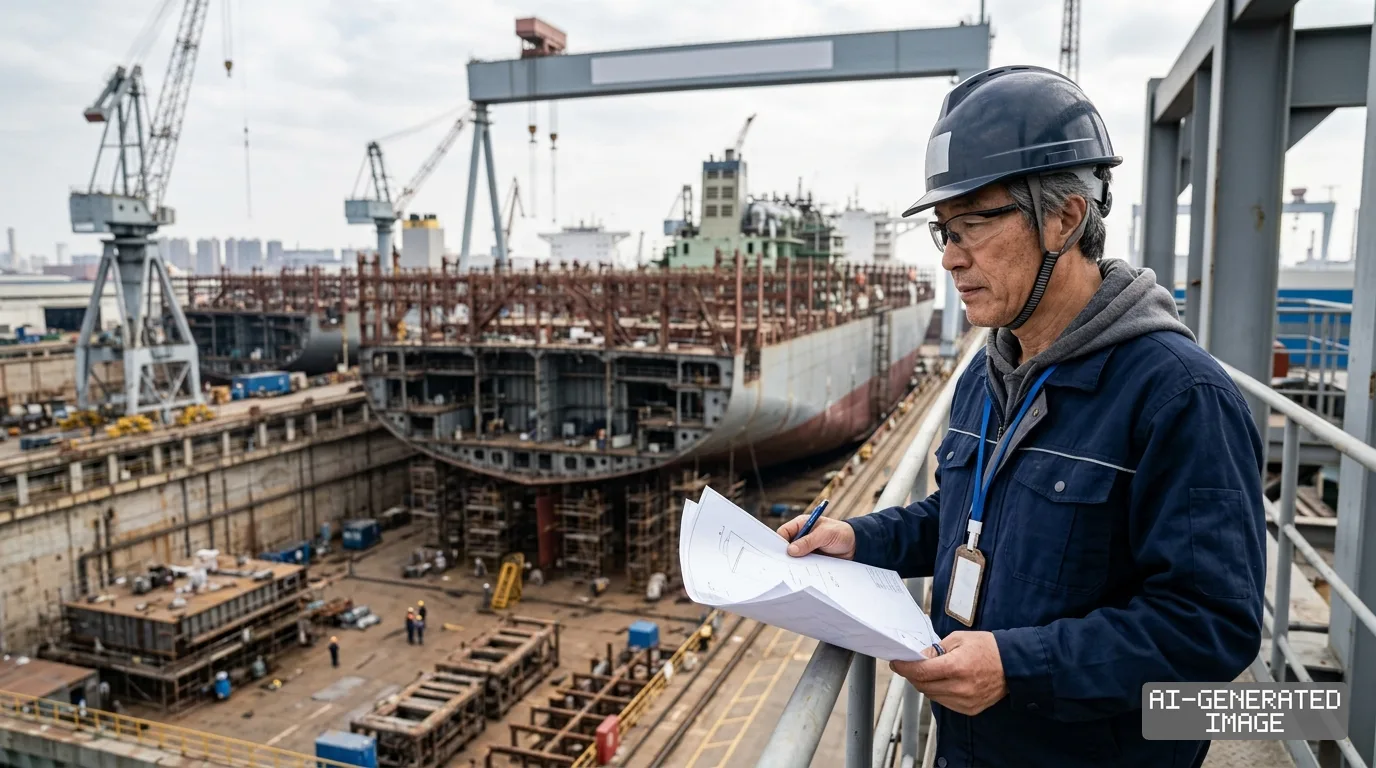
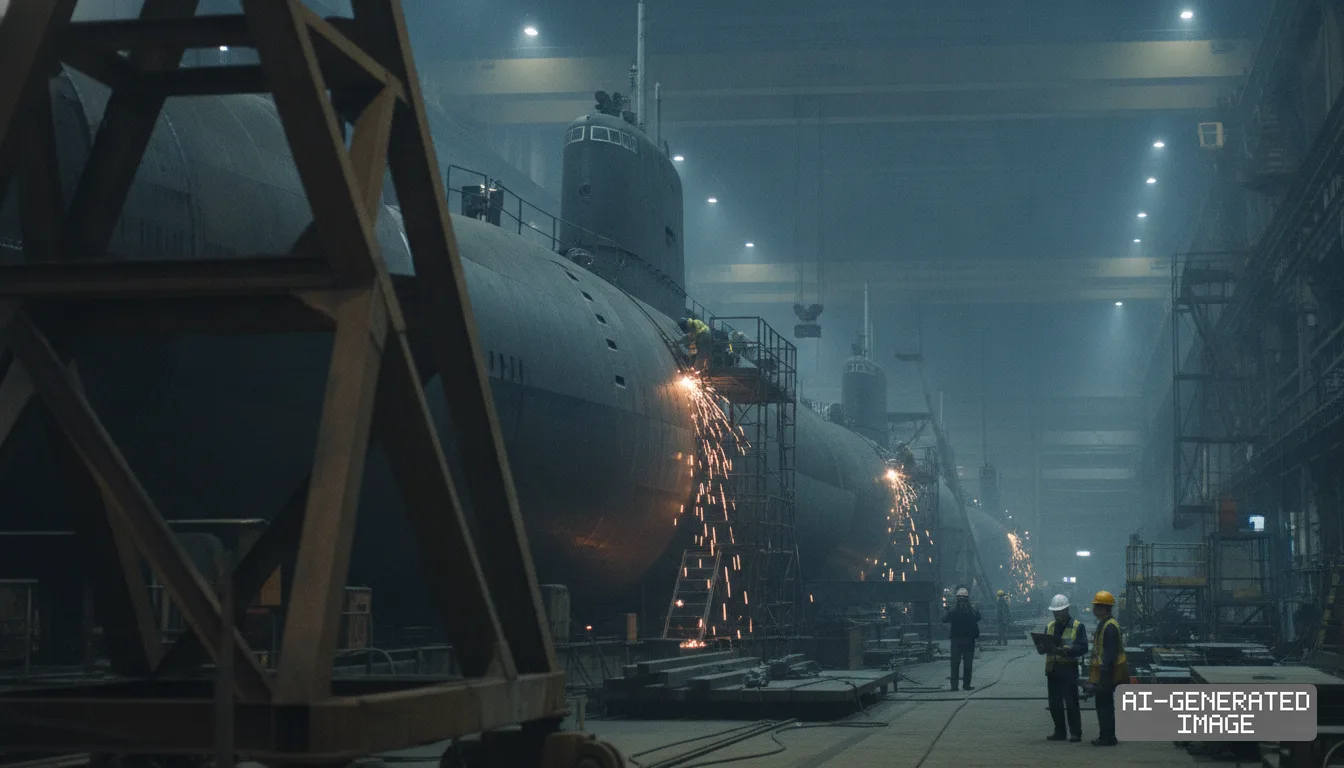
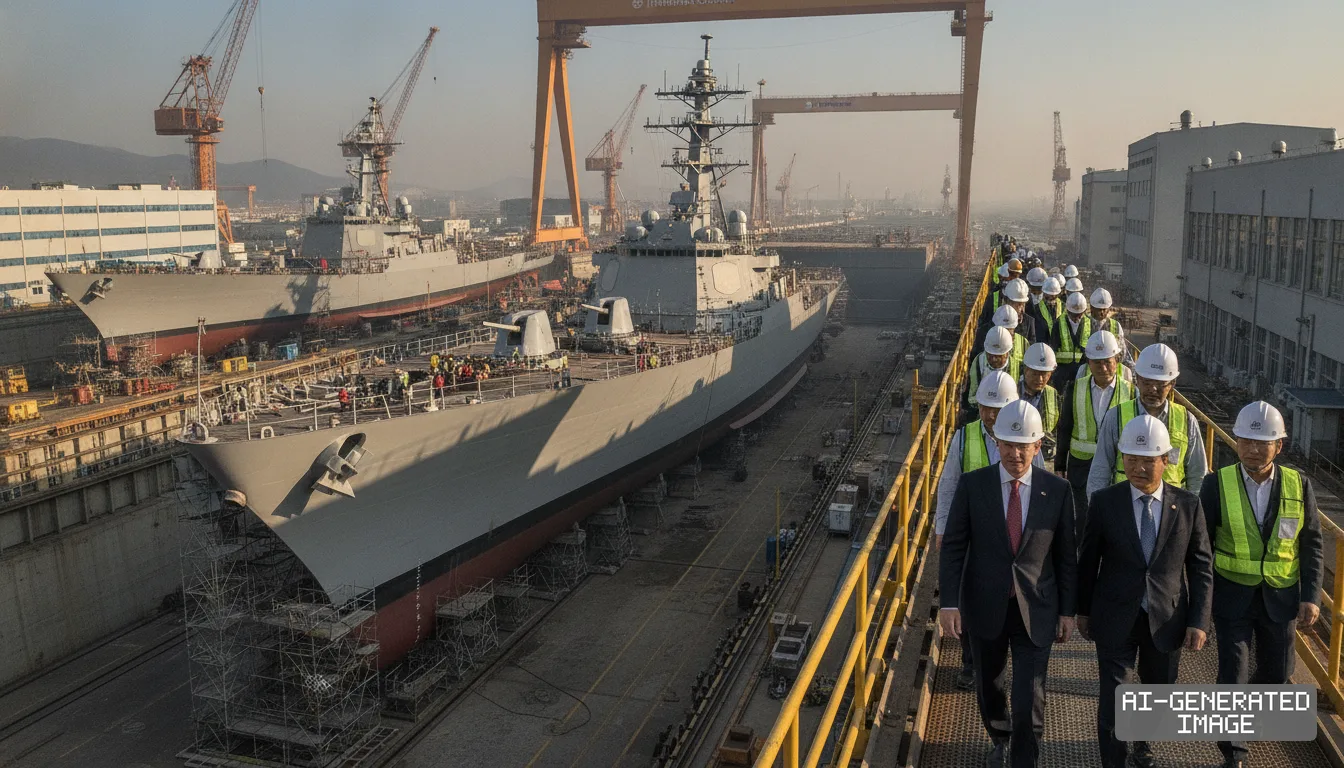
State-owned shipbuilders Jiangnan Shipyard and Hudong-Zhonghua Shipbuilding have completed dry dock reconfigurations on Shanghai's Changxing Island to establish continuous, tandem construction lines for 24,000 TEU dual-fuel ultra-large container vessels. The physical modifications, which alter dry dock dimensions and expand heavy-lift gantry crane rails, aim to compress dry-dock occupancy times and address delivery bottlenecks across China State Shipbuilding Corporation's forward order book through 2028.
The infrastructure changes follow a structural shift in global maritime procurement, where major container liners have committed capital to alternative-propulsion mega-boxships capable of carrying more than 24,000 twenty-foot equivalent units. These vessels require specialized berth layouts due to their 400-meter overall lengths, 61.3-meter beam profiles, and the integration of cryogenic liquefied natural gas or methanol fuel containment systems. Both shipyards operate as core commercial shipbuilding subsidiaries of China State Shipbuilding Corporation, anchoring China's production capacity in the high-capacity container segment.
Under the revised facility layout, Jiangnan Shipyard has converted its primary civil construction dry docks into a continuous assembly sequence that utilizes tandem construction methodologies. By lengthening the working footprint and reallocating adjacent intermediate staging areas, the yard can assemble the stern section and cargo holds of a lead mega-boxship while simultaneously laying down the aft hull and machinery spaces of a follow-on hull within the same dock basin. The system reduces total dry dock occupancy per vessel by allowing machinery installation, shaft alignment, and fuel containment integration to advance before full dock flooding.
To support the accelerated hull construction cycle, Jiangnan has upgraded its shore-based crane capacity, adding rail-mounted gantry cranes with working hook heights exceeding 80 meters and individual lifting capabilities up to 1,600 tonnes. The expanded lifting envelope permits the pre-assembly of complete mega-block structures, superstructure deckhouses, and integrated deck houses with pre-fitted electrical and piping bundles in covered fabrication workshops prior to dock transfer. This reduces high-altitude welding and steel fitting inside the dry dock, shifting labor-intensive tasks to automated flat-panel and curved-block production lines onshore.
Hudong-Zhonghua Shipbuilding has executed a complementary overhaul across its Changxing Phase II yard facilities, dedicating specific heavy outfitting berths to dual-fuel mega-containerships and large membrane-type LNG carriers. The yard has optimized the dock bottom load-bearing specifications to support the concentrated weight distribution of Type B LNG bunker tanks and membrane fuel cargo systems. The installation of secondary liquid-nitrogen piping lines and dedicated cryogenic testing rigs along the outfitting quays allows the yard to perform gas trials and tank cool-down procedures without moving vessels to third-party industrial terminals.
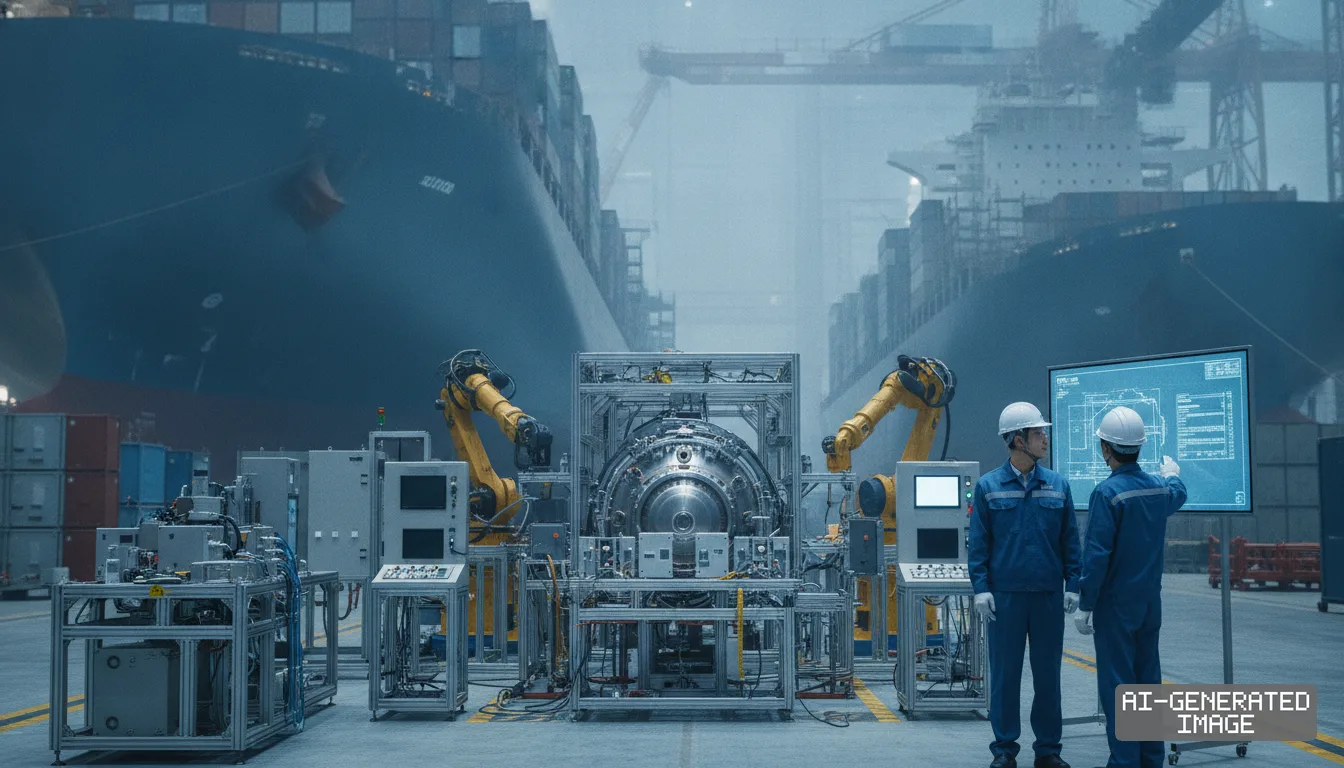
The retooling addresses operational friction caused by the sheer size and engineering complexity of dual-fuel propulsion equipment. Unlike conventional heavy-fuel-oil container vessels, 24,000 TEU dual-fuel designs incorporate specialized low-pressure or high-pressure two-stroke engines, high-pressure gas piping networks, boil-off gas handling compressors, and vacuum-insulated bunkering stations. These systems occupy space traditionally allocated to standard cargo holds and require clean-room installation environments that complicate standard dry dock schedules if not segregated from hot-work hull fabrication.
For container carrier fleet managers and charterers, the reconfiguration directly alters delivery slot availability and shipyard performance benchmarks. The compression of dry dock assembly schedules enables both yards to offer fixed delivery windows with reduced buffer periods for multi-vessel series orders. Liner operators seeking fleet renewals to comply with International Maritime Organization carbon intensity regulations have increasingly booked consecutive series of four to 12 sister vessels, requiring shipyards to demonstrate repeatable dock turnaround intervals without disrupting naval or offshore commitments.
The standardized berth operations also reshape the procurement schedule for critical propulsion and containment inputs. Marine engine builders, including CSSC-affiliated engine works and licensed manufacturers of WinGD and MAN Energy Solutions engines, face tighter supply delivery windows linked to specific dock entry dates. High-manganese steel plates, cryogenic stainless steel, and specialized insulation panels for fuel tanks must align with precise crane rotation plans to prevent block-staging yards on Changxing Island from reaching storage saturation.
The concentration of mega-boxship assembly at Changxing Island contrasts with the construction strategies of South Korean shipbuilders, which have largely prioritized high-value LNG carrier series and specialized offshore units while selective on mega-container slots due to dry dock availability constraints. By optimizing dry docks specifically for consecutive mega-boxship hulls, CSSC has expanded its baseline capacity share for ultra-large boxship deliveries, locking in slot allocations for European and Asian container carriers through the late 2020s.
Operations across the reconfigured dry docks at both Jiangnan and Hudong-Zhonghua are fully integrated into CSSC's standardized production calendar, with the next cycle of dual-fuel 24,000 TEU hull float-outs scheduled under the revised dock utilization schedule.
Impact map
How this development propagates across the region and out to global buyers.
| Event | Korea | China | Japan | Global impact |
|---|---|---|---|---|
| Mega-boxship dock expansion | selective container slots | expands 24000 TEU dual-fuel berth capacity | non-participant in mega-boxship dock sizing | locks in carrier fleet delivery schedules |
In this story
- Companies
- China State Shipbuilding CorporationJiangnan ShipyardHudong-Zhonghua Shipbuilding
- Tickers
- 600150.SS
- Exposed
- WinGDMAN Energy SolutionsHD Korea Shipbuilding & Offshore Engineering
- Policy
- Economic SecuritySubsidies
- Impact
- CapexOrder BookSupply Chain
Track every Economic Security development → Track every Subsidies development →
Related briefings
- Shipyard labor policies diverge as Korea, Japan, and China tackle yard manning gaps Also on Jiangnan Shipyard, Hudong-Zhonghua Shipbuilding, China State Shipbuilding Corporation
- South Korea engine builders expand methanol test benches for 2027 ship handoffs Also on WinGD, MAN Energy Solutions, Order Book
- HD Hyundai Marine Engine wins $16.5M Chinese shipyard order Also on WinGD, MAN Energy Solutions, Order Book
- CSSC Reallocates Yard Drydocks to Accelerate Large Containership Output Also on Jiangnan Shipyard, China State Shipbuilding Corporation, Order Book
Sources
This briefing carries no sources block. It was written from our desks’ working knowledge of the sector rather than from documents retrieved for this piece. Read it as orientation and check any figure you intend to act on — how we source briefings.
This briefing carries no linked sources: it was written from our desks' working knowledge of the sector rather than from documents retrieved for this piece. East Asia Brief publishes no citation it cannot link. Our English text is produced with AI assistance under human editorial review. See our methodology and AI policy. Spotted an error? Tell us.
The Morning Brief
What changed in Korean, Chinese and Japanese industry overnight — and what it means for your supply chain. One email, weekday mornings, US time. Free.
The Morning Brief is in preparation. Leave your address and we will write to you once — when the first issue is ready. Nothing before that.