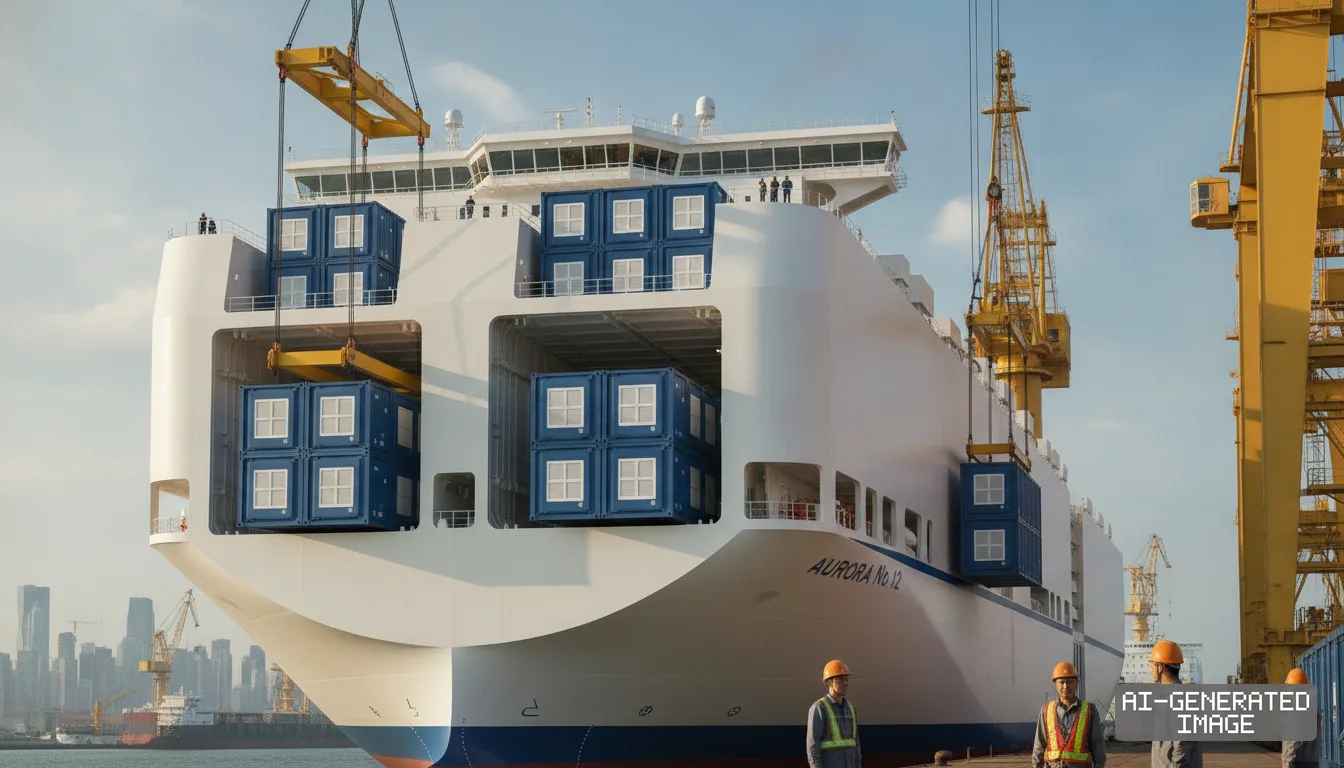
HD Hyundai establishes US subsidiary under MASGA maritime agreement
The shipbuilder opened HD Hyundai USA to steer engineering work as South Korea pledges $150 billion toward American maritime projects.
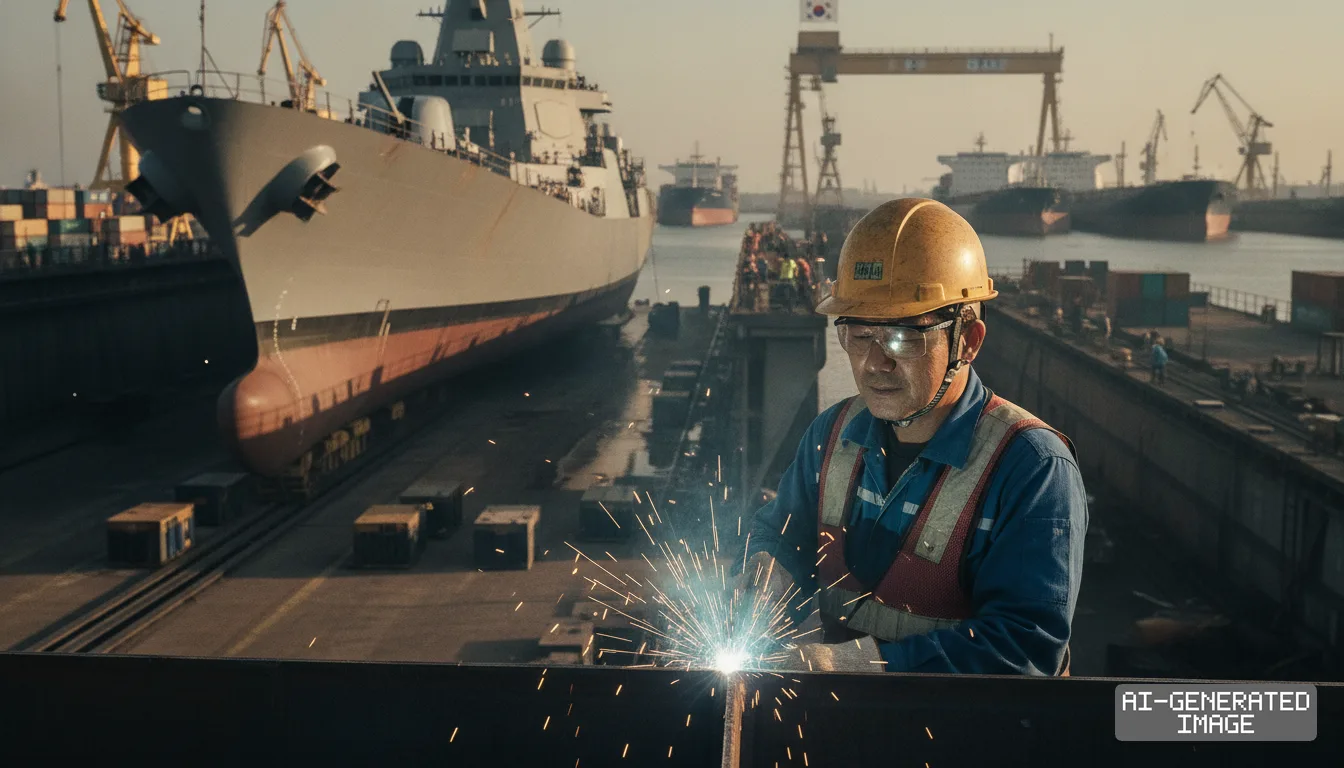
HD Hyundai Chairman Chung Ki-sun met with United States Ambassador Michelle Park Steel on Nov. 20, 2026, to advance bilateral naval and commercial shipbuilding cooperation under the Make American Shipbuilding Great Again initiative.
The diplomatic discussion aligns with South Korea's official commitment to channel $150 billion into American maritime industrial projects, representing roughly 43% of a broader $350 billion bilateral trade and investment framework.
HD Hyundai simultaneously upgraded its dedicated North American task force on Nov. 20, 2026, establishing a wholly owned operational subsidiary named HD Hyundai USA to steer local shipyard investments and engineering programs.
Senior Vice President Hong Seok-hwan was appointed to lead HD Hyundai USA, positioning the holding company to exercise direct corporate control over manufacturing sites and partner ventures across the United States.
The MASGA program—an acronym for Make American Shipbuilding Great Again—serves as the bilateral industrial framework coordinated by South Korea's Ministry of Trade, Industry and Energy and the United States Department of Commerce.
The initiative addresses persistent industrial shortfalls in the United States, where commercial yard capacity has contracted sharply despite rising fleet recapitalization requirements for naval auxiliary and combatant vessels.
Both governments established the Korea-U.S. Shipbuilding Partnership Center in Washington on July 23, 2026, to manage industrial exchanges, regulatory coordination, joint technical training and facility modernization projects.
The ministry committed 19.93 billion won ($14.5 million) through 2028 to finance operations at the partnership center, alongside a five-year, 120 billion won ($87 million) bilateral maritime research program.
Ambassador Steel said the bilateral partnership focuses on enhancing the industrial competitiveness of American shipyards and manufacturing workers while creating tangible commercial opportunities for Korean corporate partners.
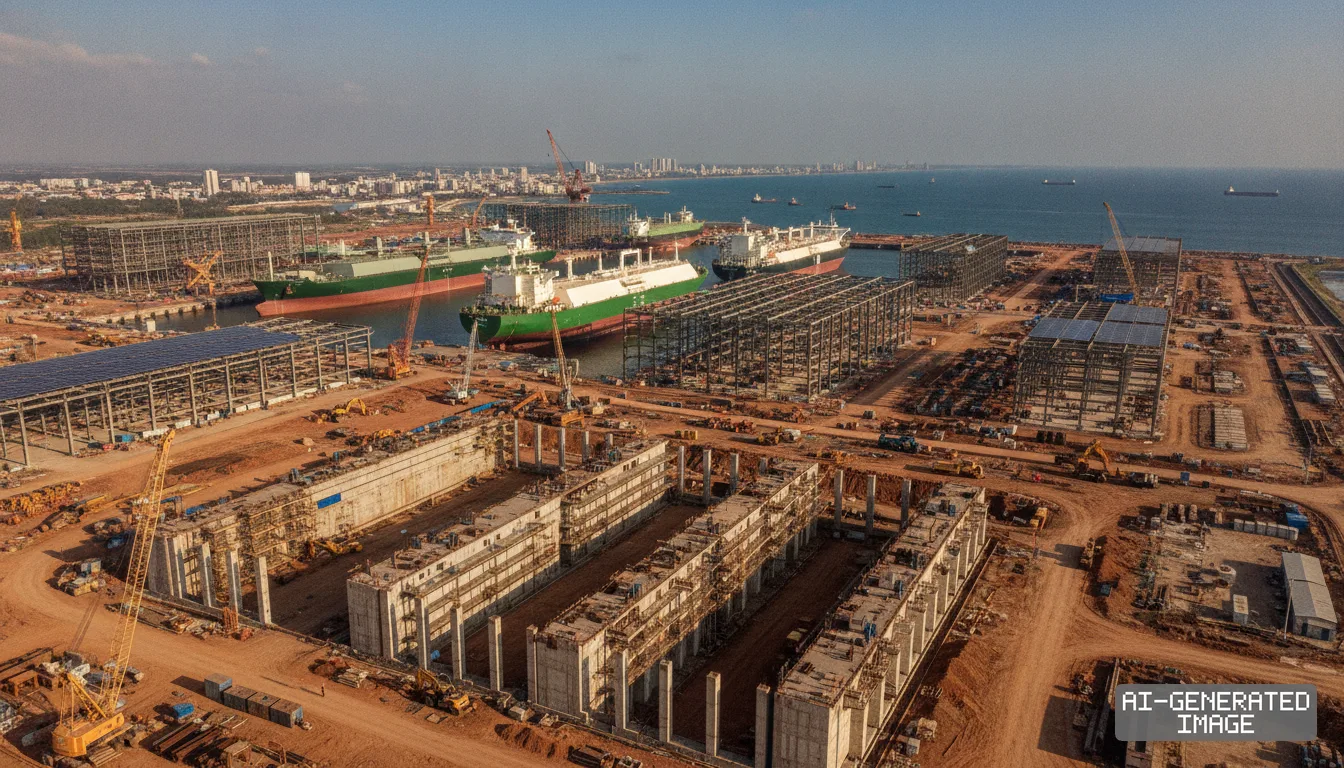
HD Hyundai is translating the bilateral policy architecture into physical shipyard infrastructure through a joint venture named HD Kiewit Shipbuilding, formalized in Houston on Oct. 22, 2026.
HD Hyundai USA partnered with Kiewit Offshore Services, an engineering and construction subsidiary of Kiewit Corporation that operates heavy industrial fabrication facilities along the Gulf of Mexico.
The proposed joint venture combines HD Hyundai's proprietary vessel design and production systems with Kiewit's large-scale engineering and onshore construction capabilities.
Project filings specify that the joint yard will produce commercial merchant ships and naval auxiliary support vessels, while supplying fabricated hull modules to existing American shipyards.
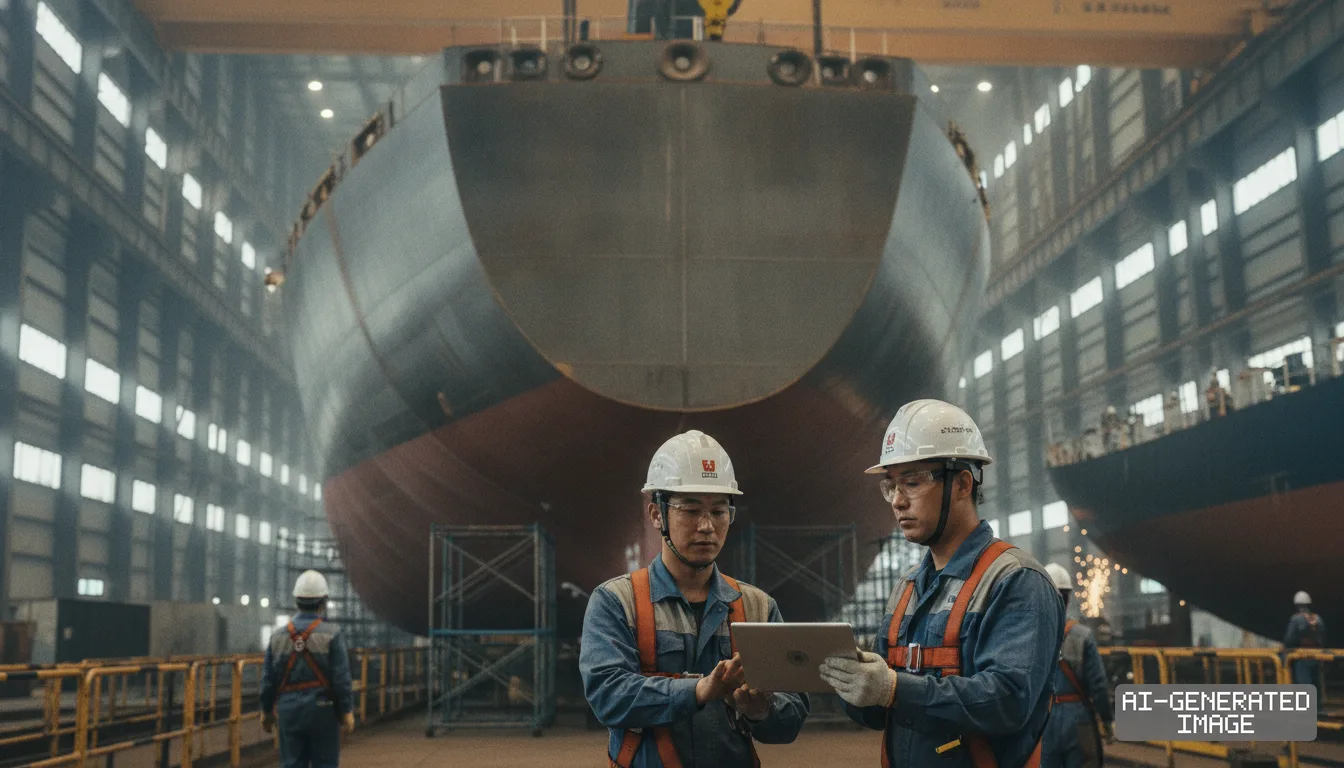
HD Hyundai plans to implement its Future of Shipyard automation platform at the new facility, incorporating digital twin simulation, automated material handling and automated welding equipment.
Preliminary project disclosures indicate that the proposed Gulf Coast manufacturing site could support up to 3,000 skilled American shipbuilding jobs once the facility reaches full production capacity.
The operational push builds on a cooperation agreement signed on Aug. 25, 2025, between HD Hyundai, Cerberus Capital Management and state-run Korea Development Bank.
Under that private investment vehicle, Cerberus manages institutional capital while HD Hyundai serves as the anchor industrial partner assessing shipyard modernization candidates and marine equipment supply chains.
Commercial initiatives already link HD Hyundai to Tampa Ship in Florida, where the Korean shipbuilder provides engineering and design support to build medium-sized liquefied natural gas dual-fuel containerships.
In naval depot operations, HD Hyundai secured Master Ship Repair Agreement certification from the United States Navy, completing overhaul and voyage maintenance work on the logistics ship USNS Alan Shepard.
In an exchange filing on Nov. 20, 2026, HD Korea Shipbuilding & Offshore Engineering said specific equity contribution figures and total capital expenditure for the Kiewit project remain subject to ongoing commercial negotiations.
HD Hyundai has not published a regulatory disclosure or formal press statement detailing the specific agenda items, contract figures or capital allocations discussed during the Nov. 20 diplomatic meeting.
HD Korea Shipbuilding & Offshore Engineering faces a regulatory re-disclosure deadline of Feb. 19, 2027, to provide finalized financial terms for the American shipyard construction project.
Groundbreaking for the HD Kiewit Shipbuilding facility remains targeted for 2027, with both partners scheduling full-scale commercial yard operations to commence in 2029.
Impact map
How this development propagates across the region and out to global buyers.
| Event | Korea | China | Japan | Global impact |
|---|---|---|---|---|
| MASGA shipyard alliance | HD Hyundai deploys proprietary smart yard systems and expands US defense support role | Chinese commercial shipbuilders face long-term counterweight in North American coastal yards | Japanese yards remain limited to domestic naval repair without dedicated US manufacturing hubs | US naval auxiliary supply chains gain modular fabrication capacity backed by $150 billion bilateral capital |
| MASGA shipyard alliance | HD Hyundai deploys proprietary smart yard systems and expands US defense support role | Chinese commercial shipbuilders face long-term counterweight in North American coastal yards | Japanese yards remain limited to domestic naval repair without dedicated US manufacturing hubs | US naval auxiliary supply chains gain modular fabrication capacity backed by |
| MASGA shipyard alliance | HD Hyundai deploys proprietary smart yard systems and expands US defense support role | Chinese commercial shipbuilders face long-term counterweight in North American coastal yards | Japanese yards remain limited to domestic naval repair without dedicated US manufacturing hubs | US naval auxiliary supply chains gain modular fabrication capacity backed by $150 billion bilateral capital |
In this story
- Companies
- HD HyundaiHD Korea Shipbuilding & Offshore Engineering
- Tickers
- 267250.KS009540.KS
- Exposed
- KiewitCerberus Capital ManagementKorea Development Bank
- Policy
- Procurement RulesStandards
- Impact
- CapexSupply ChainOrder Book
Track every Procurement Rules development → Track every Standards development →
Related briefings
- HD Hyundai widens Philippine naval pact at Subic shipyard Also on Cerberus Capital Management, HD Hyundai, Order Book
- HD Hyundai launches third Philippine offshore patrol vessel in Ulsan Also on Cerberus Capital Management, Order Book
- HD Hyundai and Kiewit to build automated Gulf Coast shipyard Also on Kiewit, HD Hyundai, Procurement Rules
- HD Hyundai signs US shipyard pact with Kiewit for naval work Also on Kiewit, HD Hyundai, Procurement Rules
Sources
Primary documents
Reporting
Confidence: high — how we grade this
The documents behind this briefing are linked above. East Asia Brief produces its English text with AI assistance under human editorial review, and does not translate or republish other outlets' articles. See our methodology and AI policy. Spotted an error? Tell us.
The Morning Brief
What changed in Korean, Chinese and Japanese industry overnight — and what it means for your supply chain. One email, weekday mornings, US time. Free.
The Morning Brief is in preparation. Leave your address and we will write to you once — when the first issue is ready. Nothing before that.