Hoegh Autoliners picks BYD battery system for ammonia vessel
The installation on the 9,100 CEU Aurora No. 12 combines deck solar and shaft generation to eliminate roughly 1,000 metric tons of carbon emissions annually.
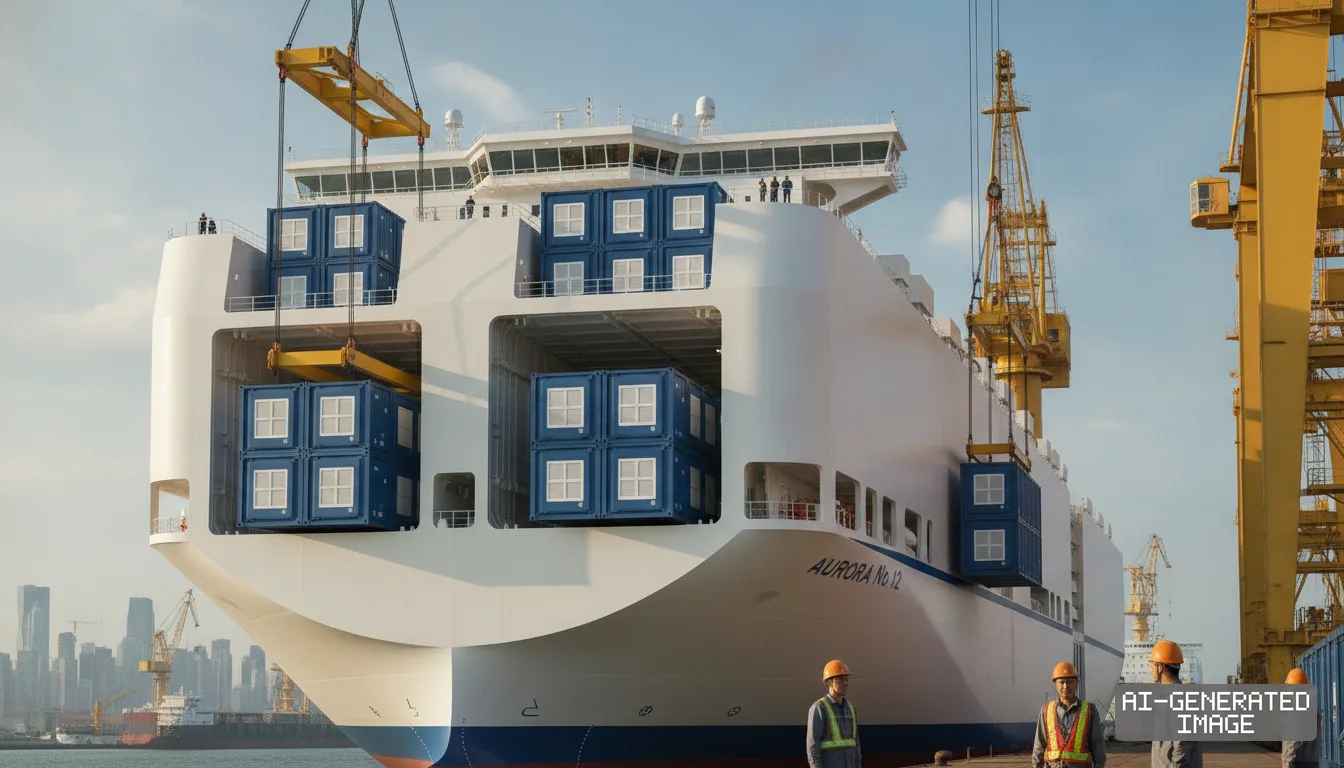
Höegh Autoliners ASA partnered with BYD Co. on Nov. 20, 2026, to deploy containerized marine battery systems aboard its 9,100 CEU ammonia-fueled pure car and truck carrier Aurora No. 12.
The vessel is the final ship in the Norwegian carrier's 18-vessel Aurora-class construction program. Each vessel carries up to 9,100 car equivalent units, making them the largest vehicle carriers ordered in the sector.
The onboard battery installation operates alongside deck solar panels and a shaft generator. The integrated electrical arrangement is projected to eliminate approximately 1,000 metric tons of carbon dioxide equivalent emissions annually.
Aurora No. 12 combines four separate power sources within a single marine energy management network. The vessel relies on a dual-fuel two-stroke engine engineered to burn clean ammonia from its first day of commercial service.
BYD supplies containerized lithium-based energy storage units to provide peak shaving — a process that supplies stored power during sudden demand spikes. That role prevents auxiliary engines from burning extra fuel when port operations or maneuvering require rapid power surges.
A rooftop array of 1,500 square meters of solar photovoltaic panels supplements the batteries on the upper deck. A shaft generator captures rotational kinetic energy directly from the propeller shaft to charge the cells while sailing.
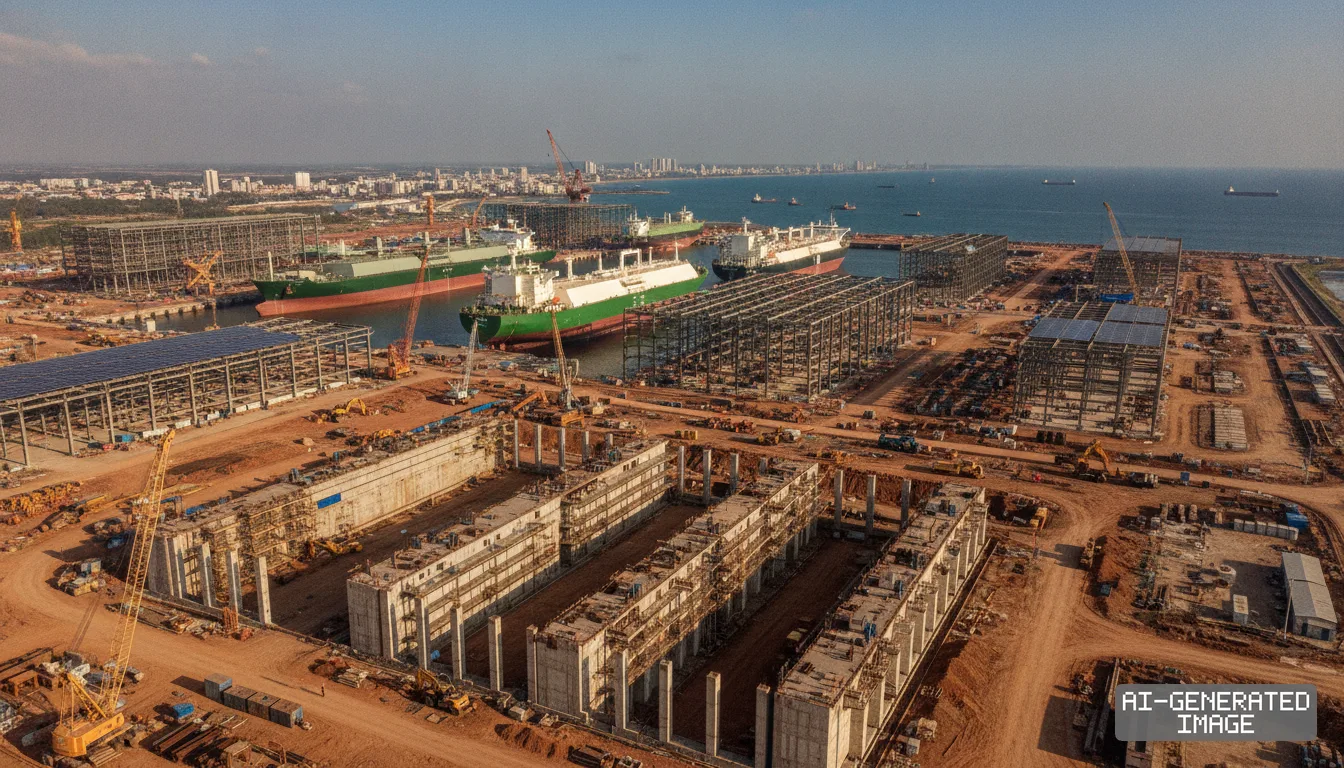
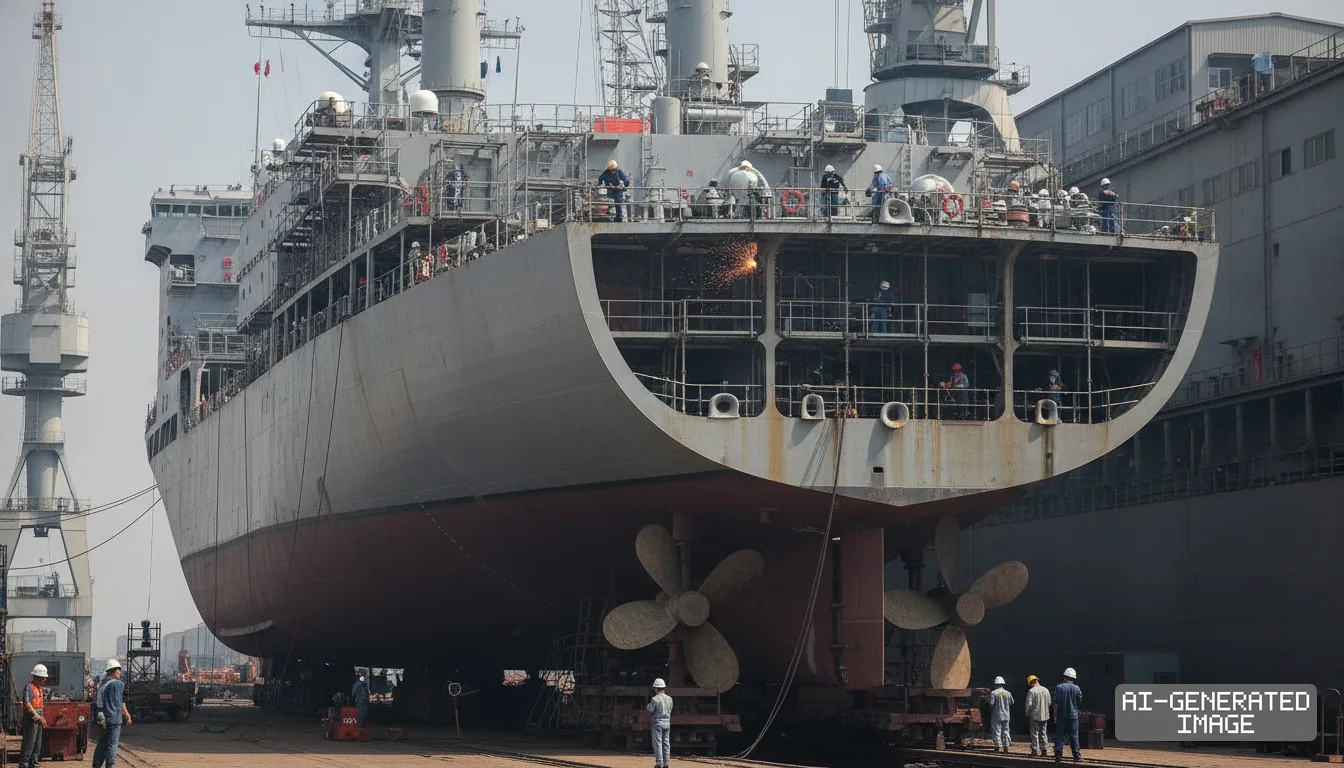
China Merchants Heavy Industry Jiangsu is building the vessel at its shipyard in Haimen. The state-owned Chinese shipbuilder holds contracts for all 18 firm vessels in Höegh's Aurora series, which could expand to 26 units if optional berths are exercised.
The bilateral cooperation agreement was signed at the China Pavilion during the COP31 climate conference in Antalya, Turkey. Höegh Chief Executive Officer Andreas Enger and BYD Energy Storage General Manager Yin Xueqin finalized the documents.
China's Minister of Ecology and Environment Huang Runqiu and Special Climate Envoy Liu Zhenmin attended the ceremony. Their presence underscored Beijing's strategy to tie domestic battery manufacturing directly into international maritime transport corridors.
The project demonstrates how commercial shipping can implement multi-technology decarbonization systems on deep-sea trade routes, Enger said. Combining ammonia propulsion with electrical storage on an ocean car carrier had not been accomplished before, Enger added.
The partnership provides scalable industrial energy solutions for deep-sea logistics, Yin said. BYD has expanded its maritime presence as Chinese carmakers seek dedicated shipping capacity to move export volumes to Europe and Southeast Asia.
The hybrid configuration addresses the commercial challenge of alternative maritime fuels. Clean ammonia releases no carbon dioxide when combusted, but production costs keep green ammonia prices higher than very low sulfur fuel oil.
Cutting fuel consumption through battery peak shaving makes zero-emission voyages economically viable for vessel charterers. Höegh estimates the Aurora design reduces overall carbon emissions per transported automobile by up to 58% compared with conventional roll-on roll-off carriers.
The first eight vessels in the Aurora series run on liquefied natural gas and low-sulfur bunker oil with ammonia-ready notations. The final four vessels, including Aurora No. 12, enter service equipped directly with ammonia-burning main machinery.
Kongsberg Maritime provides the vessel automation and bridge control systems from Norway. Everllence and MAN Energy Solutions supply the two-stroke propulsion engines, while DNV provides classification approval and notation certification.
BYD has sought direct control over automotive shipping lanes since ordering its own dedicated car carrier fleet in 2022. Equipping European vessel operators with proprietary battery storage integrates BYD's component manufacturing into competing carrier fleets.
Aurora No. 12 is scheduled for shipyard delivery and entry into commercial shipping service in May 2028. The delivery will complete Höegh's current 18-ship capital construction program in China.
The companies did not disclose the financial value of the battery supply contract. Neither Höegh nor BYD published the kilowatt-hour storage capacity or the specific cell chemistry of the containerized installation.
Impact map
How this development propagates across the region and out to global buyers.
| Event | Korea | China | Japan | Global impact |
|---|---|---|---|---|
| PCTC battery integration | Korean shipyards face rising competition in alternative-fuel vehicle carrier orders | BYD and CMHI secure equipment and building integration on 18-vessel PCTC series | Japanese car carriers evaluate hybrid ammonia systems to protect European auto routes | Deep-sea automotive logistics cuts peak fuel consumption on zero-emission transport corridors |
In this story
- Companies
- Hoegh AutolinersBYD
- Tickers
- HAUTO.OL002594.SZ
- Exposed
- China Merchants Heavy IndustryKongsberg MaritimeMAN Energy Solutions
- Impact
- Supply ChainCost Structure
Related briefings
- Hoegh Autoliners picks BYD batteries for ammonia-fueled ship Also on Höegh Autoliners, China Merchants Heavy Industry, BYD
- Hanwha Ocean equips MOL LNG carrier with dual rigid sails Also on MAN Energy Solutions, Cost Structure
- HD Hyundai Marine Engine wins $16.5M Chinese shipyard order Also on MAN Energy Solutions, Cost Structure
- South Korea engine builders expand methanol test benches for 2027 ship handoffs Also on MAN Energy Solutions
Sources
Reporting
Confidence: medium — how we grade this
The documents behind this briefing are linked above. East Asia Brief produces its English text with AI assistance under human editorial review, and does not translate or republish other outlets' articles. See our methodology and AI policy. Spotted an error? Tell us.
The Morning Brief
What changed in Korean, Chinese and Japanese industry overnight — and what it means for your supply chain. One email, weekday mornings, US time. Free.
The Morning Brief is in preparation. Leave your address and we will write to you once — when the first issue is ready. Nothing before that.