Shipyard labor policies diverge as Korea, Japan, and China tackle yard manning gaps
Governments deploy foreign visa quotas, shipyard automation grants, and state vocational pipelines to safeguard vessel delivery schedules through 2028.
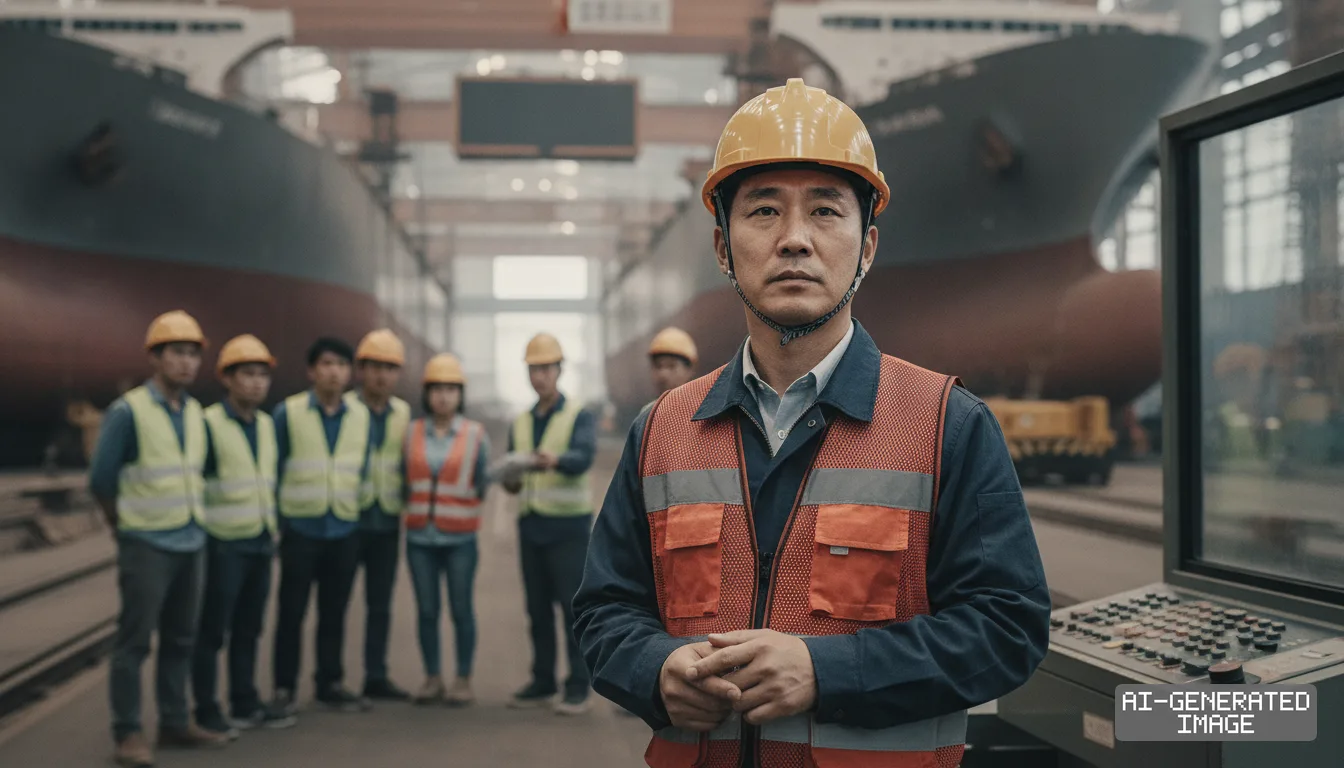
Shipbuilding authorities across South Korea, Japan, and China have rolled out contrasting labor interventions to resolve structural manning shortages that threaten commercial vessel delivery schedules through 2028. The policy divergence pits South Korea's fast-tracked foreign technical visa allocations against Japan's capital subsidies for automated drydock robotics and China's state-directed vocational education pipelines.
Global commercial shipyards face historic order backlogs driven by energy security fleet expansion, dual-fuel containership replacements, and stricter international maritime emissions thresholds. Major shipbuilding conglomerates, including HD Korea Shipbuilding & Offshore Engineering, Hanwha Ocean, Samsung Heavy Industries, China State Shipbuilding Corporation (CSSC), and Imabari Shipbuilding, have fully committed their active drydock slots for the next three to four years. However, an aging domestic skilled workforce and inter-industry wage competition from urban construction and advanced manufacturing sectors have created critical shortages of hull welders, pipefitters, and painting technicians across all three manufacturing hubs.
South Korea has addressed this constraint primarily through administrative adjustments to its immigration framework, expanding specialized visa pipelines to import blue-collar shipyard labor. The Ministry of Justice, in coordination with the Ministry of Trade, Industry and Energy (MOTIE), increased foreign workforce hiring limits for shipyard sub-contractors from 20 percent to 30 percent of total domestic payrolls under the E-7-4 skilled worker and E-7-S specialized activity visa categories. The policy revision also shortened document review timelines from several months to under four weeks and allowed overseas technical college graduates with government-recognized trade credentials to bypass prior multi-year field experience rules.
This regulatory pivot directly targets the high subcontractor density of South Korean shipyards located in Ulsan, Geoje, and Yeongam, where outsourced primary contractors execute more than 70 percent of production activities. Official labor statistics indicate that foreign workers now represent over 15,000 active personnel in South Korea's commercial yard workforce, filling vital roles in block assembly, shielded metal arc welding, and liquefied natural gas (LNG) membrane tank insulation.
While this visa-led approach provides immediate headcount elasticity to meet tight delivery schedules for premium LNG carriers, it carries tangible operational trade-offs for yard managers. Korean shipbuilders have seen higher administrative overhead tied to mandatory safety training, language onboarding, and accommodation management under revised occupational safety standards. Furthermore, labor turnover remains concentrated among subcontractor tiers, forcing shipbuilders to continuously absorb training cycles as short-term visa holders shift across fabrication sites.
Japan has chosen a capital-intensive strategy focused on structural labor elimination, responding to a more severe demographic contraction and a conservative foreign worker intake regime. Japan's Ministry of Land, Infrastructure, Transport and Tourism (MLIT) has paired industrial policy guidelines with targeted funding programs managed through the Nippon Foundation and the Maritime Bureau to subsidize maritime digital transformation (DX) across regional yards.
Under this model, Japanese builders such as Imabari Shipbuilding, Japan Marine United (JMU), and Tsuneishi Shipbuilding are investing directly in automated flat-block welding gantries, robotic pipe benders, and digital twin drydock simulation platforms. The Japanese government covers up to 50 percent of capital expenditure on qualified yard automation projects aimed at reducing total man-hours per compensated gross tonnage (CGT) by 20 percent by 2027. While Japan expanded its Specified Skilled Worker (SSW-ii) visa program to maritime construction, the volume of imported workers remains low compared to South Korean levels, leaving shipyard output tethered strictly to automated process productivity.
The Japanese mechanism shields domestic shipyards from foreign currency wage differentials and immigration compliance overheads, but it imposes hard ceilings on gross annual construction throughput. Japanese yards have largely stepped back from labor-intensive, hyper-customized offshore production units and ultra-large gas vessels, focusing instead on standardized bulk carriers, small-to-midsize chemical tankers, and uniform dual-fuel feeder containerships where automated production lines yield maximum operational repeatability.
China combines demographic mobilization with centralized institutional coordination, leveraging state-owned shipyard structures under the China State Shipbuilding Corporation alongside municipal vocational education systems. China's Ministry of Industry and Information Technology (MIIT) works directly with coastal provincial governments in Jiangsu, Zhejiang, and Shanghai to connect state technical academies to coastal shipyard hubs.
Institutions such as Jiangsu Shipping College and Zhenjiang vocational clusters feed thousands of state-certified metal fabricators, electricians, and non-destructive testing inspectors directly into long-term apprenticeships at facilities including Hudong-Zhonghua Shipbuilding and Jiangnan Shipyard. The central government reinforces this pipeline with regional vocational stipends and municipal housing guarantees that stabilize skilled labor pools along the Yangtze River maritime corridor.
China's centralized training approach delivers high labor volume at controlled base wage levels, allowing Chinese shipbuilders to maintain parallel production schedules across basic bulk carriers, container vessels, and membrane-type LNG carriers. However, rising industrial wages in Tier 1 and Tier 2 coastal manufacturing zones have increased operational attrition among younger workers, prompting yards to accelerate structural automation investments alongside their educational pipeline programs.
For global shipowners, cargo charterers, and maritime financiers, these divergent national labor strategies translate directly into operational risk profiles for vessel delivery schedules and yard contract pricing structures. South Korean delivery stability remains contingent on administrative visa processing speeds, foreign labor retention rates, and subcontractor compliance. Japanese yards offer low scheduling volatility and predictable construction quality but provide constrained drydock slot availability. Chinese builders provide extensive berth capacity and rapid scaling, balanced against the operational challenge of retaining specialized cryogenic gas containment technicians amid rising domestic industrial wages.
Regulatory benchmarks across the three jurisdictions are slated for implementation over the coming quarters. South Korea's MOTIE will complete its scheduled quota reassessment for the E-7 visa categories in the fourth quarter of 2026, Japan's MLIT is scheduled to audit phase-one automated productivity targets under its maritime DX plan by mid-2027, and China's MIIT will finalize its next multi-year vocational allocation framework across major regional shipbuilding centers by early 2027.
Impact map
How this development propagates across the region and out to global buyers.
| Event | Korea | China | Japan | Global impact |
|---|---|---|---|---|
| Yard labor shortage mitigation | foreign E-7 visa quota expansion | state vocational pipeline allocation | MLIT automated yard capital grants | delivery slot reliability and pricing differentials |
In this story
- Companies
- HD Korea Shipbuilding & Offshore EngineeringHanwha OceanSamsung Heavy IndustriesImabari ShipbuildingChina State Shipbuilding Corporation
- Tickers
- 009540.KS042660.KS010140.KS600150.SS
- Exposed
- Japan Marine UnitedTsuneishi ShipbuildingHudong-Zhonghua ShipbuildingJiangnan Shipyard
- Policy
- Economic SecuritySubsidies
- Impact
- Supply ChainOrder BookCost StructureCompliance
Track every Economic Security development → Track every Subsidies development →
Related briefings
- Asian Shipyard Heavy Plate Costs Diverge as Mills and Builders Clash Over Contract Pricing Also on Tsuneishi Shipbuilding, Japan Marine United, Imabari Shipbuilding
- China State Shipyards Reconfigure Dry Docks for Dual-Fuel Mega-Boxships Also on Jiangnan Shipyard, Hudong-Zhonghua Shipbuilding, China State Shipbuilding Corporation
- CSSC Reallocates Yard Drydocks to Accelerate Large Containership Output Also on Jiangnan Shipyard, China State Shipbuilding Corporation, Hanwha Ocean
- HD Hyundai wins DNV approval on 271,000 cbm LNG hull design Also on Hudong-Zhonghua Shipbuilding, China State Shipbuilding Corporation, Order Book
Sources
This briefing carries no sources block. It was written from our desks’ working knowledge of the sector rather than from documents retrieved for this piece. Read it as orientation and check any figure you intend to act on — how we source briefings.
This briefing carries no linked sources: it was written from our desks' working knowledge of the sector rather than from documents retrieved for this piece. East Asia Brief publishes no citation it cannot link. Our English text is produced with AI assistance under human editorial review. See our methodology and AI policy. Spotted an error? Tell us.
The Morning Brief
What changed in Korean, Chinese and Japanese industry overnight — and what it means for your supply chain. One email, weekday mornings, US time. Free.
The Morning Brief is in preparation. Leave your address and we will write to you once — when the first issue is ready. Nothing before that.