HD Hyundai Heavy Industries faces delivery risks after wage rejection
Union members voted down a record compensation package, threatening dock operations and liquefied natural gas carrier delivery timetables in Ulsan.
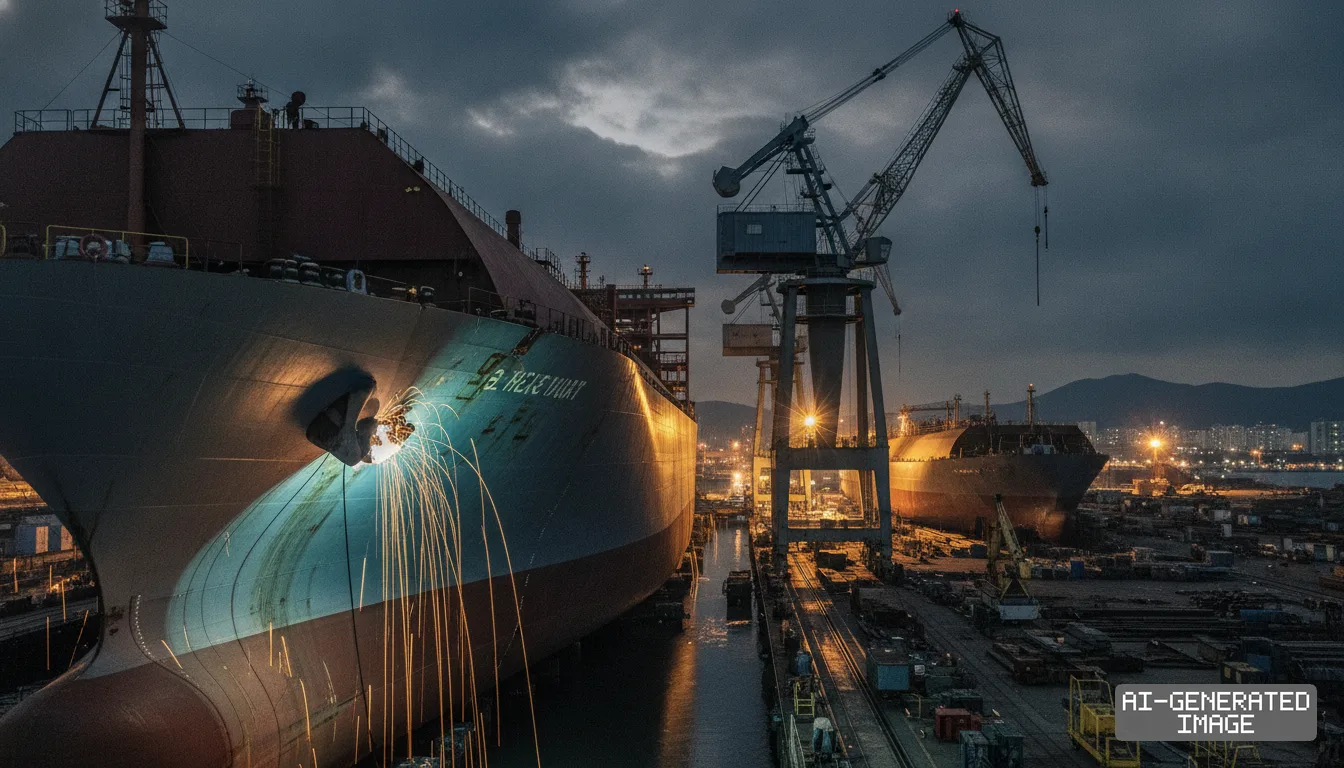
HD Hyundai Heavy Industries faced mounting delivery risks for high-value export vessels on Oct. 6, 2026, as unionized workers rejected a tentative wage pact and threatened renewed shipyard strikes.
The ballot results finalized after a holiday recess showed that 3,932 union members, or 52.14% of the 7,541 who cast ballots, opposed the tentative labor settlement.
The rejected contract offered an average annual compensation package of 40.56 million won ($30,000) per employee, which represented a rise of 10.61 million won over the 2025 settlement.
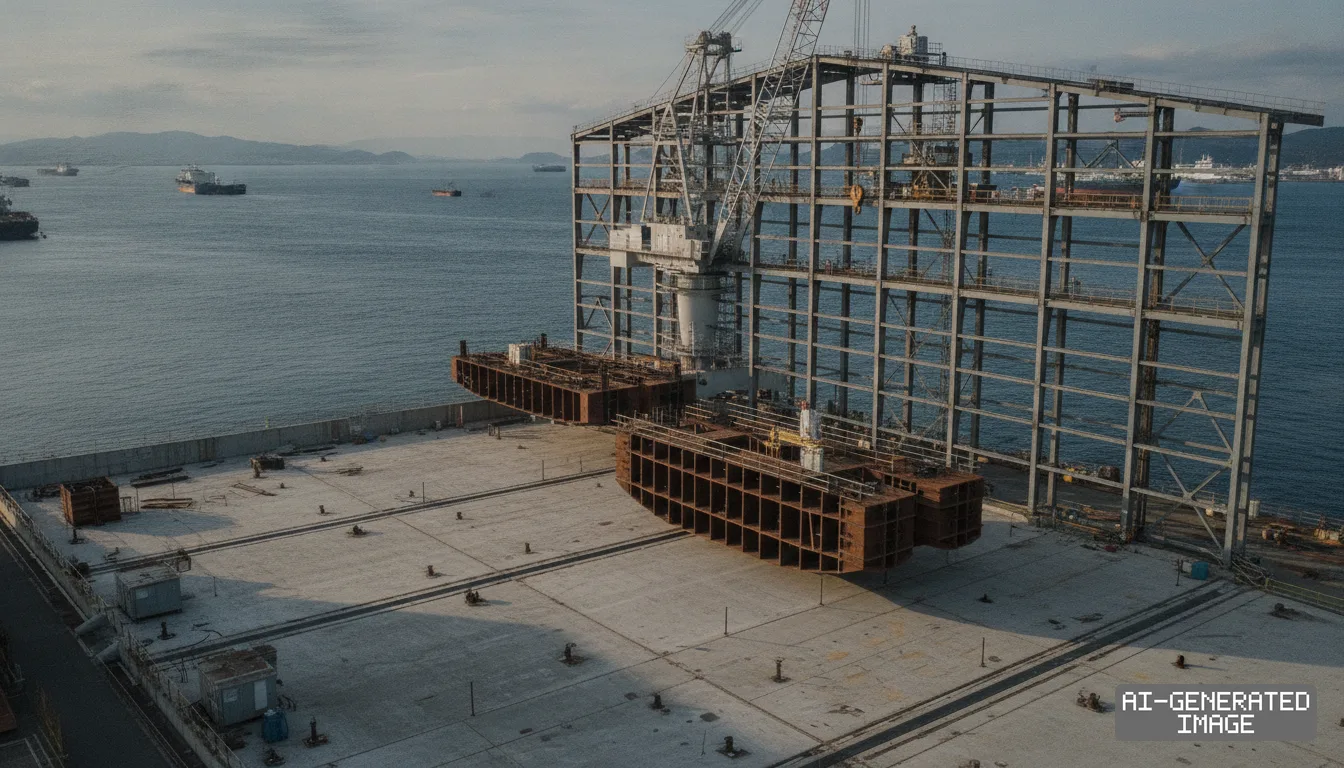
The dispute directly exposes the Ulsan shipyard to operational bottlenecks at a time when dry dock slots are booked through 2028.
HD Hyundai Heavy Industries holds an extensive commercial backlog dominated by liquefied natural gas carriers, including a 17-vessel contract with QatarEnergy valued at 5.2 trillion won ($3.9 billion).
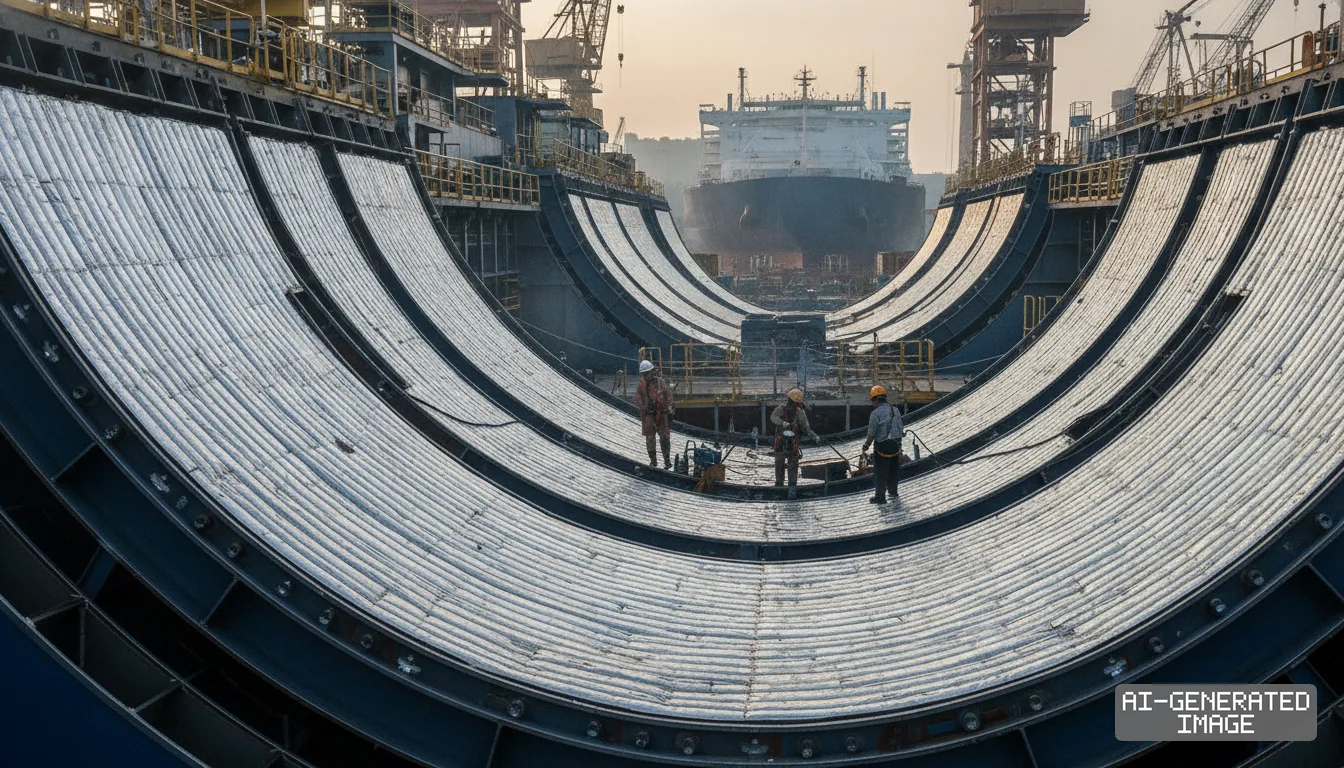
Those specialized gas carriers require tight outfitting cycles and specialized cryogenic insulation work that leave little room for manufacturing schedule slips.
Shipbuilding contracts in this segment carry liquidated damages clauses that impose severe financial penalties on the shipbuilder if delivery deadlines slip past agreed contract dates.
The company had reached the tentative agreement on Sept. 30 during a 14-hour bargaining session, marking the 22nd round of talks since negotiations began on June 2.
The package offered a monthly base wage increase of 120,000 won ($90), which included a 50,000-won seniority step adjustment.
Management also put forward 11 million won in lump-sum cash bonuses alongside an incentive equal to 200% of standard monthly wages.
Rank-and-file workers rejected the terms because fixed base wage improvements fell short of recent annual settlements across South Korean shipbuilding yards.
HD Hyundai Heavy Industries had raised basic monthly wages by 130,000 won in 2024 and 135,000 won in 2025, leaving this year's proposal 15,000 won below the previous year.
Union sentiment hardened further after rival shipbuilder Samsung Heavy Industries settled its annual wage talks earlier this year with a basic pay rise of 131,786 won.
The comparison angered Ulsan workers, given that HD Hyundai Heavy Industries generated 2.04 trillion won in operating profit last year, more than double Samsung Heavy Industries' operating profit of 862.2 billion won.
The rejection also reflected unresolved demands over profit sharing, as union negotiators had demanded at least 30% of operating profit be distributed to employees.
The failed ballot marked the eleventh consecutive year since 2016 in which union members voted down the first tentative wage pact presented by management.
Unionized workers conducted seven partial strikes during September totaling 37 hours of lost production time to pressure executive management during negotiations.
Those temporary work stoppages caused minor assembly line disruptions that factory supervisors absorbed through weekend overtime and adjusted block movement schedules.
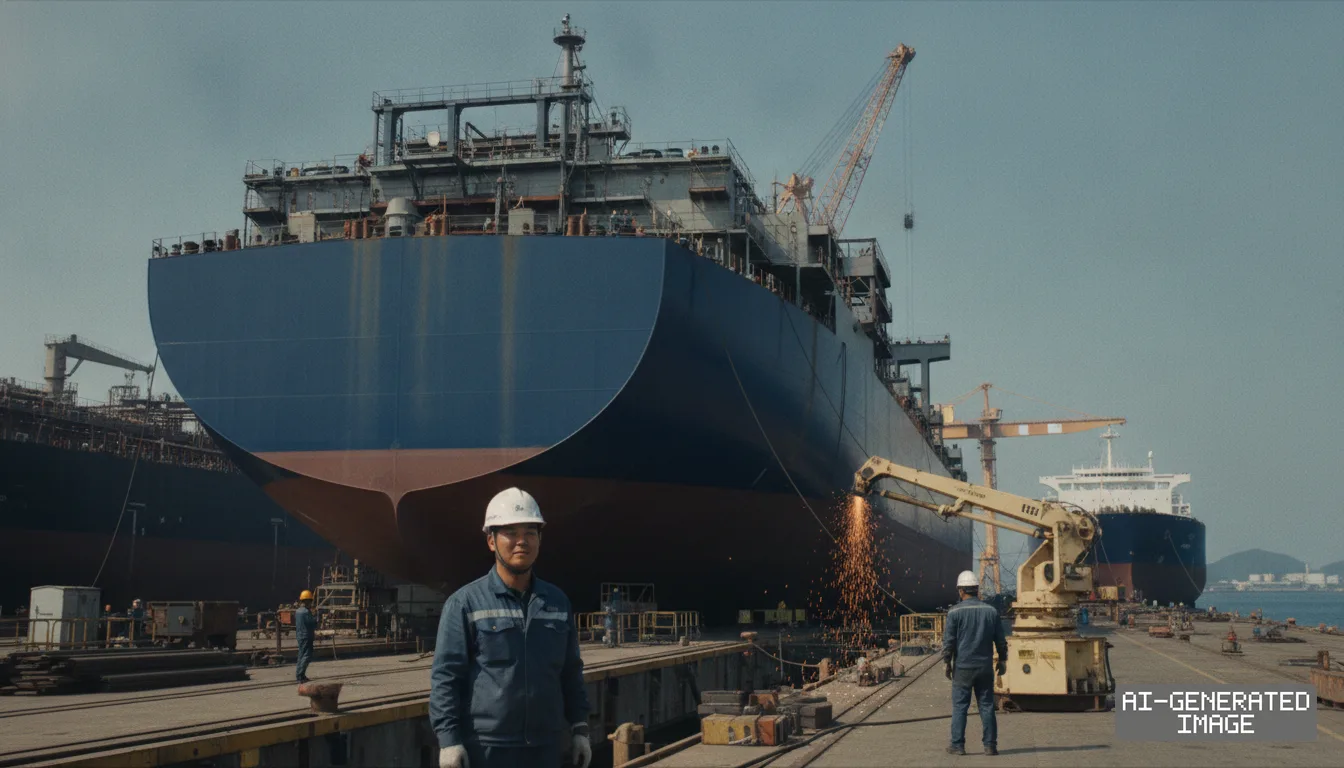
A resumption of industrial action would have far more damaging consequences because dock turnover schedules are running at maximum capacity across all nine large docks.
Shipyard operations rely on modular block assembly, where hull segments are welded together inside dry docks before flotation and quayside equipment installation.
Any prolonged stoppage in block fabrication halts the entire sequence, preventing completed hulls from floating out and stranding subsequent projects on the slipways.
The labor dispute is complicated further by the recent integration of HD Hyundai Mipo, making this negotiation the first joint collective agreement for the merged corporate workforce.
Other South Korean yards face similar pressure as Hanwha Ocean continues difficult wage talks with its own labor union amid a nationwide shortage of skilled welders.
The company said it regretted that an industry-leading wage proposal failed to win worker approval, adding that it will seek balanced solutions in subsequent sessions.
Union representatives plan to convene their central dispute committee this week to decide strike tactics and determine requests for the 23rd round of formal talks.
The company has not published a date for the resumption of negotiations, and neither party has disclosed the penalty amounts specified in active vessel delivery agreements.
Impact map
How this development propagates across the region and out to global buyers.
| Event | Korea | China | Japan | Global impact |
|---|---|---|---|---|
| HD Hyundai wage pact rejection | HD Hyundai Heavy faces dock delays across 5.2 trillion won in LNG orders | Hudong-Zhonghua gains competitive advantage on delivery reliability | Japanese consortium partners NYK and K Line track Ulsan LNG delivery slots | Global LNG carrier fleet expansion faces delivery slippage risks |
In this story
- Companies
- HD Hyundai Heavy Industries
- Tickers
- 329180.KS
- Exposed
- Samsung Heavy IndustriesHanwha OceanQatarEnergy
- Policy
- Economic Security
- Impact
- Supply ChainOrder BookCost Structure
Track every Economic Security development →
Related briefings
- HD Hyundai wins DNV approval on 271,000 cbm LNG hull design Also on QatarEnergy, HD Hyundai Heavy Industries, Order Book
- Samsung Heavy orders GTT tank designs for four LNG ships Also on Samsung Heavy Industries, Hanwha Ocean, HD Hyundai Heavy Industries
- HD Hyundai Heavy union votes down wage deal, reopening talks Also on Samsung Heavy Industries, Hanwha Ocean, HD Hyundai Heavy Industries
- Korean shipbuilders localize Arctic ice design software Also on Samsung Heavy Industries, Hanwha Ocean, HD Hyundai Heavy Industries
Sources
Reporting
Confidence: medium — how we grade this
The documents behind this briefing are linked above. East Asia Brief produces its English text with AI assistance under human editorial review, and does not translate or republish other outlets' articles. See our methodology and AI policy. Spotted an error? Tell us.
The Morning Brief
What changed in Korean, Chinese and Japanese industry overnight — and what it means for your supply chain. One email, weekday mornings, US time. Free.
The Morning Brief is in preparation. Leave your address and we will write to you once — when the first issue is ready. Nothing before that.