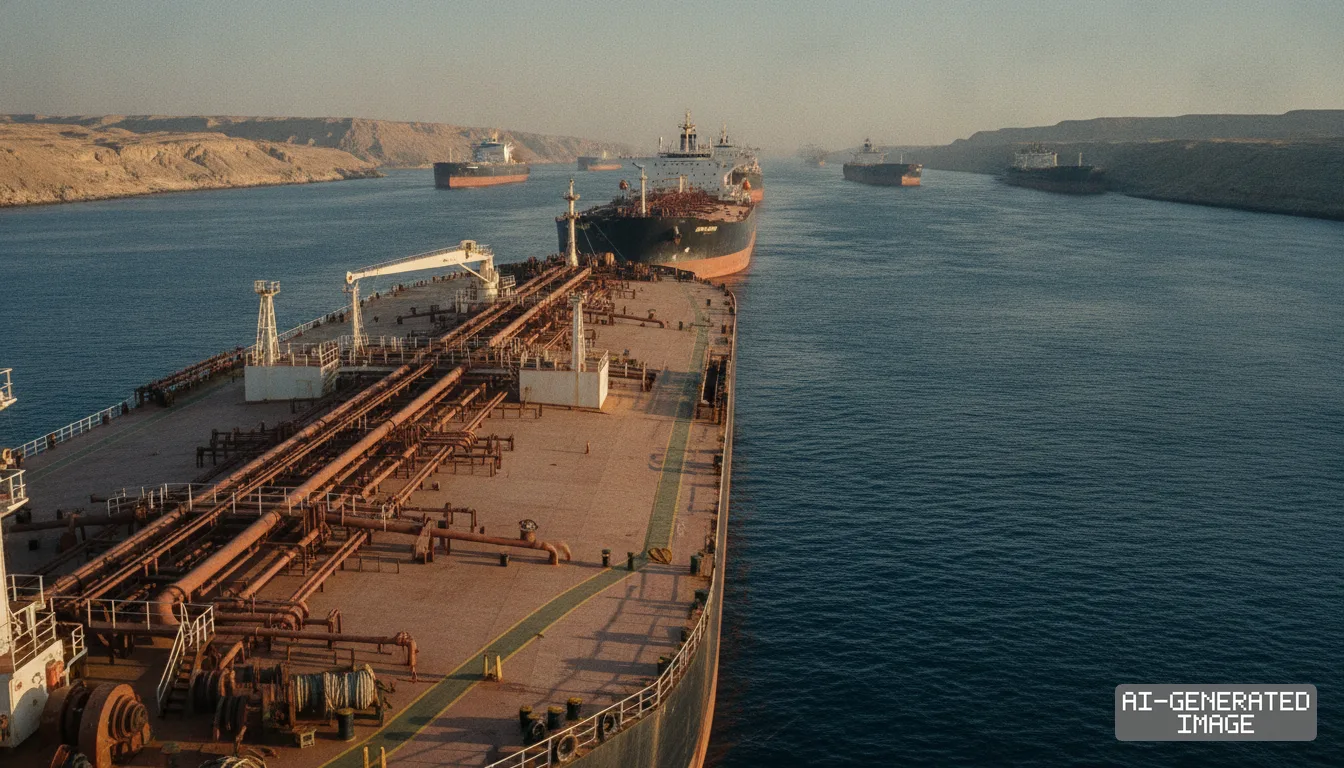
HD Hyundai develops 150,000 cbm ultra-large ethane carrier
The South Korean shipbuilder partnered with GTT and Lloyd's Register to apply Mark III Slim tanks for growing seaborne ethane exports from the US Gulf Coast.
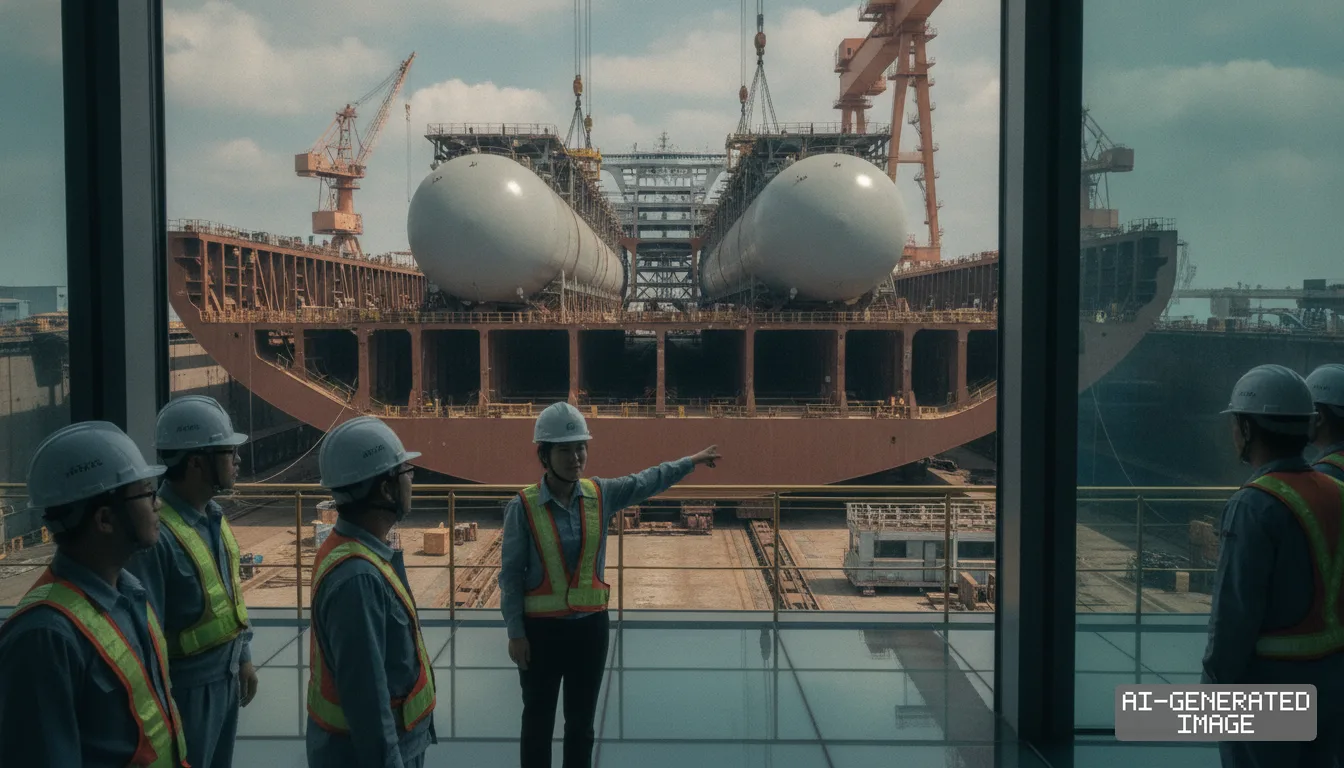
HD Hyundai Heavy Industries partnered on Sept. 26, 2026, with French engineering firm GTT and Lloyd's Register to develop a 150,000 cubic meter ultra-large ethane carrier.
The 150,000 cubic meter design is the largest vessel concept in the ethane segment. The hull expands cargo capacity by roughly 47% compared to the 102,000 cubic meter carrier the shipbuilder developed in February.
The ship incorporates the Mark III Slim membrane cargo containment system developed by GTT. The membrane system uses corrugated stainless steel barriers and thinner insulation to maximize internal cargo space.
Ethane serves as petrochemical feedstock to produce ethylene, the primary chemical building block for commercial plastics. Rising output from US shale basins has pushed Asian chemical producers to import greater seaborne volumes.
Long voyages between the US Gulf Coast and terminals across East Asia require larger ships to lower unit freight costs. Moving 150,000 cubic meters on a single transit reduces fuel burn and port fees per delivered ton.
Liquid ethane requires specialized storage at minus 90 degrees Celsius. Maintaining that cryogenic temperature over open-ocean journeys demands insulation that resists severe thermal contraction and cargo sloshing inside wide tanks.
HD Hyundai Heavy Industries leads structural design and shipyard production planning. The shipbuilder aims to optimize steel layout to reduce dry vessel weight without compromising hull girder strength.
Hongryeul Ryu, chief technology officer at HD Hyundai Heavy Industries, said the project applies advanced containment to achieve both weight reduction and higher operating efficiency.
GTT manages containment engineering, cargo barrier integration and thermal modeling. The French company licenses proprietary membrane technologies used across the global liquefied natural gas and gas carrier fleets.
The Mark III Slim design reduces the physical footprint of secondary insulation layers. That geometry allows ship designers to add internal cubic capacity while keeping outer hull dimensions within port access limits.
Lloyd's Register conducts technical assessments and classification reviews under LR Rules. The classification society evaluates structural safety, tank barrier integrity and international gas carrier regulatory compliance.
Constantinos Chaelis, global gas segment director at Lloyd's Register, said shipowners seek larger vessels that deliver economic gains without compromising reliability.
South Korean shipbuilders face competition from Chinese yards for high-specification gas tonnage. Chinese yards have steadily expanded beyond bulk vessels into high-margin liquefied gas transport.
Commercial orders for the size class began in 2024 when Eastern Pacific Shipping ordered eight 150,000 cubic meter ethane carriers. China's Jiangnan Shipyard won six of those hulls, while HD Hyundai Samho took two.
The joint development project focuses on technical refinement rather than nominal size alone. HD Hyundai Heavy Industries is altering tank weight, hydrodynamic lines and cargo boil-off rates to outpace competitors.
Standard very large ethane carriers in commercial operation transport between 98,000 and 100,000 cubic meters. Expanding hull capacity to 150,000 cubic meters allows operators to scale transatlantic and transpacific trade volumes.
Vessels of this dimension must fit existing infrastructure at Asian discharge ports. Receiving terminals across China, South Korea and Japan impose draft limits and specific manifold heights for refrigerated discharge.
HD Hyundai Heavy Industries plans to fabricate the vessels at its Ulsan shipyard. The facility operates dedicated dry docks and automated welding lines designed for cryogenic membrane installation.
The partners have not published the total development budget for the project. The joint statement also does not state a target date for commercial delivery slots.
Lloyd's Register and shipyard naval architects will complete class approval evaluations and structural risk reviews in 2027.
Impact map
How this development propagates across the region and out to global buyers.
| Event | Korea | China | Japan | Global impact |
|---|---|---|---|---|
| 150,000 cbm ULEC joint development | HD Hyundai builds on two-hull EPS order to challenge China on gas vessel design | Jiangnan Shipyard defends lead after taking six of eight 150,000 cbm EPS contracts | no direct yard exposure, chemical importers gain lower freight on transpacific ethane parcels | shippers gain ~47% capacity per voyage to lower US-to-Asia ethane freight rates |
In this story
- Companies
- HD Hyundai Heavy IndustriesGTTLloyd's Register
- Tickers
- 329180.KSGTT.PA
- Exposed
- Eastern Pacific ShippingJiangnan Shipyard
- Policy
- Economic Security
- Impact
- Order BookSupply ChainCost Structure
Track every Economic Security development →
Related briefings
- HD Hyundai Wins LR Approval for Hybrid Electric LNG Carrier Also on Lloyd's Register, HD Hyundai Heavy Industries, Order Book
- HD Hyundai Unveils Three-Tank LNG Carrier Design at Gastech Also on Lloyd's Register, Order Book
- CSSC Reallocates Yard Drydocks to Accelerate Large Containership Output Also on Jiangnan Shipyard, HD Hyundai Heavy Industries, Order Book
- Shipyard labor policies diverge as Korea, Japan, and China tackle yard manning gaps Also on Jiangnan Shipyard, Order Book, Cost Structure
Sources
Reporting
Confidence: medium — how we grade this
The documents behind this briefing are linked above. East Asia Brief produces its English text with AI assistance under human editorial review, and does not translate or republish other outlets' articles. See our methodology and AI policy. Spotted an error? Tell us.
The Morning Brief
What changed in Korean, Chinese and Japanese industry overnight — and what it means for your supply chain. One email, weekday mornings, US time. Free.
The Morning Brief is in preparation. Leave your address and we will write to you once — when the first issue is ready. Nothing before that.