Hormuz Tanker Transits Plunge as Freight Costs Spike
Reuters counted just nine vessels transiting the Strait of Hormuz on Sept. 24 as VLCC rates hit an all-time high of $1.27 million a day.
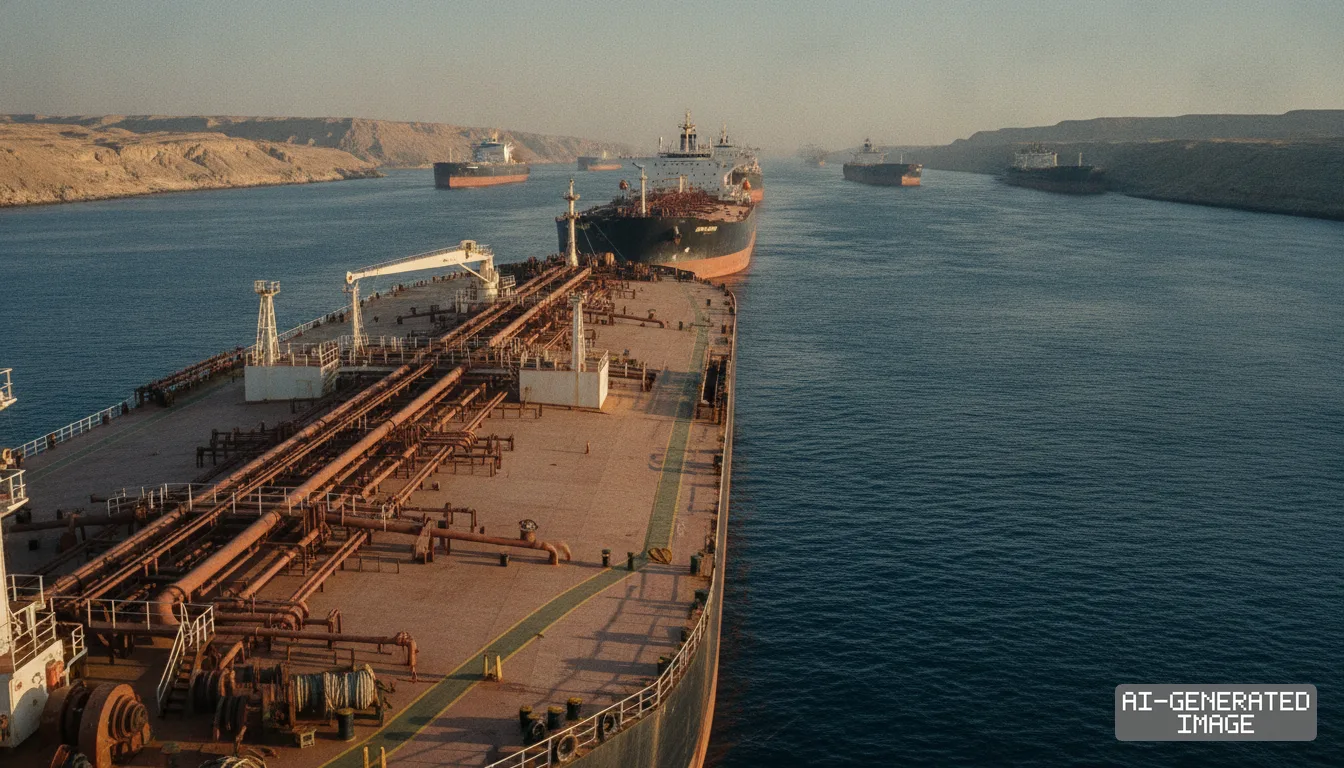
Only nine commodity tankers passed through the Strait of Hormuz on Sept. 24, and eight of those were leaving the waterway, according to a Reuters tally of vessel traffic reported Sept. 25. The count marks a further drop from already depressed daily figures that have fallen from the double digits into the single digits over the past ten days.
The strait, the narrow passage between Iran and Oman that carries roughly a fifth of the world's oil trade, has become the choke point for tanker owners since a crisis in the waterway began earlier this year. The Reuters tally's ten-day rolling average now stands at 18 transits a day, itself a fraction of pre-crisis traffic.
Vessel-tracking firm Windward recorded five tankers entering the strait on Sept. 23, including one crude carrier, two product tankers and one liquefied natural gas carrier. Windward's own dashboard separately logged 11 vessels, nine inbound and two outbound, transiting that same day, alongside a strike on a cargo vessel reported by the UK Maritime Trade Operations agency. The gap between the two counts shows trackers are not agreeing on exact numbers, even as they agree traffic has collapsed.
The traffic drop has driven freight costs to levels shipowners had not seen before the crisis. The rate for a very large crude carrier (VLCC) sailing from the Persian Gulf to China touched an all-time high of $1.27 million on Sept. 21 before easing slightly to $1.26 million, according to Lloyd's List shipping editor Greg Miller. Miller said crude tanker spot rates remain at levels that were unimaginable before the Hormuz disruption began.
Saudi Arabia has added to the strain by increasing oil exports routed through the Strait of Hormuz and the Gulf of Oman even as fewer vessels make the transit, according to the same reporting. That combination has left a shrinking pool of tankers competing to move a steady or rising volume of cargo, the mechanism behind the rate spike.
South Korea's HD Hyundai, Hanwha Ocean and Samsung Heavy Industries, along with Japan's shipbuilders, are the main builders of VLCCs and LNG carriers, the vessel classes most exposed to Persian Gulf routes. Elevated one-way freight rates typically raise the daily earnings available to a ship's owner over its working life, a calculation that factors into whether an owner orders a new vessel or extends the life of an older one.
No shipbuilder, in a filing or public statement identified in the reporting reviewed for this article, has yet linked the current rate spike to a change in its order intake, pricing or delivery schedule. The mechanism by which higher charter earnings could eventually support newbuild orders for tankers and LNG carriers is a standard feature of shipping economics, not a confirmed outcome tied to this specific episode.
Diplomatic activity around the strait has continued alongside the traffic and rate figures. Iran has proposed a plan to reopen the waterway within six to seven days in exchange for relief from US sanctions, according to reporting from Sept. 24. Neither the Reuters tally nor the Lloyd's List rate data reviewed for this article states whether or when transit numbers are expected to recover.
The disruption comes against a backdrop of continued crude flows through the strait despite the drop in vessel count, meaning fewer ships are carrying comparable or larger volumes of oil. Reuters' tanker count for Sept. 24, the lowest reading yet reported in the current run of single-digit days, followed a Sept. 23 reading in which Windward's two separate counts diverged by more than a factor of two.
The strait crisis behind the traffic drop has been running for months. A separate live tracker, straits.live, dates the disruption to around Feb. 28 and describes the waterway as effectively closed as of Sept. 25, citing IMF PortWatch data showing a single transit on Sept. 20 against a pre-crisis baseline of roughly 85 vessels a day. That figure is considerably lower than the Reuters tally and should be treated as a divergent estimate rather than a confirmed count, given the gap between trackers already evident in the Sept. 23 numbers.
For shipping finance desks, the immediate, confirmed variable is the freight rate, not the newbuild order book. A VLCC earning $1.26 million a day on the Persian Gulf-to-China run generates several multiples of the vessel's operating cost, income that flows to the ship's owner and charterer rather than to the yard that built it. Whether sustained rates of that scale eventually pull forward newbuild ordering at Korean or Japanese yards, as has happened in past tanker cycles, is a question the current reporting does not answer.
LNG carriers face a related but distinct exposure. Windward's Sept. 23 count included one LNG carrier among the five inbound tankers it tracked, evidence that gas cargoes continue moving through the strait alongside oil even as overall vessel numbers fall. South Korean and Japanese yards hold the bulk of the world's LNG carrier order book, but no source reviewed for this article ties the Sept. 24 transit count or the VLCC rate spike to a specific LNG newbuild contract, price or delivery date.
The reporting reviewed for this article does not state the total number of tankers currently queued outside the strait awaiting transit, nor does it specify whether the $1.27 million VLCC rate applies to spot fixtures only or includes any period charters. Lloyd's List and the Reuters tally are both continuing to publish updates as the situation develops, with the next reading due in the days ahead.
Impact map
How this development propagates across the region and out to global buyers.
| Event | Korea | China | Japan | Global impact |
|---|---|---|---|---|
| Hormuz transit collapse and VLCC rate spike | HD Hyundai and Hanwha Ocean build VLCCs and LNG carriers exposed to the route, no confirmed order-book impact yet | no exposure reported in current tally data | Japanese shipyards hold LNG carrier capacity tied to Gulf routes, no confirmed order change reported | VLCC owners earn record spot rates while transit volumes fall to single digits |
| Hormuz transit collapse and VLCC rate spike | HD Hyundai and Hanwha Ocean build VLCCs and LNG carriers exposed to the route, no confirmed order-book impact yet | no exposure reported in current tally data | Japanese shipyards hold LNG carrier capacity tied to Gulf routes, no confirmed order change reported | VLCC owners earn record spot rates while transit volumes fall to single digits |
In this story
- Exposed
- HD HyundaiHanwha OceanSamsung Heavy Industries
- Impact
- Order BookPricingSupply Chain
Related briefings
- Hanwha Ocean unveils 60MW floating data center for AI demand Also on HD Hyundai, Hanwha Ocean, Order Book
- HD Hyundai and Hanwha Ocean Lock In LNG Carrier Berth Slots Through 2029 Also on Samsung Heavy Industries, Hanwha Ocean, Pricing
- Asian Shipyard Heavy Plate Costs Diverge as Mills and Builders Clash Over Contract Pricing Also on Samsung Heavy Industries, Hanwha Ocean, Pricing
- Hanwha Ocean wins ABS approval for ammonia-ready LNG tanks Also on Samsung Heavy Industries, Hanwha Ocean, Order Book
Sources
Reporting
- Hormuz Tanker Transits Crash to Single Digits as Crisis Deepens — OilPrice.com
- Strait of Hormuz — Windward Daily Intelligence
Confidence: medium — how we grade this
The documents behind this briefing are linked above. East Asia Brief produces its English text with AI assistance under human editorial review, and does not translate or republish other outlets' articles. See our methodology and AI policy. Spotted an error? Tell us.
The Morning Brief
What changed in Korean, Chinese and Japanese industry overnight — and what it means for your supply chain. One email, weekday mornings, US time. Free.
The Morning Brief is in preparation. Leave your address and we will write to you once — when the first issue is ready. Nothing before that.