HD Hyundai Unveils Three-Tank LNG Carrier Design at Gastech
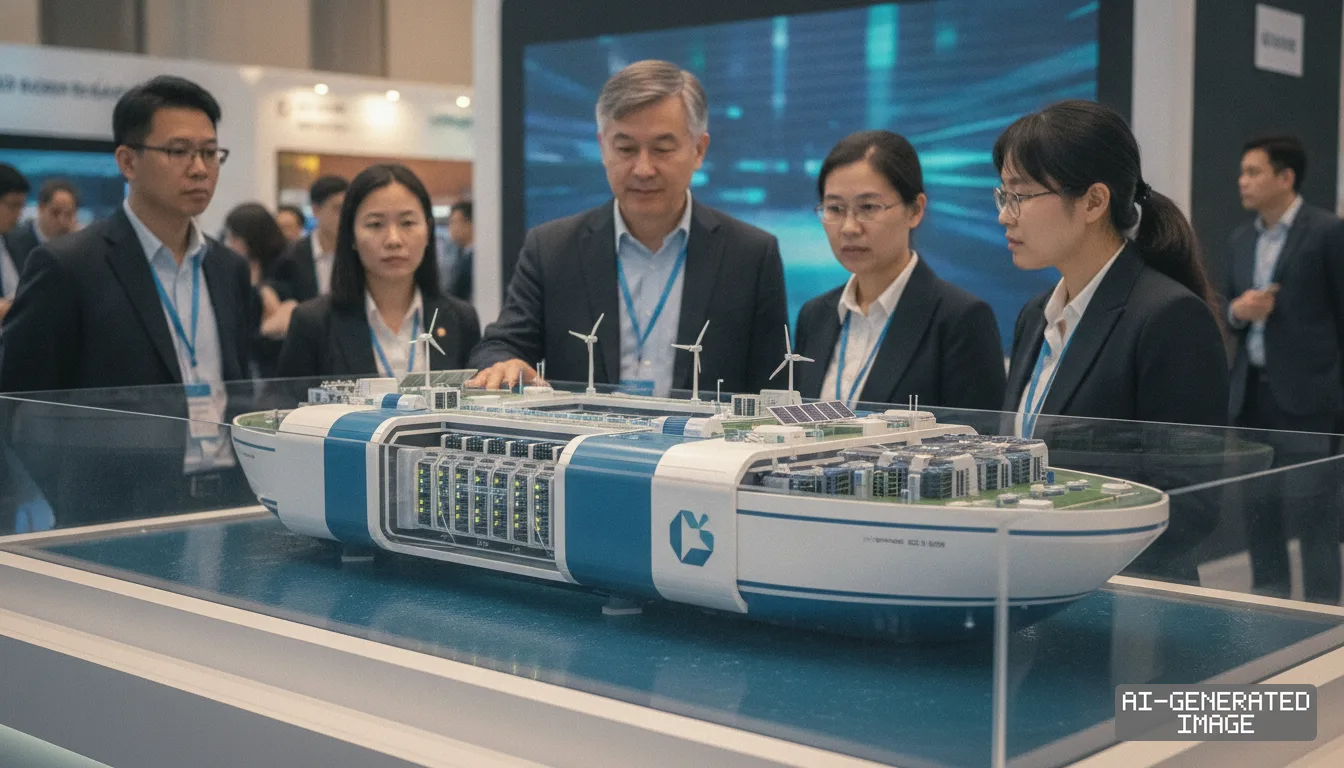
The shipbuilder secured design approvals for wind-assisted hull layouts and three-tank vessels delivering from late 2028 to counter tightening maritime emissions rules.
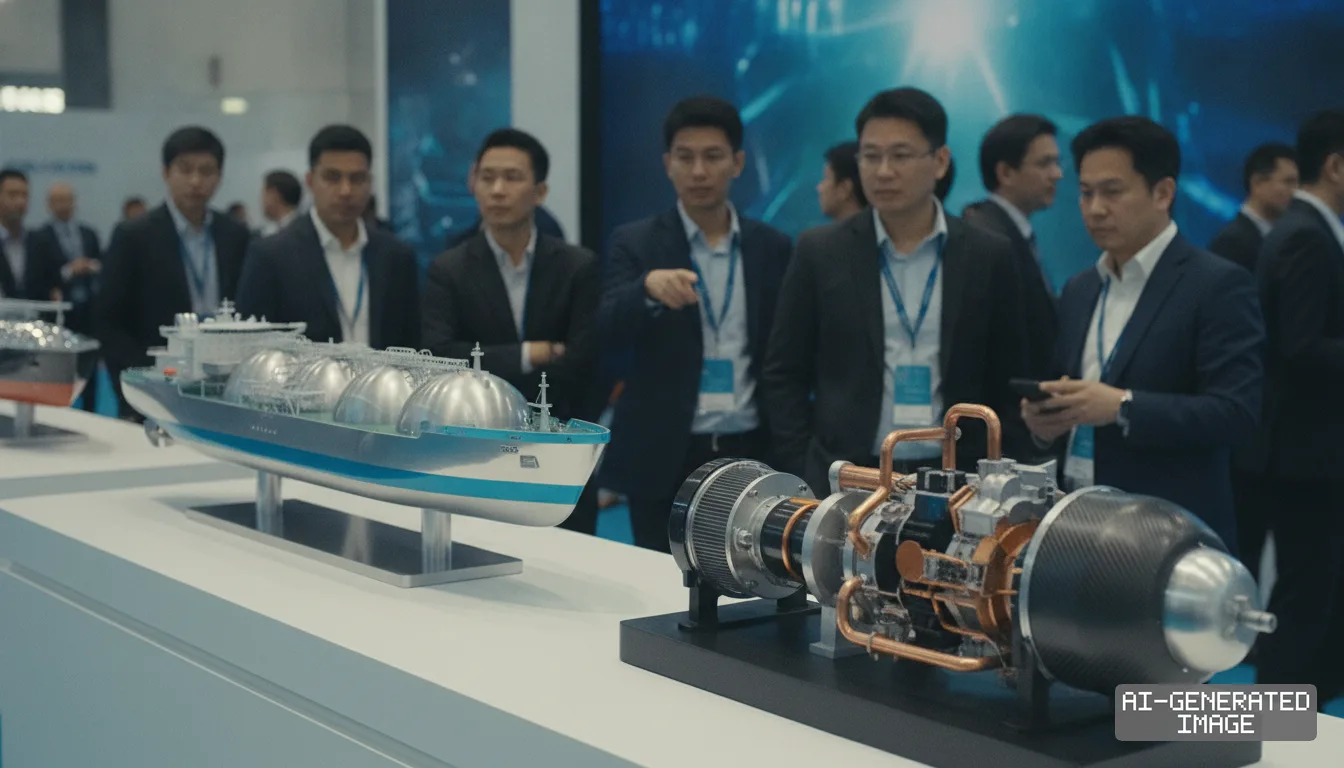
HD Hyundai announced Sept. 13, 2026, that it will showcase next-generation liquefied natural gas carrier designs and low-carbon propulsion systems at the Gastech 2026 conference in Bangkok.
The world's largest gas exhibition runs Sept. 14 to 17 at the Bangkok International Trade and Exhibition Centre. The event convenes more than 1,000 industrial energy corporations and roughly 50,000 international maritime delegates.
Five group subsidiaries are operating an integrated exhibition booth to present gas transport technologies. The participating units comprise HD Korea Shipbuilding & Offshore Engineering, HD Hyundai Heavy Industries, HD Hyundai Samho, HD Hyundai Marine Solution and HD Hyundai Electric.
The showcase features a three-tank containment system that expands cargo hold capacity to 177,000 cubic meters. That configuration adds 3,000 cubic meters, or roughly 1.7%, over conventional four-tank 174,000-cubic-meter designs while lowering natural cargo boil-off rates.
Norwegian shipowner BW LNG holds contracts for four 177,000-cubic-meter vessels at HD Hyundai Samho. The four-ship construction commitment represents an aggregate capital outlay exceeding $1 billion.
The four vessels are scheduled for sequential commercial delivery starting in the fourth quarter of 2028 and running through the third quarter of 2029.
The containment architecture was developed jointly with French membrane designer Gaztransport & Technigaz and Norwegian classification society DNV. Removing one transverse cofferdam bulkhead simplifies vessel construction and reduces hull steel mass.
Fewer cargo holds reduce onboard cryogenic pumps, valves, piping instrumentation and voyage inspection requirements for commercial fleet operators. The three-compartment hull maintains identical external hull dimensions and terminal compatibility with standard 174,000-cubic-meter vessels.
HD Hyundai is also receiving formal Drawing Appraisal design suitability confirmation from Lloyd's Register during the Bangkok exhibition. The approval covers an advanced hull concept featuring forward crew accommodations.
Moving the crew deckhouse to the ship's bow frees extensive continuous space along the upper cargo deck. That cleared surface accommodates multiple wind-assisted propulsion systems, such as rigid composite wing sails or rotating mechanical cylinders.
HD Hyundai secured preliminary Approval in Principle for the forward-accommodation hull arrangement at Gastech 2025. The new appraisal incorporates structural steel review and classification society construction rules for operational sailing conditions.
Shipowners face mounting penalties under the International Maritime Organization's Carbon Intensity Indicator rules, which rate operating operational efficiency annually. Auxiliary wind devices reduce auxiliary fuel burn on open-ocean routes without requiring engine power derating.
The shipbuilder also secured an Approval in Principle from Lloyd's Register for an alternative design governing Type-C liquefied gas tanks. The design replaces standard minimum internal design pressure thresholds on pressure-vessel tanks used in mid-sized gas carriers.
HD Hyundai is also presenting a 35,000-cubic-meter liquefied carbon dioxide carrier design certified by global classification bodies. The vessel targets growing carbon capture, utilization and maritime storage projects across the Asia-Pacific basin.
Classification societies also issued an Approval in Principle for a hybrid electric propulsion arrangement engineered for 185,000-cubic-meter gas carriers. The system pairs dual-fuel combustion machinery with large-scale marine battery packs and shaft generator motors.
The group is also advancing an artificial intelligence engine optimization platform undergoing concurrent Approval in Principle and Product Design Assessment. The algorithm continuously calculates optimal combustion timing and fuel-injection parameters under shifting wave loads.
The automated system reduces voyage bunker consumption while stabilizing cargo boil-off gas handling during port maneuvering. HD Hyundai Marine Solution will manage post-delivery digital servicing and remote software updates for operating fleets.
HD Hyundai signed a memorandum of understanding with the American Bureau of Shipping and Siemens during the conference. The three entities will develop physics-based digital twins to conduct formal safety assessments for ammonia-fueled vessels.
Ammonia produces zero carbon emissions during combustion but poses severe toxicity, vapor dispersion and corrosion risks to vessel crews. Computational modeling simulates piping fractures, engine-room ventilation dynamics and bunkering line releases before shipyards cut production steel.
South Korean shipyards hold delivery order books filled through 2028, supported by ongoing fleet renewals and long-term export contracts. Chinese state yards, including Hudong-Zhonghua Shipbuilding, have expanded their own large-scale LNG construction berths to win market share.
Korean shipbuilders are countering Chinese capacity expansions by licensing higher-efficiency containment tanks and proprietary hull geometries. HD Korea Shipbuilding & Offshore Engineering has directed yard capacity toward complex cryogenic gas tonnage to protect commercial margins.
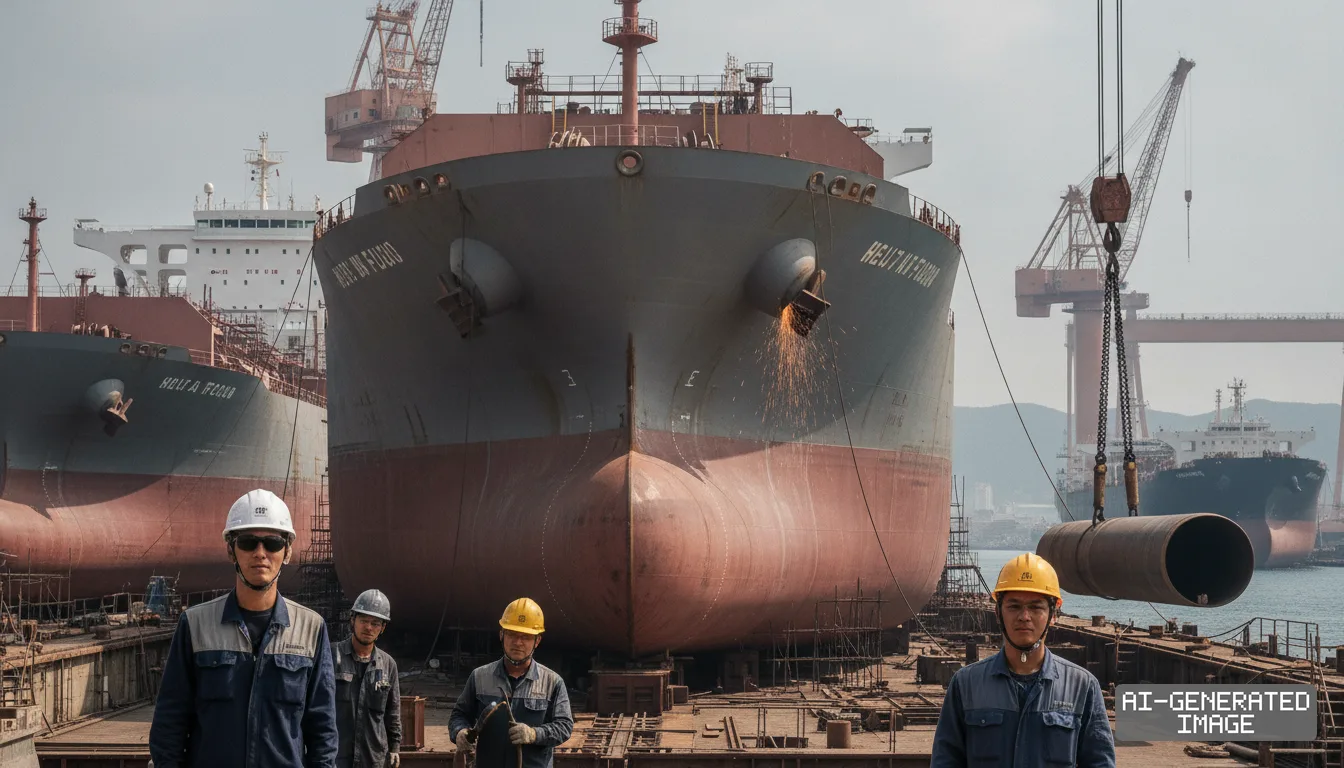
High-complexity gas carrier assembly remains concentrated at HD Hyundai Heavy Industries in Ulsan and HD Hyundai Samho in Yeongam. Both shipyards maintain dedicated indoor cryogenic membrane insulation shops to maintain construction quality.
The announcement did not disclose individual contract values for the remaining option slots, and HD Hyundai has not published commercial bunkering schedules for ammonia-fueled main engines.
HD Hyundai Chairman Chung Ki-sun and HD Korea Shipbuilding & Offshore Engineering Chief Executive Officer Kim Hyung-kwan are leading the group's Bangkok delegation. The executives scheduled roughly 30 formal technical certification signings and corporate partnership meetings across the event.
Gastech 2026 opens its technical conference sessions Sept. 14, with maritime classification societies formally presenting the approved engineering certificates at the BITEC exhibition center.
Impact map
How this development propagates across the region and out to global buyers.
| Event | Korea | China | Japan | Global impact |
|---|---|---|---|---|
| Three-tank LNG carrier approval | HD Hyundai Samho secures 4-ship order series delivering 2028-2029 | Hudong-Zhonghua faces pressure on standard 174k m³ containment efficiency | Imabari and Japanese fleet operators evaluate Type-C alternative tank approvals | Shipowners gain 1.7% cargo capacity increase and lower boil-off rates per voyage |
| Three-tank LNG carrier approval | HD Hyundai Samho secures 4-ship order series delivering 2028-2029 | Hudong-Zhonghua faces pressure on standard 174k m³ containment efficiency | Imabari and Japanese fleet operators evaluate Type-C alternative tank approvals | Shipowners gain 1.7% cargo capacity increase and lower boil-off rates per voyage |
In this story
- Companies
- HD HyundaiHD Korea Shipbuilding & Offshore EngineeringHD Hyundai Samho
- Tickers
- 267250.KS009540.KS
- Exposed
- BW LNGGTTLloyd's RegisterDNVSiemensABS
- Policy
- Economic Security
- Impact
- Order BookCapexSupply Chain
Track every Economic Security development →
Related briefings
- SK On and GS Caltex Advance Immersion Cooling Packs for High-Voltage EV Fleets Also on DNV
- HD Hyundai inspects Thoothukudi site for greenfield shipyard in India Also on HD Hyundai, HD Korea Shipbuilding & Offshore Engineering, Order Book
- South Korea engine builders expand methanol test benches for 2027 ship handoffs Also on HD Hyundai Samho, Order Book
- China Antimonopoly Review Imposes Harsher Operational Remedies on Automation Mergers Also on Siemens, Order Book
Sources
Reporting
Confidence: medium — how we grade this
The documents behind this briefing are linked above. East Asia Brief produces its English text with AI assistance under human editorial review, and does not translate or republish other outlets' articles. See our methodology and AI policy. Spotted an error? Tell us.
The Morning Brief
What changed in Korean, Chinese and Japanese industry overnight — and what it means for your supply chain. One email, weekday mornings, US time. Free.
The first issue goes out shortly. Sign up now and you will not miss it.