Hanwha Ocean joins Busan joint logistics to cut yard costs
A municipal network operated by CJ Logistics begins consolidated deliveries Nov. 1, projecting 9 billion won in annual logistics savings across South Korea's shipyards.
The Busan Metropolitan City government expanded its shared marine equipment logistics network to Hanwha Ocean on Oct. 31, 2026, targeting double-digit cuts in transport expenses.
The initiative targets 9 billion won ($6.5 million) in annual logistics savings across the shipbuilding supply chain. That figure includes 3 billion won in direct trucking fees and 6 billion won in indirect administrative overhead.
Busan invested 10 billion won ($7.3 million) alongside state bodies and private contributors to build the network. The funds supported a 270-pyeong (892 square meter) demonstration center inside the Noksan National Industrial Complex.
The platform coordinates joint deliveries using a milk-run model, a routing method where a single large truck collects components from multiple factories along a planned circuit.
Suppliers that cannot share truck space can book full-truckload journeys under standardized tariffs. Both shared and dedicated freight bookings run at an average discount of 15% compared to commercial spot rates, municipal officials said.
Maximum rate cuts reach 25% for high-frequency freight routes connecting Busan factories to southern shipyards. Since pilot trials began in March 2026, roughly 110 equipment vendors have routed shipments through the system.
The addition of Hanwha Ocean links South Korea's third-largest shipbuilder to the municipal cargo pool. The company previously managed component shipments from suppliers through separate bilateral transport agreements.
Hanwha Ocean linked its proprietary procurement system, called ICOPS, directly to the municipal logistics platform. The interface allows parts suppliers to see delivery milestones and submit joint pickup orders in one interface.
The Busan Marine Equipment Association conducted field verification tests with Hanwha Ocean between Oct. 14 and Oct. 30, 2026. Technicians tested automated notification alerts, yard delivery protocols and specialized offloading crane assignments.
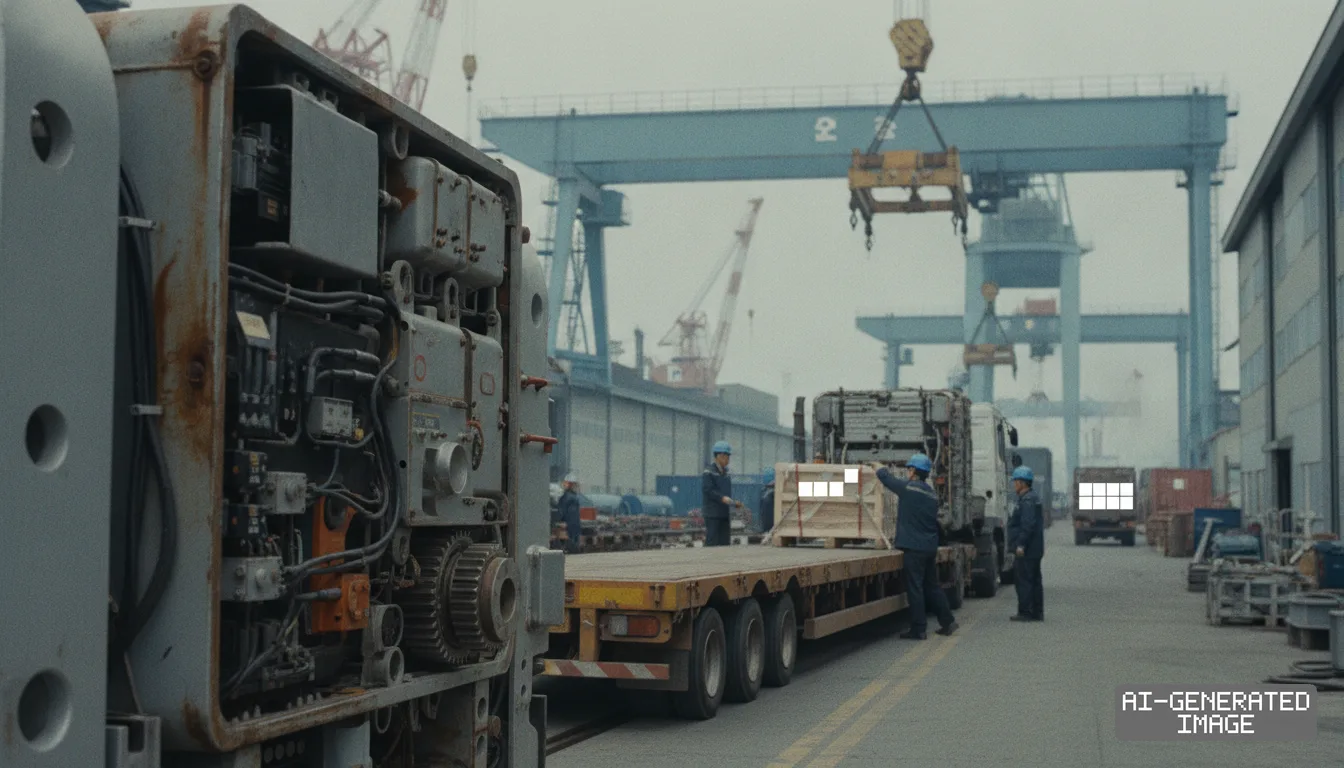
CJ Logistics operates the physical trucking fleet under a contract with the equipment association. The carrier deploys heavy flatbeds and consolidated container vehicles between Busan production sites and coastal drydocks.
The network now serves all three of South Korea's dominant shipbuilding groups. HD Hyundai Heavy Industries joined the program in late 2023, followed by Samsung Heavy Industries earlier this year.
Regional shipbuilders HJ Shipbuilding & Construction and SB Daesun Shipbuilding also route components through the hub. The inclusion of Hanwha Ocean extends the program to five major shipyard facilities across the southeastern coast.
Commercial ship construction requires tens of thousands of fabricated metal parts, valves and electronic assemblies. Individual suppliers historically dispatched partially loaded trucks to shipyard gates, inflating regional logistics overhead.
Uncoordinated arrivals often generated long vehicle queues outside shipyard receiving docks in Geoje and Ulsan. The shared distribution program reduces inbound truck traffic, lowering yard gate congestion and onsite vehicular safety risks.
Fewer vehicle runs also trim diesel carbon dioxide emissions across the transport corridor between Busan and South Gyeongsang province. Municipal authorities plan to monitor roadside emissions data as cargo volumes increase.
Component suppliers in the Noksan industrial belt often operate on tight manufacturing margins below 5%. Rising domestic fuel tariffs and specialized transport driver shortages had driven up their unit shipping costs since 2024.
Consolidated shipping allows small component makers to avoid paying full vehicle charter rates for partial pallet loads. The municipal system calculates optimal cargo consolidation using digital simulation algorithms.
Busan Marine Equipment Association Chairman Choi Geum-sik said the expansion creates an integrated delivery pipeline covering South Korea's major yards. The association plans to recruit more midsize component manufacturers into the pool.
South Korean shipyards currently hold three years of delivery orders for liquefied natural gas carriers and container vessels. Tight construction schedules have made timely component delivery critical to avoid financial delay penalties.
Rising prices for thick steel plates, imported machinery and skilled yard labor have narrowed operating margins across Korean shipyards. Reducing inbound supply chain friction gives shipbuilders a tool to curb indirect construction expenses.
The municipal release does not state what proportion of Hanwha Ocean's total inbound shipyard supply volume passes through the Noksan hub. The city also withheld specific freight tonnage handled during the October trial phase.
Regular scheduled cargo dispatches for Hanwha Ocean's supplier network take effect Nov. 1, 2026. The association and the city will review freight performance indicators after the first full quarter of operation.
Impact map
How this development propagates across the region and out to global buyers.
| Event | Korea | China | Japan | Global impact |
|---|---|---|---|---|
| Shipbuilding joint logistics expansion | Hanwha Ocean cuts inbound yard trucking rates up to 25% | State shipyards face wider South Korean delivery efficiency gap | Regional shipyards remain reliant on independent supplier trucking | Ship construction overhead eases as supplier delivery bottlenecks diminish |
In this story
- Companies
- Hanwha OceanCJ Logistics
- Tickers
- 042660.KS000120.KS
- Exposed
- HD Hyundai Heavy IndustriesSamsung Heavy Industries
- Policy
- Subsidies
- Impact
- Supply ChainCost Structure
Track every Subsidies development →
Related briefings
- HD Hyundai Robotics backs sensor maker AIDIN in $12M round Also on CJ Logistics
- Korean shipbuilders localize Arctic ice design software Also on Samsung Heavy Industries, Hanwha Ocean, HD Hyundai Heavy Industries
- HD Hyundai Heavy Industries faces delivery risks after wage rejection Also on Samsung Heavy Industries, Hanwha Ocean, HD Hyundai Heavy Industries
- Samsung Heavy orders GTT tank designs for four LNG ships Also on Samsung Heavy Industries, Hanwha Ocean, HD Hyundai Heavy Industries
Sources
Primary documents
Reporting
Confidence: high — how we grade this
The documents behind this briefing are linked above. East Asia Brief produces its English text with AI assistance under human editorial review, and does not translate or republish other outlets' articles. See our methodology and AI policy. Spotted an error? Tell us.
The Morning Brief
What changed in Korean, Chinese and Japanese industry overnight — and what it means for your supply chain. One email, weekday mornings, US time. Free.
The Morning Brief is in preparation. Leave your address and we will write to you once — when the first issue is ready. Nothing before that.