Hanwha Ocean seals wage deal, securing Korean ship schedules
The narrow ratification concludes labor negotiations across South Korea's Big Three shipbuilders, protecting continuous dock operations for a combined backlog exceeding 200 trillion won.
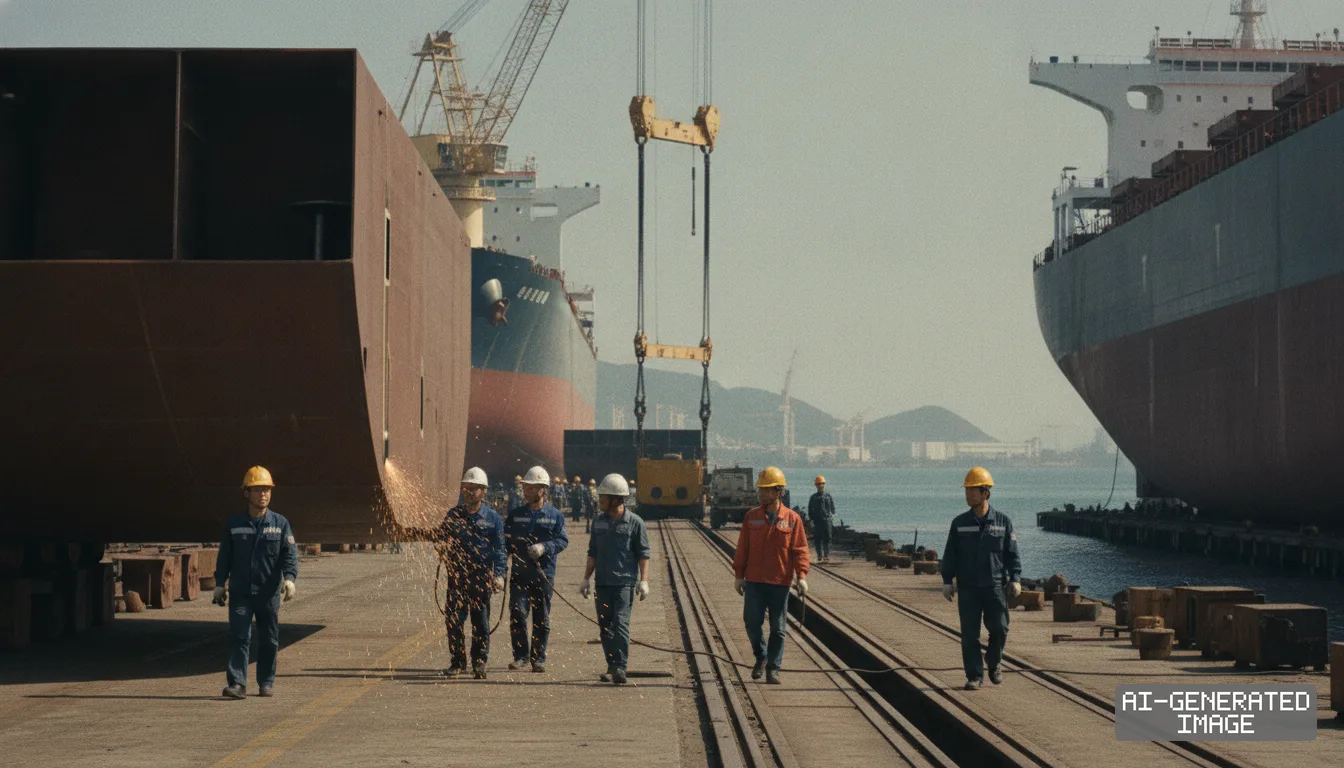
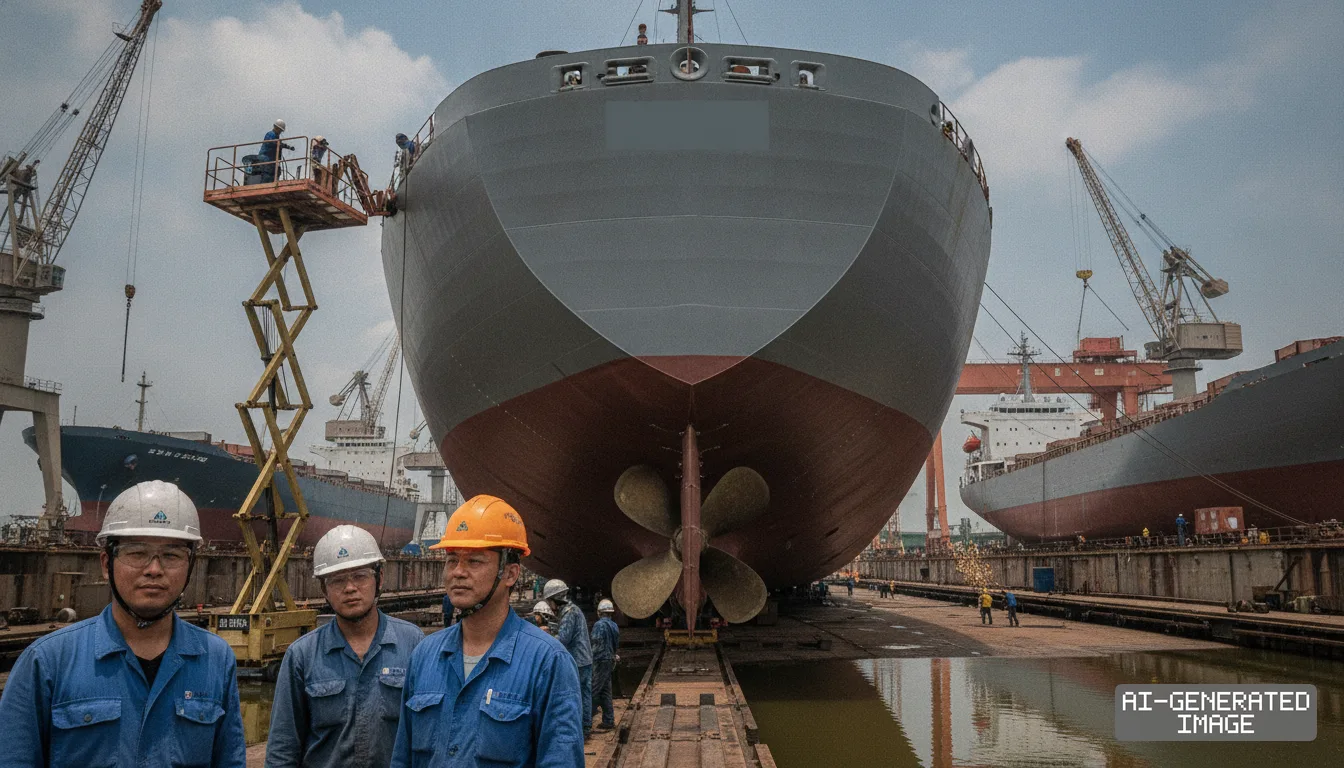
Hanwha Ocean finalized a collective bargaining agreement with its labor union on Oct. 30, 2026, ending a five-month standoff and securing labor peace across South Korea's three major shipbuilders.
The settlement unblocks full-scale construction across domestic shipyards holding a combined order backlog exceeding 200 trillion won ($145 billion). South Korea's top three shipbuilders hold more than three years of guaranteed delivery slots.
Production facilities at HD Hyundai Heavy Industries, Samsung Heavy Industries and Hanwha Ocean recorded average facility utilization rates of 106.1%, 100.2% and 100% during the first half of 2026. Densely booked dry docks leave yards vulnerable to schedule slippage.
Union members at Hanwha Ocean approved the tentative wage agreement in a ballot tallied late on Oct. 29, union officials announced. The measure passed by a razor-thin margin of 29 votes among 4,422 voting members.
Of the 4,707 eligible union members at the Geoje shipyard, 4,422 participated in the vote, marking a 93.95% turnout rate. Tally clerks counted 2,212 votes in favor, representing 50.02% approval, against 2,183 opposing ballots and 27 invalid votes.
The pact increases monthly base pay by 140,000 won ($102), which includes a regular step increment of 23,689 won. The base pay increase is retroactive to March 1, 2026, applying across all direct production personnel.
Direct employees will also receive 8.5 million won ($6,200) in lump-sum bonuses, company representatives said. The package combines a 4.5 million won settlement bonus, a 1 million won mutual-growth payment and 3 million won for digital transformation.
Hanwha Ocean introduced an annual welfare credit program worth 1 million won per employee under the negotiated package. The shipbuilder also tripled monthly schooling assistance for children entering primary school to 300,000 won, union records show.
The agreement establishes terms for rehiring mandatory retirees as temporary contract production technicians for one year, the company said. An optional second-year extension will remain subject to formal operational review by a joint labor-management committee.
Following the ratification announcement, union leader Kim Yu-cheol concluded an elevated protest atop a shipyard crane, union representatives said. Kim descended from the 25-meter gantry structure at the Geoje facility after maintaining the sit-in strike for 21 days.
HD Hyundai Heavy Industries cleared its own five-month wage impasse on Oct. 27 when union members ratified a second tentative pact. That vote passed with 55.06% approval among 7,724 participating workers at the Ulsan complex.
Samsung Heavy Industries concluded its 2026 collective bargaining earlier in the summer without suffering strike-related production pauses, industry sources said. The early agreement preserved uninterrupted block assembly across its primary manufacturing berths in Geoje.
Concurrently concluding talks across all three major builders insulates the country's most valuable maritime export pipeline from systemic work stoppages. South Korean yards build the vast majority of high-specification liquefied natural gas carriers worldwide.
Hanwha Ocean carries an active order backlog of $33.86 billion across all business segments, company disclosures show. Commercial merchant vessels account for $25.3 billion, while offshore energy production plants represent an additional $3.66 billion of that total.
Samsung Heavy Industries holds a committed delivery portfolio valued at $35.4 billion across 150 vessels, company financial filings show. That backlog includes 70 liquefied natural gas carriers worth $27.1 billion, representing 77% of total contracted shipyard value.
HD Korea Shipbuilding and Offshore Engineering secured $23.31 billion in new vessel contracts during the first half of 2026. The holding company's primary shipyards in Ulsan and Gunsan maintain continuous construction runs for large container vessels and gas tankers.
Korean shipbuilders operate under tight dock schedules where an unexcused delay on one hull disrupts subsequent dry dock rotations. Contracts for commercial vessels carry liquidated damages clauses that impose heavy financial penalties for missed delivery windows.
Hanwha Ocean committed 686.9 billion won ($500 million) in capital expenditure during the second half of 2026 to upgrade shipyard production lines. The spending program targets automated indoor welding systems to lessen operational vulnerability to shop-floor labor deficits.
Labor and management agreed to operate a joint task force through Dec. 31, 2026, to redesign performance-based bonus structures. The panel will formulate transparent payment standards linked to corporate operating income and strategic digital milestones.
Hanwha Ocean will distribute the 8.5 million won lump-sum bonuses within five business days of final ratification, management said. Retroactive wage differentials accumulated since March 1 will be disbursed to qualifying workers on Dec. 7, 2026.
Subcontracted workers at the Geoje yard continue separate bargaining sessions through regional branches of the Korean Metal Workers' Union, labor organizers said. Subcontractor labor representatives seek formal wage adjustments and improved on-site working conditions for outsourced personnel.
The company notice does not state whether Hanwha Ocean will offer direct wage concessions to subcontracted labor groups, and management has not published an operational schedule for secondary contractor talks.
With primary labor agreements locked across the Big Three shipyards, Korean dock operations will run at maximum scheduled throughput through the winter building cycle. Yards will focus on accelerating hull assembly for high-margin commercial gas carriers.
Impact map
How this development propagates across the region and out to global buyers.
| Event | Korea | China | Japan | Global impact |
|---|---|---|---|---|
| Shipyard wage deal settlement | Big Three secure uninterrupted dock operations for 200T won backlog | State shipbuilders face heightened execution pressure on export vessel delivery slots | Specialized gas yards maintain small-scale backlogs without dock scheduling advantage | Commercial shipowners avoid delivery penalty risks as Korean yard utilization holds at 100% |
| Shipyard wage deal settlement | Big Three secure uninterrupted dock operations for 200T won backlog | State shipbuilders face heightened execution pressure on export vessel delivery slots | Specialized gas yards maintain small-scale backlogs without dock scheduling advantage | Commercial shipowners avoid delivery penalty risks as Korean yard utilization holds at 100% |
In this story
- Companies
- Hanwha OceanHD Hyundai Heavy IndustriesSamsung Heavy Industries
- Tickers
- 042660.KS329180.KS010140.KS
- Impact
- Order BookCost StructureCompliance
Related briefings
- HD Hyundai Heavy ratifies wage deal as Hanwha Ocean faces yard protest Also on Samsung Heavy Industries, Hanwha Ocean, HD Hyundai Heavy Industries
- HD Hyundai Heavy union votes down wage deal, reopening talks Also on Samsung Heavy Industries, Hanwha Ocean, HD Hyundai Heavy Industries
- Hanwha Ocean and Samsung Heavy diverge on currency hedging Also on Samsung Heavy Industries, Hanwha Ocean, HD Hyundai Heavy Industries
- HD Hyundai Heavy Industries faces delivery risks after wage rejection Also on Samsung Heavy Industries, Hanwha Ocean, HD Hyundai Heavy Industries
Sources
Reporting
Confidence: medium — how we grade this
The documents behind this briefing are linked above. East Asia Brief produces its English text with AI assistance under human editorial review, and does not translate or republish other outlets' articles. See our methodology and AI policy. Spotted an error? Tell us.
The Morning Brief
What changed in Korean, Chinese and Japanese industry overnight — and what it means for your supply chain. One email, weekday mornings, US time. Free.
The Morning Brief is in preparation. Leave your address and we will write to you once — when the first issue is ready. Nothing before that.