HD Hyundai Heavy deploys AI vision system for ship coatings
The shipbuilder partnered with four global classification societies to standardize automated defect detection across steel blocks at its Ulsan and Yeongam yards.
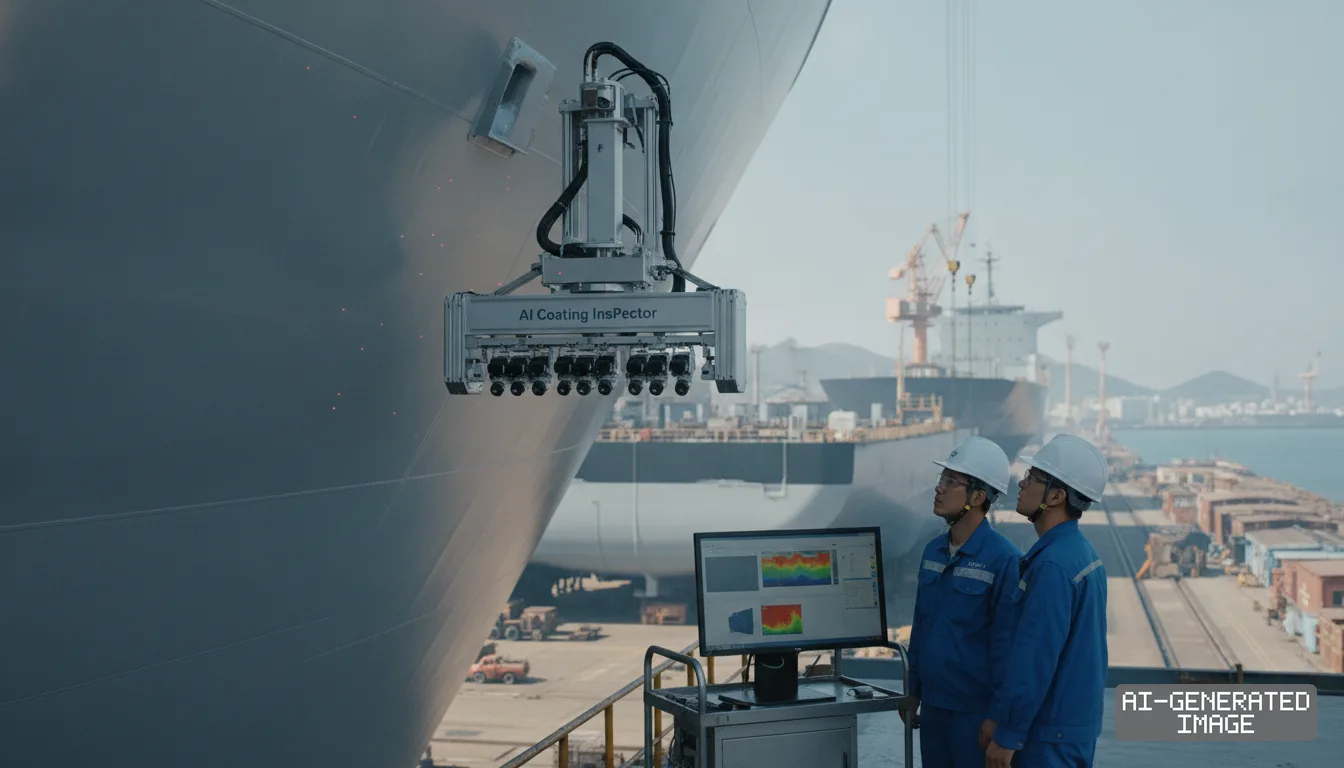
HD Hyundai Heavy Industries put a vision artificial intelligence system into shipyard operation Oct. 30, 2026 to automate surface coating defect inspections on commercial vessel blocks, following its Oct. 29 announcement in Ulsan.
The tool, named AI Coating InsPector, scans steel block surfaces to spot paint defects before hull blocks enter drydocks for final assembly. Shipbuilders apply protective coatings to shield steel hulls from seawater corrosion, marine organisms and severe structural degradation over decades of maritime service.
HD Hyundai Heavy Industries has not published the exact percentage reduction in drydock cycle time or coating rework costs achieved by the deployment. The shipbuilder stated instead that the software establishes objective digital records across assembled hull blocks and removes visual variance among inspectors.
The system replaces manual visual checks that have long served as the primary quality control method across South Korean commercial shipyards. Human inspections frequently produce conflicting quality assessments on identical blocks, depending on individual technician experience, ambient lighting and physical fatigue.
HD Korea Shipbuilding & Offshore Engineering, the group intermediate holding company, developed the deep-learning vision platform jointly with HD Hyundai Heavy Industries through its AIX Center. The engineering teams began training convolutional vision models on shipyard coating imagery in 2024.
The project models learned to classify pinholes, uneven film thickness, surface blistering and overspray across commercial cargo tanks and curved outer hull sections. Technical teams tested the algorithms against historical inspection archives compiled during container ship and liquefied natural gas carrier construction cycles.
HD Hyundai Heavy Industries signed a memorandum of understanding Oct. 29 at its human resources center in Ulsan with three group peers and four classification societies. The partnership aims to validate algorithmic accuracy and build common inspection benchmarks across commercial shipbuilding programs.
The industry group includes British registry Lloyd's Register, American Bureau of Shipping, Norway-based DNV and the Korean Register. These four maritime societies certify hull integrity and safety standards for the vast majority of international cargo fleets.
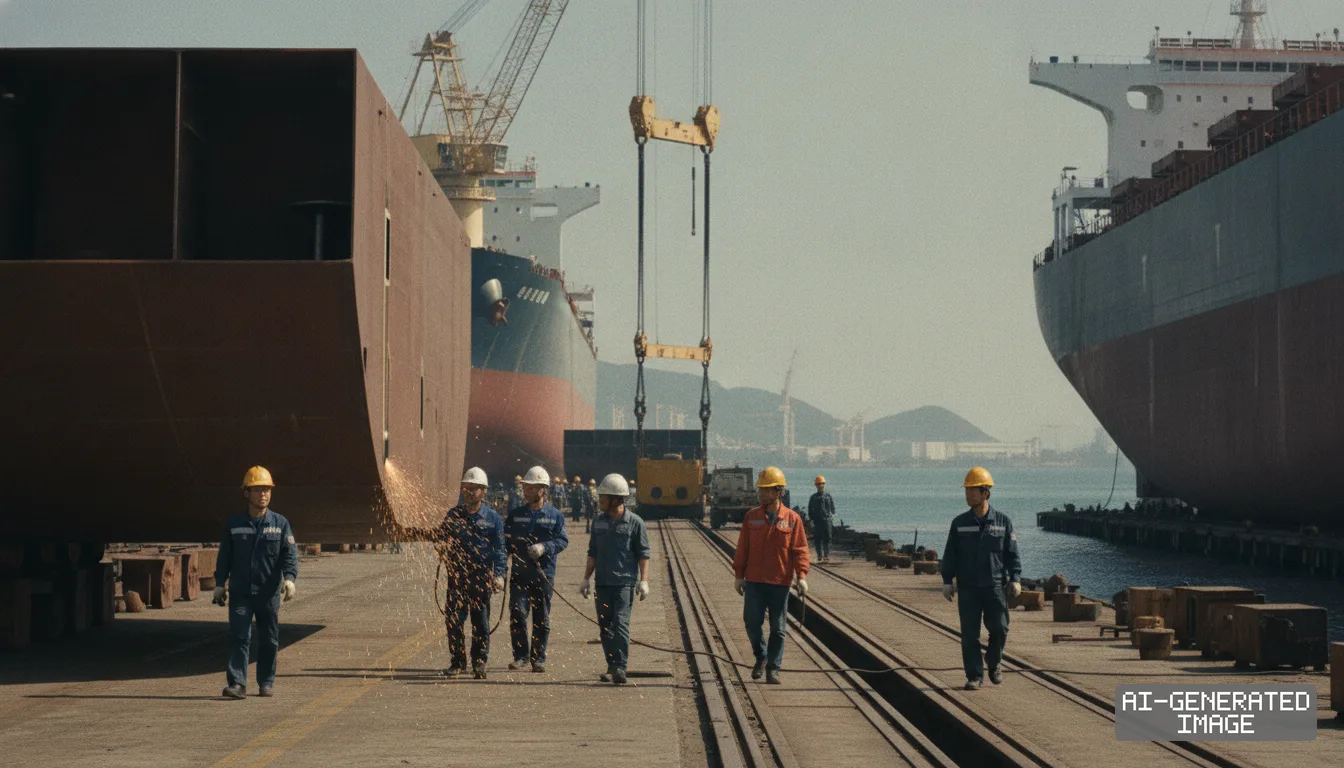
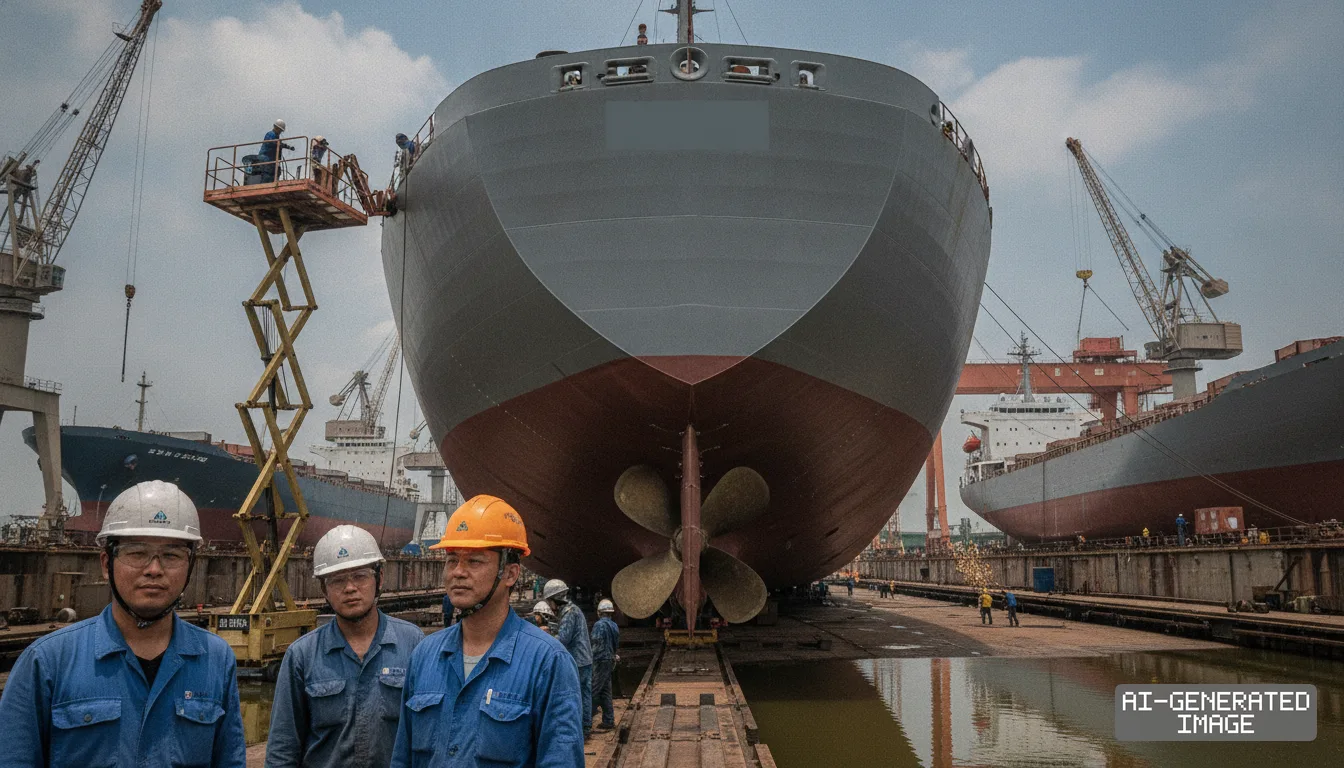
Under the agreement, HD Hyundai Heavy Industries and affiliate HD Hyundai Samho will expand shop-floor deployment of the scanning units and manage coating defect repositories. The two shipyards represent the core manufacturing capacity of the world's largest shipbuilding group by tonnage.
HD Hyundai Samho operates active drydock slots in Yeongam, Jeollanam-do, where high-specification container vessels and liquefied natural gas carriers undergo simultaneous block fabrication. Adding digital defect detection allows both yards to feed uniform quality logs into shared engineering databases.
HD Korea Shipbuilding & Offshore Engineering will refine core algorithms, upgrade image processing models and verify how software performs across diverse commercial marine paint formulations. Marine coatings vary widely in chemical composition, drying profile and optical sheen depending on vessel operating requirements.
The four classification societies will evaluate automated defect recognition against existing maritime quality codes and establish formal technical inspection protocols. Independent verification by ship classification societies remains mandatory before shipowners accept newly constructed merchant vessels.
South Korean shipbuilders face tightening construction schedules as order books extend beyond three full delivery years across major domestic yards. High shipyard berth utilization leaves limited margin for painting rework once crane operators lift blocks into drydocks.
Subsurface rust, blisters or missed coating coverage discovered late during drydock assembly require immediate sandblasting and recoating, stalling adjacent construction sequences. Automating block inspections at earlier fabrication bays intercepts defective surfaces before erection teams weld blocks together.
HD Hyundai has accelerated digital automation across its production facilities under group initiatives to address skilled shipyard labor constraints. The group upgraded its artificial intelligence development unit into an office reporting directly to the chief executive officer in late 2025.
Parallel automation programs across the shipbuilder test autonomous welding robots equipped with vision tracking, digital crane management platforms and virtual shipyard twins. Standardizing coating inspection processes marks the latest phase of modernizing heavy fabrication tasks historically reliant on experienced yard craftsmen.
Chinese shipbuilders continue to expand capacity in bulk carriers and standard container vessels, pressuring South Korean yards to maintain an engineering lead in premium gas carriers. Digital inspection records give South Korean yards verifiable build-quality histories that international shipowners demand during contract handovers.
The three shipbuilders and the four classification societies plan to establish formal technical standards and standardized AI inspection procedures during the first half of 2027. Shipowners will review digital defect logs alongside traditional surveyor sign-offs during intermediate construction milestones.
The company has not disclosed the precise accuracy rate of the computer vision model or the capital expenditure spent developing the software. HD Hyundai Heavy Industries has also not stated whether the software will be licensed to third-party shipbuilders outside the group.
Impact map
How this development propagates across the region and out to global buyers.
| Event | Korea | China | Japan | Global impact |
|---|---|---|---|---|
| AI ship coating inspection | HD Hyundai Heavy and HD Hyundai Samho standardize automated block quality control across Ulsan and Yeongam | State shipyards rely on manual visual surveying across standard bulk and container drydocks | Imabari and Nihon Shipyard face widened digital manufacturing gap on premium vessel blocks | Four major classification societies evaluate digital coating logs for commercial fleet delivery standards |
In this story
- Companies
- HD Hyundai Heavy IndustriesHD Korea Shipbuilding & Offshore EngineeringHD Hyundai Samho
- Tickers
- 329180.KS009540.KS
- Policy
- Standards
- Impact
- Supply ChainCost Structure
Track every Standards development →
Related briefings
- HD Hyundai and Siemens launch Busan digital shipyard center Also on HD Hyundai Samho, HD Korea Shipbuilding & Offshore Engineering, HD Hyundai Heavy Industries
- HD Hyundai Marine Engine inks WinGD pact for dual-fuel units Also on HD Hyundai Samho, Standards, HD Hyundai Heavy Industries
- HD Hyundai delivers world’s first lashing-free boxship to CMA CGM Also on HD Hyundai Samho, Standards, HD Hyundai Heavy Industries
- HD Hyundai names Lee Sang-kyun head of group shipbuilding units Also on HD Hyundai Samho, HD Korea Shipbuilding & Offshore Engineering, HD Hyundai Heavy Industries
Sources
Reporting
Confidence: medium — how we grade this
The documents behind this briefing are linked above. East Asia Brief produces its English text with AI assistance under human editorial review, and does not translate or republish other outlets' articles. See our methodology and AI policy. Spotted an error? Tell us.
The Morning Brief
What changed in Korean, Chinese and Japanese industry overnight — and what it means for your supply chain. One email, weekday mornings, US time. Free.
The Morning Brief is in preparation. Leave your address and we will write to you once — when the first issue is ready. Nothing before that.