Samsung Heavy orders GTT tank designs for four LNG ships
The contract equips four 200,000-cubic-meter vessels delivering in 2029 with Mark III Flex+ containment systems, locking South Korean yard slots as LNG carrier backlogs extend past 2028.
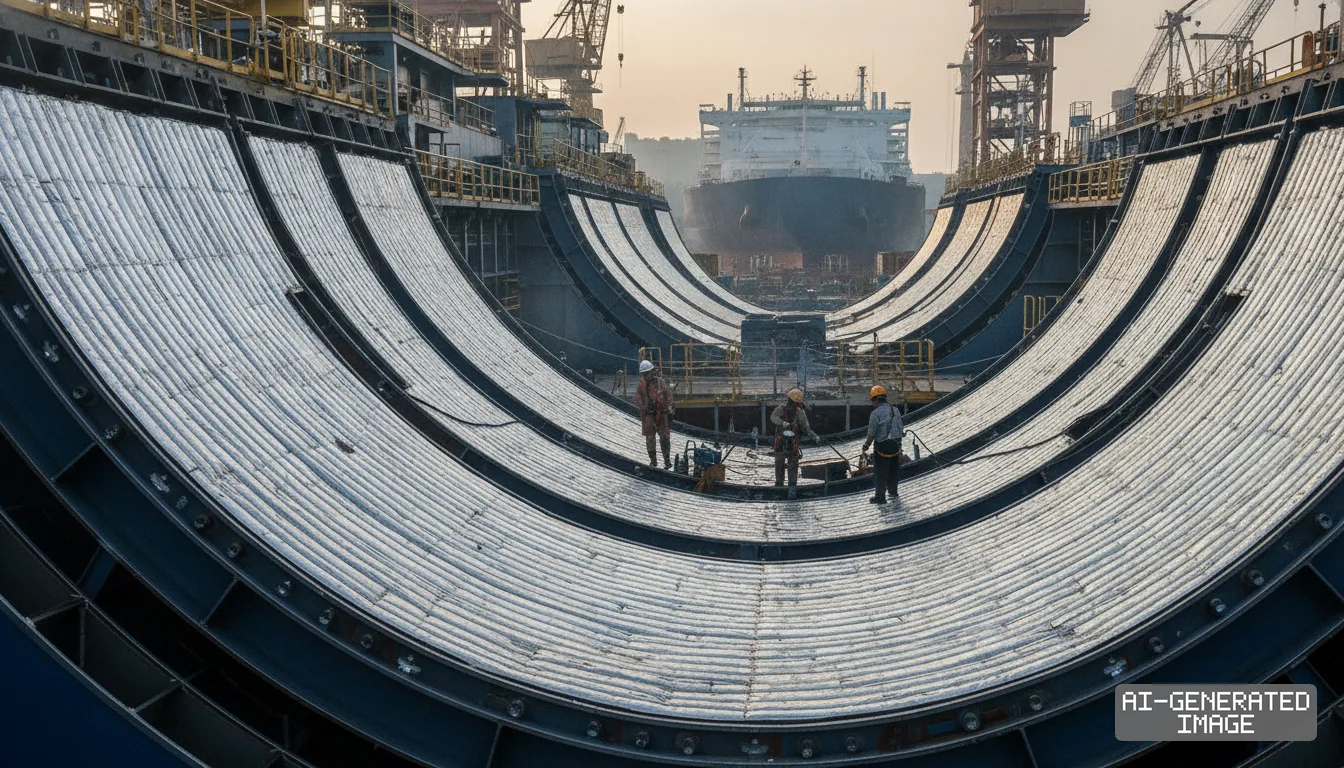
Samsung Heavy Industries contracted French engineering company GTT on Oct. 5, 2026, to design cryogenic membrane cargo tanks for four 200,000-cubic-meter liquefied natural gas carriers delivering in 2029.
The four vessels represent a combined carrying capacity of 800,000 cubic meters. GTT booked the technical order during the third quarter of 2026, the Paris-based containment specialist said in an official notice.
Each vessel will feature GTT's proprietary Mark III Flex+ membrane containment system. The design uses reinforced polyurethane insulation panels and corrugated stainless steel to maintain gas at minus 163 degrees Celsius.
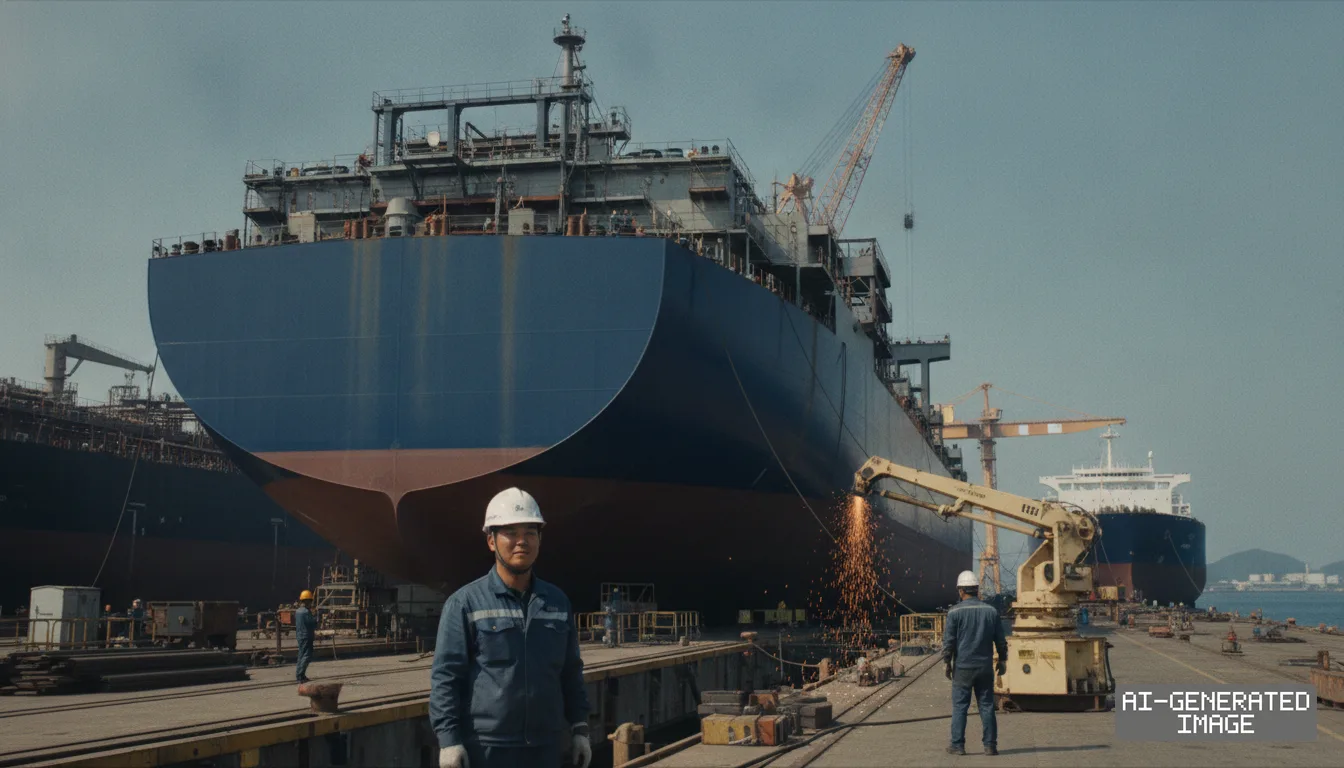
Samsung Heavy Industries builds its large commercial gas carriers at its primary shipyard in Geoje, South Korea. LNG carriers account for more than 70% of the shipbuilder's existing commercial vessel order backlog.
The 2029 delivery timeline confirms that South Korean drydock slots for premium gas tonnage remain committed for the next three years. Major Korean yards hold firm production schedules stretching into late 2028 and 2029.
GTT said the vessels are being constructed for an unnamed European shipowner. The engineering firm did not identify the ultimate client or charterer behind the four-vessel series.
The companies did not disclose the total financial value of the tank engineering agreement. Independent industry estimates place cryogenic tank licensing royalties at roughly 5% of the total newbuild price of an LNG carrier.
Current market pricing for large 174,000 to 200,000-cubic-meter LNG carriers hovers near $260 million per vessel. At that valuation, engineering fees across a four-ship program can exceed $50 million.
GTT controls more than 70% of the global market for cryogenic membrane containment designs on oceangoing gas carriers. Its patented systems remain the default specification for major international energy charterers.
South Korean shipbuilders, including Samsung Heavy Industries, Hanwha Ocean and HD Hyundai Heavy Industries, construct the vast majority of the world's large-scale LNG carrier fleet.
Every membrane vessel built in South Korea requires imported tank license packages. Domestic attempts to commercialize proprietary containment systems, such as the state-backed KC-1 design, faced technical setbacks.
Royalties paid directly to GTT represent an ongoing margin deduction for Korean shipbuilders. Despite building the hulls, local shipyards cannot retain the intellectual property value of the cryogenic barriers.
The Mark III Flex+ system selected for the four Samsung Heavy vessels lowers the daily cargo boil-off rate to approximately 0.085%. Lower boil-off preserves valuable cargo during transoceanic voyages.
A capacity of 200,000 cubic meters exceeds the conventional industry standard of 174,000 cubic meters. European and Asian gas utilities increasingly prefer larger hulls to capture volume efficiencies on long trading routes.
Larger membrane vessels help operators meet tightening International Maritime Organization carbon rules. Lower boil-off gas venting directly improves operational ratings under global fleet efficiency metrics.
Shipyards typically finalize membrane engineering contracts within three to six months of winning preliminary ship orders. The third-quarter procurement confirms Samsung Heavy completed engineering specifications with the buyer.
Samsung Heavy Industries did not issue an independent regulatory disclosure on the Korea Exchange regarding the subcontracted design work. Korean listing rules do not mandate disclosures for sub-tier component engineering contracts.
Chinese competitors such as Hudong-Zhonghua Shipbuilding also rely on GTT membrane licenses for their standard LNG carrier output. However, Korean yards continue to secure the bulk of high-capacity export orders.
Construction of Mark III Flex+ tanks requires specialized secondary barriers, high-density foam insulation and stainless membrane sheets. Korean suppliers produce these modular composite panels under GTT quality supervision.
By committing berths to 2029 deliveries, Samsung Heavy shields its revenue pipeline from near-term spot freight volatility. High-margin gas carrier construction stabilizes yard cash flows through the late 2020s.
The four carriers will undergo keel-laying and block erection ahead of scheduled handovers across 2029. Samsung Heavy will integrate the insulated tank modules once the hulls enter drydock fabrication.
The engineering notice does not identify the European buyer, and Samsung Heavy has not published the firm contract delivery dates for each hull.
Impact map
How this development propagates across the region and out to global buyers.
| Event | Korea | China | Japan | Global impact |
|---|---|---|---|---|
| LNG membrane tank design contract | Samsung Heavy commits Geoje drydock slots through 2029 with 5% royalty outflow | Hudong-Zhonghua faces tightened competition for 200,000-cbm European carrier tenders | Japanese yards remain largely excluded from large membrane LNG export orders | European charterers secure 800,000 cbm of replacement gas transport capacity |
In this story
- Companies
- Samsung Heavy IndustriesGTT
- Tickers
- 010140.KSGTT.PA
- Exposed
- Hanwha OceanHD Hyundai Heavy Industries
- Policy
- Economic Security
- Impact
- Supply ChainOrder BookCost Structure
Track every Economic Security development →
Related briefings
- HD Hyundai develops 150,000 cbm ultra-large ethane carrier Also on GTT, HD Hyundai Heavy Industries, Cost Structure
- HD Hyundai Heavy union votes down wage deal, reopening talks Also on Samsung Heavy Industries, Hanwha Ocean, HD Hyundai Heavy Industries
- Korean shipbuilders localize Arctic ice design software Also on Samsung Heavy Industries, Hanwha Ocean, HD Hyundai Heavy Industries
- Samsung Heavy clears wage deal as strike risks hit rivals Also on Samsung Heavy Industries, Hanwha Ocean, HD Hyundai Heavy Industries
Sources
Reporting
Confidence: medium — how we grade this
The documents behind this briefing are linked above. East Asia Brief produces its English text with AI assistance under human editorial review, and does not translate or republish other outlets' articles. See our methodology and AI policy. Spotted an error? Tell us.
The Morning Brief
What changed in Korean, Chinese and Japanese industry overnight — and what it means for your supply chain. One email, weekday mornings, US time. Free.
The Morning Brief is in preparation. Leave your address and we will write to you once — when the first issue is ready. Nothing before that.