HD Hyundai forms US shipyard venture with Kiewit Maritime
The partnership creates a greenfield fabrication yard to build commercial vessels and service naval logistics ships while complying with Jones Act build rules.
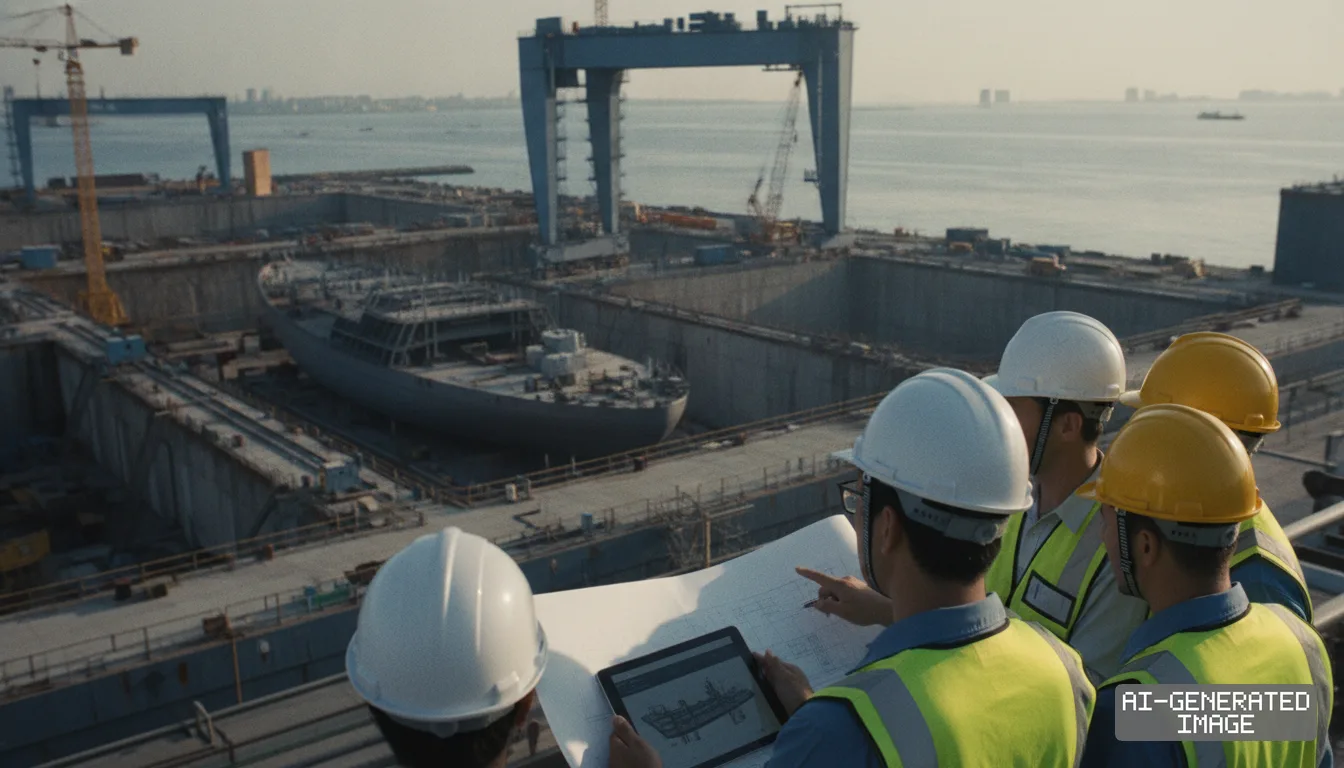
HD Hyundai agreed on Oct. 30, 2026, to establish a joint venture with Kiewit Maritime to build commercial vessels and maintain naval logistics ships inside the United States.
The agreement formalizes plans to create HD Kiewit Shipbuilding. The entity will construct a new manufacturing facility rather than acquire an older domestic drydock.
The planned facility targets an operating workforce of 3,000 local employees. The yard will supply commercial tonnage and naval auxiliary vessels, representing South Korea's largest industrial manufacturing deployment on the American coast.
Operating an onshore yard allows the shipbuilder to navigate the Jones Act. The century-old maritime cabotage law requires commercial ships moving between American ports to be built in domestic shipyards.
The facility also addresses the Byrnes-Tollefson Amendment. That federal statute prohibits the United States Department of Defense from constructing naval vessels in foreign shipyards.
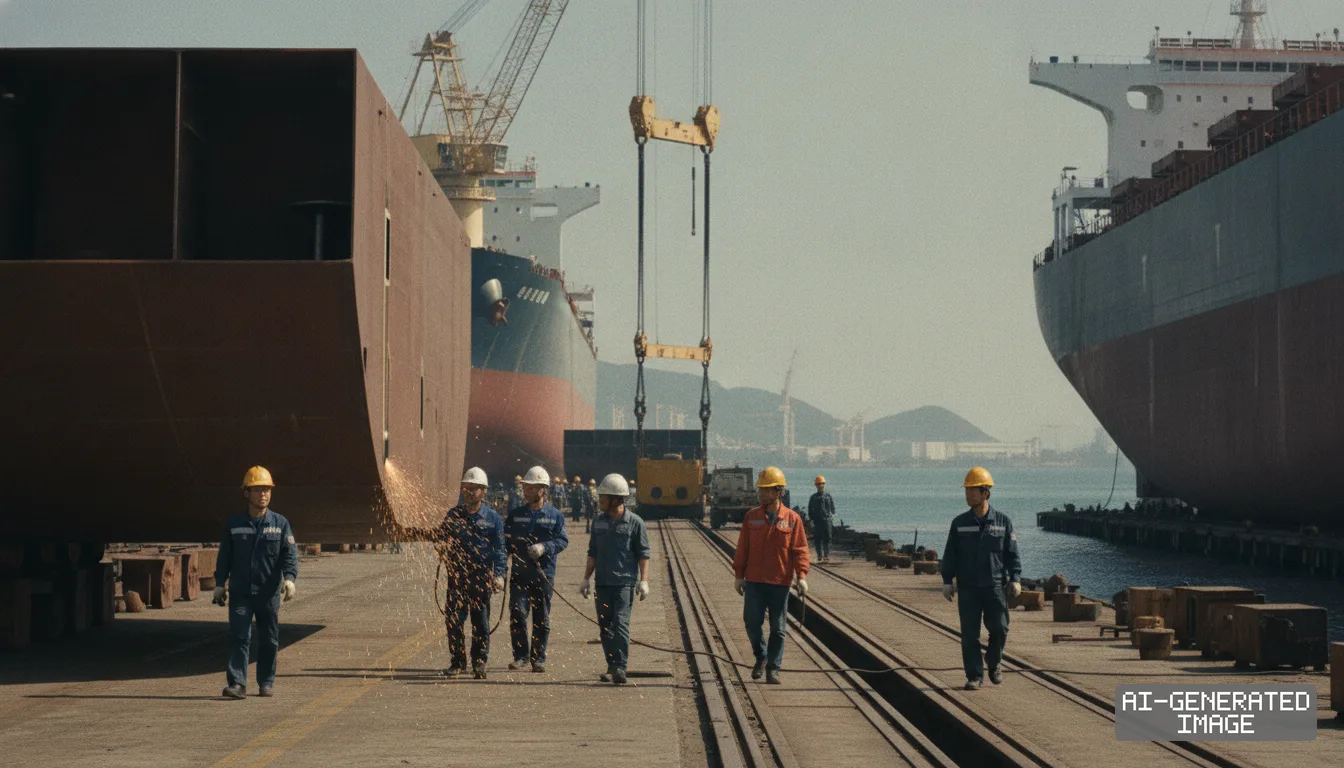
HD Hyundai will provide proprietary ship designs, procurement networks and production management systems. The company plans to introduce its Future of Shipyard production model across the entire fabrication layout.
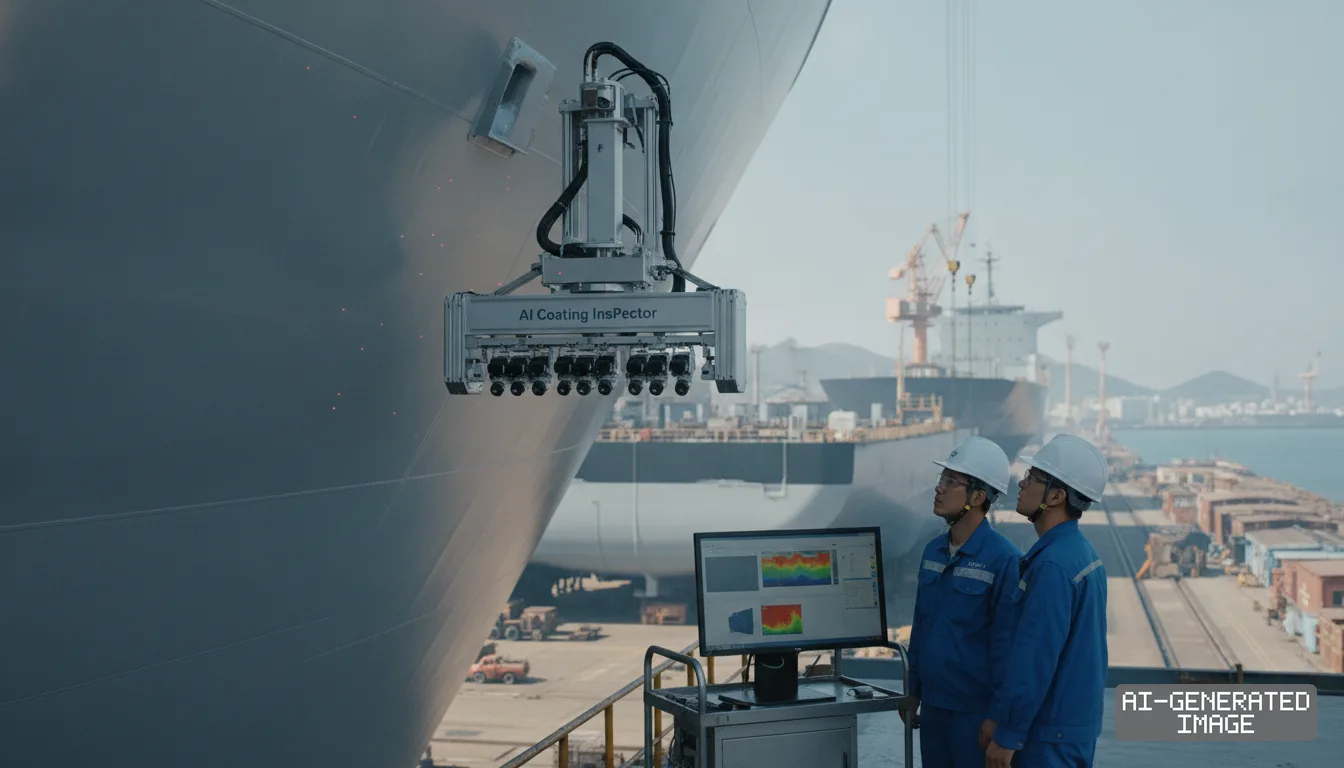
The system uses a digital twin — a virtual simulation that tracks materials and work sequences in real time — to oversee operations. Robotic welding and automated cutting tools will handle structural steel assembly.
Automated manufacturing aims to offset skilled labor deficits in the American shipbuilding sector, HD Hyundai said. Production costs in domestic shipyards typically run two to three times higher than Asian yards.
Kiewit Maritime brings heavy civil engineering, industrial contracting and structural fabrication capabilities to the partnership. The firm is an operating unit of Kiewit Corporation, an engineering giant founded in 1884.
Kiewit Corporation generated $18.2 billion in revenue last year and employs roughly 34,500 personnel across North America. The company operates a 555-acre offshore fabrication facility in Ingleside, Texas, logging 5 million annual work hours.
The joint yard will focus initially on auxiliary vessels for the United States Navy. Primary product lines include fleet replenishment oilers, fleet tugs and roll-on/roll-off logistics ships.
The venture also intends to manufacture structural hull blocks and preassembled equipment modules for other American defense shipbuilders. Those modules package interior piping, machinery and electrical networks into drop-in assemblies.
Supplying modular assemblies allows primary defense contractors to accelerate vessel delivery schedules, the companies said. Tier-one military shipbuilders Huntington Ingalls Industries and General Dynamics face persistent construction delays on combatant programs.
The project builds upon a Master Ship Repair Agreement secured by HD Hyundai in July 2024. That naval certification authorized maintenance, repair and overhaul work on American warships docked in South Korea.
A mainland shipyard expands that Asian repair capability into domestic construction, company executives said. The initiative aligns with Washington's policy to expand domestic maritime capacity through allied capital investment.
A White House national security memorandum issued in August provided legal flexibility for foreign investors. The directive permits allied shipbuilders establishing domestic yards to construct up to two naval auxiliary ships at home yards during site development.
That policy waiver gives foreign builders immediate contract access before local drydocks become operational. The United States Navy plans to release its first vessel solicitations under the program in December.
South Korean competitor Hanwha Ocean pursued a different entry route by acquiring Philly Shipyard in 2024 for $100 million. That transaction provided Hanwha with an active merchant shipyard in Pennsylvania.
HD Hyundai chose a greenfield build instead to install clean automated layouts, the company said. Legacy yards often have restrictive physical configurations that complicate automated crane installations and data-linked transport routes.
Beyond vessel production, the joint venture plans to enter the maritime port equipment sector. The yard will fabricate ship-to-shore container cranes to replace imported machinery at coastal cargo terminals.
American commercial ports currently depend on Chinese manufacturers for more than 70% of heavy container cranes. Federal procurement mandates now require domestic terminal operators to replace that machinery with allied hardware.
The partners have selected the Gulf Coast as the preferred operating region, corporate filings show. The location provides year-round construction weather, deepwater channels and unrestricted navigation access to open sea lanes.
Choi Han-nae, corporate planning chief at HD Korea Shipbuilding & Offshore Engineering, signed the partnership documents alongside Kiewit Maritime Chief Executive Chad Johnson. The parent company oversees commercial yards in Ulsan and Gunsan.
Groundbreaking on the new shipyard is scheduled for 2027, with commercial operations targeted to begin in 2029. Initial site development will focus on covered fabrication bays and automated panel lines.
The corporate disclosures do not state the venture's exact capital expenditure, equity split or final municipal site, leaving the specific coastal property unconfirmed. HD Hyundai said in an investor call that partners would finalize capital commitments before December.
Board committees from both companies will complete site review proceedings and structural engineering filings ahead of the year-end execution timetable.
Impact map
How this development propagates across the region and out to global buyers.
| Event | Korea | China | Japan | Global impact |
|---|---|---|---|---|
| HD Kiewit US shipyard venture | HD Hyundai deploys digital twin IP, exports high-value marine systems and modules | Chinese crane and boxship builders face restricted US port and domestic trade access | Japanese yards face heightened competition for allied naval support and Jones Act supply | US naval auxiliary fleet access expands while Jones Act commercial building costs decline |
In this story
- Companies
- HD HyundaiHD Korea Shipbuilding & Offshore EngineeringKiewit Corporation
- Tickers
- 267250.KS009540.KS
- Exposed
- Huntington Ingalls IndustriesGeneral DynamicsHanwha Ocean
- Policy
- Procurement RulesStandards
- Impact
- CapexSupply ChainOrder Book
Track every Procurement Rules development → Track every Standards development →
Related briefings
- HD Hyundai and Kiewit form U.S. shipyard venture for 2029 Also on Kiewit Corporation, Huntington Ingalls Industries, General Dynamics
- HD Hyundai will fix US shipyard spending scale by year-end Also on Huntington Ingalls Industries, Procurement Rules, HD Hyundai
- HD Hyundai and Kiewit to build automated Gulf Coast shipyard Also on Huntington Ingalls Industries, Procurement Rules, HD Hyundai
- Korean Yards Win US Navy Overhauls for 43% of Cargo Fleet Also on General Dynamics, Procurement Rules, Hanwha Ocean
Sources
Reporting
Confidence: medium — how we grade this
The documents behind this briefing are linked above. East Asia Brief produces its English text with AI assistance under human editorial review, and does not translate or republish other outlets' articles. See our methodology and AI policy. Spotted an error? Tell us.
The Morning Brief
What changed in Korean, Chinese and Japanese industry overnight — and what it means for your supply chain. One email, weekday mornings, US time. Free.
The Morning Brief is in preparation. Leave your address and we will write to you once — when the first issue is ready. Nothing before that.