South Korea pours $1B into AI smart shipyards to fight Chinese yards
A five-year public-private alliance deploys autonomous logistics and robotic welding across three coastal hubs to counter labor shortages and price competition.
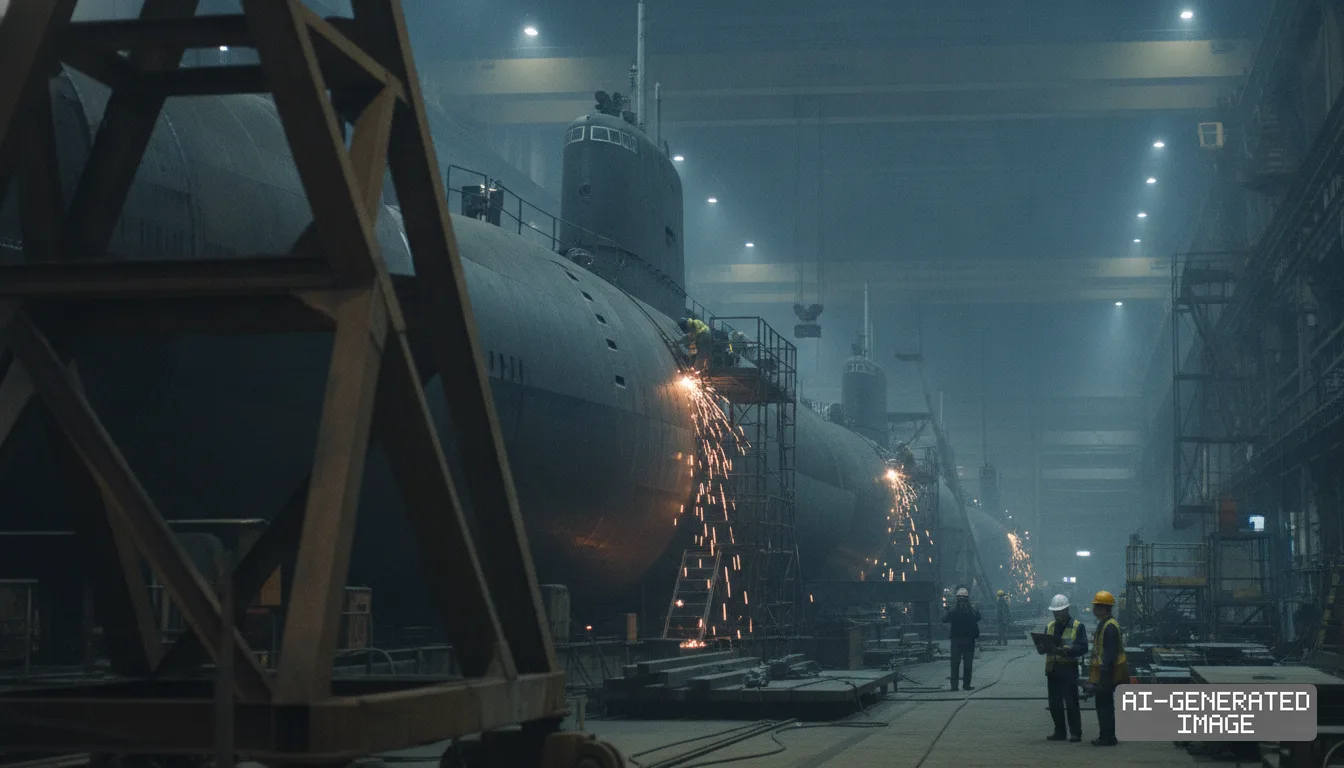
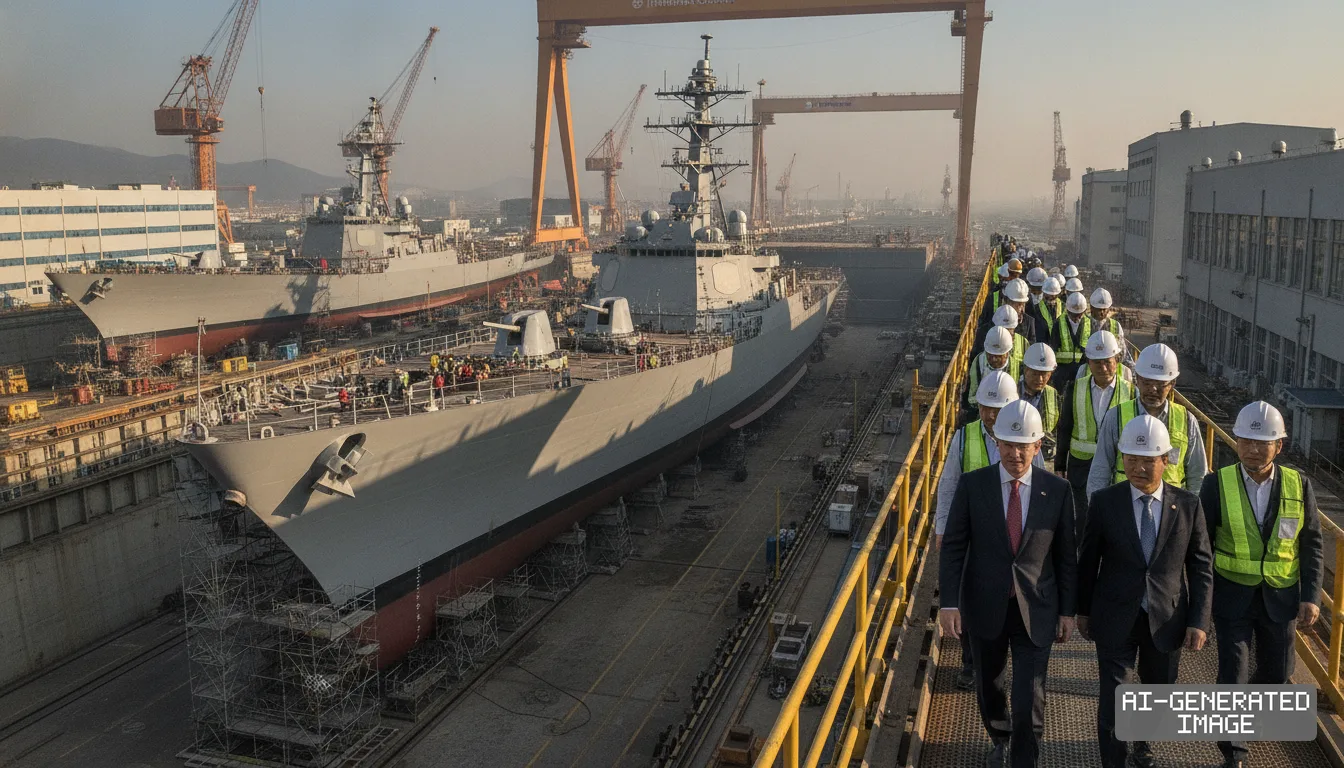
South Korea launched a 1.41 trillion won ($1.04 billion) shipyard automation program on Oct. 12, 2026, deploying manufacturing artificial intelligence across three regional shipbuilding hubs to counter severe skilled-labor shortages.
The five-year initiative commits 406 billion won in state budget alongside roughly 1 trillion won in corporate capital through 2030, according to a joint statement from the industry and maritime ministries.
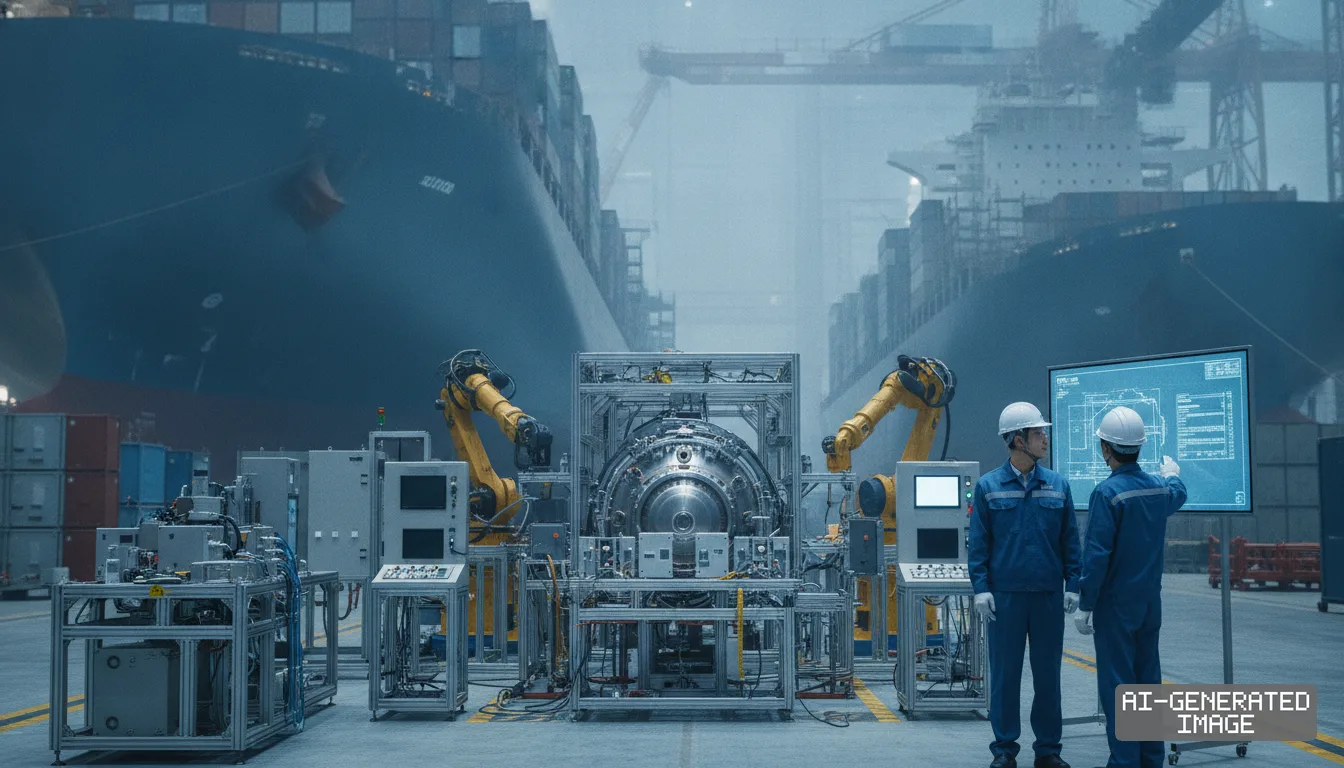
The funding covers automated block logistics, robotic welding and digital design sharing across 100 participating shipyards, marine suppliers and engineering institutes.
South Korea's Ministry of Trade, Industry and Energy convened the Shipbuilding M.AX Alliance strategy meeting in Mokpo, formalizing the expansion of a collaborative network previously focused solely on autonomous navigation.
South Korean shipbuilders face acute recruitment deficits for certified pipefitters and hull welders, as domestic wages rise and Chinese yards expand delivery slots at lower labor costs.
The national program divides work into three geographic flagship projects targeting distinct manufacturing bottlenecks across the southern and western coasts.
The largest allocation directs 596 billion won to the southwestern Mokpo and Yeongam shipbuilding cluster in South Jeolla Province.
HD Hyundai Samho and hull supplier Dae-A Industry signed a memorandum of understanding on Oct. 12, 2026, to invest 400 billion won in an autonomous lighthouse yard.
The Yeongam installation will automate curved block assembly inside the Daebul Free Trade Zone, serving as a operational testbed for merchant vessel production.
HD Korea Shipbuilding & Offshore Engineering will build autonomous yard transport networks and logistics software to coordinate heavy plate haulers between fabrication bays.
The government provides 160 billion won for core software development and 36 billion won to install automated production tooling at nine partner suppliers.
Suppliers adopting the validated machinery include regional structural contractors Yuil, Taejin, Owon and Hankook Made.
The second flagship project commits 500 billion won to the southeastern shipbuilding corridor spanning Geoje and Busan.
Samsung Heavy Industries and Hanwha Ocean lead this corridor, converting legacy manual computer-aided drafting workflows into automated AI engineering models.
Standardized three-dimensional fabrication datasets will transfer directly to piping and electrical equipment suppliers clustered in the Busan industrial belt.
The government will supply 100 billion won in shared digital infrastructure to automate the cutting and bending of outfitting pipes.
By linking design databases to yard cutters, the consortium aims to eliminate repetitive re-engineering errors that delay outfitting installation on liquefied natural gas carriers.
A third flagship project allocates 310 billion won to the western industrial hub of Gunsan in North Jeolla Province.
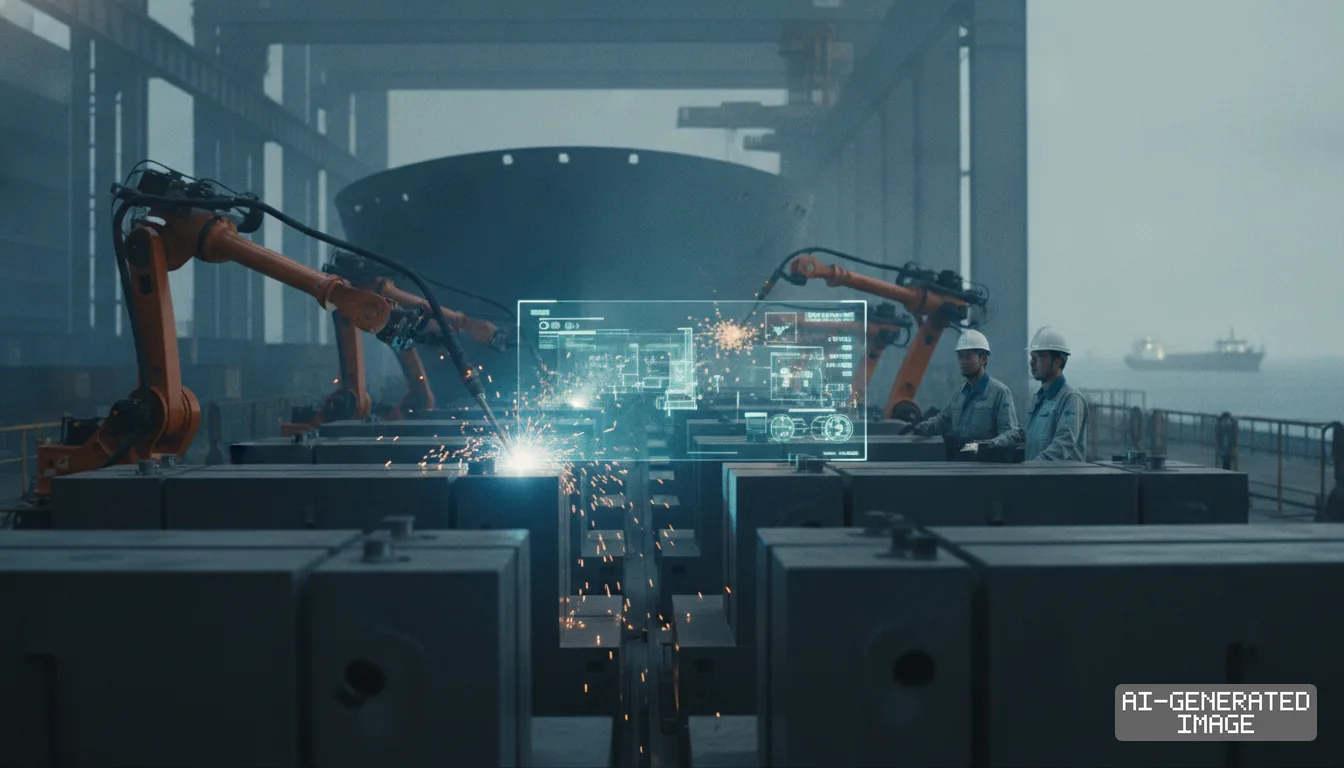
Anchor contractor J Ocean Heavy Industries will expand its Gunsan facilities to install commercial testing rigs for automated small-assembly panel welding lines.
J Ocean Heavy Industries will also provide real estate for dedicated high-speed fifth-generation private mobile telecommunications networks operating across the yard.
The central government contributes 110 billion won to fund Gunsan's private communications grid and subsidize automation equipment for neighborhood parts fabricators.
Weld seam inspection data collected from shop floors will stream over the local network to a national maritime manufacturing database for quality tracking.
Alongside the dockyard program, the two ministries approved the First Basic Plan for the Development and Commercialization of Autonomous Ships spanning 2026 through 2035.
The statutory maritime blueprint sets a target to commercialize fully crewless vessels meeting International Maritime Organization Level 4 standards by 2035.
Trade Minister Kim Jung-kwan said the transition away from labor-intensive manual methods represents an unavoidable structural adjustment for domestic ship construction.
Oceans Minister Hwang Jong-woo said integrating dockyard automation with intelligent vessel control systems will protect Korea's technological lead over low-cost overseas shipbuilders.
The tripartite steering committee will convene its first quarterly progress review in Sejong on Dec. 17, 2026, to finalize equipment procurement tenders.
The joint ministerial notice does not state the individual corporate equity split between Samsung Heavy Industries and Hanwha Ocean for their shared outfitting investment.
Impact map
How this development propagates across the region and out to global buyers.
| Event | Korea | China | Japan | Global impact |
|---|---|---|---|---|
| Shipyard AI Transformation Alliance | HD Hyundai, Samsung Heavy and Hanwha Ocean automate welding and blocks to offset welder deficit | State-backed yards face wider technology gap in smart yard execution despite 20% hull cost edge | Imabari and Nihon Shipyard face intensified automation competition for LNG carrier dock slots | Dual-fuel containership and LNG carrier delivery schedules stabilize on automated outfitting lines |
| Shipyard AI Transformation Alliance | HD Hyundai, Samsung Heavy and Hanwha Ocean automate welding and blocks to offset welder deficit | State-backed yards face wider technology gap in smart yard execution despite 20% hull cost edge | Imabari and Nihon Shipyard face intensified automation competition for LNG carrier dock slots | Dual-fuel containership and LNG carrier delivery schedules stabilize on automated outfitting lines |
In this story
- Companies
- HD Korea Shipbuilding & Offshore EngineeringHD Hyundai SamhoSamsung Heavy IndustriesHanwha Ocean
- Tickers
- 009540.KS010140.KS042660.KS
- Exposed
- J Ocean Heavy IndustriesDae-A Industry
- Policy
- SubsidiesEconomic Security
- Impact
- Supply ChainCapexCost Structure
Track every Subsidies development → Track every Economic Security development →
Related briefings
- HD Hyundai names Lee Sang-kyun head of group shipbuilding units Also on HD Hyundai Samho, HD Korea Shipbuilding & Offshore Engineering
- HD Hyundai Unveils Three-Tank LNG Carrier Design at Gastech Also on HD Hyundai Samho, HD Korea Shipbuilding & Offshore Engineering
- HD Hyundai Samho builds three-tank LNG carriers for BW LNG Also on HD Hyundai Samho, HD Korea Shipbuilding & Offshore Engineering, Cost Structure
- HD Hyundai Samho delivers gas carrier Energy North to Qatar Also on HD Hyundai Samho, Hanwha Ocean
Sources
Primary documents
Reporting
Confidence: high — how we grade this
The documents behind this briefing are linked above. East Asia Brief produces its English text with AI assistance under human editorial review, and does not translate or republish other outlets' articles. See our methodology and AI policy. Spotted an error? Tell us.
The Morning Brief
What changed in Korean, Chinese and Japanese industry overnight — and what it means for your supply chain. One email, weekday mornings, US time. Free.
The Morning Brief is in preparation. Leave your address and we will write to you once — when the first issue is ready. Nothing before that.