HD Hyundai opens offshore SMR verification center in Ulsan
A 12-member consortium spanning shipbuilders, utilities and universities will share testing facilities to develop floating reactors and nuclear-powered commercial vessels.
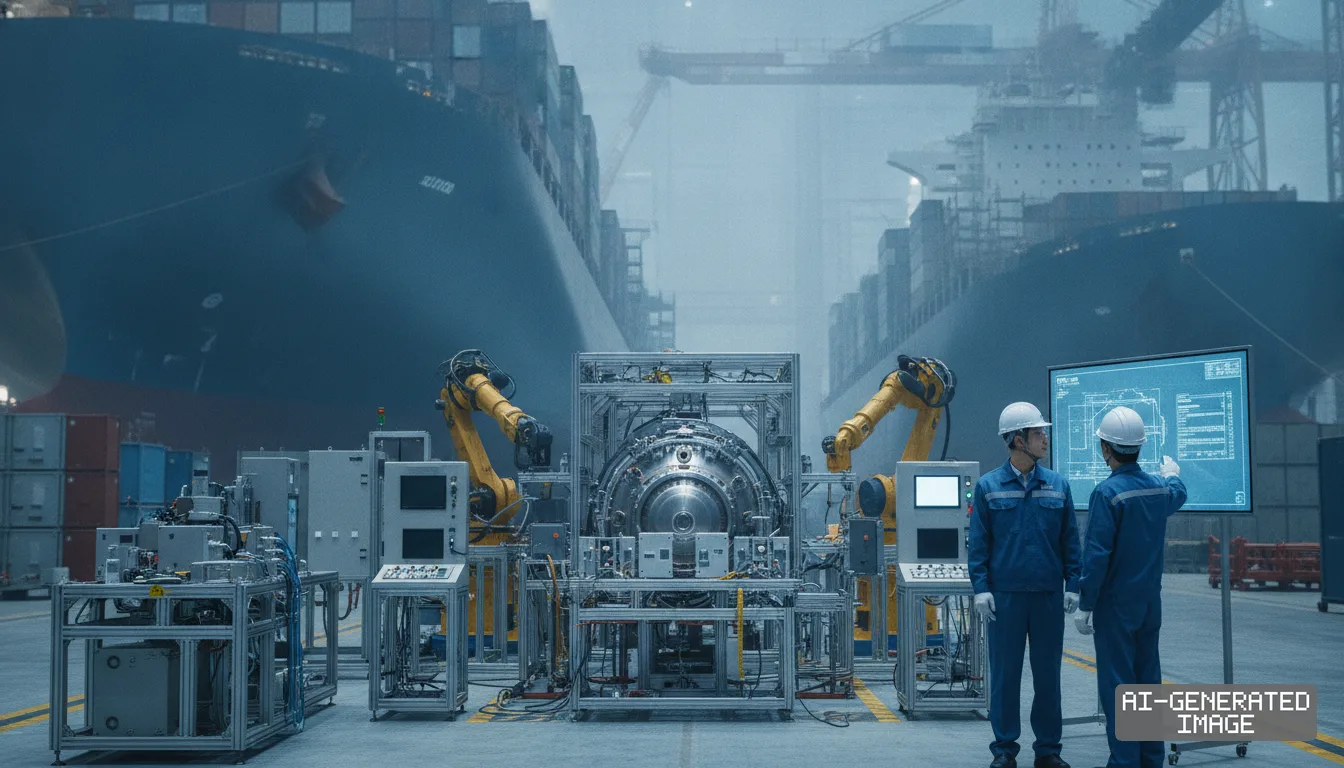
HD Hyundai Heavy Industries launched operations on Oct. 12, 2026, for a 12-member consortium center dedicated to validating offshore small modular reactor technologies in Ulsan, South Korea.
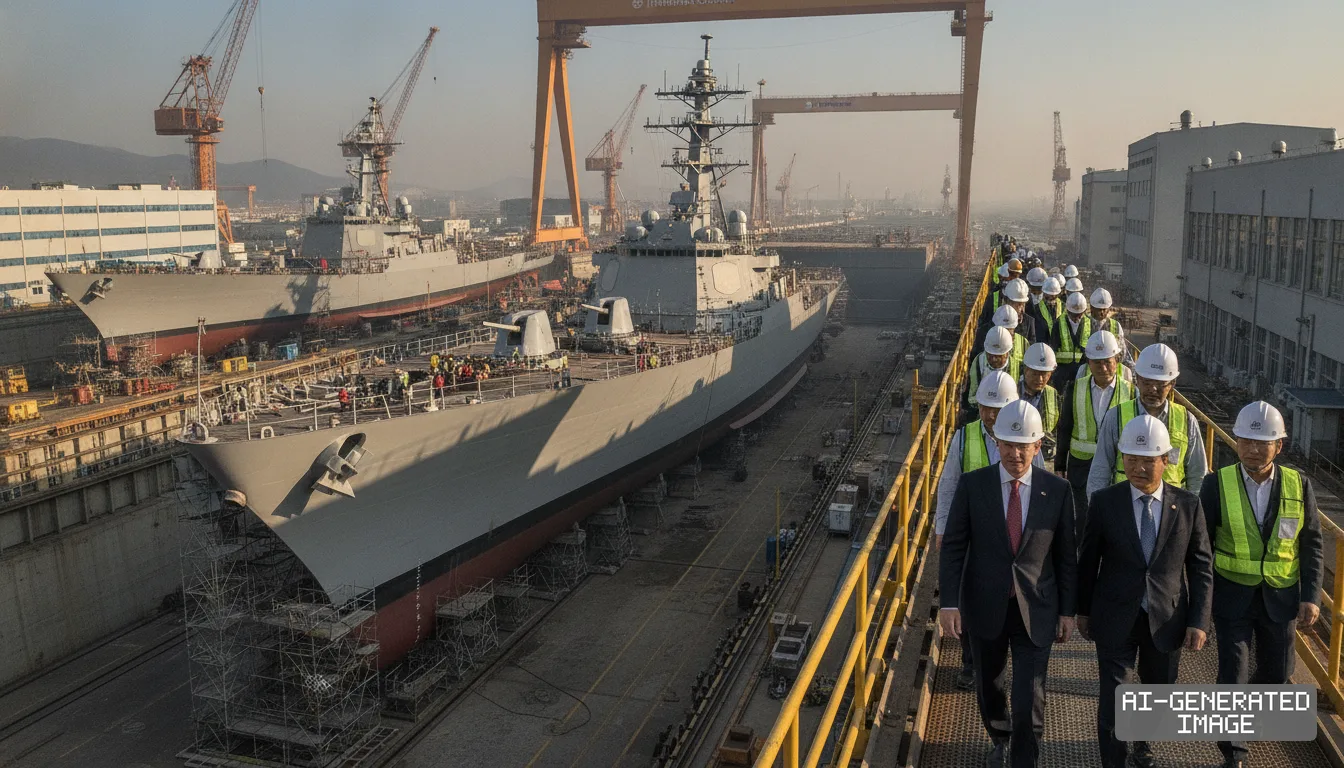
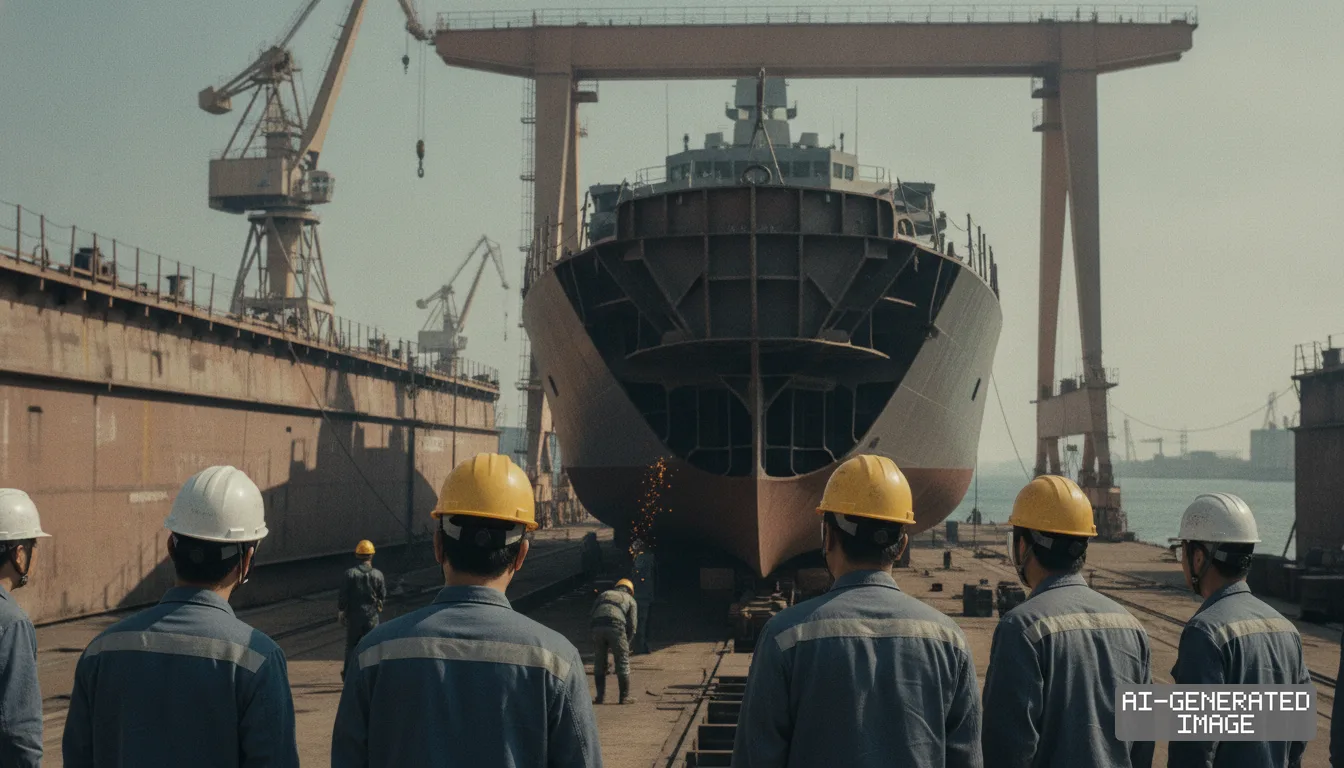
The shipbuilder operates the world's largest commercial shipyard in Ulsan, holding roughly 16% of global merchant vessel order volume.
Small modular reactors — factory-assembled nuclear units generating under 300 megawatts of electricity — offer zero-carbon propulsion without the bunkering constraints that limit alternative maritime fuels.
The consortium did not publish total capital expenditure figures for the center, which aggregates existing test benches and experimental laboratories across the participating institutions.
Parent holding company HD Korea Shipbuilding & Offshore Engineering previously invested $30 million in U.S. reactor developer TerraPower in 2022 to secure advanced reactor engineering rights.
The new testing hub operates from a dedicated engineering research building at the Ulsan National Institute of Science and Technology, known as UNIST.
Ten companion organizations joined the two HD Hyundai subsidiaries to share laboratories, aiming to eliminate duplicate equipment purchases and accelerate marine verification timelines.
The cohort includes state-backed nuclear plant designer KEPCO Engineering & Construction and general contractor Hyundai Engineering & Construction, which holds domestic nuclear building licenses.
Korean Register will establish classification criteria and inspect structural adaptations required to house reactors safely inside floating commercial vessel hulls.
Specialized equipment makers Hyundai Heavy Industries Turbo Machinery and Clad Korea will fabricate maritime steam turbines and corrosion-resistant piping capable of withstanding seawater exposure.
Regional coordinator Ulsan Technopark will manage supply-chain logistics and link industrial manufacturers with laboratory test beds across the southeastern industrial belt.
Academic research teams from UNIST, Seoul National University, KAIST and Hanyang University will conduct dynamic fluid simulations and test thermal-hydraulic responses.
Marine reactors must operate stably while enduring severe ocean swell, vessel roll and structural vibrations that land-based commercial nuclear reactors never encounter.
The research teams will design containment systems and secondary cooling loops optimized for tight machinery spaces below commercial vessel decks.
"The center will link domestic shipbuilding and nuclear engineering infrastructure, establishing an industrial foundation in stages," Won Kwang-sik, head of HD Hyundai Heavy Industries' offshore and energy division, said.
The consortium plans to draft joint proposals for upcoming state research and development tenders overseen by South Korea's Ministry of Trade, Industry and Energy.
The joint facility will test mockups of molten-salt and sodium-cooled reactor auxiliary systems, measuring how sloshing liquid coolants behave during simulated storm conditions.
Engineers will also validate emergency shutdown mechanisms designed to isolate reactor compartments automatically if an offshore vessel loses electrical power.
HD Korea Shipbuilding previously broadened its atomic initiatives in 2024 by joining TerraPower, Southern Company and Core Power to examine molten-chloride fast reactor maritime plants.
The group also formed an alliance in 2025 with TerraPower and Hyundai Engineering & Construction targeting annual fabrication capacity for two to three Natrium reactor modules.
Commercial shipowners face tightening greenhouse gas mandates from the International Maritime Organization, which requires net-zero emissions from global shipping by or around 2050.
Alternative green fuels such as e-methanol and green ammonia require large onboard storage tanks that reduce cargo space on transpacific container runs.
A single marine nuclear fuel core can power a container vessel for up to 20 years, removing regular bunkering stops and volatile fuel price swings.
Global shipyard rivals in China and Japan are also evaluating small modular reactors as competition intensifies for next-generation zero-emission vessel designs.
China State Shipbuilding Corporation unveiled design concepts for a molten-salt nuclear container vessel in late 2023, though commercial prototyping remains underway.
In the United States, the Department of Transportation's Maritime Administration is evaluating small modular reactors for commercial merchant vessels and port electrification.
The International Maritime Organization has set a 2030 target to modernize commercial maritime safety guidelines under the Safety of Life at Sea convention for nuclear-powered merchant ships.
The International Atomic Energy Agency is expanding technical consultations with maritime regulators to establish international safety baselines for floating reactors.
Nuclear-powered cargo vessels still face commercial hurdles, including port clearance access, radiation containment rules and international liability agreements during maritime accidents.
The consortium notice does not provide a commercialization timeline specifying when South Korea will complete or deliver its first nuclear-propelled commercial cargo ship.
The center began its joint testing schedule on Oct. 12, 2026, with technical working groups convening at the UNIST research facility.
Impact map
How this development propagates across the region and out to global buyers.
| Event | Korea | China | Japan | Global impact |
|---|---|---|---|---|
| Offshore SMR verification hub launch | HD Hyundai Heavy anchors 12-member domestic supply chain for maritime nuclear hulls | CSSC evaluates molten-salt reactors for commercial containership concepts | Imabari and ClassNK study floating reactor hulls without domestic prototype tests | IMO targets 2030 SOLAS revision to govern commercial nuclear maritime safety |
In this story
- Companies
- HD Hyundai Heavy IndustriesHD Korea Shipbuilding & Offshore Engineering
- Tickers
- 329180.KS009540.KS
- Exposed
- Hyundai Engineering & ConstructionKEPCO E&C
- Policy
- Economic SecuritySubsidies
- Impact
- Supply ChainCapexCompliance
Track every Economic Security development → Track every Subsidies development →
Related briefings
- HD Hyundai forms offshore SMR test center for nuclear ships Also on Hyundai Engineering & Construction, HD Korea Shipbuilding & Offshore Engineering, HD Hyundai Heavy Industries
- South Korea confirms $120 billion civil nuclear pact with US Also on Hyundai Engineering & Construction
- HD Hyundai names Lee Sang-kyun head of group shipbuilding units Also on HD Korea Shipbuilding & Offshore Engineering, HD Hyundai Heavy Industries, Compliance
- HD Hyundai Wins LR Approval for Hybrid Electric LNG Carrier Also on HD Korea Shipbuilding & Offshore Engineering, HD Hyundai Heavy Industries, Compliance
Sources
Reporting
Confidence: medium — how we grade this
The documents behind this briefing are linked above. East Asia Brief produces its English text with AI assistance under human editorial review, and does not translate or republish other outlets' articles. See our methodology and AI policy. Spotted an error? Tell us.
The Morning Brief
What changed in Korean, Chinese and Japanese industry overnight — and what it means for your supply chain. One email, weekday mornings, US time. Free.
The Morning Brief is in preparation. Leave your address and we will write to you once — when the first issue is ready. Nothing before that.