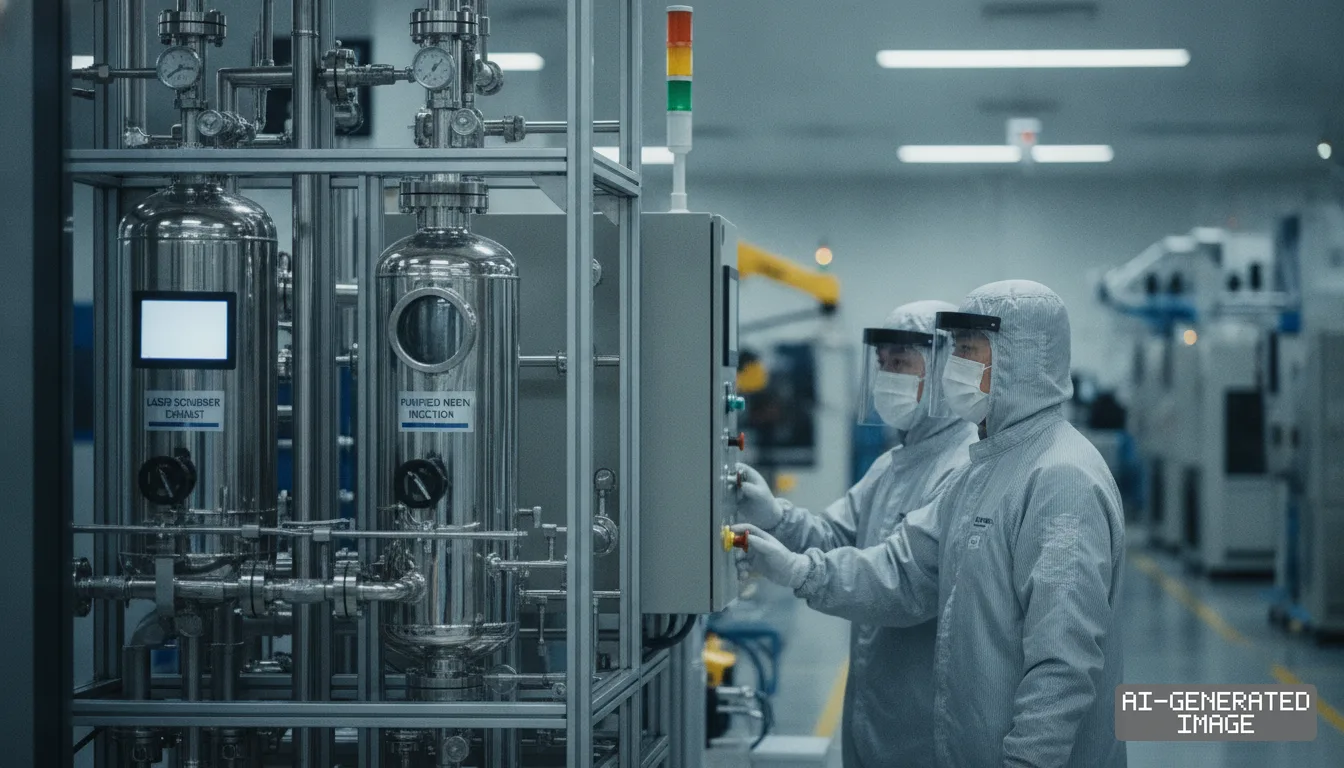
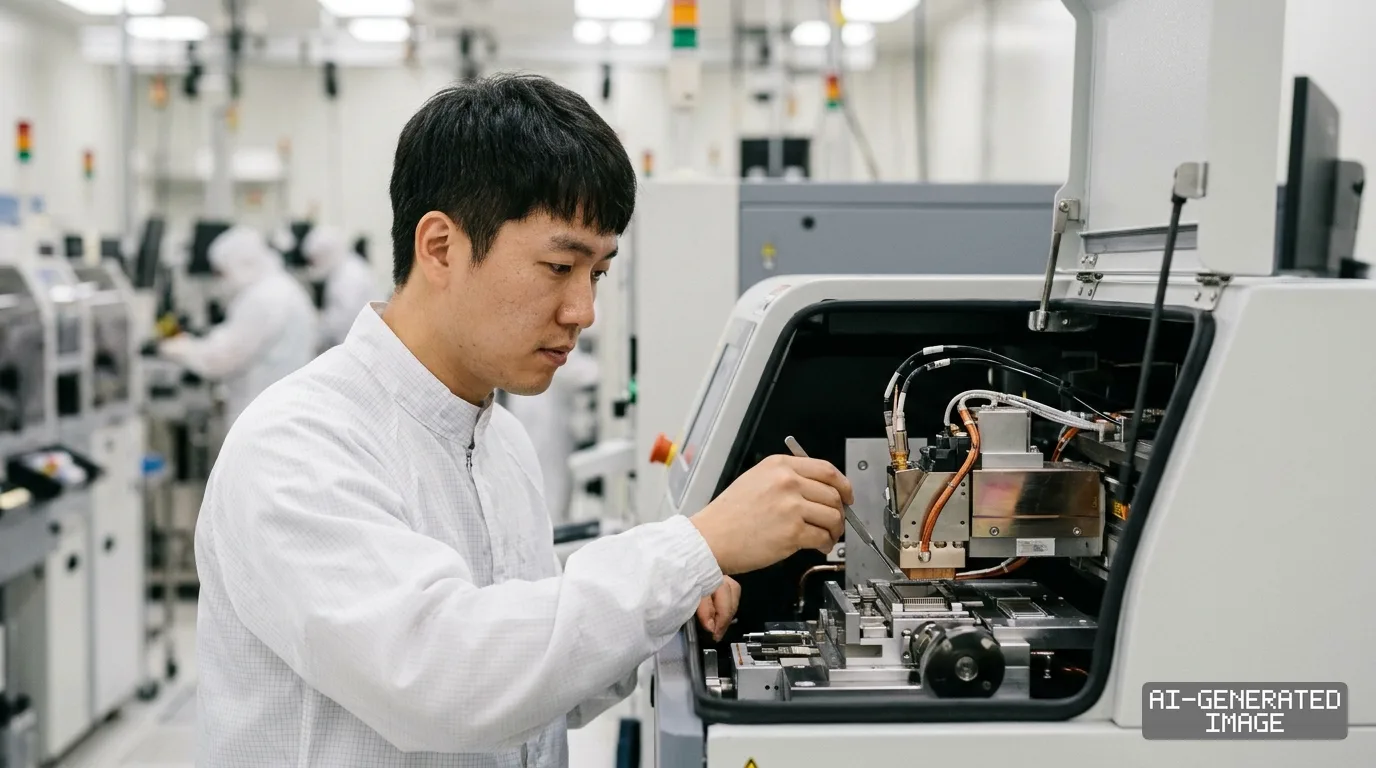
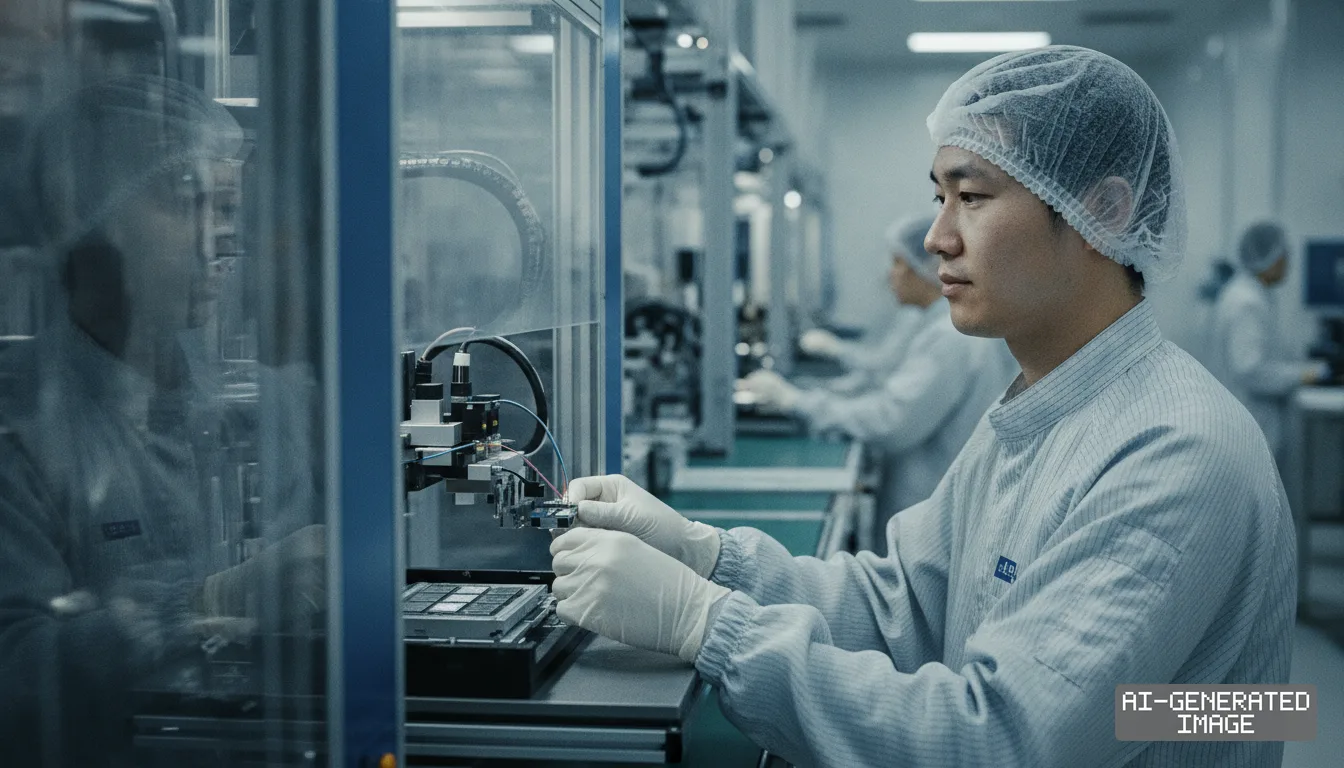
YMTC targets 70% domestic equipment for fourth Wuhan 3D NAND fab
The procurement plan covers tools for chips with over 300 layers at its planned AI memory facility, raising domestic sourcing from 50% at its third plant.
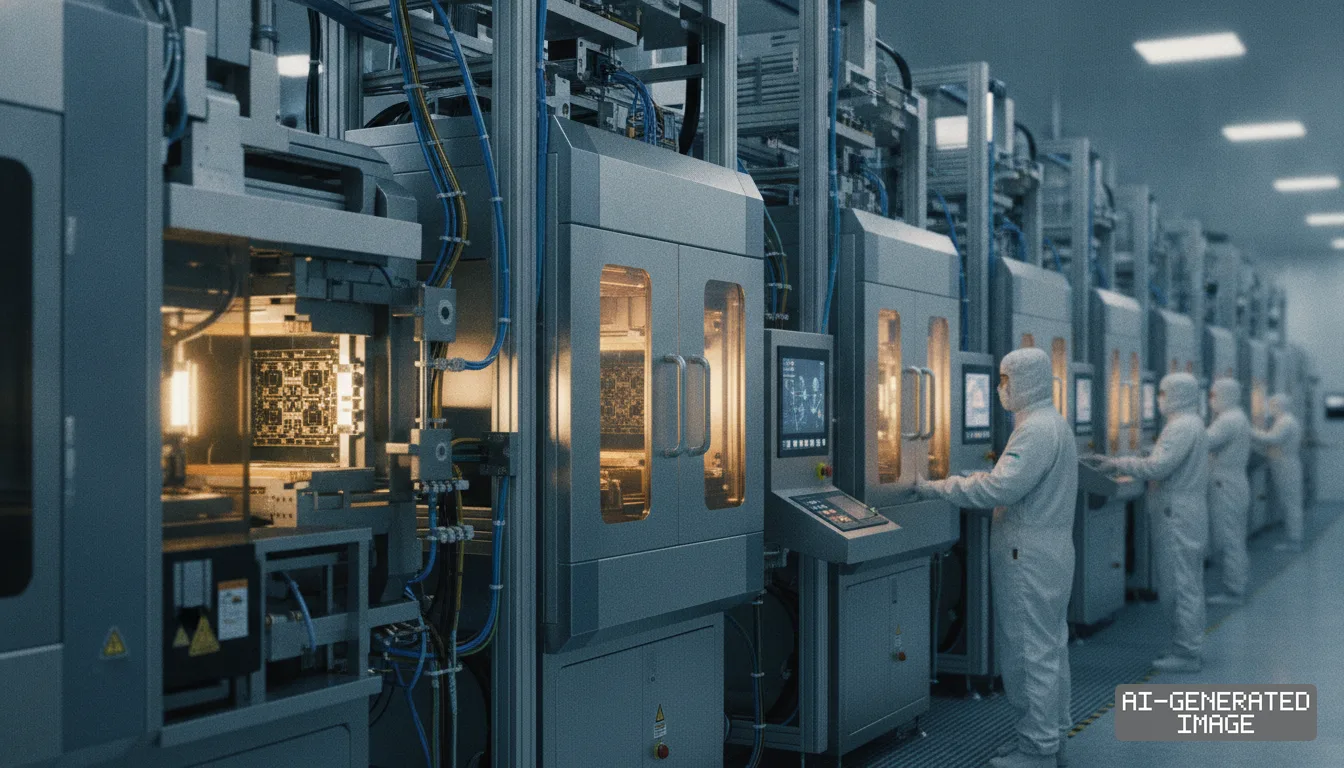
Yangtze Memory Technologies Co. set a target on Nov. 6, 2026, to source 60% to 70% of manufacturing equipment from domestic toolmakers for its fourth semiconductor fabrication plant.
The procurement plan applies to a planned production facility in Wuhan designed for advanced 3D NAND flash memory chips with more than 300 stacked layers, targeting artificial intelligence data centers.
The 60% to 70% domestic sourcing share marks an increase from YMTC's third Wuhan fab, where Chinese equipment makers supply just over 50% of the installed tools.
Initial discussions with Chinese toolmakers are underway, though the company has not yet signed binding commercial contracts or issued formal purchase orders for the facility.
The fab forms part of an industrial campaign to insulate China's memory output from foreign supply disruptions.
YMTC was placed on the United States Department of Commerce Entity List in December 2022, restricting its access to American chipmaking gear without export licenses.
Washington has restricted export licenses for tools capable of producing NAND flash memory with 128 layers or more.
Those restrictions cut YMTC off from advanced etching and deposition platforms made by Lam Research, Applied Materials and KLA.
The third Wuhan fab is scheduled to begin commercial operations by late 2026.
That plant is scheduled to reach an output rate of 50,000 wafers per month by 2027 before scaling to full monthly capacity of 100,000 wafers.
YMTC already operates two fabrication lines in Wuhan with a combined production capacity of roughly 200,000 wafers per month.
The completion of the third and fourth plants would double YMTC's total wafer processing capacity.
Chinese equipment suppliers have expanded their footprint across YMTC's baseline manufacturing process.
Naura Technology Group supplies plasma etching and chemical vapor deposition systems, with its company-wide order backlog booked through the first quarter of 2027.
Advanced Micro-Fabrication Equipment Inc. China, known as AMEC, supplies dielectric etch systems used to drill high-aspect-ratio channels through multi-layer memory stacks.
Piotech has doubled its share of plasma-enhanced chemical vapor deposition equipment at YMTC production lines, securing a 30% share of installed tools in that category.
Domestic suppliers have captured over 40% of China's market for etching and thin-film deposition tools.
Photolithography remains an unresolved bottleneck for Chinese memory production.
YMTC relies on deep ultraviolet immersion scanners imported from ASML before Dutch and American export curbs tightened.
Shanghai Micro Electronics Equipment has not deployed volume-ready immersion scanners capable of supporting dense 3D NAND fabrication.
YMTC works around lithography limits by using its proprietary Xtacking architecture.
The Xtacking process fabricates memory cell arrays and peripheral logic circuits on separate wafers before bonding them together.
This architecture lets YMTC increase memory density by stacking vertical layers without requiring extreme ultraviolet lithography systems.
YMTC captured a 14% share of global NAND flash bit shipments in the second quarter of 2026, ranking third worldwide.
The company trailed only Samsung Electronics at 25% and SK hynix at 22%.
In China, YMTC's market share in NAND flash memory reached 38.5% in the second quarter of 2026, surpassing Samsung Electronics.
Samsung Electronics and SK hynix operate memory fabrication lines in Xi'an and Wuxi under United States export authorizations.
The expansion of YMTC's domestic tooling ratio coincides with funding adjustments at its parent organization.
YMTC's parent entity, Changjiang Storage Holdings Co., deferred its initial public offering on Shanghai's STAR Market on Nov. 4, 2026.
The company distributed an internal memorandum stating that the strategic share allocation process had been paused due to market conditions.
The China Securities Regulatory Commission issued guidance advising financial sponsors to pace public offerings across the artificial intelligence and semiconductor sectors.
The CSI 300 Index fell 8.5% in October 2026, reducing domestic market liquidity for large equity listings.
The STAR Market 50 Index declined 40% from its July peak through late October 2026.
Changjiang Storage Holdings originally submitted its listing application to the Shanghai Stock Exchange on Aug. 21, 2026, seeking to raise 33 billion yuan ($4.9 billion).
The Shanghai Stock Exchange shifted the application status to the inquiry stage on Sept. 3, 2026, after nine business days of review.
The planned listing represents the largest proposed fundraising on the STAR Market.
Company filings allocate 20.8 billion yuan ($3.1 billion) of the proceeds to production line upgrades and 12.2 billion yuan ($1.8 billion) to research projects.
State-backed capital controls the enterprise through multiple investment vehicles.
Hubei Changsheng Development holds a 26.54% stake, while Wuhan Xinfei Technology Investment holds 25.35%.
China's National Integrated Circuit Industry Investment Fund holds a combined 23.35% interest across its first and second phases.
The deferral pushes the company's listing timetable into the first half of 2027.
YMTC has not published an official procurement notice for the fourth fab, and regulatory filings do not specify tool allocation across individual process lines.
Construction on the fourth Wuhan fab is scheduled to break ground in 2027, following the operational start of Fab 3 in late 2026.
Impact map
How this development propagates across the region and out to global buyers.
| Event | Korea | China | Japan | Global impact |
|---|---|---|---|---|
| YMTC Fab 4 equipment localization | Samsung and SK hynix face rising competition as YMTC takes 38.5% of China NAND market | Naura and AMEC gain tool share while CCSH delays 33 billion yuan IPO to 2027 | Japanese wet-clean and inspection vendors face phased substitution on non-lithography steps | Memory supply chain bifurcates into domestic Chinese tool ecosystems and Western-aligned fabs |
In this story
- Companies
- Yangtze Memory Technologies Co.Changjiang Storage Holdings Co.
- Tickers
- 002371.SZ688012.SS688072.SS005930.KS000660.KS
- Exposed
- Naura Technology GroupAdvanced Micro-Fabrication Equipment Inc. ChinaPiotechSamsung ElectronicsSK hynix
- Policy
- Export Controls
- Impact
- Supply ChainCapexOrder Book
Track every Export Controls development →
Related briefings
- Naura and SMEE Accelerate Domestic Tool Shipments to Chinese Fabs Also on Advanced Micro-Fabrication Equipment Inc. China, Naura Technology Group, Export Controls
- Samsung and SK hynix upgrade China memory fabs to 286 layers Also on Yangtze Memory Technologies Co., SK hynix, Samsung Electronics
- China DRAM Makers Advance Proprietary Vertical Stacking to Counter HBM Export Curbs Also on Piotech, Naura Technology Group, Export Controls
- SMIC hits record $9.33B revenue as legacy nodes mask 7nm lag Also on Naura Technology Group, Export Controls
Sources
Primary documents
Reporting
Confidence: high — how we grade this
The documents behind this briefing are linked above. East Asia Brief produces its English text with AI assistance under human editorial review, and does not translate or republish other outlets' articles. See our methodology and AI policy. Spotted an error? Tell us.
The Morning Brief
What changed in Korean, Chinese and Japanese industry overnight — and what it means for your supply chain. One email, weekday mornings, US time. Free.
The Morning Brief is in preparation. Leave your address and we will write to you once — when the first issue is ready. Nothing before that.