TSMC Dismisses Terafab Rumors as Texas Factory Talks Surface
While TSMC dismissed market talk of joining Elon Musk's 1-terawatt AI compute initiative, Intel remains the sole confirmed foundry partner for the $16.8 billion Texas project.
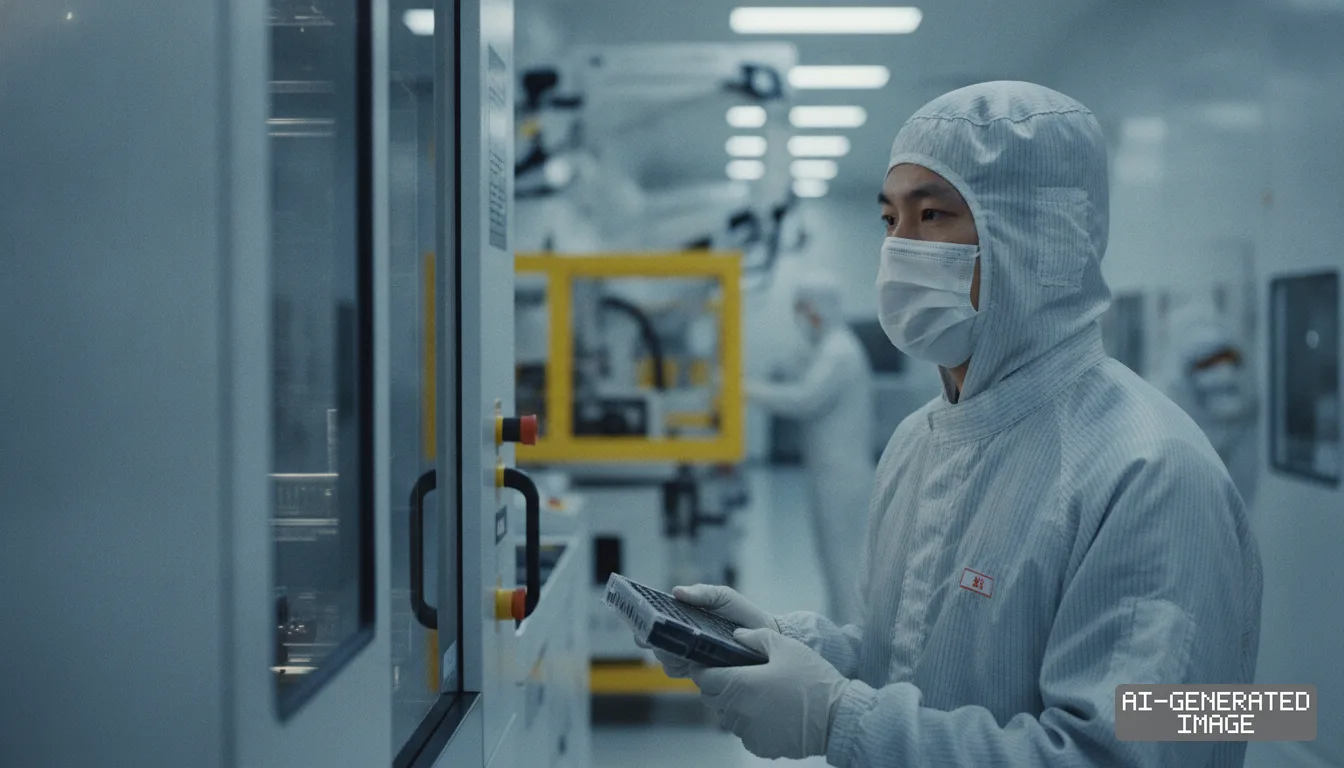
Taiwan Semiconductor Manufacturing Co. dismissed market reports on Oct. 2, 2026, that linked the contract chipmaker to Elon Musk's planned Terafab chipmaking venture in Texas.
The company said in a written statement that it does not comment on market rumors. The response followed reports that TSMC is evaluating a new Texas foundry campus costing at least $20 billion per fab.
Any Texas buildout would stand separate from the $265 billion TSMC committed to its Arizona site. North American customers accounted for more than 75% of TSMC wafer revenue in the first half of the year.
Musk announced the Terafab project on March 21, 2026, as a joint venture between Tesla and SpaceX. The venture targets more than one terawatt of annual computing capacity for autonomous vehicles and artificial intelligence models.
Filings with the U.S. Securities and Exchange Commission confirm that Intel joined as Terafab's primary foundry partner in April 2026. Intel committed its 18A and 14A manufacturing nodes to supply the facility.
The partnership positioned Intel to anchor chip fabrication for Musk's hardware initiatives. Tesla and SpaceX filed registration statements on Form S-1 outlining the compute roadmap in April and August 2026.
Public records in Grimes County, Texas, detail an initial $16.8 billion capital outlay for the first phase of the Terafab campus. Total planned spending across all phases could reach $119 billion.
Terafab aims to operate a prototype wafer fabrication plant in Austin by late 2027. Full production at the permanent Grimes County complex is scheduled for completion before the end of 2028.
Rumors of TSMC involvement gathered momentum after reports indicated company scouts had reviewed prospective sites near Austin. The proximity to Tesla's central operations led market observers to suggest a foundry tie-up.
TSMC leadership previously expressed skepticism regarding Musk's independent semiconductor plans. Chairman C.C. Wei told investors at the annual shareholder meeting on June 4, 2026, that building a greenfield foundry takes three to five years.
Wei wished Musk luck during that meeting but noted that wafer manufacturing involves operational discipline that outsiders consistently underestimate. TSMC had not engaged in formal technical discussions with the project team.
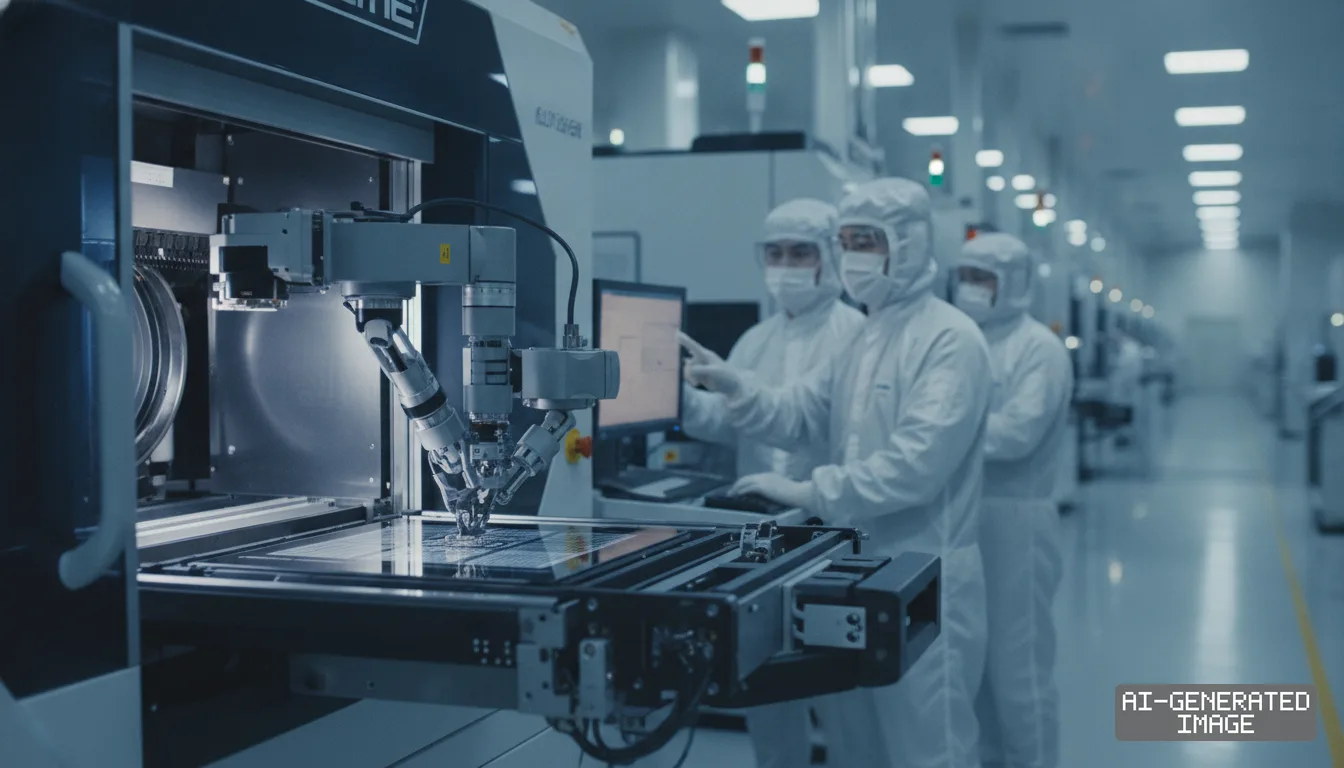
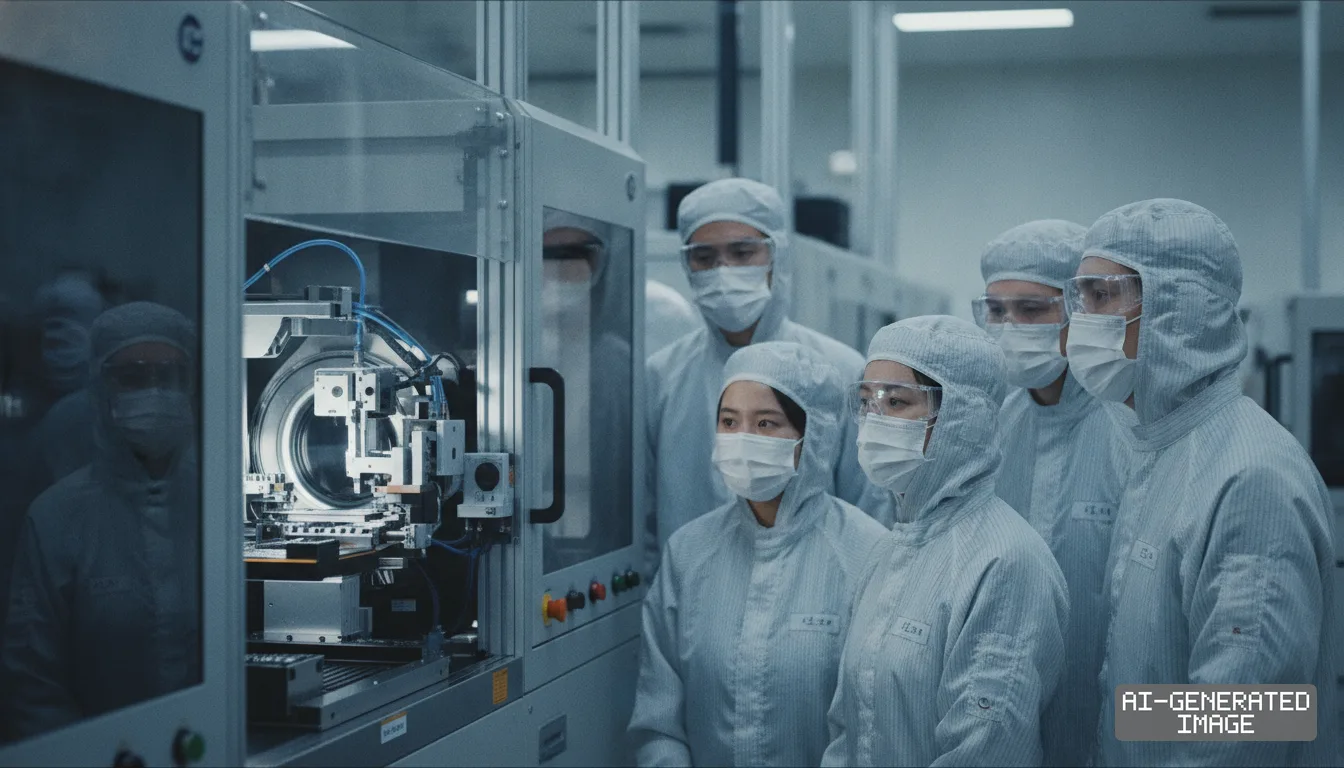
Modern semiconductor manufacturing requires intricate supply chains and thousands of specialized suppliers. TSMC operates high-volume foundries that depend on decades of yield optimization and proprietary packaging techniques.
Equipment procurement across the foundry sector has tightened as chipmakers race to expand packaging lines. TSMC Deputy Co-Chief Operating Officer Cliff Hou said last month that tool orders doubled over the prior year.
Packaging bottlenecks center on chip-on-wafer-on-substrate capacity, known as CoWoS. TSMC allocates nearly all advanced packaging capacity to existing high-volume accelerator clients including Nvidia, Advanced Micro Devices and Broadcom.
Diverting leading-edge packaging lines or 2-nanometer wafer capacity to an unproven external initiative would introduce operational risks. TSMC prefers multiyear customer commitments backed by advance prepayments and joint capacity reservations.
Texas already hosts large semiconductor manufacturing complexes run by Samsung Electronics and Texas Instruments. Samsung operates a logic foundry in Taylor, while Texas Instruments expands mature-node analog capacity in Sherman.
TSMC currently maintains design service centers in Austin and San Jose, alongside a mature fab in Camas, Washington. A full fabrication campus in Texas would mark its second major manufacturing cluster in the United States.
High utility costs, clean water requirements and local power availability pose logistical hurdles for new Texas fabs. Terafab itself intends to draw heavy electrical loads from dedicated substation infrastructure at the Grimes County site.
Federal incentives also dictate the pace of foundry investments across the United States. TSMC used the 2022 CHIPS and Science Act to support three advanced fabrication plants at its complex in Phoenix.
The U.S. advanced-manufacturing investment tax credit, which provides a 35% tax benefit for qualifying semiconductor tools and facilities, expires Dec. 31, 2026. Foundry operators are conditioning new U.S. campuses on legislative renewal.
Congressional lawmakers have debated extending the 35% tax credit into 2027, but no formal tax package has cleared committee votes. A lapse in the tax incentive would alter internal rate-of-return models for foreign foundries.
The company has not filed regulatory disclosures regarding Texas property acquisitions, and public records show no commercial agreement between TSMC and Terafab.
For now, Intel retains exclusive manufacturing rights under the registered Terafab disclosures. TSMC plans to review fourth-quarter capital expenditure guidance during its third-quarter earnings conference on Oct. 15, 2026.
Impact map
How this development propagates across the region and out to global buyers.
| Event | Korea | China | Japan | Global impact |
|---|---|---|---|---|
| TSMC Texas and Terafab speculation | Samsung foundry maintains Taylor Texas lines without direct competition from a local TSMC campus | SMIC and domestic foundries face no supply displacement from US-based custom accelerator buildouts | Tokyo Electron and tool suppliers maintain delivery schedules tied to existing TSMC Arizona phases | Intel retains exclusive access to Terafab 18A manufacturing orders while TSMC preserves leading-edge packaging for top AI clients |
In this story
- Companies
- Taiwan Semiconductor Manufacturing Co.Intel
- Tickers
- 2330.TWINTC
- Exposed
- TeslaSpaceXTexas InstrumentsSamsung Electronics
- Policy
- SubsidiesTax Credits
- Impact
- CapexSupply ChainOrder Book
Track every Subsidies development → Track every Tax Credits development →
Related briefings
- Hanmi Semiconductor Wins Tool Order for Musk's Terafab Plant Also on SpaceX, Tesla, Order Book
- South Korea funds advanced chip packaging and backside power pilot lines Also on Tax Credits, Intel, Samsung Electronics
- TSMC warns AI cannot solve physical barriers for 1.4nm chips Also on Taiwan Semiconductor Manufacturing Co, Intel, Samsung Electronics
- Chinese EVs capture 35% Korea market share under 8% tariff Also on Tesla, Tax Credits, Order Book
Sources
Primary documents
Reporting
Confidence: high — how we grade this
The documents behind this briefing are linked above. East Asia Brief produces its English text with AI assistance under human editorial review, and does not translate or republish other outlets' articles. See our methodology and AI policy. Spotted an error? Tell us.
The Morning Brief
What changed in Korean, Chinese and Japanese industry overnight — and what it means for your supply chain. One email, weekday mornings, US time. Free.
The Morning Brief is in preparation. Leave your address and we will write to you once — when the first issue is ready. Nothing before that.