Indonesia taps 3 billion tons of quartz for chip polysilicon
Jakarta pitched raw silica and polysilicon refining to South Korean chipmakers on Nov. 18, expanding resource export restrictions beyond nickel.
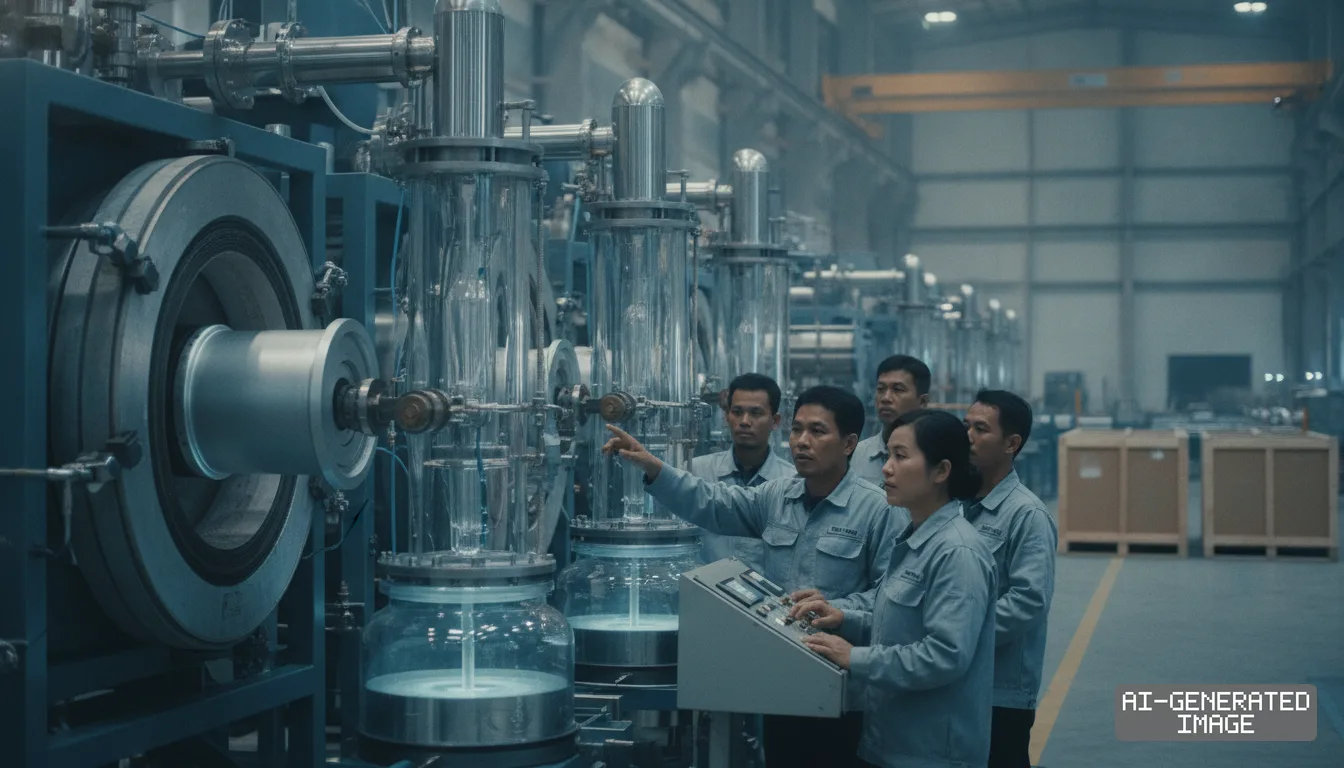
Indonesia pitched its critical mineral downstreaming program to South Korean chipmakers on Nov. 18, expanding resource export restrictions from nickel into polysilicon and semiconductor silicon supply chains.
The initiative seeks to link Southeast Asian raw material processing directly with East Asian semiconductor manufacturing. Two-way merchandise trade between South Korea and the Association of Southeast Asian Nations reached $226 billion last year.
Indonesia holds 3 billion metric tons of proven silica sand reserves, according to Geological Agency data. Jakarta aims to convert those quartz deposits into domestic polysilicon rather than exporting unrefined ore.
President Prabowo Subianto formally proposed the mineral supply alliance at the ASEAN-Republic of Korea Summit in Manila. Prabowo urged Seoul to integrate South Korean chipmaking with Southeast Asian mineral refining hubs.
The Ministry of Energy and Mineral Resources published the industrial proposal on Nov. 17 under the title From Mine to Chip. The document outlines processing stages from quartz mining to ingot pulling.
Indonesia has completed initial domestic processing capacity and stands ready to supply advanced technology manufacturing, Energy and Mineral Resources Minister Bahlil Lahadalia said. The plan replicates Jakarta's nickel processing mandates for electronics inputs.
Southeast Asian leaders adopted the ASEAN Critical Minerals Declaration on Nov. 15. The regional pact commits member states to coordinate processing standards and curb unrefined mineral outflows across member borders.
The semiconductor pitch activates a bilateral critical minerals agreement signed in Seoul on April 1. Under that framework, South Korea agreed to transfer clean processing technologies in return for guaranteed mineral supply quotas.
The energy ministry added silica sand and quartzite to Indonesia's official critical minerals schedule on March 10, 2025. That regulatory shift gave authorities legal powers to require domestic refining of raw quartz.
PT Trina Mas Agra Indonesia broke ground on an integrated solar and silicon facility in Central Java. The joint venture between Trina Solar and local partners operates in the Kendal Special Economic Zone.
The Kendal project includes an initial 1-gigawatt cell line and upstream wafer production capacity. Project developers designed the smelting facility to refine domestic quartz into metallurgical and solar-grade polysilicon.
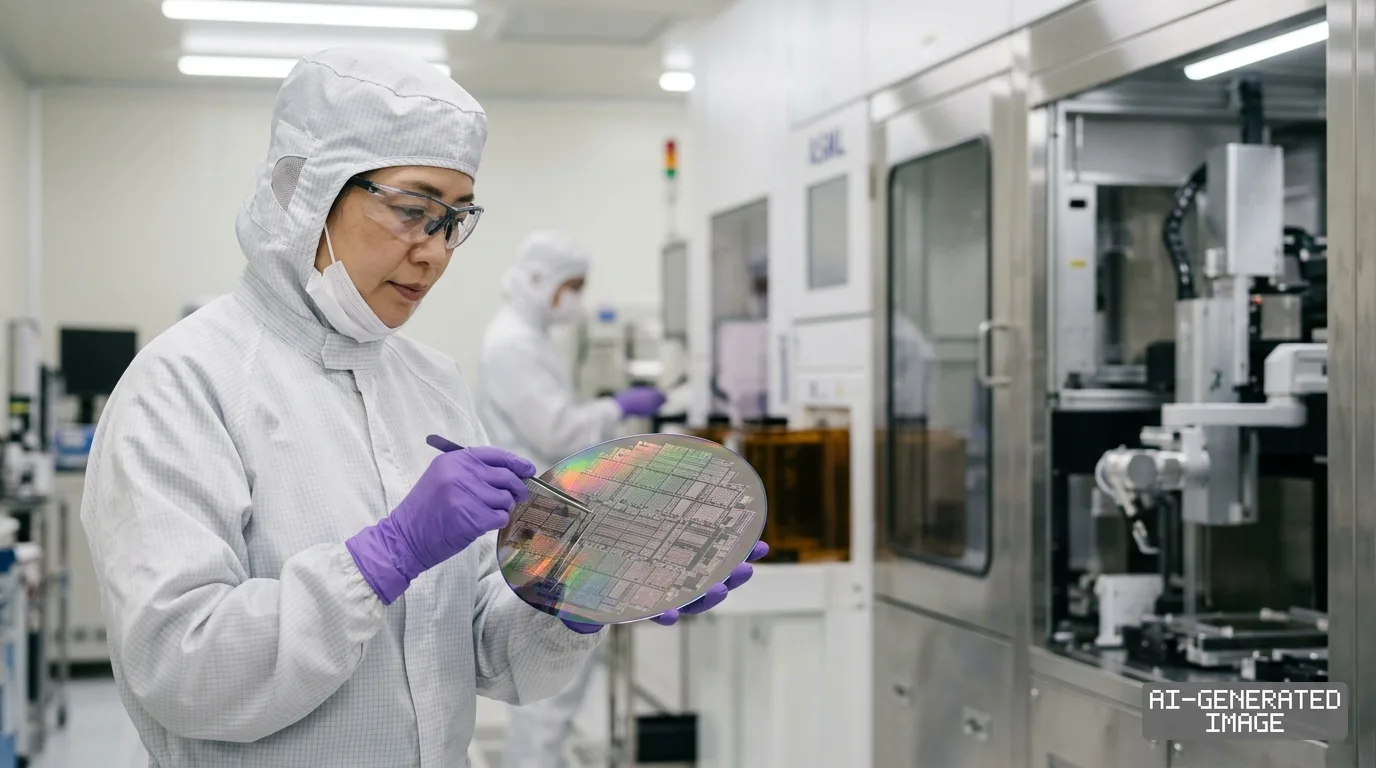
South Korean memory producers Samsung Electronics and SK hynix consume large volumes of silicon wafers across domestic fabrication lines. Both manufacturers rely on international supply networks for high-purity polysilicon feedstocks.
Samsung Electronics operates mega-scale memory fabrication complexes in Pyeongtaek and Hwaseong. The company sources processed silicon wafers from certified chemical suppliers to sustain monthly production exceeding 500,000 wafer starts.
SK hynix runs advanced DRAM and NAND flash plants in Icheon and Cheongju. The memory producer requires continuous shipments of electronic-grade wafers to maintain production yields on high-bandwidth memory packaging lines.
Bridging the gap between solar-grade polysilicon and semiconductor materials requires complex chemical refining. Solar cells tolerate nine-nines purity, while semiconductor fabrication demands eleven-nines purity of 99.9999999%, chemical engineers said.
Chinese chemical producers currently control more than 80% of global polysilicon refining capacity. Jakarta aims to position its planned smelters as alternative sources for buyers seeking diversified mineral procurement channels.
Japanese silicon wafer makers Shin-Etsu Chemical and Sumco produce over half of global polished wafers. Both suppliers purchase refined polysilicon under long-term contracts from vetted international chemical refineries.
Polysilicon smelting consumes large volumes of base-load electricity during chemical vapor deposition. Industrial power rates in Java average roughly $0.07 per kilowatt-hour, exceeding electricity tariffs available in northwestern Chinese refining hubs.
Indonesia provides 20-year corporate income tax holidays for mineral processing investments located inside special economic zones. Qualifying projects must commit at least 500 billion rupiah ($31 million) in domestic capital expenditure.
Bilateral mineral working groups will convene in Jakarta on Dec. 12 to review project feasibility under the April agreement. Indonesian officials scheduled technical consultations with Korean trade representatives for the following week.
The energy ministry has not published purity thresholds for refined silicon export permits. The public notice does not state whether foreign joint ventures can retain majority ownership of downstream chemical purification plants.
The Geological Agency completed exploratory drilling across 14 quartz deposits in Riau and Central Kalimantan. Final assay results for those silica reserves enter the national mineral inventory database next month.
Impact map
How this development propagates across the region and out to global buyers.
| Event | Korea | China | Japan | Global impact |
|---|---|---|---|---|
| Indonesia silicon downstream expansion | Samsung and SK hynix assess alternative polysilicon supply outside China | Trina Solar expands Kendal wafer capacity while Chinese refiners protect 80% market share | Shin-Etsu Chemical and Sumco evaluate Southeast Asian feedstock quality for wafer production | Polysilicon supply diversifies from China but faces 99.9999999% purity hurdle |
In this story
- Companies
- Samsung ElectronicsSK hynixTrina Solar
- Tickers
- 005930.KS000660.KS688599.SS
- Exposed
- Shin-Etsu ChemicalSumco
- Policy
- Export ControlsTax Credits
- Impact
- Supply ChainCapexCost Structure
Track every Export Controls development → Track every Tax Credits development →
Related briefings
- Global solar additions drop 14.8% as China curbs export rebates Also on Trina Solar, Tax Credits, Cost Structure
- China restricts 12 solar technologies under new export rules Also on Trina Solar, Export Controls
- China expands 300mm silicon wafer capacity to cut reliance on Japanese suppliers Also on SUMCO, Shin-Etsu Chemical, Tax Credits
- SK hynix Convenes Japan Chip Suppliers on Next HBM Roadmap Also on SUMCO, Shin-Etsu Chemical, SK hynix
Sources
Reporting
Confidence: medium — how we grade this
The documents behind this briefing are linked above. East Asia Brief produces its English text with AI assistance under human editorial review, and does not translate or republish other outlets' articles. See our methodology and AI policy. Spotted an error? Tell us.
The Morning Brief
What changed in Korean, Chinese and Japanese industry overnight — and what it means for your supply chain. One email, weekday mornings, US time. Free.
The Morning Brief is in preparation. Leave your address and we will write to you once — when the first issue is ready. Nothing before that.