Japanese epoxy mold makers reformulate resins to tame warpage in 16-high memory
Chemical suppliers modify spherical silica filler morphology and polymer matrices to counter extreme thermomechanical stress across 16-die vertical stacks.
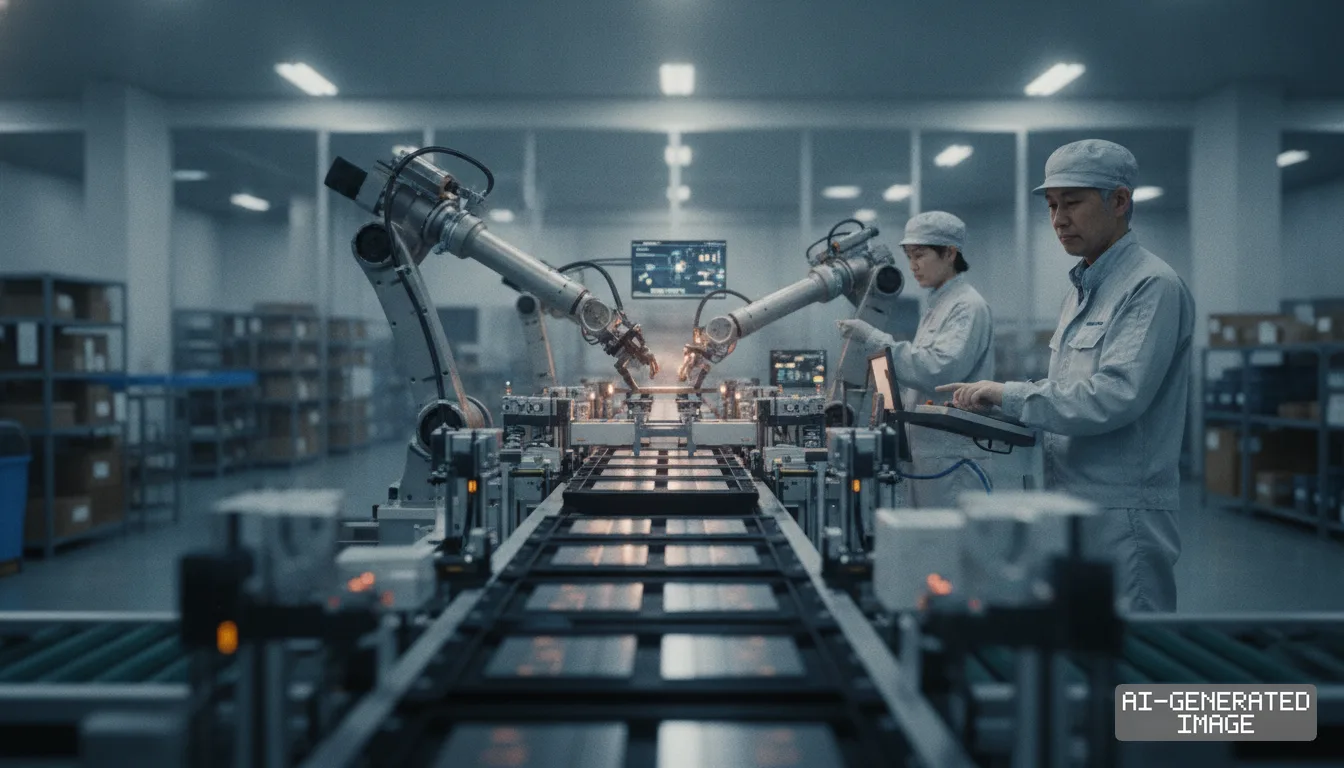
Japanese electronic material producers are reformulating epoxy molding compounds and liquid encapsulants with tailored silica filler morphologies and low-modulus polymer matrices, addressing acute wafer warpage and thermomechanical stress in 16-high memory architectures. The technical shift targets the severe physical constraints emerging as high-bandwidth memory (HBM) designs transition from 8-high and 12-high structures to 16-high vertical stacks for next-generation AI accelerators.
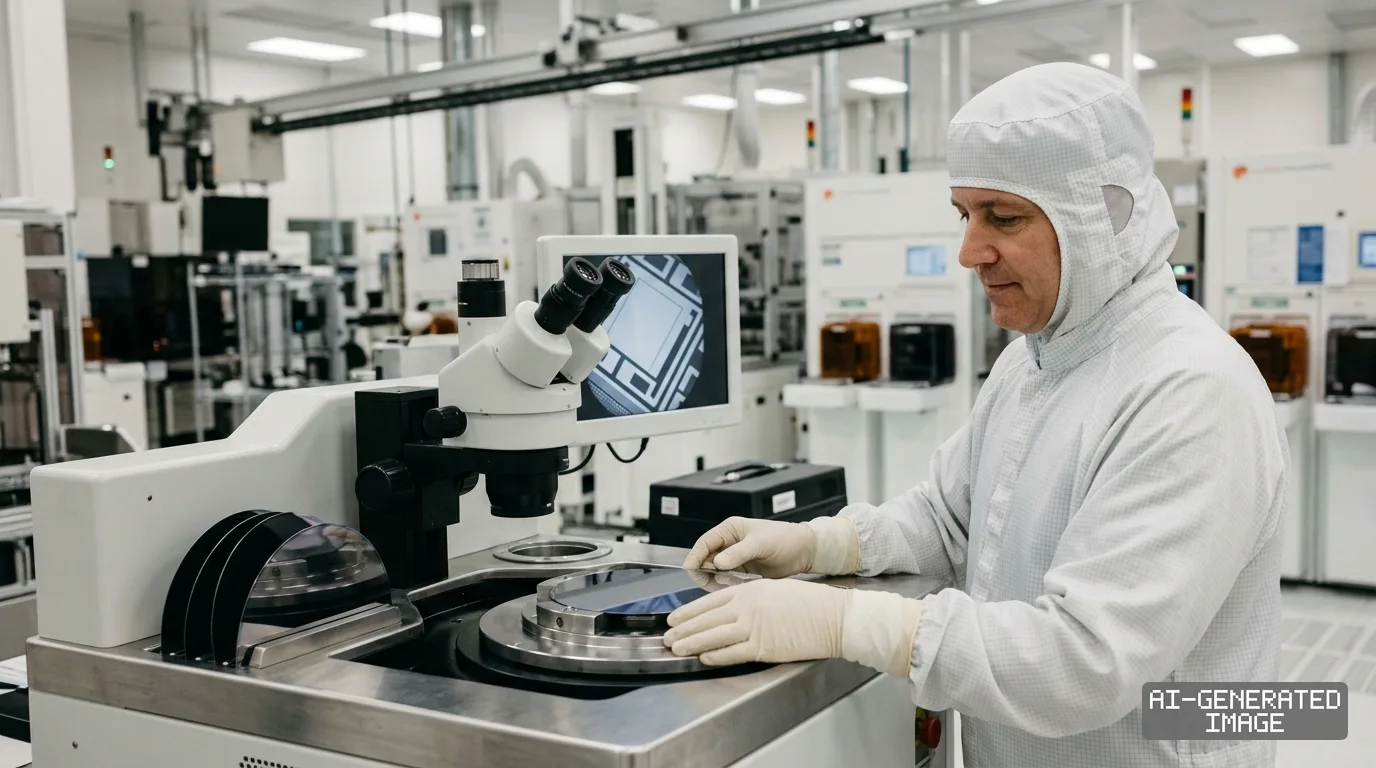
In 16-high configurations, semiconductor manufacturers stack 16 discrete dynamic random-access memory (DRAM) dies over a base logic die, requiring individual wafer thicknesses to drop below 40 micrometers to remain within standardized package height envelopes. Stacking multiple ultra-thinned silicon layers introduces cumulative coefficient of thermal expansion (CTE) mismatches between silicon, copper micro-bumps, and polymeric encapsulation materials. During thermocompression bonding, mass reflow, and post-mold curing cycles, localized stress gradients cause die tilt, micro-bump bridging, interfacial delamination, and excessive substrate warpage that complicates downstream packaging processes.
Japan's specialized chemical sector, which commands a dominant share of global semiconductor encapsulation materials, is responding with redesigned material architectures. Sumitomo Bakelite Co., Ltd. initiated the trial launch of its EME-L series liquid encapsulant, engineered specifically for 2.xD, 3D chiplet, and high-density multi-die systems. The material combines under-mold and over-mold steps into a single compression molding operation. By balancing flowability with low internal stress and reduced mold shrinkage, the EME-L formulation targets package warpage reduction during post-encapsulation handling, with customer qualifications slated through 2027 alongside its established SUMIKON EME granular product lines.
Resonac Corporation is expanding its advanced packaging portfolio with formulations such as the NH-860 series, engineered with a reduced flexural modulus and enhanced interfacial adhesion. The material absorbs thermomechanical strain generated across vertical silicon interfaces, preventing corner delamination and crack propagation under thermal cycling. Resonac is pairing these low-stress mold compounds with its non-conductive film (NCF) systems and chemical mechanical planarization (CMP) slurries to offer integrated material stacks for 16-high thermocompression bonding flows.
Panasonic Industry Co., Ltd. has commercialized molded underfill (MUF) compounds, including the LEXCM CF CV8581, CV8713, and CV8511CUB series, tailored for narrow-gap micro-bump arrays and low-warpage panel-level and wafer-level packaging. The formulations utilize proprietary high-density filler loading technologies to achieve low mold shrinkage, high glass transition temperatures, and controlled flexural modulus. This enables complete, void-free filling beneath flip-chip dies with bump pitches below 25 micrometers while encapsulating top surfaces in a single process step.
Shin-Etsu Chemical Co., Ltd. is supplying silicone-modified epoxy transfer molding compounds under its KMC series, incorporating silicone flexibilizers directly into the epoxy backbone. The hybrid polymer structure lowers the elastic modulus at room and elevated temperatures without sacrificing thermal stability, minimizing the residual stresses that induce wafer curvature during mold cooling.
The core chemical challenge in 16-high stacks centers on controlling the morphology and surface treatment of fused silica fillers embedded within the resin matrix. Japanese formulators are shifting toward multimodal particle size distributions composed of sub-micron and nanometer-scale spherical silica treated with specialized silane coupling agents. By optimizing the packing density of spherical particles, formulators increase total inorganic filler loading beyond 85 percent by weight. High filler loadings depress the material's CTE closer to the 3 to 4 parts per million per degree Celsius of monocrystalline silicon, directly lowering thermal expansion divergence.
Simultaneously, formulators are modifying resin backbones with low-viscosity multifunctional epoxy resins and hydrocarbon-based curing agents. This resin design preserves melt flowability at high filler volumes, enabling liquid and granular encapsulants to penetrate narrow vertical clearances without displacing thinned memory dies or shearing micro-bump interconnects.
The material reformulations directly affect memory manufacturers and outsourced semiconductor assembly and test (OSAT) providers evaluating packaging routes for upcoming memory nodes. SK hynix Inc. relies extensively on Mass Reflow Molded Underfill (MR-MUF) processes utilizing specialized liquid epoxy materials sourced from Japan's Namics Corporation, which provide high thermal conductivity and narrow-gap penetration. Samsung Electronics Co., Ltd. continues to advance its Advanced Thermal Compression Non-Conductive Film (TC-NCF) processes while evaluating molded underfill materials for its tall-stack roadmaps to curb processing times and warpage.
For downstream customers integrating multi-die memory stacks onto large-area silicon interposers, encapsulant-driven warpage control dictates assembly yield. Excessive wafer bow prevents uniform contact during interposer placement and causes structural defects in adjacent logic chiplets. The availability of qualified low-stress encapsulation materials will govern the production ramp schedules for 16-high memory modules across major East Asian packaging facilities through 2027.
Impact map
How this development propagates across the region and out to global buyers.
| Event | Korea | China | Japan | Global impact |
|---|---|---|---|---|
| Low-stress EMC formulation | memory yields | packaging lag | chemical dominance | AI server supply |
In this story
- Companies
- Sumitomo BakeliteResonacPanasonic IndustryShin-Etsu ChemicalNamicsSK hynixSamsung Electronics
- Tickers
- 4203.T4004.T6752.T4063.T000660.KS005930.KS
- Policy
- Economic Security
- Impact
- Supply ChainCapexCost Structure
Track every Economic Security development →
Related briefings
- Samsung opens Yokohama chip packaging lab to rival TSMC lead Also on Resonac, Samsung Electronics, Cost Structure
- Sumitomo Bakelite expands Asian chip molding compound lines Also on Sumitomo Bakelite, Cost Structure
- TSMC and Samsung set High-NA EUV roadmaps for sub-2nm nodes Also on Shin-Etsu Chemical, Samsung Electronics
- Japan accelerates grants for rare-earth-reduced robot motor magnets under economic security act Also on Shin-Etsu Chemical, Cost Structure
Sources
Reporting
Confidence: medium — how we grade this
The documents behind this briefing are linked above. East Asia Brief produces its English text with AI assistance under human editorial review, and does not translate or republish other outlets' articles. See our methodology and AI policy. Spotted an error? Tell us.
The Morning Brief
What changed in Korean, Chinese and Japanese industry overnight — and what it means for your supply chain. One email, weekday mornings, US time. Free.
The Morning Brief is in preparation. Leave your address and we will write to you once — when the first issue is ready. Nothing before that.