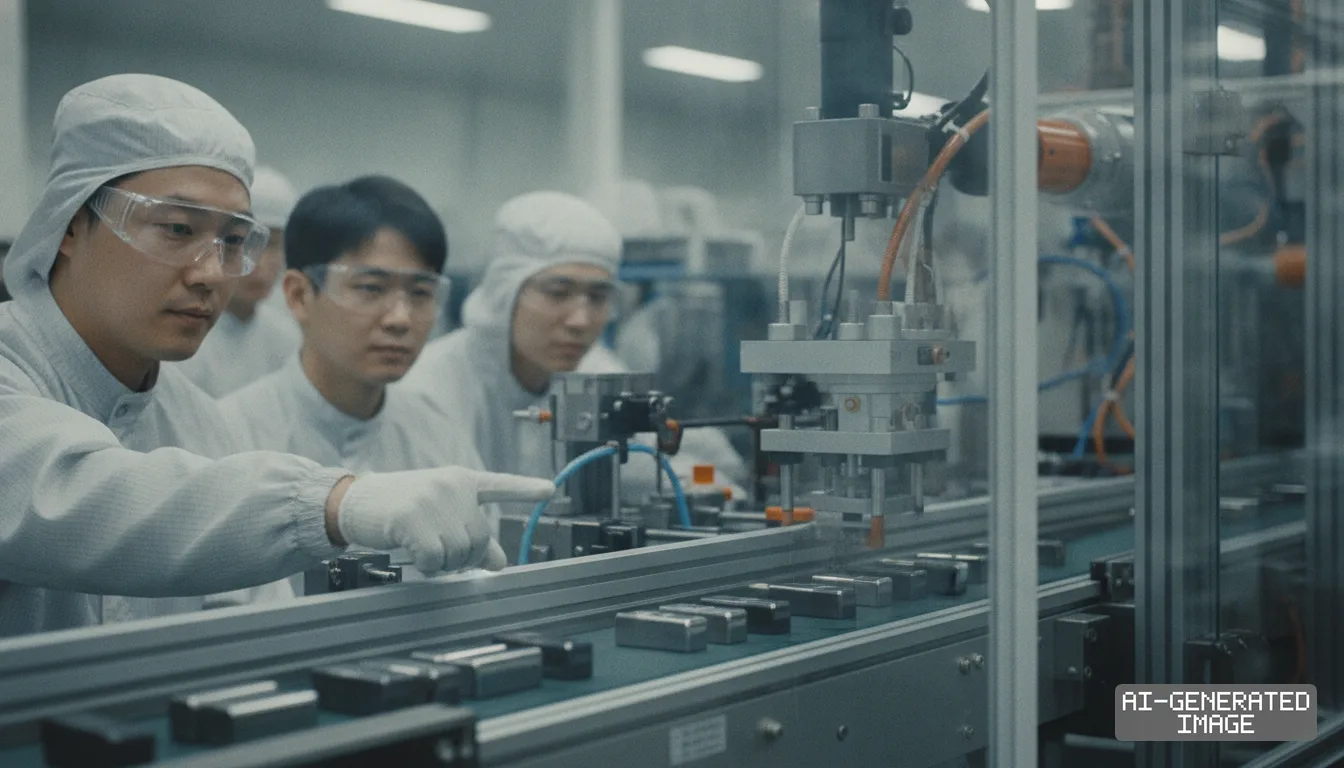
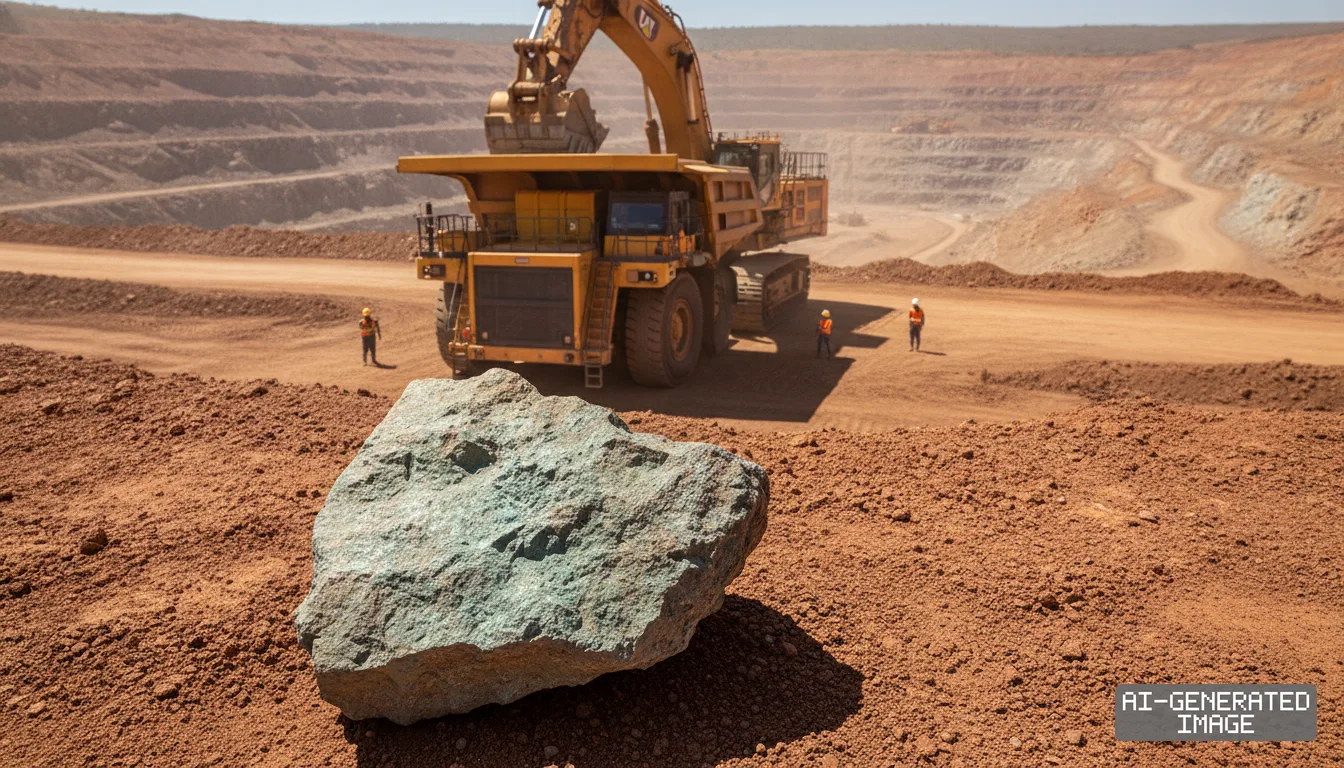
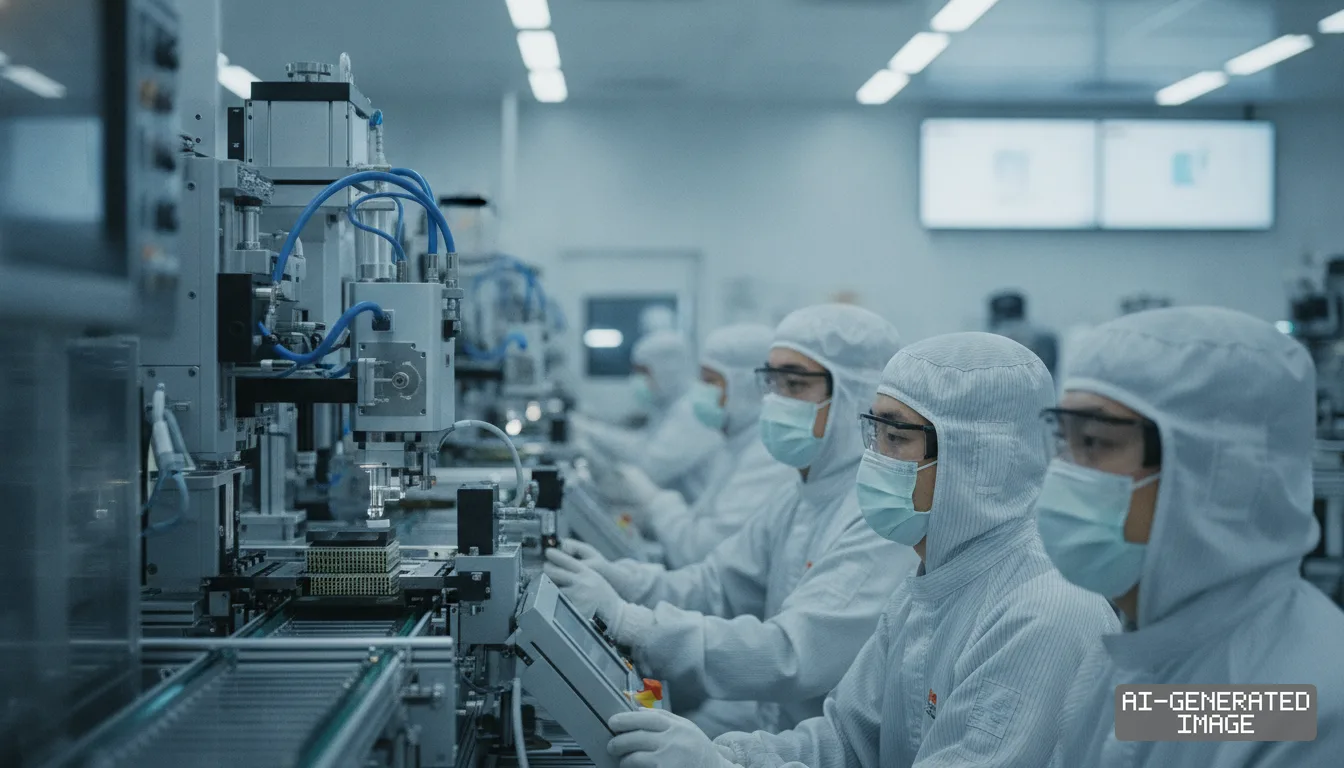
Korea Zinc backs $7.4B Tennessee smelter to bypass Chinese minerals
Project Crucible deploys $4.7 billion in Pentagon loans and a $210 million CHIPS Act grant to refine 11 federally designated defense materials.
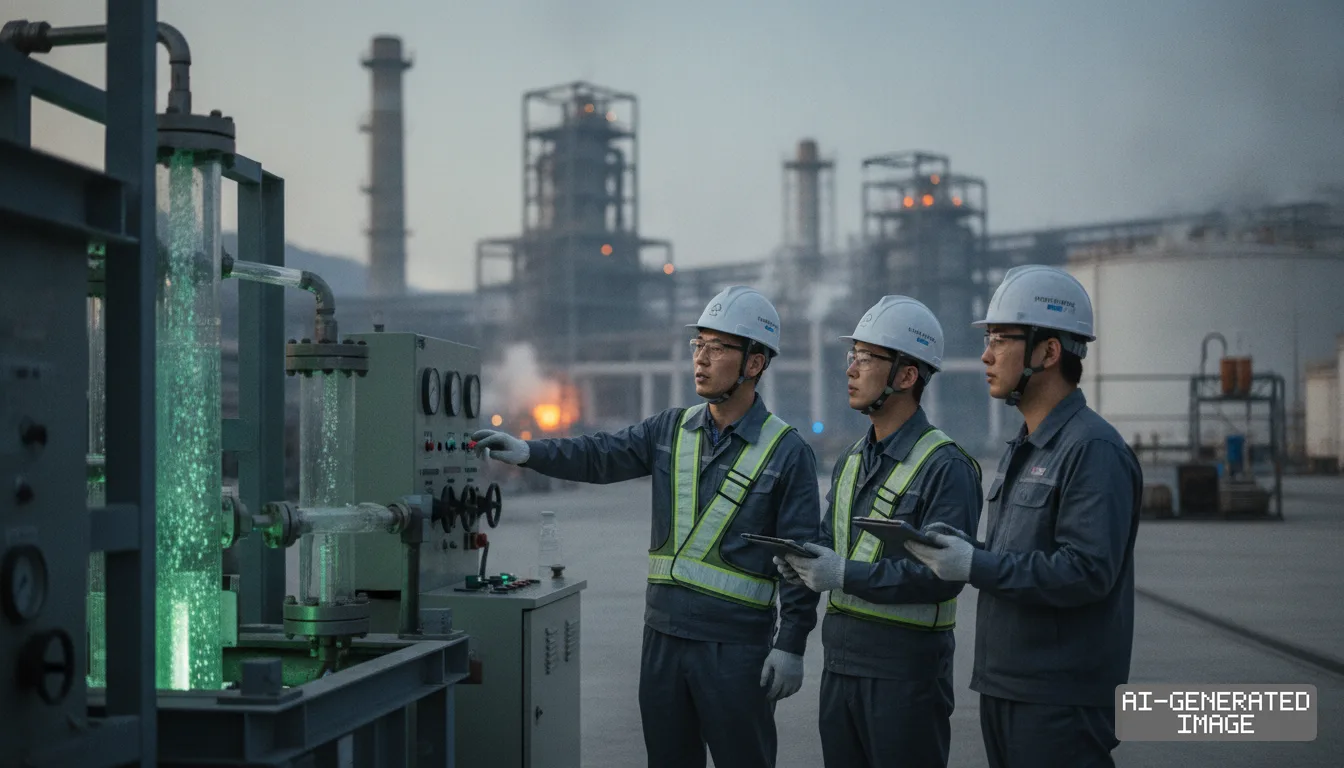
Korea Zinc moved forward on Nov. 24, 2026 with Project Crucible, advancing its $7.43 billion integrated smelter in Tennessee to process 11 federally designated critical minerals outside Chinese supply chains.
The Seoul-based smelter is the world's largest producer of refined zinc and lead. It operates the Onsan complex in South Korea, extracting valuable minor metals from base ore residues using proprietary metallurgical recovery circuits.
Project Crucible requires $6.6 billion in direct capital expenditure within the $7.43 billion total budget. Federal credit programs cover $4.7 billion of the capital through Department of Defense loans, alongside a $210 million CHIPS Act grant.
Strategic investors and joint venture equity provide $1.94 billion toward the complex. Korea Zinc committed $580 million directly, maintaining operational control while securing external backing for more than 90% of the total project debt.
The company integrated the project with existing industrial infrastructure in Tennessee. Korea Zinc acquired the Clarksville zinc smelter from commodity trader Nyrstar in April 2026, securing an operational footprint and regional transport links for the expanded complex.
Feedstock supply depends partly on secondary industrial recycling. Korea Zinc established a 70:30 joint venture named Jupiter with solar recycler SOLARCYCLE on Nov. 16, securing decommissioned photovoltaic panels to recover antimony, copper and silver inputs.
Smelting operations require an uninterrupted power supply to maintain high-temperature furnaces. The Tennessee Valley Authority approved a firm power request on Nov. 10, contracting 230 megawatts to subsidiary Crucible Zinc with deliveries scheduled to begin in 2029.
Commercial negotiations focused on electricity pricing mechanisms. Chairman Yun B. Choi met with TVA board leaders in May to finalize transmission capital plans, locking in public utility rates that undercut tariffs charged by 90% of large US power distributors.
Federal environmental regulators cleared the industrial site for full development. The Department of Defense issued a Finding of No Significant Impact on Sept. 21, concluding formal environmental reviews under the National Environmental Policy Act.
The Federal Permitting Improvement Steering Council placed the Clarksville smelter on its FAST-41 dashboard in April. The designation synchronizes regulatory timelines across federal and state bodies, preventing administrative delays during final building authorizations.
Federal support extends beyond direct project capital. The facility qualifies for production tax credits under Section 45X of the Internal Revenue Code, offering operational credits for every kilogram of critical minerals refined on domestic soil.
The project gained fresh strategic weight following bilateral meetings in Shenzhen that concluded without easing Chinese export quotas. China controls 99% of global primary gallium output and over 80% of refined bismuth and antimony production.
The Tennessee facility will produce 12 nonferrous metals, including gallium, germanium, antimony, indium and tellurium. The plant also manufactures semiconductor-grade sulfuric acid, an essential chemical agent used to cleanse silicon wafers during microchip production.
Antimony serves as an essential compound in armor-piercing munitions, primers, military optics and heavy grid storage batteries. The United States imported 85% of its antimony needs in 2024, leaving defense manufacturers dependent on foreign supply lines.
Bismuth replaces lead in defense alloys and high-stress industrial coatings, while gallium forms the base for advanced radar transceivers and high-voltage power semiconductors. Chinese export licensing has steadily tightened Western physical procurement schedules for both elements.
Korea Zinc applies its hematite iron-precipitation process to recover these dispersed minerals. The system removes iron impurities from zinc solution mixtures, allowing chemical extraction circuits to isolate trace metals with purities exceeding 99.99%.
The hematite recovery circuit achieves an overall zinc recovery rate above 98.5%, company filings show. Capturing minor byproducts during primary smelting removes the economic need to construct standalone, single-metal recovery facilities for small-volume strategic minerals.
Crucible Zinc will construct the 650,000-square-meter smelting complex adjacent to its existing Clarksville facility. Groundbreaking is scheduled for early 2027, with commissioning of primary zinc circuits and byproduct recovery units planned for 2029.
The complex expects to create more than 400 permanent technical manufacturing positions across Montgomery County. Commercial operations will expand in phases until all 12 metal processing streams reach full capacity in 2030, the company said.
Cross-border ore procurement will supplement domestic recycling scrap. Corporate executives met with Canadian mining leaders in Ottawa to integrate North American mineral supplies, ensuring steady ore feeds for the Clarksville blast and leaching furnaces.
The federal FAST-41 permitting dashboard sets the formal completion target for all remaining federal permits and environmental reviews on Sept. 30, 2028, prior to final high-voltage grid connections and commercial commissioning.
Korea Zinc has not published the long-term tolling formulas or off-take pricing structures governing the strategic metals produced under its federal loan agreements.
Engineering teams in Clarksville and Ulsan completed initial site topography surveys this month, finalizing layout configurations for the primary electrowinning halls and byproduct recovery plants.
Impact map
How this development propagates across the region and out to global buyers.
| Event | Korea | China | Japan | Global impact |
|---|---|---|---|---|
| Project Crucible smelter construction | Korea Zinc leverages Onsan metallurgical technology to anchor $4.7 billion in US federal financing | Mineral exporters face long-term loss of Western byproduct refining dominance | Tech suppliers secure non-Chinese sources of high-purity indium and semiconductor sulfuric acid | Western defense and aerospace supply chains gain domestic processing for 11 critical minerals |
In this story
- Companies
- Korea Zinc
- Tickers
- 010130.KS
- Exposed
- SOLARCYCLE
- Policy
- Subsidies
- Impact
- Supply ChainCapexOrder Book
Track every Subsidies development →
Related briefings
- Pentagon commits $174M to Australian gallium plant to break China monopoly Also on Korea Zinc, Subsidies
- US redirects mineral funds to back Korea Zinc's $7.4B smelter Also on Korea Zinc, Subsidies
- Korea Zinc advances $7.4B US smelter for critical minerals Also on Korea Zinc, Subsidies
- Korea Eximbank weighs state loan for Korea Zinc's US smelter Also on Korea Zinc, Subsidies
Sources
Primary documents
Reporting
Confidence: high — how we grade this
The documents behind this briefing are linked above. East Asia Brief produces its English text with AI assistance under human editorial review, and does not translate or republish other outlets' articles. See our methodology and AI policy. Spotted an error? Tell us.
The Morning Brief
What changed in Korean, Chinese and Japanese industry overnight — and what it means for your supply chain. One email, weekday mornings, US time. Free.
The Morning Brief is in preparation. Leave your address and we will write to you once — when the first issue is ready. Nothing before that.