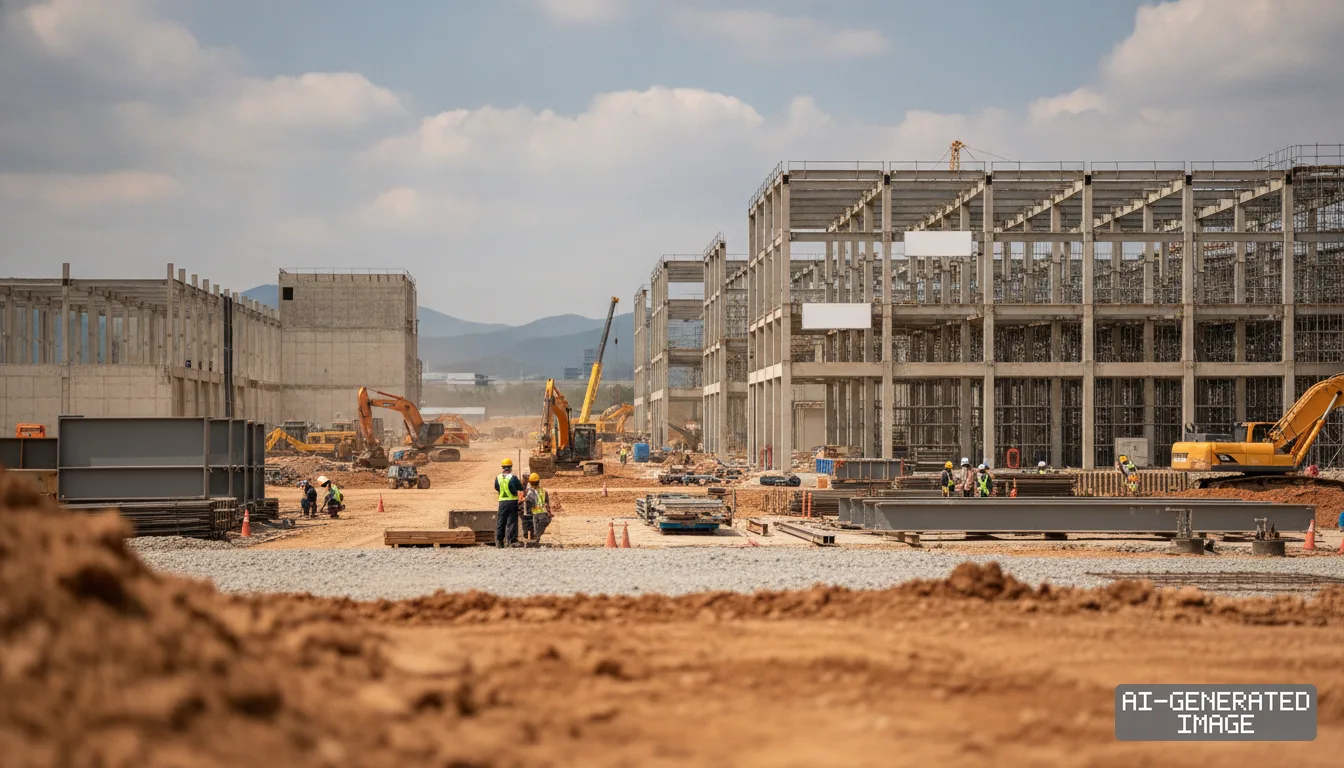
Korea Eximbank weighs state loan for Korea Zinc's US smelter
Seoul's Supply Chain Stabilization Fund opens review for the $7.4 billion Tennessee critical minerals plant, matching Washington's $4.7 billion loan backing.
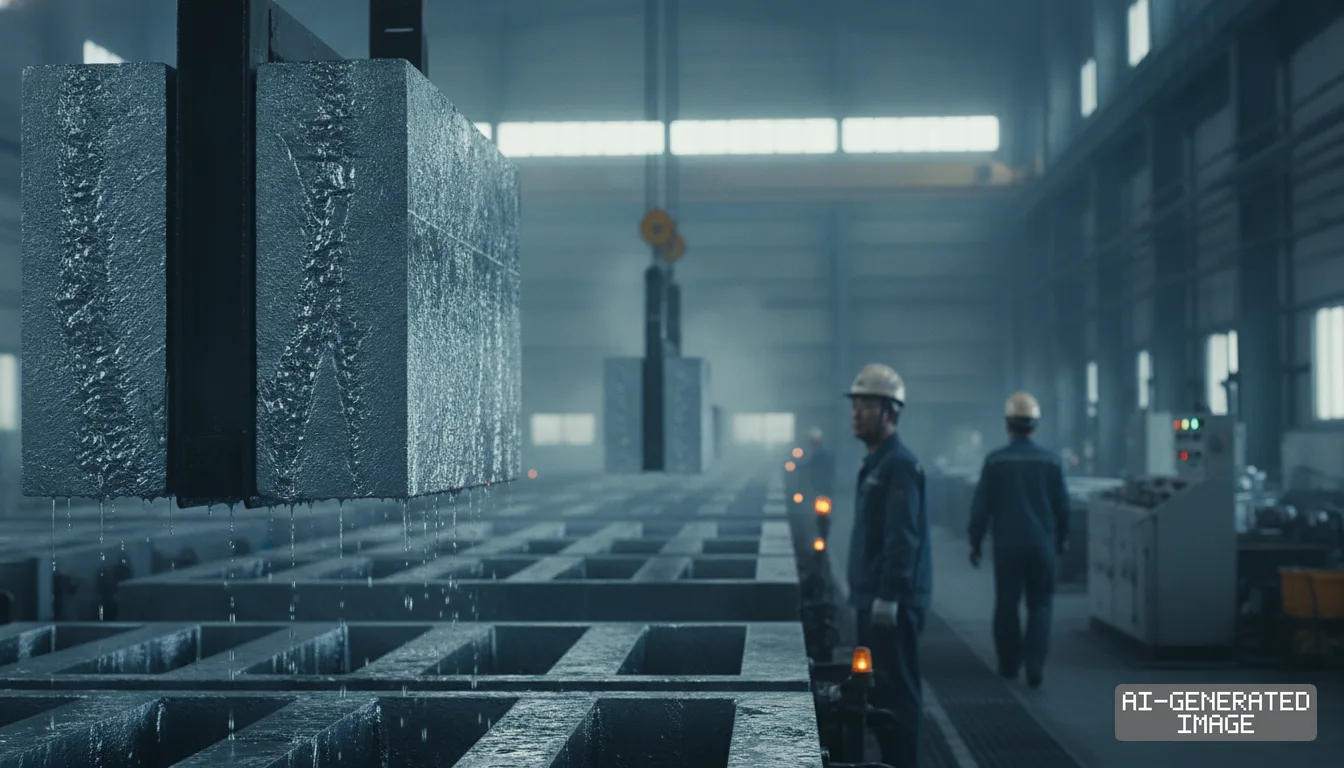
The Export-Import Bank of Korea said Oct. 20 it is weighing state financing for Korea Zinc's $7.4 billion smelter project in Tennessee through the country's Supply Chain Stabilization Fund.
Eximbank Chairman Hwang Ki-yeon disclosed the review during a parliamentary audit conducted by the National Assembly Strategy and Finance Committee. Hwang said credit officers are currently evaluating project eligibility, financing structures and risk factors.
The initiative, designated Project Crucible, carries an estimated budget of $7.4 billion (10.9 trillion won) in Clarksville, Tennessee. The federal government of the United States has already agreed to provide $4.7 billion in long-term debt financing.
The complex will break ground in 2027 and aims to reach commercial operations by 2029. The site will refine zinc and copper alongside 11 critical minerals designated by Washington, including gallium, germanium, indium and antimony.
The South Korean policy lender established the Supply Chain Stabilization Fund in September 2024 under the Framework Act on Supply Chain Stabilization for Economic Security. The program provides state-backed loans to diversify critical mineral procurement away from single-nation dependencies.
Lawmakers urged the policy lender during the hearing to match Washington's speed in committing project capital. Ruling People Power Party lawmaker Kim Sang-hoon stated that domestic policy institutions must actively back critical mineral infrastructure developed by South Korean refiners abroad.
Kim pointed out that Korea Zinc generated 1.33 trillion won ($965 million) in operating profit in the first half of 2026. That operating result marked a 151% increase from the prior year, demonstrating sufficient underlying debt-service capability.
Korea Zinc is constructing the facility to expand beyond its Onsan smelter complex in Ulsan, South Korea. The company operates the world's single largest nonferrous smelting facility at Onsan, producing 1.2 million metric tons of refined metals each year.
Project Crucible will replicate roughly 50% of Onsan's operational processing capacity across a 160-acre site. The footprint incorporates property from the former Nyrstar Clarksville facility, which operated as the only primary zinc smelter in the United States.
The Clarksville installation will process 620,000 metric tons of legacy zinc smelting residues stored in five surface ponds. The facility will recover minor metals from that residue — the concentrated leftover byproduct of initial smelting — including industrial gallium and germanium.
China currently refines more than 90% of global primary gallium output and roughly 60% of commercial germanium supply. Chinese authorities imposed strict export licensing mandates on both metals in August 2023, restricting raw material flows to overseas semiconductor manufacturers.
Gallium and germanium serve as primary inputs for high-frequency radio chips, night-vision optics, optical fibers and advanced infrared defense hardware. Procuring non-Chinese volumes has become a mandatory procurement benchmark for Western defense contractors and commercial wafer fabricators.
The United States government placed Project Crucible on its FAST-41 federal permitting dashboard to accelerate multi-agency regulatory reviews. That coordinated framework enabled the project to obtain an environmental finding of no significant impact from the Department of War in September.
Hwang told lawmakers that Eximbank's review process requires extensive scrutiny of credit exposure and balance sheet metrics. The bank chairman said evaluating a foreign greenfield refinery requires thorough review due to sensitive financial considerations surrounding outbound manufacturing capital.
Opposition lawmakers separately criticized the state lender during the audit for concentrating stabilization funding inside large industrial groups. Committee data showed that large corporate entities absorbed 91% of cumulative disbursements from the fund through September 2026.
Lawmakers also criticized the fund for emphasizing short-term trade loans over long-term capital expenditure commitments. Roughly 74% of the 2.55 trillion won committed to critical minerals financed one-year purchasing credit lines for raw material buyers.
Democratic Party lawmaker Kim Young-hwan argued that revolving short-term trade credit fails to reshape structural bottlenecks in strategic resource processing. Hwang conceded that early disbursements leaned toward operational raw-material purchases amid global shipping and commodity volatility.
Hwang added that Eximbank will expand multi-year facility loan programs to finance overseas plant construction directly. The state lender plans to widen joint risk-sharing programs to pull mid-tier parts suppliers into overseas refining supply chains.
Project Crucible also includes specialized facilities to manufacture semiconductor-grade sulfuric acid, an ultra-pure chemical solvent used to wash silicon wafers during chipmaking. Fabrication plants in Arizona and Texas currently face regional shortages of electronic-grade chemical reagents.
Korea Zinc plans to source primary concentrate from two affiliated zinc mines in the region while treating local industrial scrap. Processing regional concentrates inside North America removes intercontinental ocean freight costs and shields downstream buyers from maritime trade disruptions.
The bank has not published the financing amount, interest rate terms, or a formal decision date for the facility. Eximbank's internal credit evaluation committee must finalize risk underwriting before issuing a binding commitment letter.
Groundbreaking for the Clarksville complex remains scheduled for early 2027, with the consortium targeting full commercial output by 2029. The pending credit review will decide whether Seoul joins Washington as a co-lender for the nonferrous processing hub.
Impact map
How this development propagates across the region and out to global buyers.
| Event | Korea | China | Japan | Global impact |
|---|---|---|---|---|
| Eximbank supply chain fund review | Korea Zinc seeks state loan backing to replicate 50% of Onsan smelter capacity in US | Ex-China refining network chips away at gallium and germanium processing dominance | Japanese battery and chip suppliers gain alternative nonferrous feedstock channel | Project Crucible provides 11 critical minerals outside Chinese domestic supply chains |
In this story
- Companies
- Korea Zinc
- Tickers
- 010130.KS
- Policy
- Subsidies
- Impact
- Supply ChainCapex
Track every Subsidies development →
Related briefings
- Korea Zinc Secures US Backing for $7.4B Tennessee Smelter Also on Korea Zinc, Subsidies
- Korea Zinc wins US political backing for Tennessee smelter Also on Korea Zinc, Subsidies
- Korea Zinc taps e-waste to build non-China rare earth supply Also on Korea Zinc, Subsidies
- Samsung Heavy commits to Geoje yard automation under 2029 pact Also on Subsidies
Sources
Reporting
Confidence: medium — how we grade this
The documents behind this briefing are linked above. East Asia Brief produces its English text with AI assistance under human editorial review, and does not translate or republish other outlets' articles. See our methodology and AI policy. Spotted an error? Tell us.
The Morning Brief
What changed in Korean, Chinese and Japanese industry overnight — and what it means for your supply chain. One email, weekday mornings, US time. Free.
The Morning Brief is in preparation. Leave your address and we will write to you once — when the first issue is ready. Nothing before that.