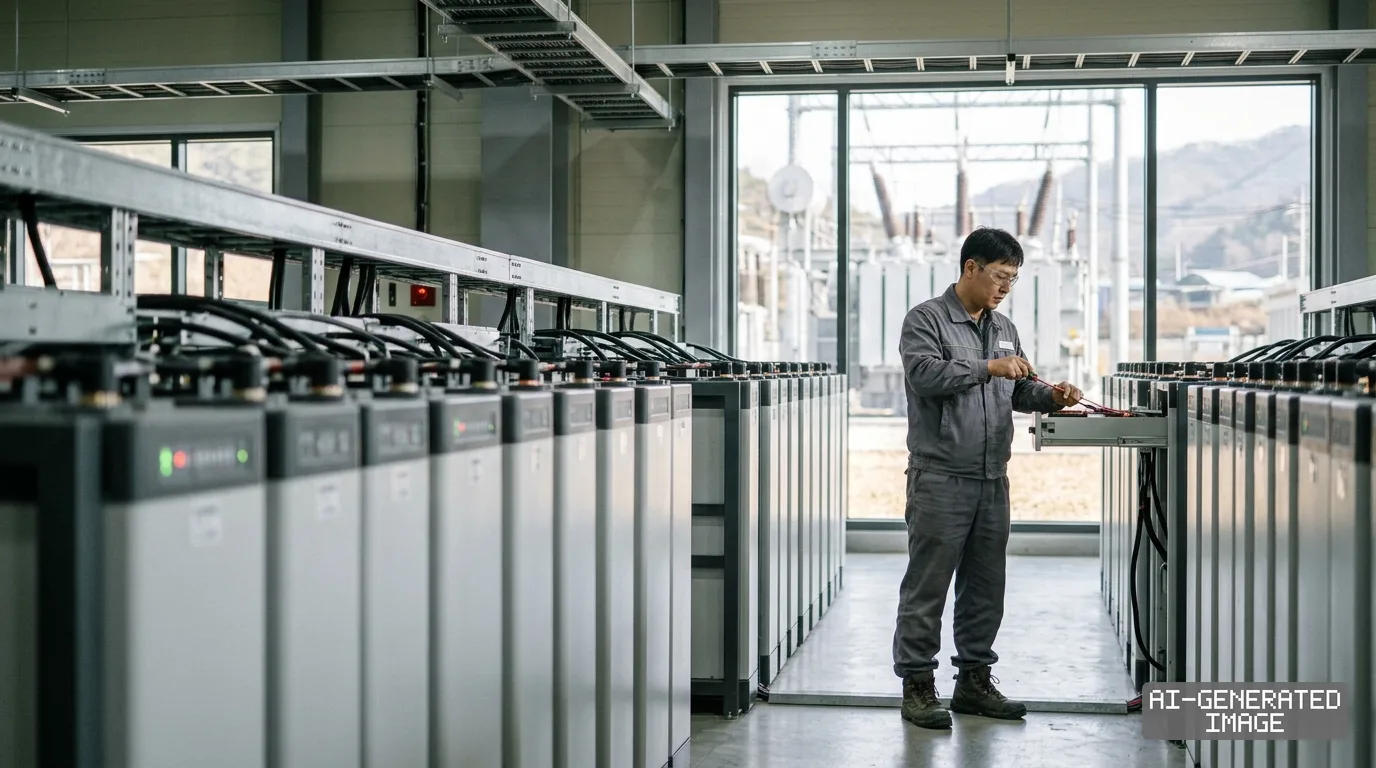
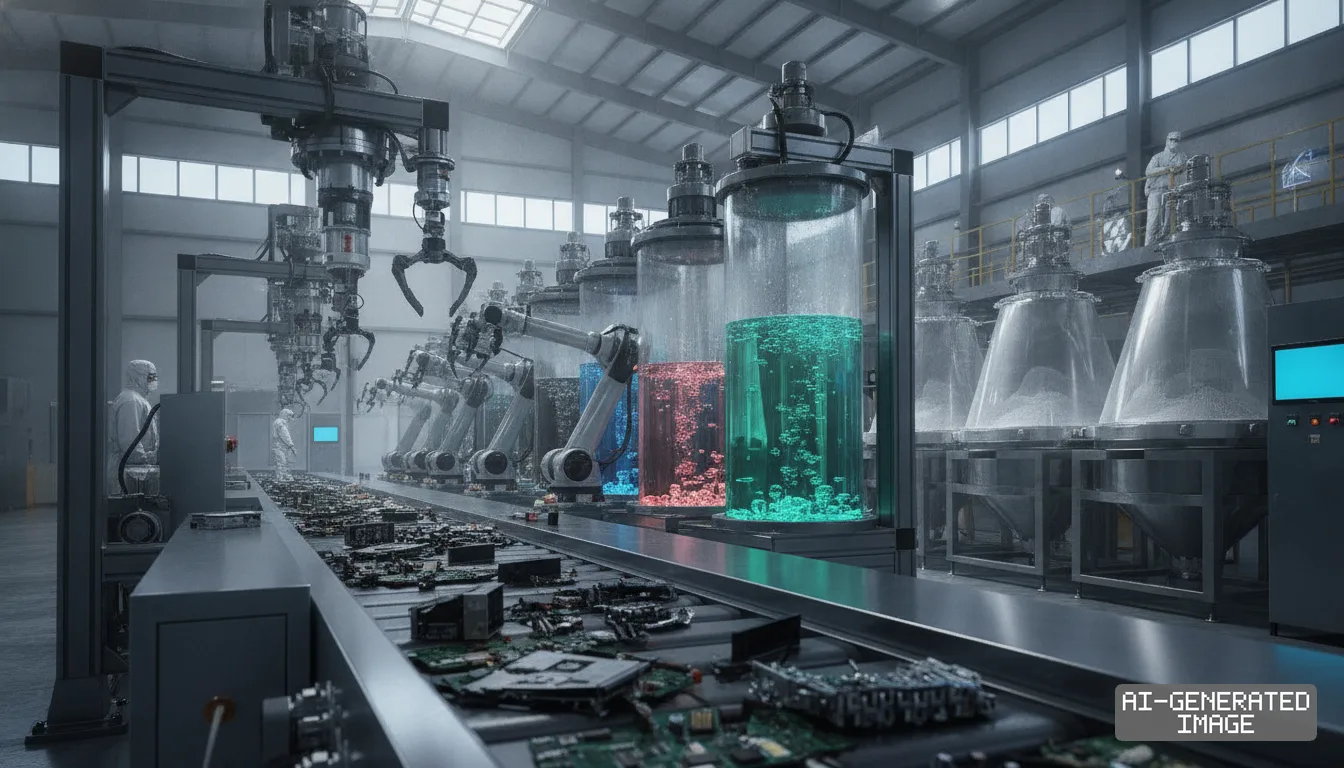
Korea Zinc advances $7.4B US smelter for critical minerals
An industry assessment on Nov. 2 showed federal supply chain funding and clean energy tax credits protect the 540,000-ton Tennessee refinery from political shifts.
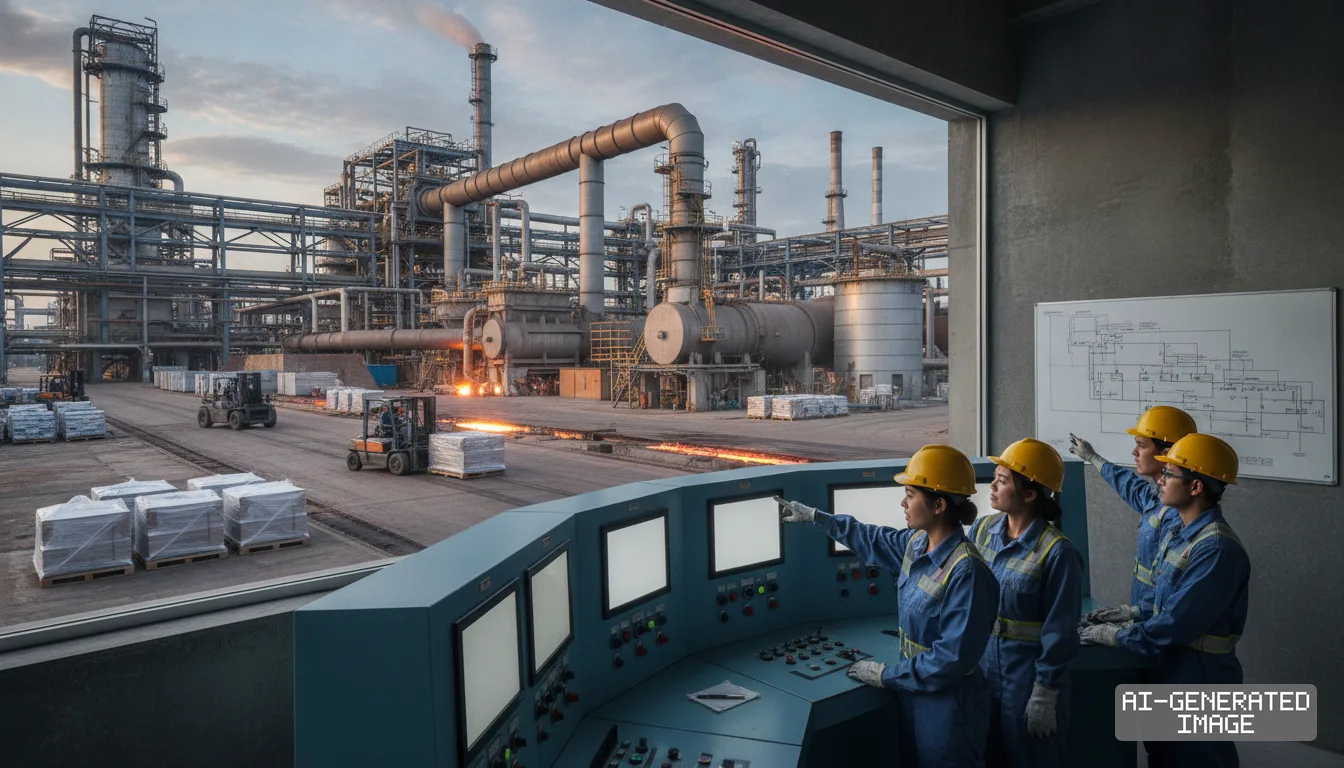
Korea Zinc consolidated its planned $7.43 billion Tennessee refinery into federal procurement channels on Nov. 2, 2026, anchoring supply contracts ahead of the United States midterm elections.
The complex will process 540,000 metric tons of nonferrous metals annually. That volume equals roughly 50% of the company's flagship Onsan smelter in South Korea, according to corporate filings.
Federal procurement guidelines designate 11 of the plant's 13 planned metals as critical minerals. The project will yield germanium, gallium and antimony for aerospace radar, optics and microelectronics.
Chinese refiners control over 90% of global primary gallium output and 60% of refined germanium capacity. Export licensing rules issued by Beijing in 2023 limited Western access to those supply chains.
An industry analysis published Nov. 2, 2026, concluded that congressional support for mineral refining remains insulated from election results. Bipartisan legislation introduced on Oct. 1 shields processing subsidies from partisan review.
The Critical Minerals Commission Act would mandate federal mineral purchases from domestic refineries. Congressional leaders designed the measure to guarantee baseline demand for commercial processing hubs, Shinhan Securities analyst Park Kwang-rae said.
Federal agencies hold $5 billion in enacted supply-chain appropriations. The Department of Defense retains an additional $2 billion in unspent capital dedicated to the National Defense Stockpile, Park said.
Those balances provide guaranteed multi-year purchase commitments for operating smelters. Federal agencies can deploy the funds without requiring new statutory authority from Congress, according to the research report.
Tax incentives under the Inflation Reduction Act provide the largest direct margin support. Section 45X offers an Advanced Manufacturing Production Credit equal to 10% of production costs for critical minerals.
The statute mandates a phased reduction in production tax credits beginning in 2031. Credit values drop 25% annually through 2033 before sunsetting entirely in 2034, Treasury Department rules show.
Korea Zinc scheduled initial commercial output for 2029, with full commercial capacity running by 2030. That timetable positions the Tennessee refinery to claim maximum credit rates during its first two operating years.
Total capital commitments for the Clarksville installation stand at $7.43 billion, or about 11 trillion won. Direct equipment and engineering costs account for $6.6 billion of that total, corporate disclosures show.
The company formed Crucible Metals LLC to direct development and commercial partnerships. The corporate entity plans to raise $4.7 billion through loans supported by United States government agencies, according to investor presentation materials.
Crucible Metals secured an initial $210 million direct grant through the CHIPS and Science Act. The Commerce Department designated the capital to support sulfuric acid output for domestic semiconductor fabs.
The project occupies 160 acres at a site acquired from commodities trader Trafigura's Nyrstar unit. The transaction transferred ownership of the existing Clarksville smelter and two operational Middle Tennessee zinc mines.
The Nyrstar asset operated as the only primary zinc refinery in the United States. Korea Zinc plans to double overall processing capacity while integrating specialty recovery circuits for rare metals.
Smelting recovers trace critical minerals that occur naturally alongside base metals in raw zinc concentrate. Refining yields zinc, lead and copper while concentrating smaller volumes of high-purity rare elements, engineers said.
The Clarksville complex contains five holding ponds filled with 620,000 metric tons of historic smelting residue. Korea Zinc will reprocess that material to extract gallium, germanium and indium, corporate releases said.
Federal regulators designated Project Crucible for expedited statutory review under FAST-41 on April 24, 2026. The program coordinates cross-agency approvals between federal departments and the state of Tennessee.
FAST-41 designation reduces permitting schedules by an average of 18 months, according to the Federal Permitting Improvement Steering Council. The dashboard tracks mandatory review dates across air, water and conservation offices.
The United States Department of Defense completed an environmental review under the National Environmental Policy Act on Sept. 11, 2026. Korea Zinc published confirmation of the formal determination on Sept. 21.
The Pentagon issued a Finding of No Significant Impact after evaluating local air quality, carbon emissions, hazardous waste and water resources. The ruling confirms project construction creates no adverse environmental degradation.
The environmental finding allows the Tennessee Valley Authority to conclude binding power allocation contracts. The utility plans to supply industrial electrical transmission capacity for the refinery's electrolytic refining cells.
Initial site preparation and preliminary equipment procurement run through late 2026. Korea Zinc scheduled ground-breaking and heavy structural construction for 2027, according to company guidance.
Korea Zinc has not published the finalized lending terms or interest rates for its planned $4.7 billion borrowing program. Federal lending agencies have not set the public disbursement schedule.
Montgomery County officials confirmed zoning and land-use authorizations remain intact for foundation work. Preliminary grading at the Clarksville facility proceeds under existing municipal permits, local authorities said.
Impact map
How this development propagates across the region and out to global buyers.
| Event | Korea | China | Japan | Global impact |
|---|---|---|---|---|
| Section 45X mineral tax rules | Korea Zinc anchors $7.43B US capex to access federal mineral production credits | Domestic refiners face exclusion from US defense and semiconductor procurement | Electronics makers gain non-China gallium and germanium refining capacity | Refined critical mineral supply diversifies away from Chinese export licensing |
In this story
- Companies
- Korea Zinc
- Tickers
- 010130.KS
- Exposed
- Trafigura
- Policy
- SubsidiesTax Credits
- Impact
- CapexSupply ChainPricing
Track every Subsidies development → Track every Tax Credits development →
Related briefings
- Korea Zinc Secures US Backing for $7.4B Tennessee Smelter Also on Trafigura, Korea Zinc, Tax Credits
- LG Energy Solution locks US lithium supply in Smackover pact Also on Trafigura, Tax Credits, Subsidies
- HD Hyundai reserves Mipo dock slots for eight gas carriers Also on Trafigura
- Korea Eximbank weighs state loan for Korea Zinc's US smelter Also on Korea Zinc, Subsidies
Sources
Reporting
Confidence: medium — how we grade this
The documents behind this briefing are linked above. East Asia Brief produces its English text with AI assistance under human editorial review, and does not translate or republish other outlets' articles. See our methodology and AI policy. Spotted an error? Tell us.
The Morning Brief
What changed in Korean, Chinese and Japanese industry overnight — and what it means for your supply chain. One email, weekday mornings, US time. Free.
The Morning Brief is in preparation. Leave your address and we will write to you once — when the first issue is ready. Nothing before that.