Korea presses US for equal chip tariff terms as Lutnick warns of import levies
Trade Minister Kim Jung-kwan said Seoul is negotiating to ensure domestic chipmakers face terms no worse than competitors under future American trade rules.
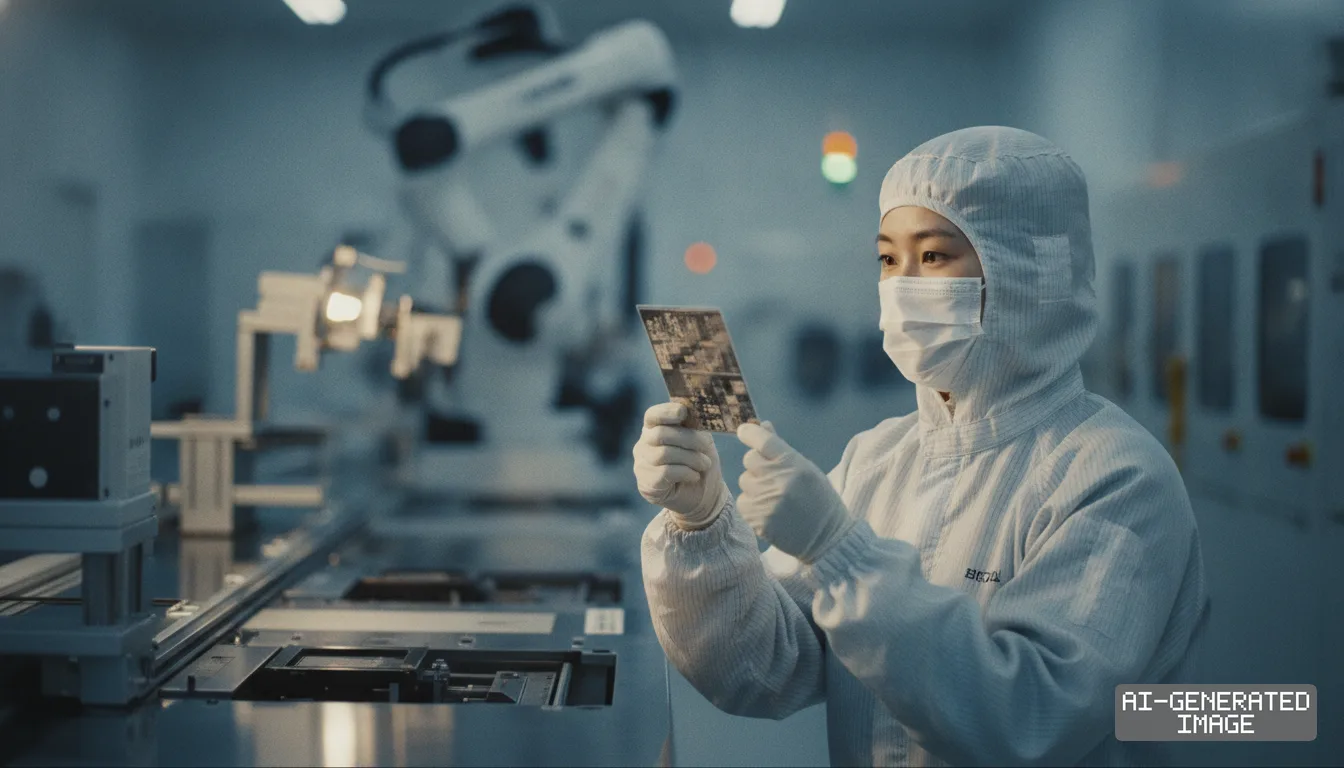
Trade Minister Kim Jung-kwan said Sept. 3 in Washington that South Korea is negotiating with the United States to ensure domestic chipmakers face terms no less favorable than foreign rivals under future semiconductor tariffs.
The negotiations follow warnings issued Sept. 2 by US Commerce Secretary Howard Lutnick. Lutnick said foreign semiconductor makers must produce chips in the United States or face import duties on their products.
Lutnick singled out Samsung Electronics and SK hynix during his remarks. He also stated that tariffs could apply beyond bare silicon components to finished hardware, including servers and personal computers.
South Korea's presidential office said Sept. 3 that Washington has not released a finalized tariff schedule. The office said officials are coordinating with American counterparts to safeguard domestic manufacturing interests.
Seoul based its negotiating position on a bilateral trade pact finalized on July 30, 2025. That accord lowered general reciprocal tariffs between the two countries from 25% to 15%, according to the trade ministry.
Under the 2025 joint agreement, Washington agreed to grant South Korea terms no less favorable than competitors on future semiconductor tariffs. The clause provides Seoul with most-favored-nation parity against rival exporting economies.
Kim made his statement after an investment ceremony in Washington on Sept. 3. The ministry announced that four American corporations had committed $2 billion in direct investments into South Korea during the event.
Korean trade officials want those tariff commitments applied directly against Taiwan. Taiwan Semiconductor Manufacturing Co. fabricates the majority of cutting-edge processors for American design firms and maintains its own expanding Arizona fabrication base.
The threatened duties create immediate commercial exposure for South Korea's memory manufacturers. Both Samsung Electronics and SK hynix are constructing American facilities, but each firm keeps primary memory fabrication lines in South Korea.
SK hynix held a groundbreaking ceremony on Aug. 27 for an advanced packaging plant in West Lafayette, Indiana. The company plans to spend over $4 billion on the packaging and research site, according to company filings.
The Indiana plant will package high-bandwidth memory for artificial intelligence processors. SK hynix plans to complete the facility cleanroom by October 2028 and start commercial mass production during the second half of 2029.
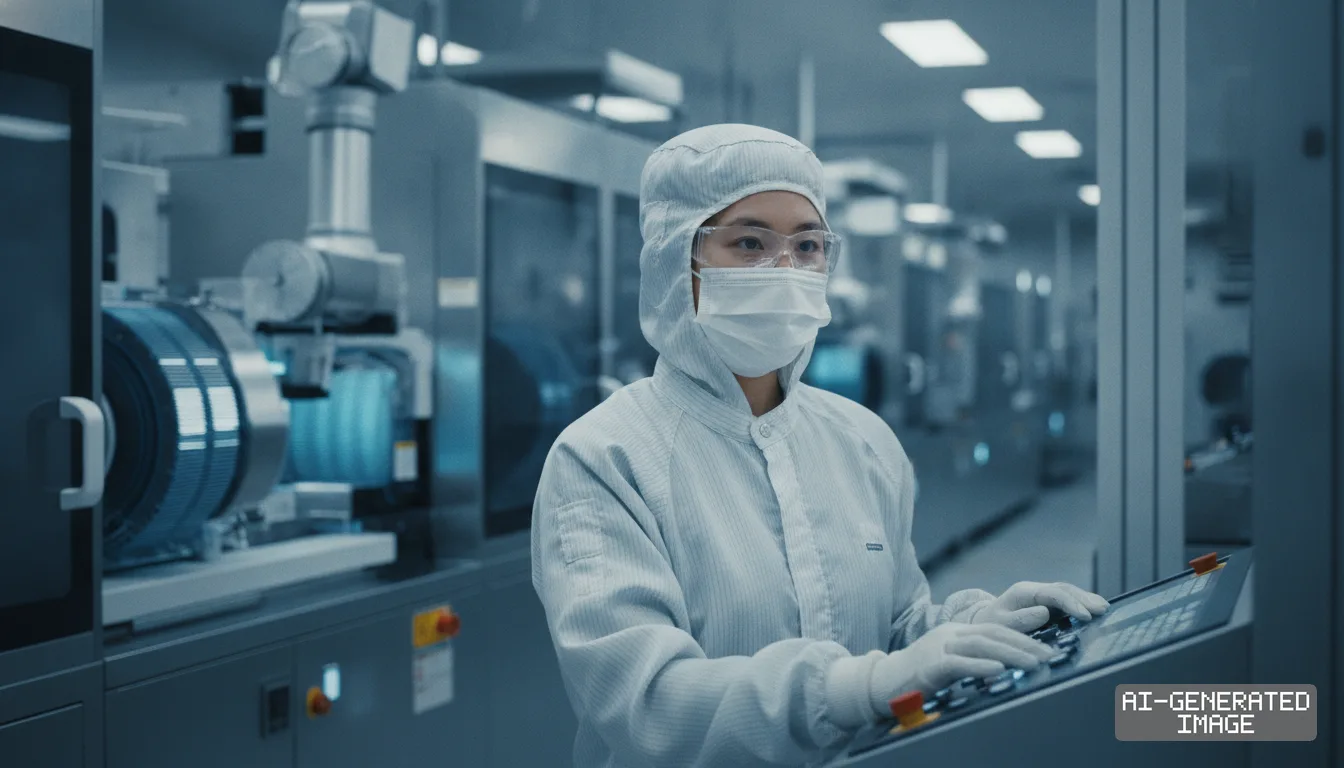
Front-end wafer fabrication will remain inside South Korea. SK hynix plans to process dynamic random-access memory wafers at facilities in Icheon and Cheongju before transporting the silicon to Indiana for stacking and testing.
Samsung Electronics operates under similar manufacturing constraints. The company is investing between $37 billion and $40 billion in Taylor, Texas, to build contract fabrication lines and advanced packaging facilities.
Samsung Electronics runs its main memory manufacturing operations at domestic plants in Pyeongtaek and Hwaseong. Duplicating front-end memory fabrication lines in the United States would require several years of construction and heavy capital expenditure.
Korean trade negotiators raised those capital commitments during bilateral talks in 2025. Under the July 2025 accord, South Korea established a $200 billion fund to finance investments in semiconductors, batteries and nuclear energy.
South Korea also created a $150 billion naval cooperation fund to support American shipyards. Trade officials argue these capital commitments demonstrate extensive alignment with American industrial supply chain goals.
Direct tariffs on imported memory chips would raise input prices across the technology sector. Major American cloud providers rely on Korean high-bandwidth memory components to equip generative artificial intelligence data centers.
Duties on finished electronics would create broader price pressures. Contract assemblers across Southeast Asia incorporate Korean memory chips into server motherboards before exporting the finished units to American corporate buyers.
Import duties placed on completed computing systems would increase hardware costs for data center operators. System assemblers would face higher component procurement expenses or pass those costs to enterprise purchasers.
Trade specialists are discussing tariff-rate quotas as one possible compromise. Under a quota mechanism, designated volumes of foreign memory chips could enter the United States duty-free to prevent domestic hardware shortages.
Korean trade delegates argue that abrupt levies would disrupt American technology rollouts. Curbing memory imports before domestic packaging operations reach commercial scale could constrain hardware shipments for American developers.
Neither Samsung Electronics nor SK hynix will deliver packaged chips from American plants before 2027. Samsung scheduled volume foundry manufacturing in Taylor for late 2026, while SK hynix starts Indiana output in 2029.
The Korea Semiconductor Industry Association met with trade ministry officials to evaluate potential tariff formulas. The association said American designers like Nvidia depend on overseas fabrication to meet current delivery schedules.
South Korea exported $44.8 billion in semiconductors in the first half of 2026, according to trade ministry customs data. Memory chips drove the increase as global demand for artificial intelligence hardware expanded.
South Korea's Ministry of Trade, Industry and Energy said it will continue bilateral consultations with the United States Department of Commerce through September. Working-level delegates plan to hold additional sessions in Washington before tariff draft rules appear.
Impact map
How this development propagates across the region and out to global buyers.
| Event | Korea | China | Japan | Global impact |
|---|---|---|---|---|
| US chip tariff negotiations | memory makers exposed | hardware assembly affected | component suppliers | AI server cost increases |
In this story
- Companies
- Samsung ElectronicsSK hynix
- Tickers
- 005930.KS000660.KS
- Exposed
- Nvidia
- Policy
- TariffsSubsidies
- Impact
- Supply ChainPricingCapex
Track every Tariffs development → Track every Subsidies development →
Related briefings
- Micron Cuts DRAM Lead of SK hynix to One Point on HBM Demand Also on Nvidia, SK hynix, Samsung Electronics
- TSMC September revenue jumps 55% on booming AI chip orders Also on Nvidia, SK hynix, Samsung Electronics
- Nvidia locks up 37% of global HBM supply for AI accelerators Also on Nvidia, SK hynix, Samsung Electronics
- DeepSeek cuts AI memory use 75%, rattling global chipmakers Also on Nvidia, SK hynix, Samsung Electronics
Sources
Primary documents
Reporting
Confidence: high — how we grade this
The documents behind this briefing are linked above. East Asia Brief produces its English text with AI assistance under human editorial review, and does not translate or republish other outlets' articles. See our methodology and AI policy. Spotted an error? Tell us.
The Morning Brief
What changed in Korean, Chinese and Japanese industry overnight — and what it means for your supply chain. One email, weekday mornings, US time. Free.
The Morning Brief is in preparation. Leave your address and we will write to you once — when the first issue is ready. Nothing before that.