Korea Eximbank and IFC agree to finance critical minerals and AI
The state lender links policy capital to World Bank facilities in Bangkok, targeting upstream extraction and emerging-market data centers without setting dollar targets.
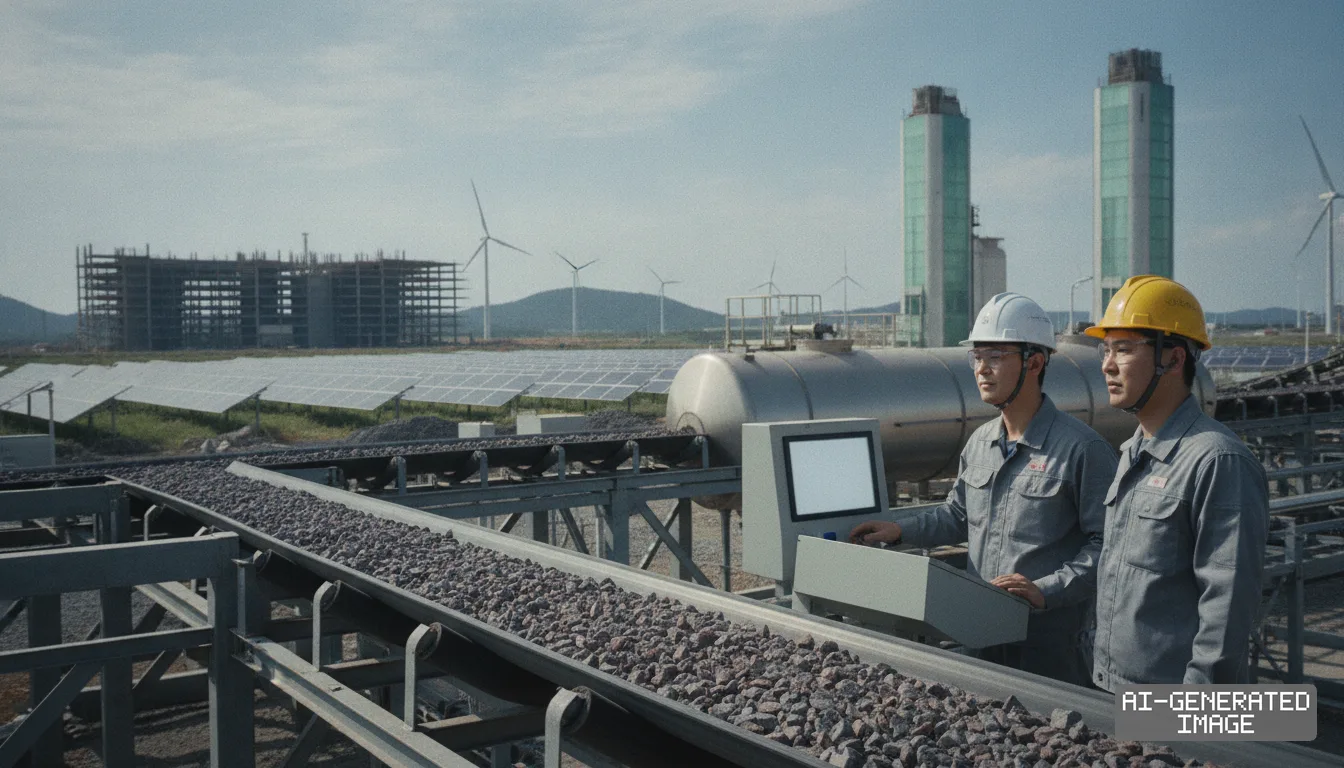
The Export-Import Bank of Korea said Oct. 18 it agreed to expand joint financing with the International Finance Corporation across critical mineral supply chains and artificial intelligence infrastructure.
The state-backed policy lender did not disclose a total dollar commitment for the partnership in its Sunday announcement. The framework expands multilateral co-financing mechanisms that support Korean industrial companies investing in emerging markets.
South Korea imports more than 90% of its critical battery minerals, leaving domestic manufacturing groups directly exposed to foreign mining restrictions and resource concentration.
Chairman and President Hwang Ki-yeon met with IFC Managing Director Makhtar Diop on Oct. 16 in Bangkok, Thailand, the bank said. The bilateral session took place during the annual meetings of the International Monetary Fund and World Bank Group.
The IFC, the private-sector lending arm of the World Bank Group, provides equity, loans and risk-mitigation instruments in developing nations. The Seoul-based export credit agency provides loans, guarantees and supply-chain funds to Korean exporters.
Under the agreement, the two lenders plan to co-finance ventures across the full critical minerals value chain. That scope covers exploration, extraction, domestic processing and global distribution networks.
The institutions also agreed to back digital infrastructure, including data center construction and regional grid connections in emerging economies. Both sides aim to connect local tech industries to global computational supply chains.
Korea Eximbank said it plans to channel funds through multilateral platforms, including the World Bank Group’s Resilient and Inclusive Supply-chain Enhancement fund. The World Bank established that partnership, known as the RISE fund, in 2023.
The multilateral tie-up addresses project risk in frontier jurisdictions where standalone commercial lending remains scarce. Korean industrial borrowers frequently face political risk, sovereign debt limits and currency volatility when developing foreign mines.
Battery cell makers represent the primary corporate sector exposed to the mineral procurement push. LG Energy Solution, which held 12% of global electric-vehicle battery usage in early 2026, relies on overseas refiners for over 85% of its precursor compounds.
Rival cell manufacturer Samsung SDI sources roughly 70% of its raw mineral feedstocks through cross-border commercial contracts. Developing sovereign production links allows producers to meet strict regional sourcing rules in North America and Europe.
Cathode producer POSCO Future M maintains long-term offtake agreements where imported lithium represents roughly 60% of total product input costs. Direct participation in overseas extraction assets protects cathode margins from volatile spot pricing.
The agreement also extends to emerging-market data centers and supporting power facilities. Korean construction and telecommunications engineering firms have struggled to secure project finance for high-density computing campuses across Southeast Asia and Africa.
Co-financing alongside the IFC provides political risk insurance and preferential credit ratings for prospective developments. Commercial banks often cap loan maturities in those markets at five years without multilateral participation.
The announcement follows parallel bilateral talks between Korea Eximbank and Western credit agencies. Hwang met with UK Export Finance Chief Executive Tim Reid in Bangkok on Oct. 15.
The British export credit agency discussed joint financing for decarbonization, critical mineral supply lines and defense equipment, Korea Eximbank said. London and Seoul have sought to coordinate financing instruments for joint third-country industrial tenders.
Korea Eximbank previously completed a $500 million framework agreement with the Asian Development Bank in May 2026 to support mineral extraction assets. The Korean government established a dedicated supply-chain stabilization fund within Korea Eximbank in 2024 to support corporate stockpiling.
The bank has not published the financing breakdown between direct loans, loan guarantees and equity investments. The official notice also leaves unconfirmed the specific target countries and pipeline projects eligible under the initial IFC allocation.
The International Monetary Fund and World Bank Group conclude their annual meetings in Bangkok on Oct. 18. Technical teams from both institutions are scheduled to draft operational implementation terms before the next executive board review in December.
Impact map
How this development propagates across the region and out to global buyers.
| Event | Korea | China | Japan | Global impact |
|---|---|---|---|---|
| Korea Eximbank IFC partnership | LG Energy Solution and Samsung SDI gain multilateral co-financing for upstream mineral assets | Resource developers face rival state-backed funding coalitions in emerging markets | Trading houses face expanded joint bidding options on multilateral clean energy projects | Upstream extraction and data center ventures gain lowered sovereign risk premiums |
In this story
- Companies
- Export-Import Bank of KoreaInternational Finance Corporation
- Exposed
- LG Energy SolutionSamsung SDIPOSCO Future M
- Policy
- Subsidies
- Impact
- Supply ChainCapexCompliance
Track every Subsidies development →
Related briefings
- Korea expands critical mineral refining pact with Uzbekistan Also on Export-Import Bank of Korea, Compliance, Subsidies
- Korean battery makers secure non-FEOC LFP supply contracts Also on POSCO Future M, Samsung SDI, LG Energy Solution
- Posco Holdings starts direct lithium extraction test runs for Korean cathode lines Also on Posco Future M, Samsung SDI, LG Energy Solution
- China Customs tightens origin documentation for graphite transit shipments Also on Posco Future M, Samsung SDI, LG Energy Solution
Sources
Reporting
Confidence: high — how we grade this
The documents behind this briefing are linked above. East Asia Brief produces its English text with AI assistance under human editorial review, and does not translate or republish other outlets' articles. See our methodology and AI policy. Spotted an error? Tell us.
The Morning Brief
What changed in Korean, Chinese and Japanese industry overnight — and what it means for your supply chain. One email, weekday mornings, US time. Free.
The Morning Brief is in preparation. Leave your address and we will write to you once — when the first issue is ready. Nothing before that.