China Customs tightens origin documentation for graphite transit shipments
New administrative guidelines mandate verified origin certificates and technical assays for bonded graphite transshipments across coastal logistics hubs.
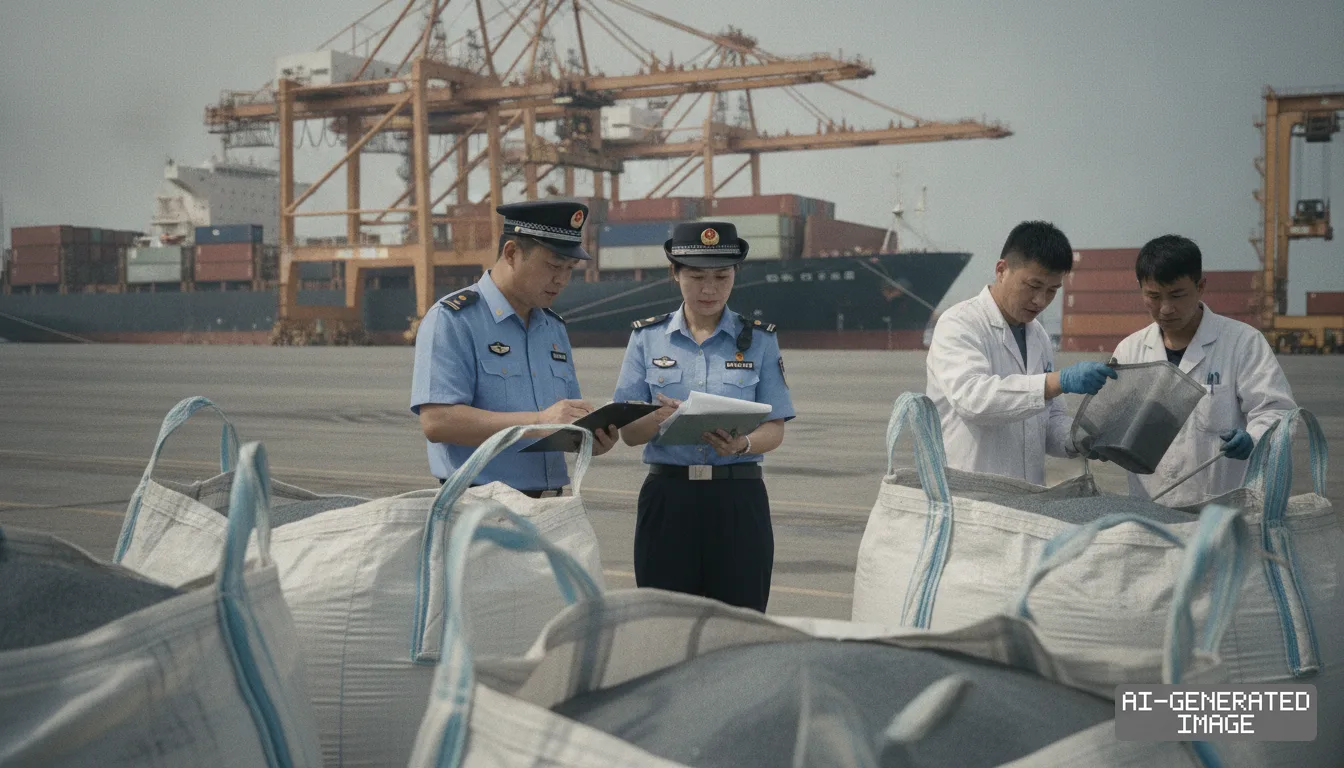
China's General Administration of Customs has tightened origin documentation and technical verification requirements for transit and transshipment cargoes of processed graphite feedstock moving through domestic bonded logistics zones and maritime port facilities.
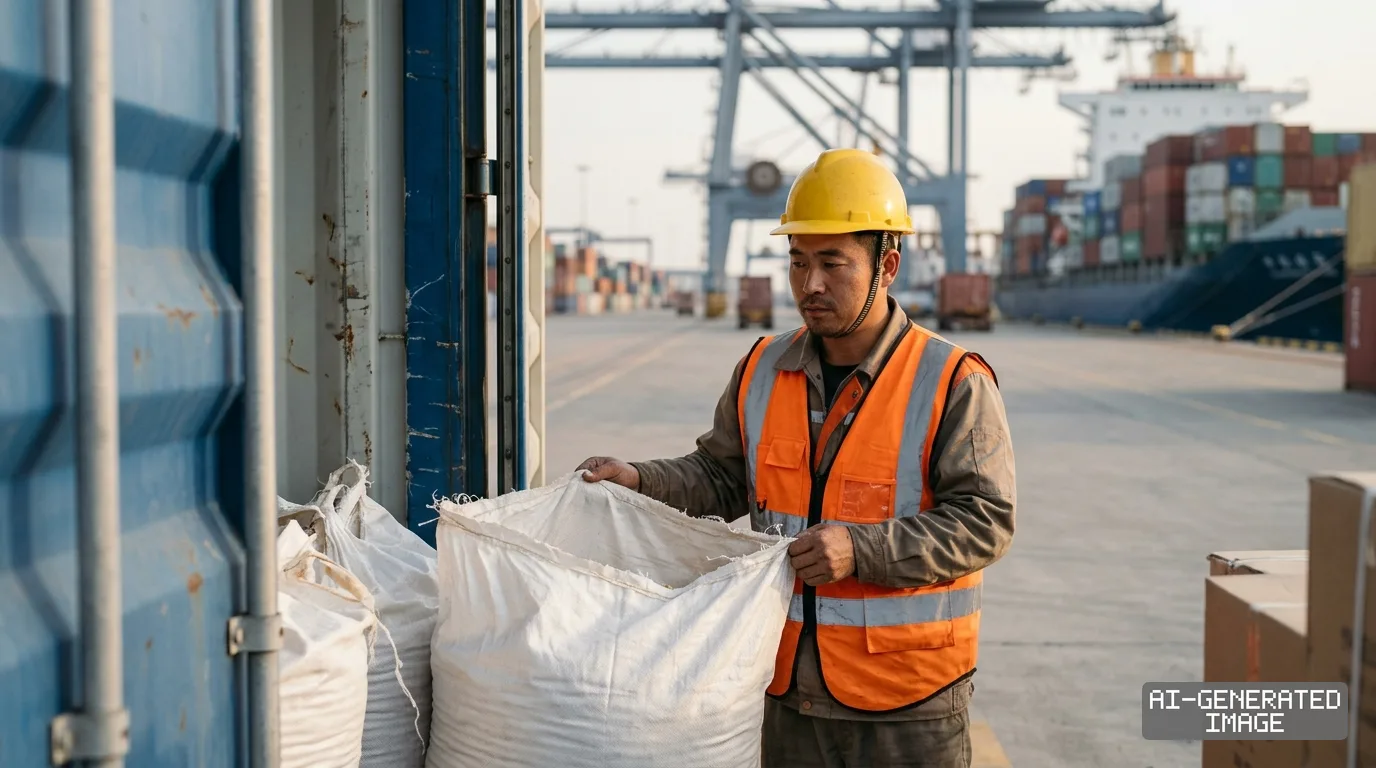
The administrative guidance instructs customs houses at major maritime gateways to enforce comprehensive origin tracing and batch-level technical certifications for natural and synthetic graphite held in bonded storage before outbound transshipment permits are issued. Traders and logistics operators must provide authenticated mill certificates, extraction origin documentation, and technical inspection reports establishing that cargo held in bonded areas conforms to declared specifications and does not bypass dual-use export licensing mandates.
The regulatory framework rests on the dual-use export control regime established under Ministry of Commerce and General Administration of Customs Announcement No. 39 of 2023, which placed high-grade artificial graphite and specific natural graphite items under statutory licensing. China supplies more than 70 percent of global synthetic graphite anode materials and controls the majority of spherical natural graphite refining capacity used in electric vehicle battery cells.
The technical parameters subject to licensing and customs verification cover artificial graphite materials and products characterized by carbon purity exceeding 99.9 percent, flexural strength higher than 30 megapascals, and bulk density above 1.73 grams per cubic centimeter under Harmonized System codes 3801.10, 3801.90, and 6815.19. Controlled natural graphite categories encompass flake graphite, spherical graphite, and expanded graphite classified under tariff subheadings 2504.10, 3801.90, 3824.99, and 6815.19.
Under Article 6 of China's Administrative Measures for Import and Export Licenses of Dual-Use Items and Technologies, export control obligations extend directly to customs transit, transshipment, through-transport, and shipments exiting bonded zones and export processing areas. The 2024 State Council Regulations on Export Control of Dual-Use Items codified administrative jurisdiction over foreign-bound dual-use items regardless of whether the materials undergo domestic customs entry or remain within bonded storage awaiting maritime re-export.
Customs enforcement at clearance terminals is applying the procedural standards outlined in General Administration of Customs Announcement No. 123 of 2025, which standardizes customs challenge procedures for dual-use items. When a customs station identifies transshipment cargo matching controlled technical parameters without an accompanying Ministry of Commerce dual-use license, it issues a formal Notice of Customs Challenge. Declaring entities must submit verified paper declarations, commercial sales contracts, end-use documentation, and accredited laboratory test reports with Chinese translations within seven working days.
The heightened documentation standard creates operational friction for international battery material traders and chemical intermediaries that use Chinese free trade ports to consolidate, repackage, or transfer unrefined graphite feedstock. Mineral traders moving intermediate materials sourced from third-country mines or domestic processing plants through bonded facilities face cargo holds if paperwork lacks mine-of-origin documentation or validated laboratory test data confirming material density and strength metrics.
Regional battery supply chains across South Korea and Japan maintain high dependency on Chinese processing capacity for anode-grade active materials. South Korean anode manufacturers Posco Future M and cell producers LG Energy Solution, Samsung SDI, and SK On procure significant volumes of spherical and synthetic graphite from Chinese supply channels, while Japanese trading houses route regional material consignments through bonded logistics centers in Qingdao, Ningbo-Zhoushan, and Shanghai.
The origin tracking measures follow the subsequent expansion of Chinese export controls under Ministry of Commerce and General Administration of Customs Announcement No. 58 of 2025, which broadened dual-use licensing across artificial graphite anode materials, cathode components, and advanced battery equipment.
Local customs bureaus across coastal entry-exit points are executing physical sampling protocols and cross-referencing shipping manifest data against the national single-window dual-use clearance registry. Logistics providers and terminal operators must maintain complete audit dossiers for bonded graphite shipments subject to ongoing customs verification schedules.
Impact map
How this development propagates across the region and out to global buyers.
| Event | Korea | China | Japan | Global impact |
|---|---|---|---|---|
| Graphite transit documentation | anode procurement delays | bonded hub compliance rules | trading house logistics friction | battery material supply chain audits |
In this story
- Companies
- Posco Future MLG Energy SolutionSamsung SDISK On
- Tickers
- 003670.KS373220.KS006400.KS096770.KS
- Policy
- Export ControlsEconomic SecurityCompliance
- Impact
- Supply ChainOrder BookCost StructureCompliance
Track every Export Controls development → Track every Economic Security development →
Related briefings
- Hanwha Ocean Loses Court Injunction Over Subcontractor Talks Also on Compliance, Cost Structure
- Korea Customs finds $410 million tariff-rate quota abuse across 10 firms Also on Compliance
- CBP ends sub-$800 duty exemptions as Chinese air cargo falls Also on Compliance, Cost Structure
- China Tightens Dual-Use Graphite Export Licensing for Anode Supply Chains Also on POSCO Future M, SK On, Samsung SDI
Sources
Primary documents
Reporting
Confidence: high — how we grade this
The documents behind this briefing are linked above. East Asia Brief produces its English text with AI assistance under human editorial review, and does not translate or republish other outlets' articles. See our methodology and AI policy. Spotted an error? Tell us.
The Morning Brief
What changed in Korean, Chinese and Japanese industry overnight — and what it means for your supply chain. One email, weekday mornings, US time. Free.
The Morning Brief is in preparation. Leave your address and we will write to you once — when the first issue is ready. Nothing before that.