CXMT validates 4F² sixth-generation DRAM to cut cell area
The Chinese memory maker plans to deliver server DDR5 RDIMM samples by year-end, seeking higher transistor density without foreign extreme ultraviolet lithography systems.
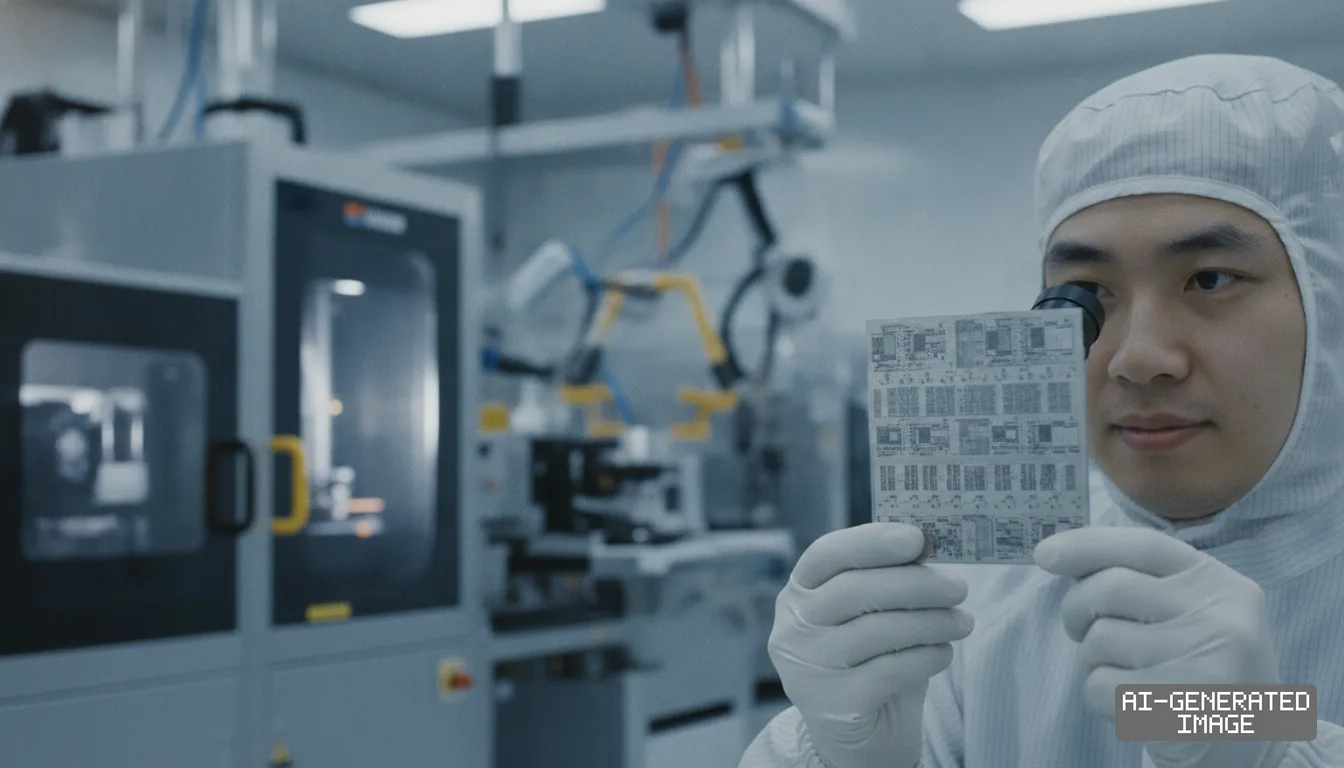
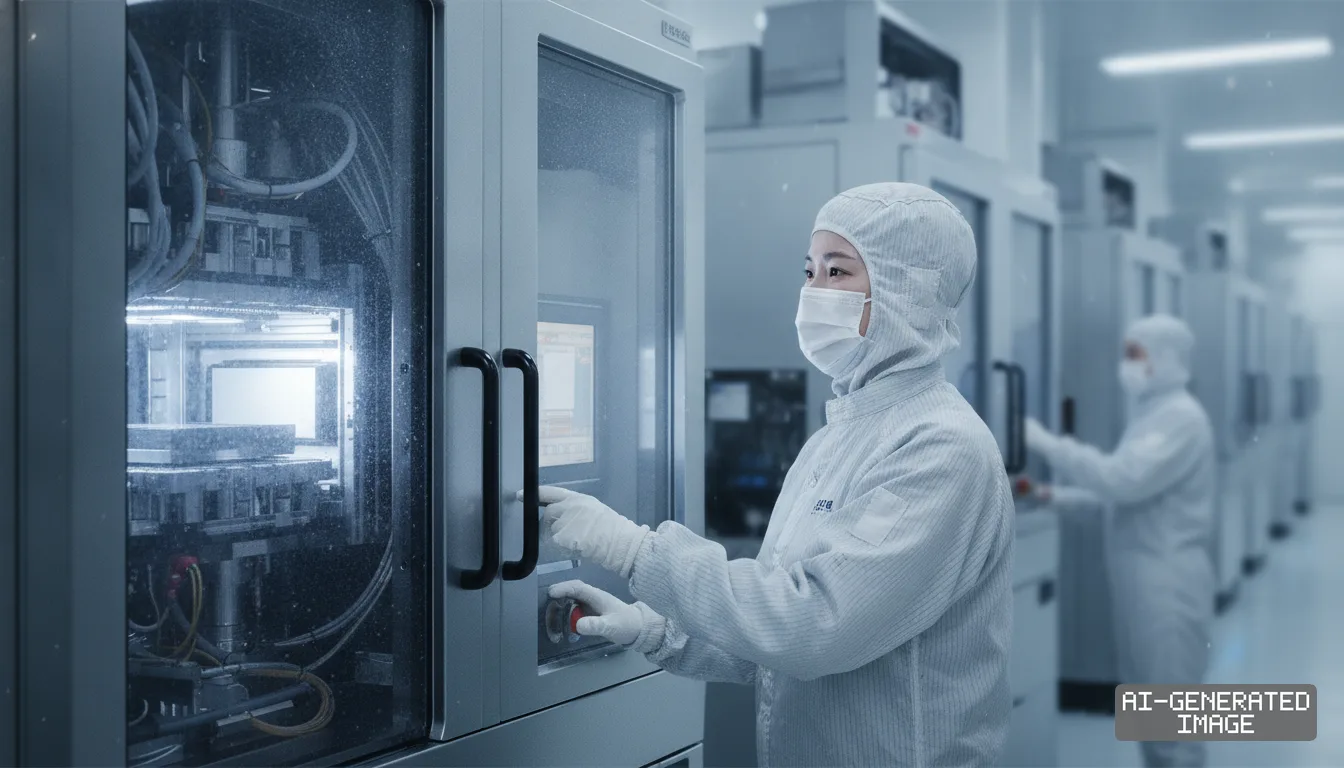
ChangXin Memory Technologies confirmed engineering sample validation on Nov. 4, 2026, for its sixth-generation DRAM platform built on a 4F² cell architecture using vertical surrounding gate transistors.
The company verified the functional prototype on actual production wafers, completing the critical technical hurdle prior to commercial product rollout.
The 4F² cell design shrinks individual memory cell area by 33% compared to conventional 6F² layouts. Those standard 6F² structures currently account for more than 95% of global commercial dynamic random-access memory manufacturing output.
F represents the minimum feature size achievable on a lithography line. A 4F² layout arranges memory cells in a two-by-two grid, packing one bit of data into a smaller physical footprint than historical six-factor cells.
CXMT held an estimated 10% share of global DRAM revenue in the second quarter of 2026. The firm relies on multi-patterning immersion tools because multilateral trade controls prohibit shipments of advanced extreme ultraviolet systems to mainland Chinese fabs.
Standing the transistor vertically allows the circuit to bypass horizontal scaling physical limits. The vertical surrounding gate wraps the conductive gate entirely around the channel, reducing electrical leakage current and sub-threshold signal degradation.
CXMT coupled the vertical transistor layout with wafer-level hybrid bonding. Hybrid bonding connects the peripheral logic circuitry directly beneath the memory array, avoiding the lateral surface overhead of conventional peripheral routing.
The architectural shift targets high-density compute infrastructure. Memory fabricators must pack greater bit density onto server motherboards to satisfy the throughput requirements of enterprise artificial intelligence clusters.
Commercial incumbents Samsung Electronics and SK hynix retain dominant market shares. Samsung Electronics accounts for approximately 41% of global DRAM sales, while SK hynix commands roughly 34% of worldwide revenue.
Both South Korean manufacturers have confined their own 4F² vertical gate platforms to corporate research laboratories. They deliberately prolonged production on mature 6F² nodes to protect stable operational margins and avoid costly fab conversion expenses.
Wafer fabrication yields on proven Korean 6F² lines regularly exceed 80%. Moving to vertical channel structures introduces severe deposition alignment challenges, which typically depress early production run rates below commercial profitability levels.
CXMT accelerated the transition after bringing its fifth-generation G5 platform into mass production in September 2026. That preceding node reached an 11.95-nanometer active half-pitch using quadruple patterning lithography methods.
The company accumulated more than 300 published patent families covering vertical cell layouts, bit-line shielding and peripheral bonding methods to establish freedom to operate against foreign competitors.
The domestic push coincides with Chinese state initiatives to validate domestic semiconductor manufacturing equipment. Chinese etch and chemical deposition toolmakers have installed demonstration gear across memory fab pilot lines in Hefei and Beijing.
DRAM fabricators face intense mechanical stress when etching narrow, high-aspect-ratio holes for vertical pillar capacitors. Tool builders must achieve sub-nanometer layer uniformity across 300-millimeter wafers to prevent cell-to-cell crosstalk.
CXMT scheduled delivery of its first 4F² engineering samples to server client vendors before Dec. 31, 2026. Those initial test components will take the form of DDR5 registered dual in-line memory modules.
Commercial volume output will proceed gradually as data center operators evaluate timing margins, thermal loads and motherboard compatibility across 2027, the company said.
The company disclosure does not state the silicon wafer yield, operating data transfer speeds, or single-die bit density of the verified prototypes.
CXMT has not published the qualification timeline for external server customers, nor did it disclose specific procurement shares for domestic Chinese toolmakers inside its G6 fabrication line.
Impact map
How this development propagates across the region and out to global buyers.
| Event | Korea | China | Japan | Global impact |
|---|---|---|---|---|
| CXMT 4F² validation | Samsung Electronics and SK hynix face earlier pricing pressure on legacy DDR5 server modules | CXMT advances 4F² memory density without foreign EUV equipment access | Tokyo Electron and Kokusai Electric see selective deposition tool demand split between 6F² and 4F² lines | Enterprise server builders gain a potential secondary supplier for high-density DDR5 RDIMMs |
In this story
- Companies
- ChangXin Memory Technologies
- Tickers
- 688825.SH
- Exposed
- Samsung ElectronicsSK hynix
- Impact
- Supply ChainCapexPricing
Related briefings
- Analysts reject Elon Musk warning on China memory chip glut Also on ChangXin Memory Technologies, SK hynix, Samsung Electronics
- Micron unveils vertical HBM architecture to stack on AI GPUs Also on ChangXin Memory Technologies, SK hynix, Samsung Electronics
- CXMT lifts revenue sixfold to 119.7 billion yuan on memory volume push Also on ChangXin Memory Technologies, SK hynix, Samsung Electronics
- CXMT plans 4F² server DRAM launch, hitting memory shares Also on ChangXin Memory Technologies, SK hynix, Samsung Electronics
Sources
Reporting
Confidence: medium — how we grade this
The documents behind this briefing are linked above. East Asia Brief produces its English text with AI assistance under human editorial review, and does not translate or republish other outlets' articles. See our methodology and AI policy. Spotted an error? Tell us.
The Morning Brief
What changed in Korean, Chinese and Japanese industry overnight — and what it means for your supply chain. One email, weekday mornings, US time. Free.
The Morning Brief is in preparation. Leave your address and we will write to you once — when the first issue is ready. Nothing before that.