Jusung Profit Surges 426% as Chipmakers Boost ALD Orders
The South Korean equipment maker posted third-quarter operating profit of 17.7 billion won on expanding capacitor deposition demand from memory producers.
Jusung Engineering said Nov. 4, 2026 its third-quarter operating profit surged 426.4% year-on-year to 17.67 billion won ($12.8 million), lifted by higher shipments of atomic layer deposition tools to memory chipmakers.
Quarterly revenue increased 32.8% to 78.08 billion won ($56.6 million), while net profit rose 267.4% to 28.05 billion won ($20.3 million). Operating profit grew elevenfold from 1.42 billion won in the second quarter, the company said in a regulatory filing.
Cumulative revenue for the first nine months totaled 192.84 billion won ($139.7 million), down 25.4% from a year earlier. Operating profit for the nine-month period dropped 72.5% to 12.06 billion won, reflecting sluggish first-half tool deliveries.
Semiconductor manufacturing equipment generated 189.43 billion won ($137.3 million) in revenue through September. The segment accounted for 98.2% of total corporate sales, while display and solar equipment contributed 3.41 billion won, or 1.8%.
The South Korean supplier held an order backlog of 214.3 billion won ($155.3 million) for semiconductor equipment at the end of June. That machinery backlog represented 91.7% of total contracted manufacturing obligations across all operating divisions.
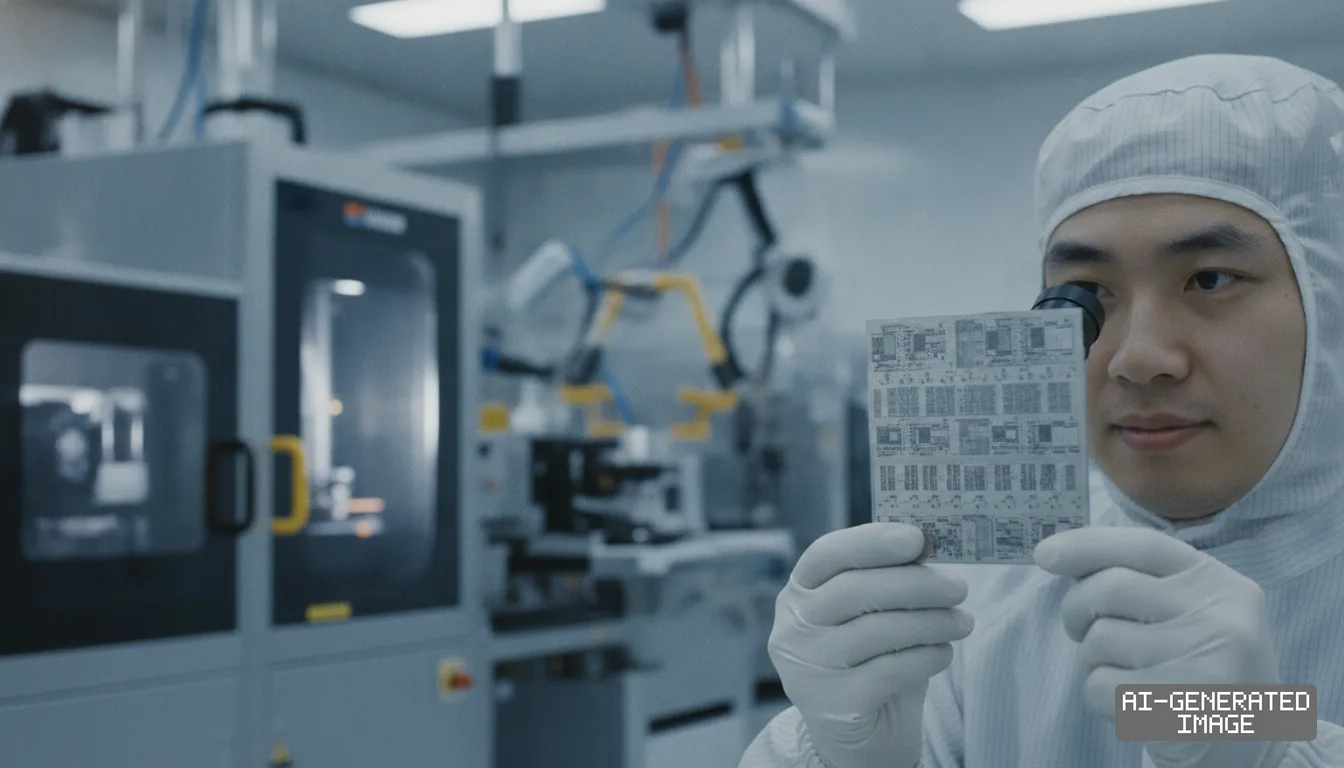
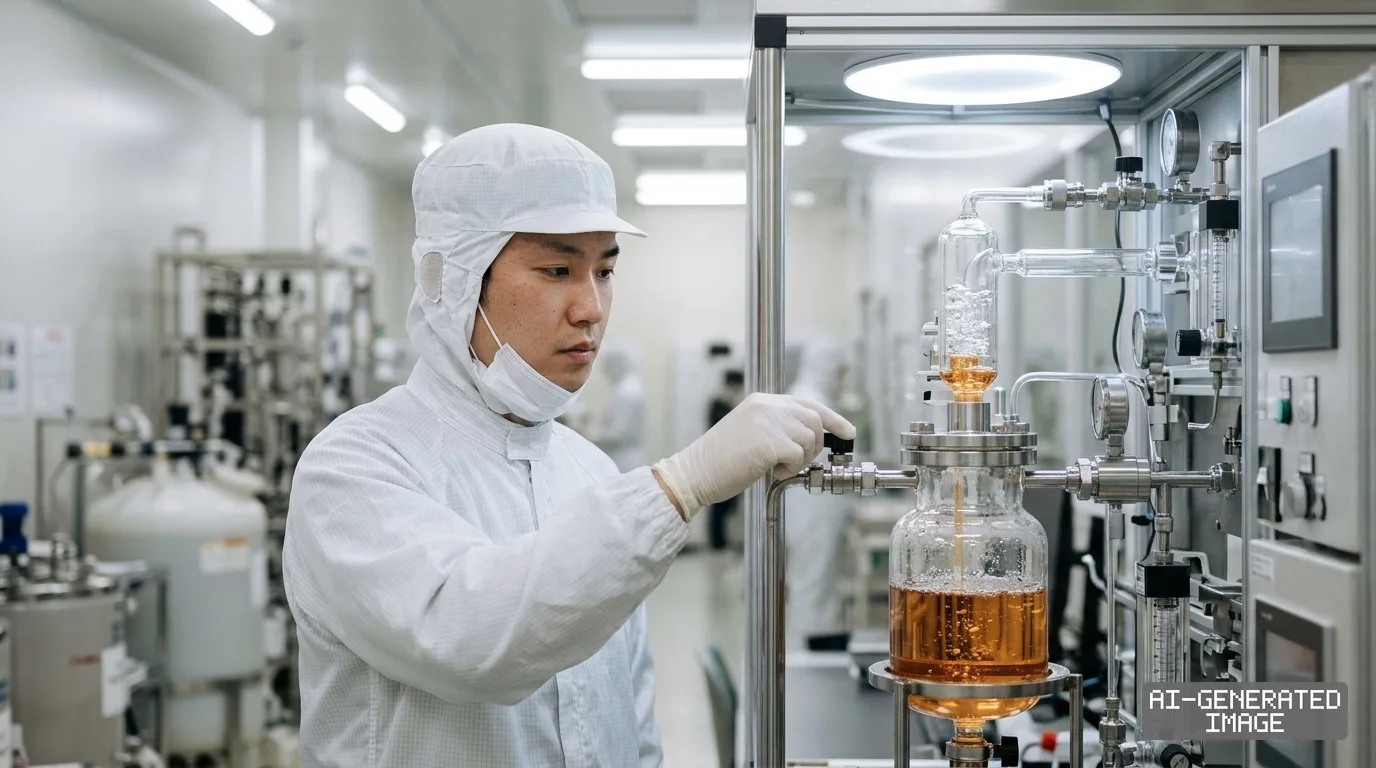
Atomic layer deposition — a chemical process depositing thin films one atomic layer at a time — controls film thickness at angstrom levels. Device makers rely on the technique to coat deep silicon trenches without creating internal voids.
Memory producers face scaling bottlenecks as planar DRAM cell geometries contract below 12 nanometers. Narrower gate widths compress capacitor volume, causing severe electrical leakage and data corruption unless insulated by advanced dielectric materials.
To preserve cell capacitance in high-aspect-ratio trenches, fabricators have transitioned from zirconium oxide to hafnium-based dielectric films. The chemical shift requires uniform deposition across aspect ratios exceeding 50-to-one inside each memory cell capacitor.
Customer exposure centers on memory producers converting fabrication lines to support High Bandwidth Memory and advanced DDR5 architectures. SK hynix has expanded equipment purchases for high-k capacitor deposition across its domestic memory fabrication lines.
SK hynix previously split capacitor ALD orders equally between Jusung and domestic competitor Wonik IPS. Wonik lost market share after failing qualification tests for hafnium precursor deposition, leaving Jusung as the primary supplier for advanced capacitor layers.
Wonik IPS supplied roughly half of earlier zirconium-based tool orders to SK hynix. Following the material change, SK hynix consolidated new capacitor deposition tool allocations with Jusung while ordering metal deposition equipment from Wonik.
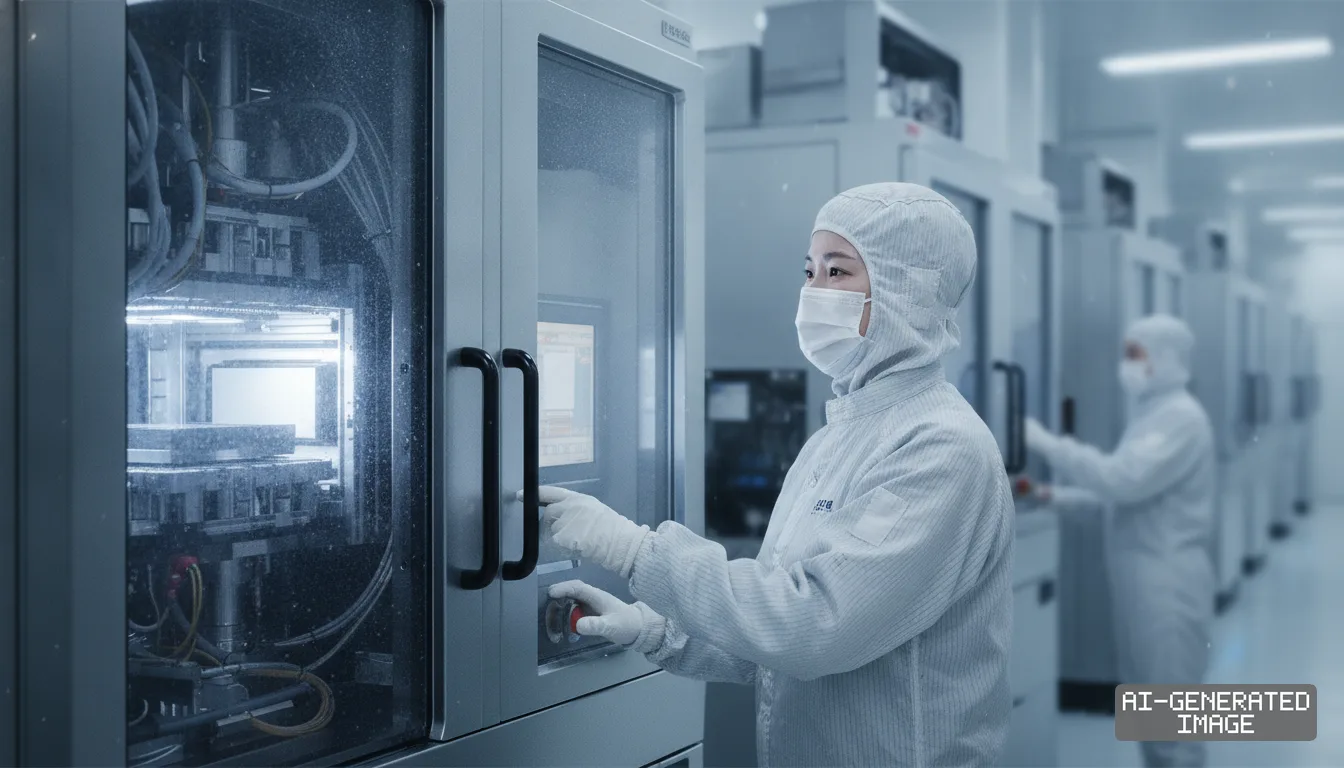
Jusung builds space-divided plasma deposition systems capable of processing five to six wafers simultaneously in a single chamber. The tool architecture operates below 300 degrees Celsius, reducing the thermal budget across temperature-sensitive wafer structures.
China's leading DRAM manufacturer ChangXin Memory Technologies provided additional tool procurement momentum during the quarter. CXMT expanded equipment intake in Hefei and Beijing to expand wafer capacity and prepare next-generation memory architectures.
CXMT announced Oct. 30 it had validated engineering samples for a sixth-generation DRAM platform using 4F² cell architecture. The design reduces memory cell area by approximately 33% compared to conventional 6F² structures, requiring extensive thin-film deposition.
The Chinese memory maker relies on specialized deposition and etching equipment to fabricate high-aspect-ratio vertical bitlines. CXMT plans to deploy the architecture across server-grade DDR5 memory modules to strengthen long-term product competitiveness.
Global DRAM market leaders Samsung Electronics and SK hynix are pursuing vertical channel transistors and three-dimensional memory layouts. Both South Korean manufacturers target commercial deployment of monolithic 3D DRAM architectures around 2030.
Transitioning from lateral scaling to 3D DRAM expands deposition requirements threefold compared to planar manufacturing steps. Fabricators must deposit structural backbone films and alternating oxide layers across stacks carrying more than 30 memory layers.
Jusung faces competition from global deposition toolmakers including ASM International and Tokyo Electron in advanced memory fabs. Domestic competitors like Wonik IPS continue developing competing atomic layer platforms to regain qualified status at Korean memory lines.
High fixed costs in precision machinery assembly create strong earnings leverage when delivery volumes rebound. Third-quarter operating margin expanded to 22.6%, up from 2.4% in the second quarter and 5.7% a year earlier.
Total assets stood at 887.9 billion won ($643.4 million) at the end of 2025, with total liabilities recorded at 297.4 billion won ($215.5 million). Working capital supported ongoing expansion of cleanroom assembly bays in Gwangju, Gyeonggi Province.
The regulatory filing does not state tool delivery counts or revenue contribution breakdown by individual customer, including SK hynix and CXMT. Jusung has not published unit pricing or contract values for specific memory fab tool orders.
These third-quarter operating figures remain preliminary estimates subject to independent auditor review, the company said in its disclosure. Final numbers will appear in the quarterly report scheduled for submission to the Korea Exchange by Nov. 14, 2026.
CXMT plans to deliver sample DDR5 server memory modules built on the 4F² platform to commercial customers by Dec. 31, 2026. Commercial adoption timelines will dictate further capital spending plans across its manufacturing lines next year.
Impact map
How this development propagates across the region and out to global buyers.
| Event | Korea | China | Japan | Global impact |
|---|---|---|---|---|
| ALD tool order surge | Jusung takes primary capacitor ALD share at SK hynix; Wonik IPS order share drops | CXMT expands equipment procurement for 4F² DRAM platform pilot lines | Tokyo Electron faces specialized ALD competition in Korean memory supply chains | DRAM makers raise ALD tool spending as capacitor aspect ratios exceed 50-to-one |
| ALD tool order surge | Jusung takes primary capacitor ALD share at SK hynix; Wonik IPS order share drops | CXMT expands equipment procurement for 4F² DRAM platform pilot lines | Tokyo Electron faces specialized ALD competition in Korean memory supply chains | DRAM makers raise ALD tool spending as capacitor aspect ratios exceed 50-to-one |
In this story
- Companies
- Jusung Engineering
- Tickers
- 036930.KQ
- Exposed
- SK hynixChangXin Memory TechnologiesWonik IPS
- Impact
- CapexSupply ChainPricing
Related briefings
- Korean tool makers advance high-k ALD platforms for sub-10nm 3D DRAM fabs Also on Jusung Engineering, Wonik IPS, SK hynix
- Merck opens South Korea molybdenum plant to feed memory fabs Also on Wonik IPS, SK hynix
- CXMT validates 4F² sixth-generation DRAM to cut cell area Also on ChangXin Memory Technologies, SK hynix, Pricing
- Analysts reject Elon Musk warning on China memory chip glut Also on ChangXin Memory Technologies, SK hynix, Pricing
Sources
Primary documents
Reporting
Confidence: high — how we grade this
The documents behind this briefing are linked above. East Asia Brief produces its English text with AI assistance under human editorial review, and does not translate or republish other outlets' articles. See our methodology and AI policy. Spotted an error? Tell us.
The Morning Brief
What changed in Korean, Chinese and Japanese industry overnight — and what it means for your supply chain. One email, weekday mornings, US time. Free.
The Morning Brief is in preparation. Leave your address and we will write to you once — when the first issue is ready. Nothing before that.