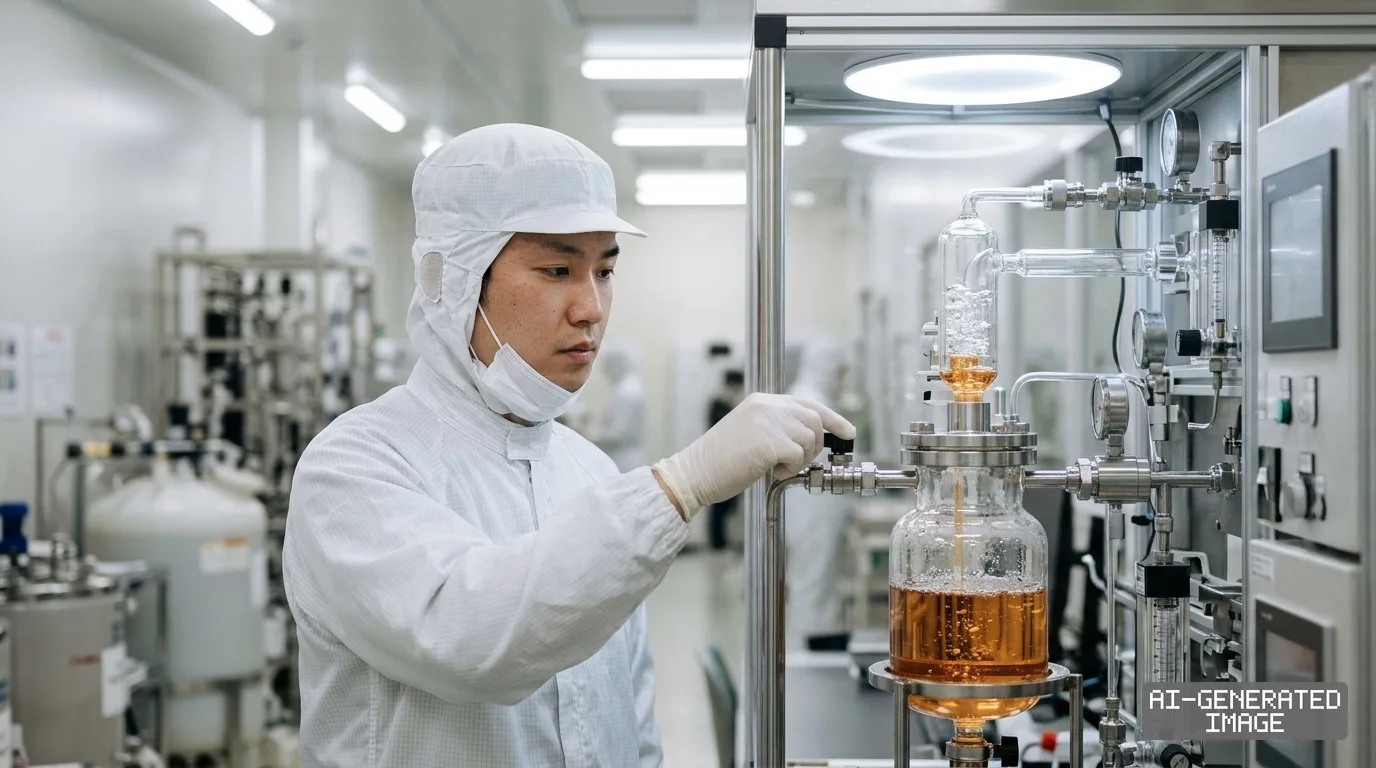
China clears rare earth export permits for EU firms under pact
Brussels and Beijing agreed to maintain green-channel approvals for magnet materials, shielding carmakers that rely on Chinese suppliers for 98% of their critical inputs.
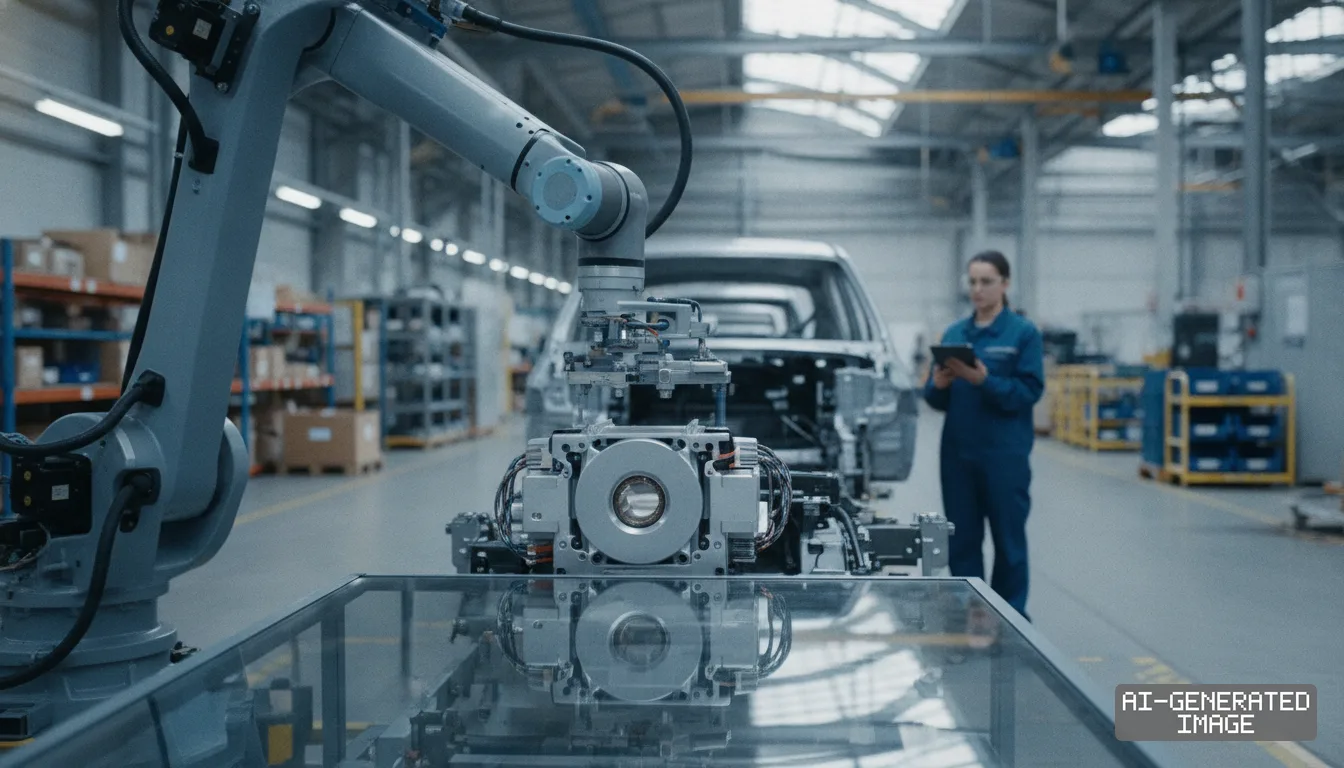
The European Commission and China’s Ministry of Commerce established implementation guidelines on Nov. 3, 2026, confirming a fast-track export licensing channel for rare earths and permanent magnets bound for European automakers.
The administrative mechanism operationalizes commitments made during bilateral consultations led by EU Trade Commissioner Maroš Šefčovič and Chinese Commerce Minister Wang Wentao. Officials designed the system to prevent supply disruptions across European assembly plants.
European automotive manufacturers import roughly 98% of their permanent magnets from China, according to data from the European Parliament and the International Energy Agency. The European Union consumes tens of thousands of metric tons of magnet alloys annually.
Permanent magnets made from neodymium, praseodymium and dysprosium generate the magnetic fields required for electric vehicle traction motors and direct-drive generators. Without reliable flows, vehicle assembly lines face immediate production stoppages.
Under the procedural framework, China’s Ministry of Commerce agreed to expedite dual-use export permits through an administrative green channel. European buyers receive priority application reviews for certified civilian manufacturing facilities.
In return, the European Commission agreed to coordinate with member state export authorities to streamline licensing for prioritized European dual-use technologies shipped to China. The mechanism balances mutual trade concessions under bilateral oversight.
The bilateral consultation mechanism was established on June 29, 2026, in Brussels, with four working groups. The two sides conducted more than 20 working-level sessions before formalizing the licensing procedure in Beijing.
The agreement also established shared trade parameters for hybrid electric vehicles. Both delegations agreed to manage volume flows in accordance with World Trade Organization rules, easing broader automotive tariff disputes.
European trade officials faced compounding pressure as the European Union’s 2025 goods trade deficit with China reached €359.8 billion ($391 billion). Securing critical inputs remained a priority during the negotiations.
Sintered permanent magnets—formed by compressing and heating alloy powders into dense blocks—remain a supply bottleneck for European industry. Domestic alternatives cannot yet match the output of Chinese refiners.
Neo Performance Materials operates a sintered magnet plant in Narva, Estonia, with 2,000 metric tonnes of annual nameplate capacity. The company began commercial deliveries to an electric vehicle traction motor customer in September.
Neo Performance Materials plans to expand the Narva facility to 5,000 metric tonnes under Project GAUSS, supported by €126 million ($137 million) from the EU Innovation Fund. That project requires two to three years to complete.
The company also runs the Silmet rare earth separation facility in Sillamäe, Estonia. The European Commission designated the plant a Strategic Project under the Critical Raw Materials Act to triple regional separation capacity.
German producer Vacuumschmelze maintains approximately 2,000 metric tonnes of annual magnet manufacturing capacity at its headquarters in Hanau, Germany. United States critical minerals firm Energy Fuels agreed to acquire the company in July for $1.9 billion.
Together, both European operations provide about 4,000 metric tonnes of permanent magnet output annually. That volume represents less than 10% of European demand for automotive and wind turbine applications.
Because domestic supply remains limited, European carmakers rely on Chinese processing hubs to sustain electric vehicle production schedules. The licensing channel gives procurement directors clearance for contracted metal shipments.
China implemented statutory licensing for seven medium and heavy rare earth elements in April 2025. Those restrictions covered samarium, gadolinium, terbium, dysprosium, lutetium, scandium and yttrium metal compounds.
In October 2025, China’s Ministry of Commerce promulgated Announcements 61 and 62, extending controls to extraction technologies. The rules imposed extraterritorial licensing on foreign-made goods containing at least 0.1% Chinese rare earth material.
Beijing subsequently suspended enforcement of the extraterritorial provisions and expanded element lists in November 2025. That temporary truce provided European and American negotiators room to establish dedicated administrative channels.
United States trade measures have pursued decoupling through export curbs and foreign-entity-of-concern rules. In contrast, the European Union has pursued de-risking by negotiating direct administrative carve-outs with Beijing.
European trade officials sought to shield automotive assembly networks while bilateral discussions regarding countervailing duties on Chinese electric vehicles continue. The licensing channel separates critical material access from tariff litigation.
The administrative arrangement offers operational predictability but leaves China with ultimate authority over export approvals. Chinese regulators retain individual review powers and can adjust licensing timelines at will.
Chinese customs authorities still require European importers to submit detailed declarations specifying the end user and industrial facility. Diverting shipments to unapproved facilities voids the fast-track permit, according to the ministry notice.
Separation and metallization—the industrial reduction of rare earth oxides into pure metals—remain concentrated in China. Replicating those processing stages in Europe requires heavy capital investment and multi-year environmental permitting.
Automotive purchasing divisions in Germany and France warned that permit delays would disrupt drivetrain manufacturing within six weeks. The fast-track protocol provides administrative relief for active production contracts.
Beijing’s suspension on expanded export controls enacted under Announcements 61 and 62 expires on Nov. 10, 2026. Trade officials will hold a ministerial video review in January 2027 before convening the third formal consultation in March 2027.
The joint statement does not confirm whether China will extend the suspension beyond Nov. 10, and Beijing has not established statutory minimum export volumes for European buyers.
Impact map
How this development propagates across the region and out to global buyers.
| Event | Korea | China | Japan | Global impact |
|---|---|---|---|---|
| EU-China fast-track rare earth export licensing | Automakers monitor EU fast-track channel while maintaining supply diversification programs away from Chinese NdFeB magnets | Ministry of Commerce maintains 98% export leverage over European automakers while gaining accelerated review for European dual-use technologies | Magnet makers Proterial and TDK track EU procurement guidelines for traction motor supply contracts | Automotive supply chains secure interim component flows, while Western magnet capacity covers under 15% of demand |
In this story
- Companies
- Neo Performance MaterialsVacuumschmelzeEnergy Fuels
- Tickers
- NEO.TOUUUU
- Policy
- Export Controls
- Impact
- Supply ChainCompliance
Track every Export Controls development →
Related briefings
- EU puts China rare earth curbs on trade docket to cut deficit Also on Neo Performance Materials, Export Controls, Compliance
- Chalmers maps automotive gallium recovery under China curbs Also on Neo Performance Materials, Export Controls, Compliance
- Vulcan Elements wins US Army drone permanent magnet contract Also on Energy Fuels, Export Controls, Compliance
- India pushes rare earth magnet output to counter China curbs Also on NEO Performance Materials, Export Controls
Sources
Primary documents
Reporting
Confidence: high — how we grade this
The documents behind this briefing are linked above. East Asia Brief produces its English text with AI assistance under human editorial review, and does not translate or republish other outlets' articles. See our methodology and AI policy. Spotted an error? Tell us.
The Morning Brief
What changed in Korean, Chinese and Japanese industry overnight — and what it means for your supply chain. One email, weekday mornings, US time. Free.
The Morning Brief is in preparation. Leave your address and we will write to you once — when the first issue is ready. Nothing before that.