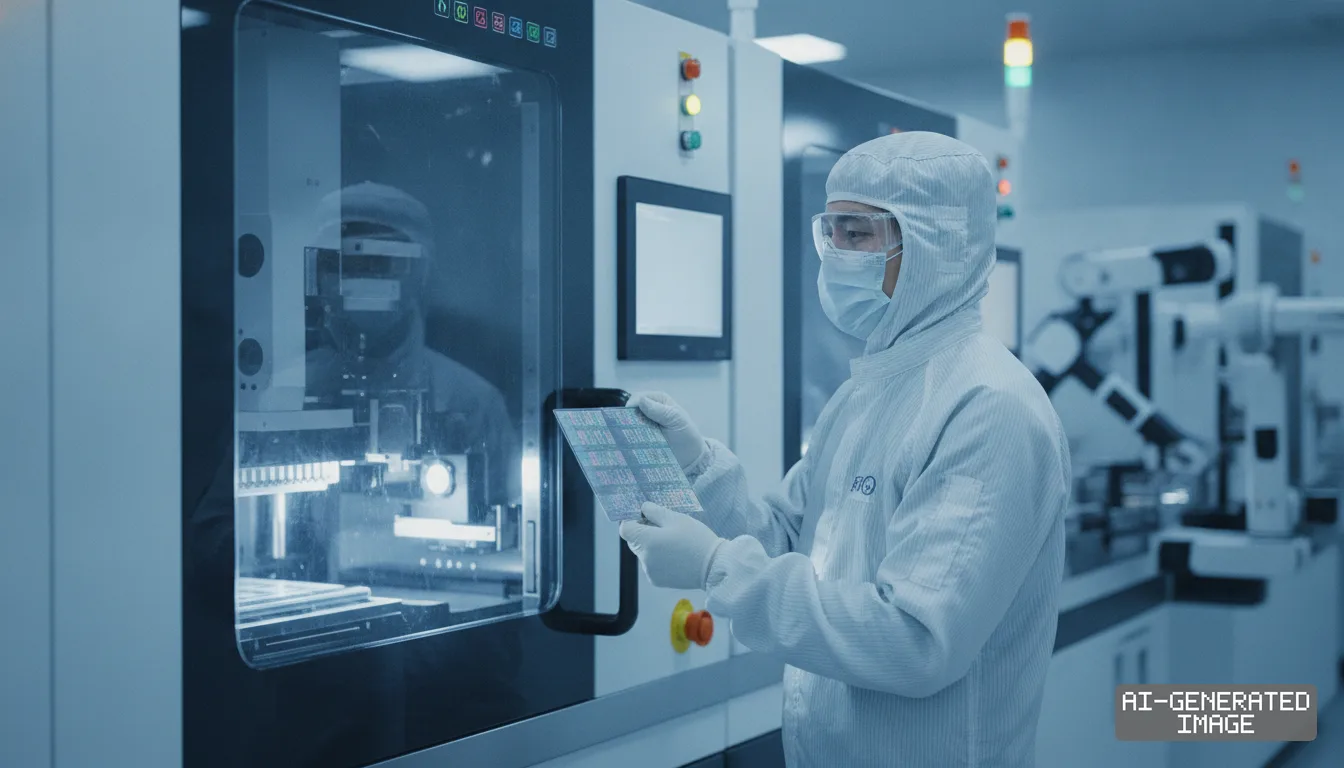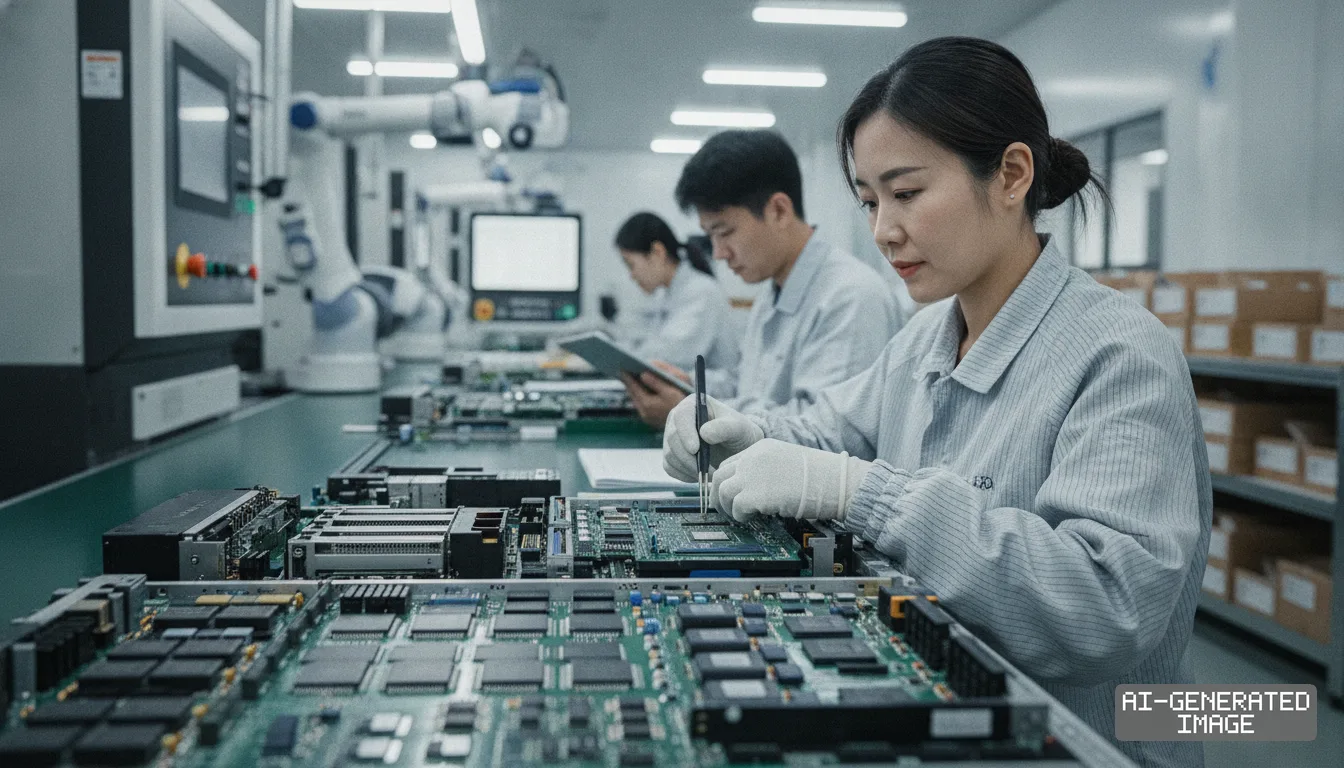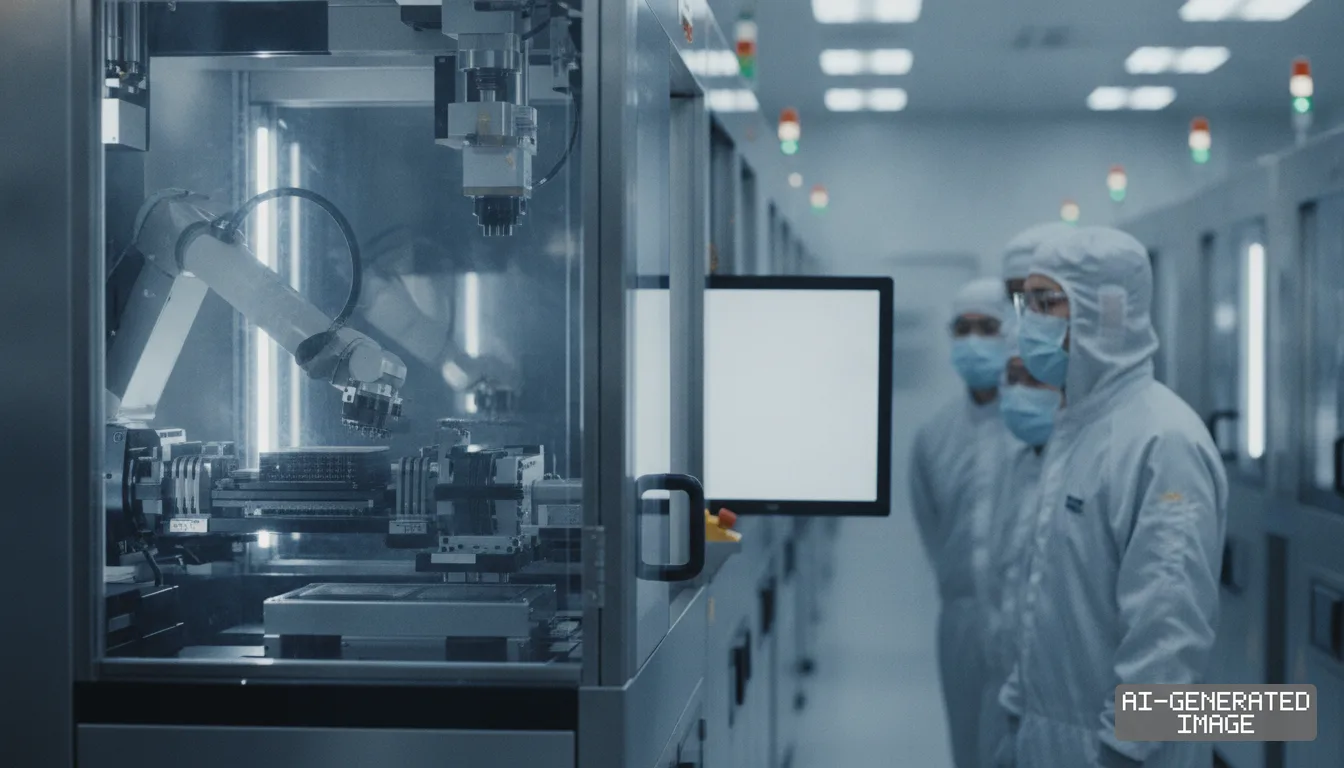
CXMT starts pilot HBM3E production as China accelerates AI chip self-reliance
Chinese memory maker CXMT is testing fifth-generation high-bandwidth memory with domestic chip designers following United States trade curbs.
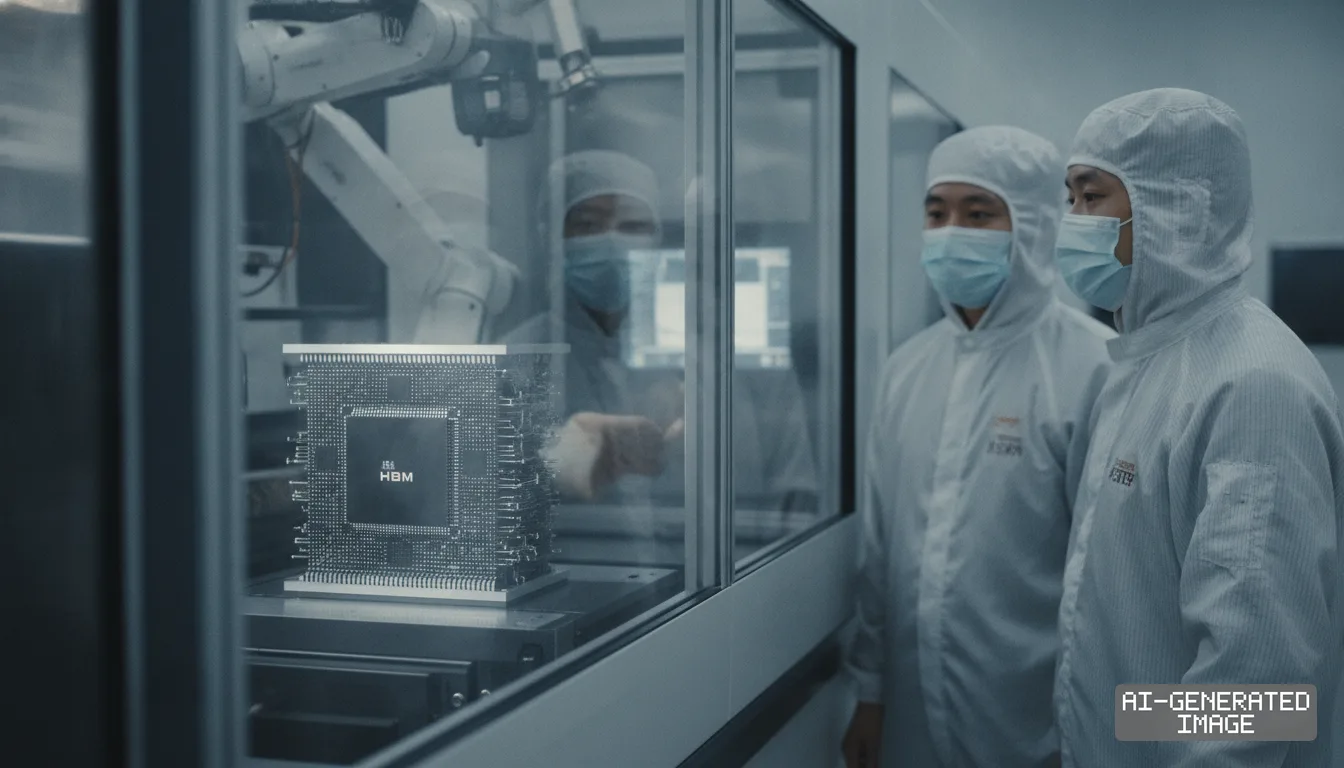
ChangXin Memory Technologies entered small-scale risk production of fifth-generation high-bandwidth memory chips on Sept. 2, 2026, delivering initial HBM3E silicon to Chinese chip designers racing to replace restricted American components.
The manufacturer is China's largest maker of dynamic random-access memory, operating fabrication facilities in Hefei and Beijing. High-bandwidth memory stacks memory dies vertically to boost data transmission speeds for artificial intelligence processors.
Alibaba Group's semiconductor subsidiary T-Head and Beijing-based Cambricon Technologies are testing the memory modules. Both companies are validating the components alongside their proprietary accelerator chips designed for data centers.
Commercial deployment in domestic server clusters could begin in 2027 if sample qualification succeeds. The pilot program aims to establish volume manufacturing lines for enterprise customers by that year.
Neither CXMT nor its prospective customers have publicly confirmed the trial production runs. Representatives for Alibaba and Cambricon did not issue public statements regarding sample verification timelines.
The memory maker has not released detailed specifications for its HBM3E silicon. Production yields, monthly wafer allocations and die stack configurations of eight or 12 layers remain undisclosed.
The high-bandwidth memory does not appear in CXMT's official product catalog. The company lists only standard DDR4, DDR5 reaching 8,000 megabits per second, LPDDR4X and LPDDR5X mobile memory products.
The pilot production follows trade restrictions enacted by the United States Bureau of Industry and Security on Dec. 2, 2024. That regulatory rule prohibited exports of HBM2 and higher-specification memory hardware to China.
Those trade measures cut Chinese artificial intelligence developers off from direct foreign shipments of advanced memory. Domestic technology companies responded by accelerating programs to build domestic component supply channels.
United States export rules also restrict Chinese memory makers from acquiring advanced wafer-fabrication tools. Those tool restrictions complicate efforts to raise chip yields and scale multi-die packaging assembly lines.
CXMT secured substantial financial resources earlier this year to finance its fabrication expansion. The company submitted its registration filing for an initial public offering on the Shanghai STAR Market on May 27, 2026.
The listing prospectus outlined plans to raise 29.5 billion yuan ($4.3 billion) in gross proceeds. The company assigned 13 billion yuan ($1.89 billion) to DRAM technology development programs.
Another 7.5 billion yuan ($1.09 billion) was allocated to upgrade existing cleanrooms and wafer lines. The expenditure plan supports equipment installation across the manufacturer's operational campuses.
The pilot lines narrow China's nominal product generation gap with foreign industry leaders to one generation. South Korean chipmakers SK hynix and Samsung Electronics initiated commercial HBM3E manufacturing in 2024.
Both Korean producers and American competitor Micron Technology are preparing commercial output of sixth-generation HBM4 memory. Those industry leaders have also begun sampling higher-specification HBM4E modules with server clients.
Industry engineers note that nominal generation parity does not signify manufacturing equivalence. Packaging defect rates and thermal warpage during through-silicon via bonding remain substantial engineering barriers for new entrants.
Through-silicon vias — vertical electrical connections etched through stacked silicon dies — require specialized etching and bonding equipment. Access to foreign advanced packaging equipment remains constrained under export controls.
Trial packaging orders from T-Head and Cambricon give CXMT an internal testbed to evaluate structural defects. Customer telemetry allows the memory maker to adjust physical packaging parameters across consecutive wafer runs.
The development signals the emergence of a dual-track memory supply architecture for artificial intelligence hardware. Chinese data center operators are redesigning system boards to accommodate domestic silicon specifications.
Domestic fabrication lines carry higher production costs because low pilot yields raise per-unit packaging outlays. Chinese cloud infrastructure operators absorb those cost premiums to guarantee supply continuity.
South Korean memory producers face limited near-term revenue impact because trade rules already bar direct HBM exports to China. The longer-term risk centers on Chinese fabs redirecting standard DRAM capacity into commoditized markets.
United States trade authorities continue to monitor Chinese packaging developments to assess whether additional export controls are warranted. Commerce Department officials have reviewed secondary tool flows that could support advanced packaging fabs.
CXMT is conducting sample testing across pilot lines while progressing toward its planned Shanghai stock listing. Test results from domestic server chipmakers will determine whether volume deliveries proceed as planned next year.
Impact map
How this development propagates across the region and out to global buyers.
| Event | Korea | China | Japan | Global impact |
|---|---|---|---|---|
| CXMT HBM3E pilot run | memory gap narrowed | domestic AI accelerators | — | dual-track AI hardware supply |
In this story
- Companies
- ChangXin Memory TechnologiesAlibaba GroupCambricon Technologies
- Tickers
- 688256.SS
- Exposed
- Samsung ElectronicsSK hynixMicron Technology
- Policy
- Export ControlsSubsidies
- Impact
- Supply ChainCapexCompliance
Track every Export Controls development → Track every Subsidies development →
Related briefings
- Xi Jinping plans business delegation for Donald Trump summit Also on Alibaba Group, Export Controls, Compliance
- CXMT beats SK hynix and Micron in DRAM margin at 87.59% gross rate Also on ChangXin Memory Technologies, Micron Technology, SK hynix
- CXMT lifts revenue sixfold to 119.7 billion yuan on memory volume push Also on ChangXin Memory Technologies, Micron Technology, SK hynix
- CXMT plans 4F² server DRAM launch, hitting memory shares Also on ChangXin Memory Technologies, Micron Technology, SK hynix
Sources
Primary documents
Reporting
Confidence: high — how we grade this
The documents behind this briefing are linked above. East Asia Brief produces its English text with AI assistance under human editorial review, and does not translate or republish other outlets' articles. See our methodology and AI policy. Spotted an error? Tell us.
The Morning Brief
What changed in Korean, Chinese and Japanese industry overnight — and what it means for your supply chain. One email, weekday mornings, US time. Free.
The Morning Brief is in preparation. Leave your address and we will write to you once — when the first issue is ready. Nothing before that.