China Northern Rare Earth lifts net profit 137% on higher volume
China Northern Rare Earth posted a 136.55% surge in nine-month net profit to 3.65 billion yuan, even as swelling inventories and export volumes weigh on Western refiners.
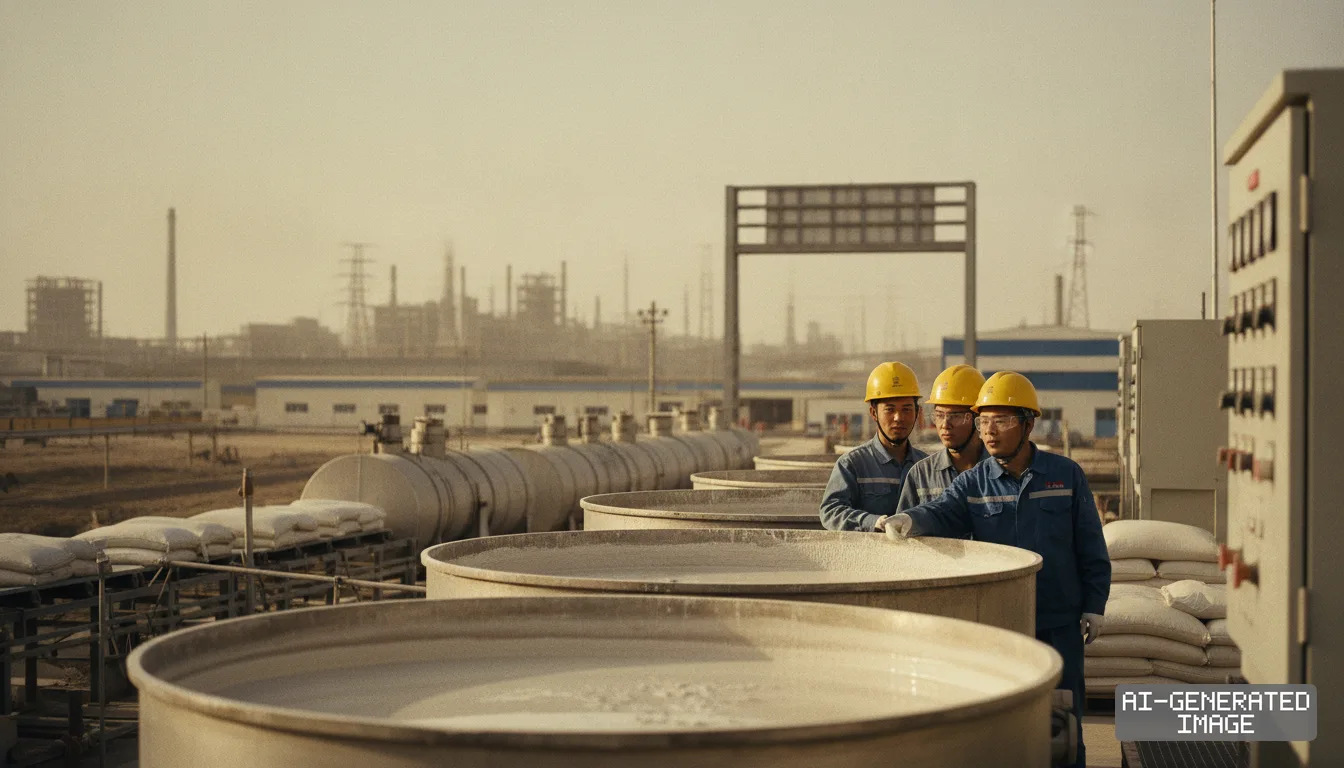
China Northern Rare Earth reported a 136.55% surge in nine-month net profit on Oct. 24, 2026, driven by record processing runs and state-backed production quotas.
The state-owned group, which operates the world's largest light rare earth separation complex in Baotou, lifted net profit attributable to parent shareholders to 3.65 billion yuan ($513 million).
Nine-month revenue climbed 36.45% to 41.33 billion yuan ($5.81 billion), the company said in a financial filing to the Shanghai Stock Exchange. That top line represents roughly two-thirds of China's total upstream rare earth market turnover.
Third-quarter standalone net profit jumped 161.13% from a year earlier to 1.59 billion yuan, the company said. Standalone revenue for the July-to-September quarter rose 35.96% to 15.53 billion yuan.
State production quotas issued earlier this year concentrated mining allotments in northern China, the filing showed. The company stated that output of separated rare earths, rare earth metals and magnetic alloys reached record highs for the nine-month period.
Demand from domestic electric vehicle makers and wind turbine plants supported higher sales volumes, the company said. The producer pushed lower-cost cerium and lanthanum derivatives into overseas supply chains to offset uneven domestic industrial momentum.
Heavy production runs created an inventory overhang across domestic warehouses. China Northern Rare Earth carried 16.87 billion yuan ($2.37 billion) in finished and semi-finished inventories at the end of September.
That stockpiled material equaled 40.8% of the company's nine-month revenue. Operating cash flow rose 63.46% to 4.46 billion yuan during the nine months, with 3.25 billion yuan collected in the third quarter alone.
The volume of separated oxides exiting Chinese plants has suppressed global spot prices for light rare earths. Praseodymium-neodymium oxide, the baseline feedstock for permanent magnets, traded near 415,000 yuan ($58,350) per metric ton this month.
That price level sits below the estimated breakeven threshold of non-Chinese mining and refining operations. State control over processing capacity allows Chinese champions to maintain positive cash margins at prices that strain overseas competitors.
Australian producer Lynas Rare Earths faces sustained commercial headwinds under this price structure. The producer extracts ore from the Mt Weld mine and processes concentrate at its refinery in Gebeng, Malaysia, producing about 10,000 metric tons of separated oxides annually.
MP Materials, which operates the Mountain Pass mine in California and produces about 42,000 metric tons of rare earth oxide in concentrate, also remains exposed. The company relies on Chinese toll-smelting for the bulk of its upstream cash receipts while ramping up domestic magnet lines.
Chinese domestic magnet manufacturers absorbed roughly 70% of China Northern Rare Earth's alloy output. The remaining volume flowed into export channels across South Korea, Japan and Europe as refined metals and bonded inventory.
Japanese magnet producers, including Shin-Etsu Chemical and Proterial, draw roughly 60% of their upstream heavy and light rare earth metal imports from Chinese state refiners. South Korean electric motor component suppliers maintain similar levels of single-source dependence.
The state group's green smelting upgrade project and secondary resource recycling facility added new processing capacity during the third quarter, the filing said. These capital additions reduced unit energy consumption across separation lines by an estimated 8%.
Operating costs fell across northern refining units during the first nine months, the company said. This cost advantage enabled the group to absorb lower export prices without cutting smelting utilization rates.
The filing does not state how much refined magnetic material entered overseas bonded warehouses, and the company has not published its export destination breakdown for the third quarter.
Management will host an online investor briefing on Oct. 26, 2026, to discuss product shipments and inventory carrying values. The Ministry of Industry and Information Technology publishes its final annual production quota allocation for domestic refiners in December.
Impact map
How this development propagates across the region and out to global buyers.
| Event | Korea | China | Japan | Global impact |
|---|---|---|---|---|
| China Northern Rare Earth Q3 earnings surge | Motor parts suppliers absorb Chinese light rare earth alloys at subdued spot rates | China Northern Rare Earth expands smelting volume while carrying 16.87B yuan inventory | Shin-Etsu Chemical retains 60% reliance on Chinese metal imports for magnet lines | MP Materials and Lynas face compressed margins under sub-$60,000/t PrNd oxide prices |
In this story
- Companies
- China Northern Rare Earth
- Tickers
- 600111.SS
- Exposed
- Lynas Rare EarthsMP MaterialsShin-Etsu Chemical
- Impact
- Supply ChainPricingCost Structure
Related briefings
- China Customs logs 6.7% rise in September rare earth exports Also on China Northern Rare Earth, Shin-Etsu Chemical, Pricing
- China Northern Rare Earth fixes fourth-quarter concentrate supply price Also on China Northern Rare Earth, Pricing, Cost Structure
- China ties rare earth permits to European trade concessions Also on China Northern Rare Earth, Pricing
- Dysprosium prices jump outside China as buyers split supply Also on MP Materials, Lynas Rare Earths, Pricing
Sources
Reporting
Confidence: medium — how we grade this
The documents behind this briefing are linked above. East Asia Brief produces its English text with AI assistance under human editorial review, and does not translate or republish other outlets' articles. See our methodology and AI policy. Spotted an error? Tell us.
The Morning Brief
What changed in Korean, Chinese and Japanese industry overnight — and what it means for your supply chain. One email, weekday mornings, US time. Free.
The Morning Brief is in preparation. Leave your address and we will write to you once — when the first issue is ready. Nothing before that.