TSMC tests rare-earth-free motors as China magnet curbs loom
Fabricators and component builders accelerate alternative magnet designs as Beijing prepares to end a one-year grace period on extraterritorial permanent magnet export licensing rules.
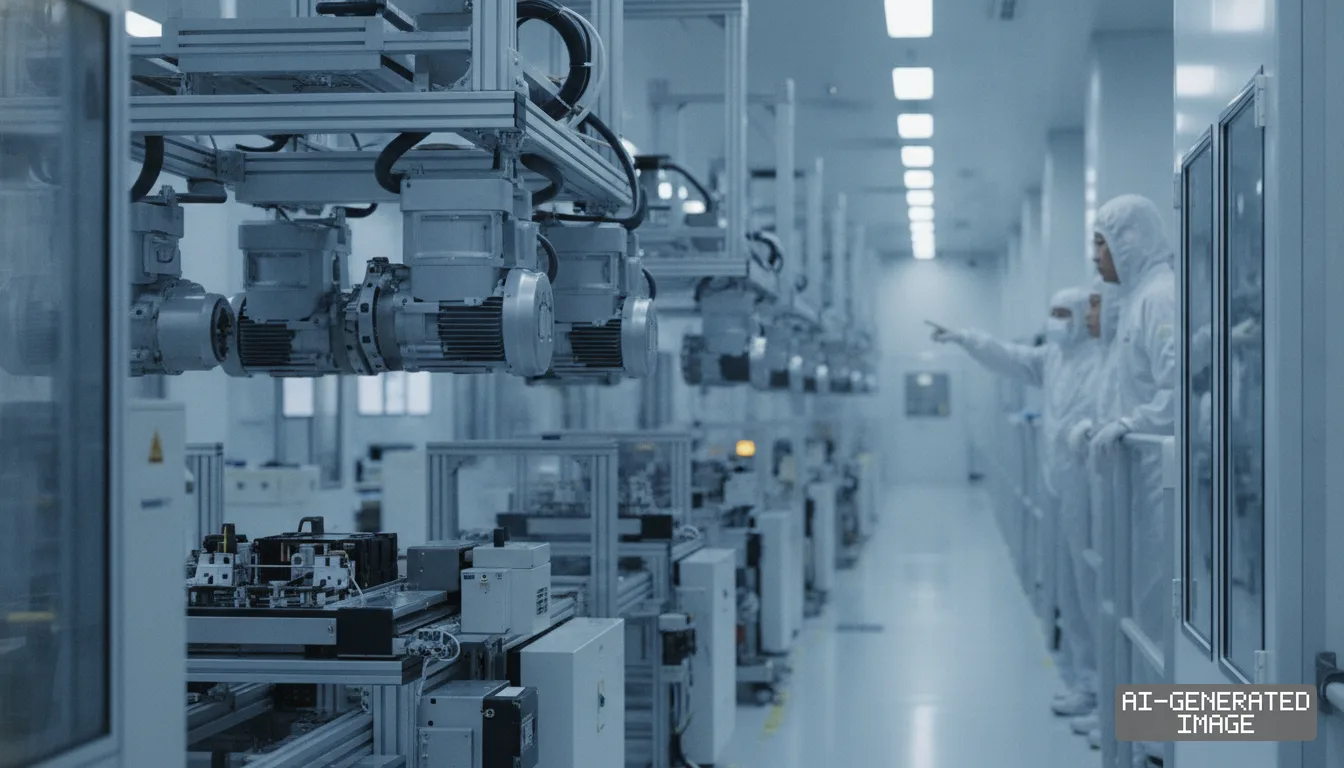
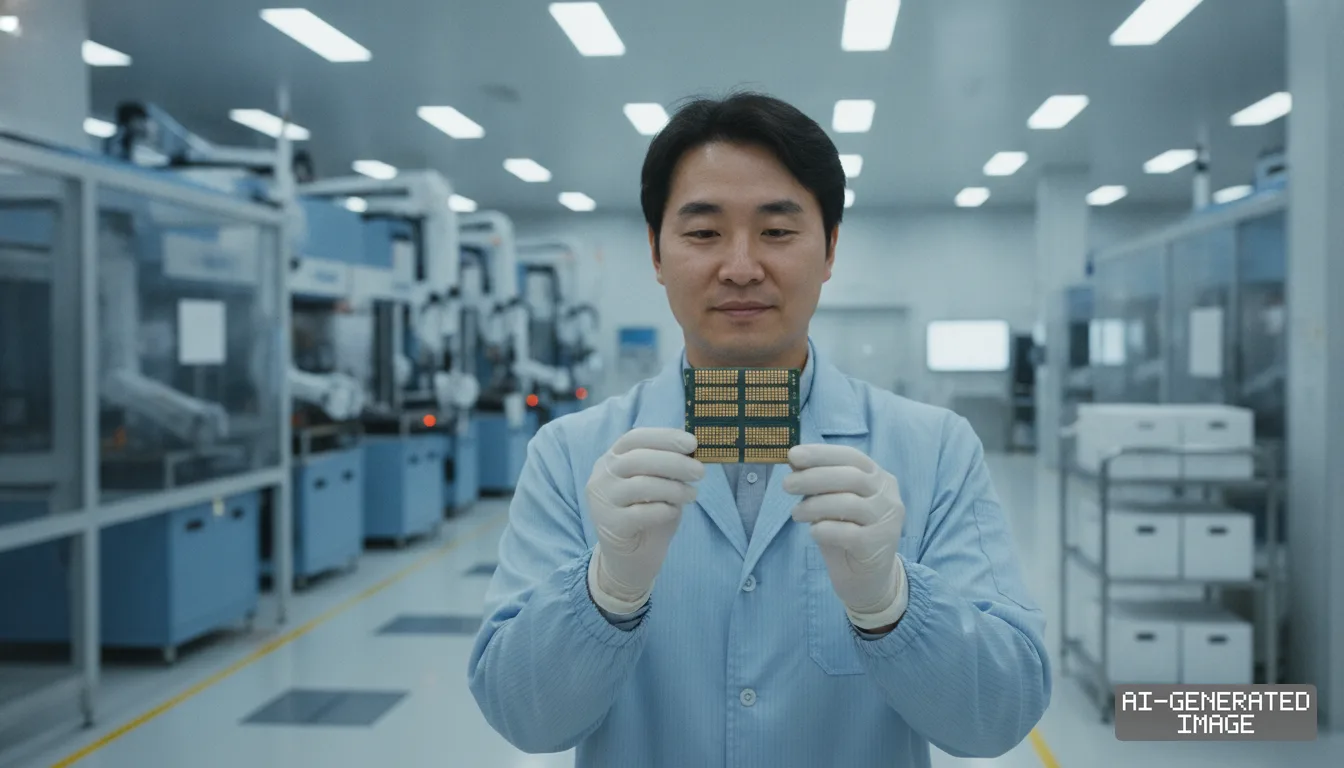
Taiwan Semiconductor Manufacturing Company surveyed equipment suppliers on Oct. 23, 2026, about replacing Chinese rare-earth permanent magnets in factory automation tools with non-rare-earth motor architectures.
China controls roughly 90% of global rare-earth refining capacity and about 95% of sintered neodymium-iron-boron magnets. Disruption in those processing lines threatens cleanroom robotics and overhead hoist transport systems across leading chip foundries.
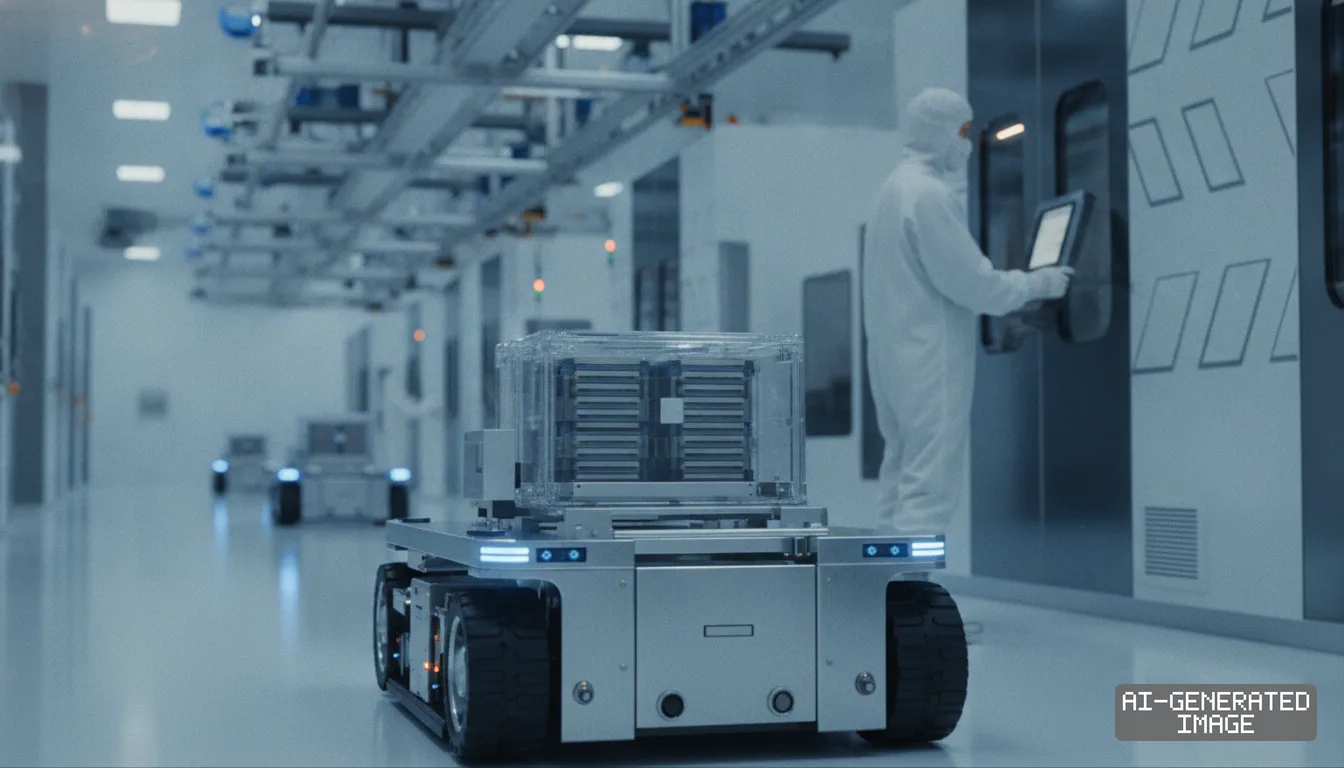
The fab operator initiated the inquiries as geopolitical tensions raised risks around critical magnet components. Automated wafer tracks move silicon through hundreds of processing chambers where mechanical vibration must remain below nanometer thresholds.
Equipment makers rely on neodymium-iron-boron magnets because their high magnetic energy product yields compact, powerful servo motors. Alternative designs without rare earths exist, but each introduces physical compromises in precision, mass or thermal management.
Three equipment industry executives confirmed the preliminary consultations, though TSMC declined to comment. Dutch lithography supplier ASML Holding and Japanese precision toolmakers supply the automated machinery that operates continuously across TSMC wafer cleanrooms.
The search for alternative motors follows export curbs introduced by China's Ministry of Commerce. In Announcement No. 62 of 2025, Beijing restricted exports of rare-earth mining, smelting, separation and magnet manufacturing technologies and production equipment.
China also issued Announcement No. 61 of 2025, imposing dual-use export licensing rules on overseas products containing Chinese-origin rare earths. That regulation applied extraterritorial controls if Chinese-origin materials represented 0.1% or more of the finished product value.
Beijing suspended enforcement of the 0.1% extraterritorial value threshold for one year. That temporary grace period expires on Nov. 10, 2026, creating immediate supply-chain compliance deadlines for multinational machinery vendors and their customers.
Semiconductor fabs run thousands of electric motors across cleanroom tracks, wafer handlers, vacuum pumps and chemical distribution loops. Replacing permanent magnets requires tool builders to select from three primary alternative motor technologies.
Induction motors eliminate permanent magnets by using alternating current to induce magnetic fields in a rotor core. The design removes rare earths but generates secondary heat and suffers lower electrical efficiency during precision low-speed positioning tasks.
Switched reluctance motors offer another magnet-free architecture, creating torque as an iron rotor aligns with magnetic resistance poles. The motors operate at high temperatures, but strong torque ripple causes acoustic noise and micro-vibrations incompatible with advanced lithography.
Ferrite permanent magnet motors represent the third option, replacing neodymium with abundant iron oxide compounds. Ferrite magnets deliver roughly one-third the magnetic strength of neodymium, forcing motor casings to expand to generate equivalent torque.
Automotive component makers have already engineered working prototypes around ferrite motor systems to eliminate supply-chain bottlenecks. Component manufacturer Astemo, formerly Hitachi Astemo and 61% owned by Honda Motor, developed a rare-earth-free synchronous reluctance traction motor delivering 180 kilowatts.
Astemo arranged ferrite magnets within a multi-layer flux rotor structure, using oil-immersion cooling to prevent thermal degradation under elevated current. The 180-kilowatt prototype proved roughly 30% larger by volume than a comparable neodymium permanent magnet unit.
Astemo paired the rear ferrite motor with a front synchronous reluctance motor that contains zero permanent magnets. That front auxiliary motor produces zero magnetic drag during vehicle coasting, conserving power without exposing the vehicle platform to critical mineral restrictions.
Industrial automation suppliers are testing similar reluctance techniques, but spatial constraints inside cleanroom equipment limit casing expansion. Tool designers must re-engineer chassis compartments or recalibrate motion controllers to accommodate larger ferrite or reluctance motors.
Material scientists are simultaneously developing non-rare-earth magnetic alloys that exceed standard ferrite output without requiring expanded motor frames. In South Korea, researchers achieved higher magnetic energy density using manganese and bismuth formulations.
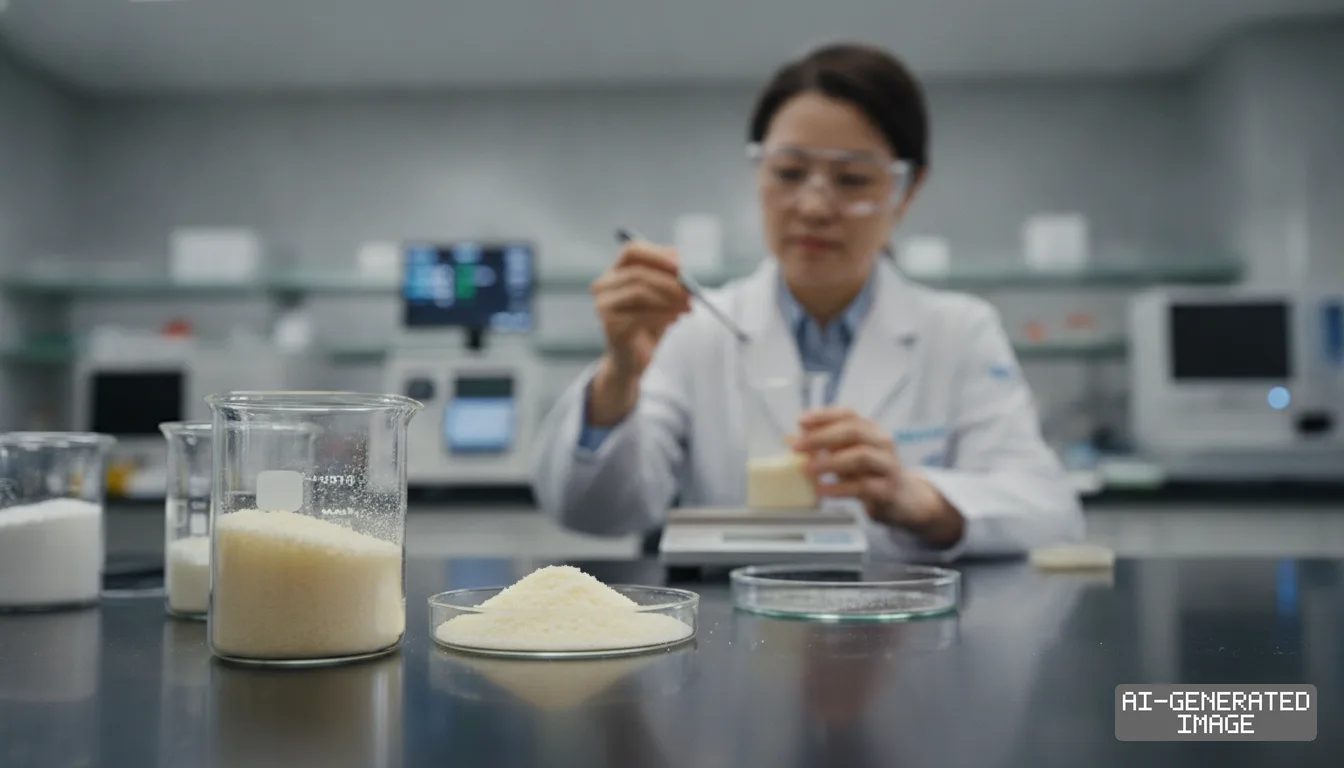
The Korea Institute of Materials Science transferred manufacturing technology for manganese-bismuth permanent magnets to magnet producer Novatech on March 26, 2025. Novatech began commercialization trials to produce non-rare-earth magnets for automotive and consumer electronics applications.
The manganese-bismuth magnet achieved a maximum energy product of 10.5 mega-gauss-oersteds through a specialized low-temperature sintering process. While exceeding the 4 to 5 mega-gauss-oersteds of commercial ferrite, it trails high-grade sintered neodymium, which exceeds 45 mega-gauss-oersteds.
Manganese-bismuth compounds exhibit a unique physical property: their magnetic coercivity increases at higher operating temperatures. That characteristic prevents thermal demagnetization in industrial drive units, reducing the need for auxiliary cooling systems.
Taiwan has backed domestic magnet initiatives alongside fab-level motor inquiries. Taiwan's Ministry of Economic Affairs funded a research program through the Industrial Technology Research Institute to establish pilot facilities capable of supplying 50% of domestic magnetic demand within three years.
The supplier consultations do not state contract volumes, procurement timelines or final motor architectures for fab equipment, and TSMC has not published an equipment transition schedule.
Beijing has not announced an extension of its one-year suspension on Announcement No. 61, leaving equipment builders focused on the Nov. 10, 2026, expiry date for extraterritorial rare-earth export licensing rules.
Impact map
How this development propagates across the region and out to global buyers.
| Event | Korea | China | Japan | Global impact |
|---|---|---|---|---|
| China magnet export licensing rules | Novatech validates KIMS Mn-Bi magnets with 10.5 MGOe density | MOFCOM controls 90% of refining and 95% of sintered NdFeB magnet output | Astemo scales 180 kW ferrite motor running 30% larger for Honda EVs | ASML and fab automation vendors face tool re-engineering ahead of Nov. 10 deadline |
In this story
- Companies
- TSMCNovatechAstemo
- Tickers
- 2330.TW285490.KQ
- Exposed
- ASMLHonda Motor
- Policy
- Export Controls
- Impact
- Supply ChainComplianceCost Structure
Track every Export Controls development →
Related briefings
- Japan urges China to expedite rare earth export approvals Also on Honda Motor, Export Controls, Compliance
- Talga advances Japan graphite anode pacts for Swedish output Also on Honda Motor, Export Controls, Compliance
- ASML reviews 2028 EUV tool expansion as Q3 sales hit €11.7B Also on ASML, TSMC, Export Controls
- LG Energy Solution secures 240,000 tons of Canadian lithium from Elevra Also on Honda Motor, Compliance, Cost Structure
Sources
Primary documents
Reporting
Confidence: high — how we grade this
The documents behind this briefing are linked above. East Asia Brief produces its English text with AI assistance under human editorial review, and does not translate or republish other outlets' articles. See our methodology and AI policy. Spotted an error? Tell us.
The Morning Brief
What changed in Korean, Chinese and Japanese industry overnight — and what it means for your supply chain. One email, weekday mornings, US time. Free.
The Morning Brief is in preparation. Leave your address and we will write to you once — when the first issue is ready. Nothing before that.