China ties rare earth permits to European trade concessions
Beijing maintains expedited clearances for European magnet buyers under its new industrial doctrine while trading raw mineral access for tariff and automotive relief.

China's Ministry of Commerce formalized managed-access export licensing for European rare earth buyers on Oct. 13, 2026, anchoring mineral flows to reciprocal industrial concessions under Beijing's new national doctrine.
The mechanism operationalizes the 16-point consensus concluded Oct. 9 at the second EU-China Trade and Investment Consultation in Beijing. Commerce Minister Wang Wentao and European Commissioner Maroš Šefčovič co-chaired the bilateral ministerial talks.
Under the arrangement, Beijing reviews tariff reductions on €4 billion ($4.36 billion) of European exports. The tariff adjustments save European automotive suppliers and food exporters at least €225 million ($245 million) annually in customs duties.
In return, Chinese regulators maintain a dedicated green channel for export applications covering raw rare earths and sintered neodymium-iron-boron magnets. These components provide critical magnetic torque for automotive drivetrains and industrial wind turbines.
The fast-track lane preserves supply lines for European manufacturers while keeping regulatory authority firmly in Beijing. Export approvals remain subject to discretionary administrative reviews rather than statutory market exemptions.
The export framework reflects a broader shift codified Oct. 9 in national guidelines on developing new quality productive forces. The Central Committee and State Council issued 19 strategic tasks establishing mineral processing as critical economic security instruments.
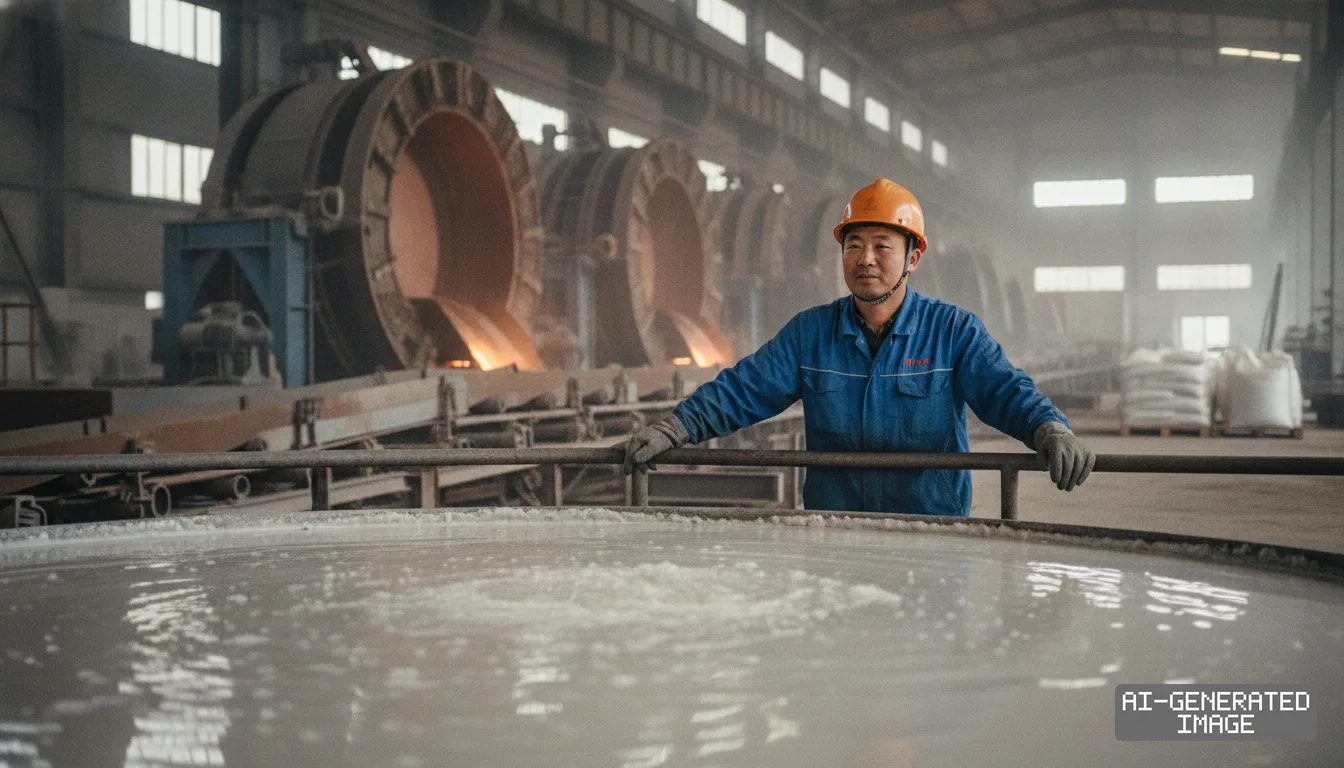
That state doctrine integrates raw resource extraction with domestic advanced equipment manufacturing. The policy channels upstream refining capacity directly into domestic electric mobility, factory automation and robotics sectors.
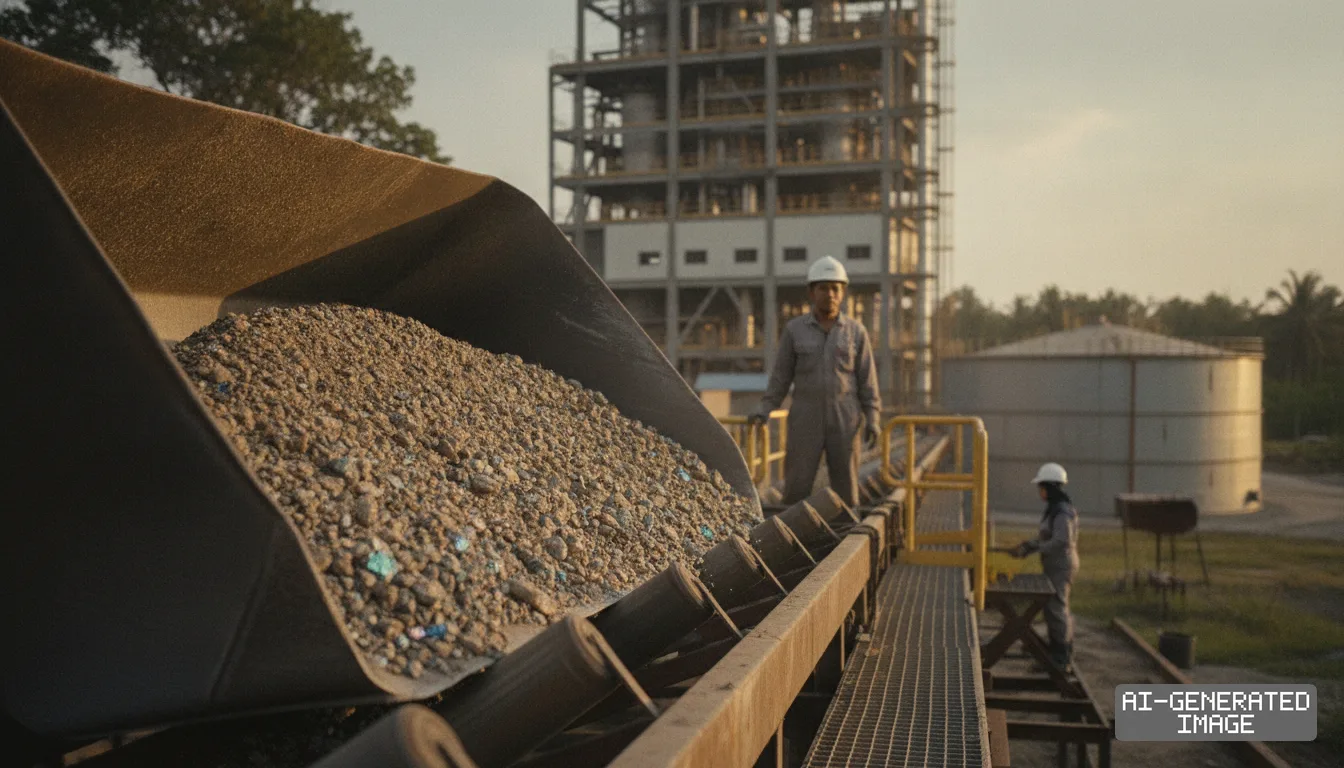
China Northern Rare Earth (Group) High-Tech anchors that processing apparatus from its Inner Mongolia operating hub. The state enterprise controls over 70% of China's light rare earth mining allocation and reported 42.56 billion yuan in revenue.
The company supplies the bulk of domestic neodymium and praseodymium feeds to downstream magnet fabricators. Light rare earths provide the foundational magnetic properties required for high-flux motor assemblies.
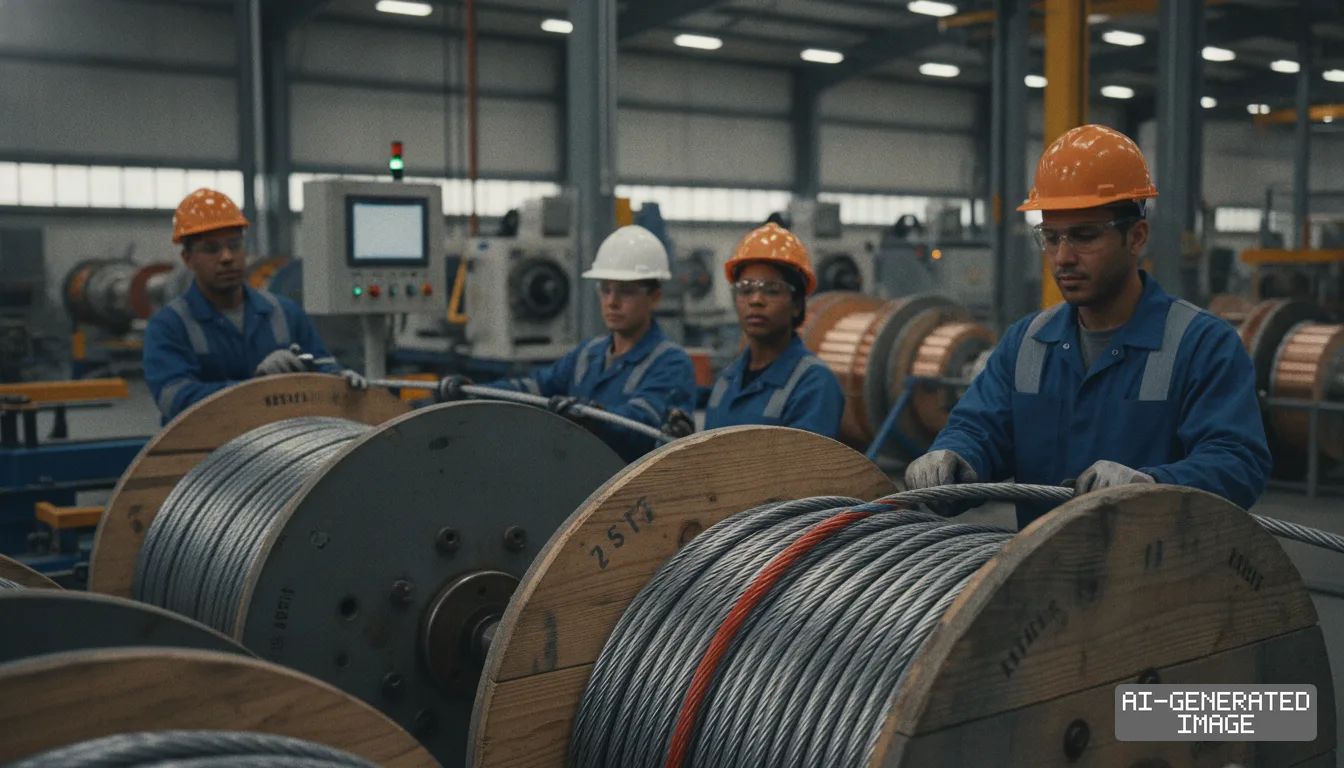
Downstream producer JL MAG Rare-Earth processes those refined elements across five domestic manufacturing centers. The Ganzhou-based supplier commands 40,000 tonnes of annual sintered magnet capacity and operates at plant run-rates above 90%.
JL MAG booked 7.12 billion yuan ($1.02 billion) in operating revenue last year, supplying global automakers and robotics integrators. Chinese plants currently account for roughly 94% of worldwide rare-earth permanent-magnet output.
Beijing reinforced this supply advantage through State Council Decree No. 785, which took effect Oct. 1, 2024. The rare earth management regulation formalized sovereign state resource ownership and mandated lifecycle tracking across all domestic supply chains.
The regulatory architecture expanded further under Commerce Ministry Announcements No. 61 and No. 62, enacted Oct. 9, 2025. Those rules imposed technology export bans on magnet manufacturing and established extraterritorial oversight.
Announcement No. 61 asserts regulatory authority over overseas goods containing at least 0.1% Chinese rare earths by value. The provision exposes multinational procurement networks to administrative tracking and potential licensing delays.
For European buyers, the consultation outcomes provide immediate operational breathing room without eliminating long-term procurement vulnerability. European motor manufacturers avoided production line halts that loomed during earlier licensing slow-downs.
The bilateral compromise also addresses automotive vehicle flows into the European single market. Chinese trade officials agreed to evaluate voluntary volume controls on hybrid and plug-in hybrid vehicle shipments to European ports.
European carmakers had raised alarms after monthly Chinese hybrid shipments expanded thirteenfold in under two years. Monthly import volumes surged from 3,800 vehicles in late 2024 to more than 50,000 units by mid-2026.
The automotive compromise balances vehicle access against magnet reliability. Brussels pledged reciprocal facilitation for Chinese dual-use licensing inquiries, while exploring World Trade Organization price undertakings on Chinese electric vehicle shipments.
The published joint statement does not disclose the numerical baseline or enforcement mechanism for the reported 50% curb on Chinese hybrid exports. China's Commerce Ministry has not published volume targets or quota schedules.
The divergent supply regimes deepen procurement splits across major industrial economies. While European plants secure temporary green-channel processing, North American manufacturers face full enforcement of Beijing's technology bans and tracing rules.
Western supply-chain managers must now navigate distinct licensing tiers based on national trade concessions. Selective mineral access has transformed raw materials diplomacy into a structural mechanism of industrial competition.
Technical working groups will advance tariff reviews and export control transparency throughout the fourth quarter. Bilateral negotiators reconvene for a ministerial video conference in January 2027 before holding the third formal consultation in March 2027 in Brussels.
Impact map
How this development propagates across the region and out to global buyers.
| Event | Korea | China | Japan | Global impact |
|---|---|---|---|---|
| rare earth managed access | domestic motor makers face cost gap against EU peers holding green-channel access | China Northern Rare Earth and JL MAG preserve export scale while locking in technology monopoly | magnet fabricators accelerate non-Chinese heavy rare earth sourcing under 0.1% rule | permanent magnet procurement fractures into country-specific bilateral licensing tiers |
In this story
- Companies
- China Northern Rare EarthJL MAG Rare-Earth
- Tickers
- 600111.SS300748.SZ
- Policy
- Export ControlsTariffsEconomic Security
- Impact
- Supply ChainPricingCompliance
Track every Export Controls development → Track every Tariffs development → Track every Economic Security development →
Related briefings
- China Northern Rare Earth fixes fourth-quarter concentrate supply price Also on China Northern Rare Earth, JL MAG Rare-Earth, Pricing
- China mandates digital tracking codes for heavy rare earth shipments to tighten export control Also on JL MAG Rare-Earth, Export Controls, Pricing
- China magnet export controls near end of one-year suspension Also on JL MAG Rare-Earth, Export Controls, Pricing
- China Rare Earth Group faces feedstock curbs from Myanmar Also on JL MAG Rare-Earth, Export Controls, Pricing
Sources
Primary documents
Confidence: high — how we grade this
The documents behind this briefing are linked above. East Asia Brief produces its English text with AI assistance under human editorial review, and does not translate or republish other outlets' articles. See our methodology and AI policy. Spotted an error? Tell us.
The Morning Brief
What changed in Korean, Chinese and Japanese industry overnight — and what it means for your supply chain. One email, weekday mornings, US time. Free.
The Morning Brief is in preparation. Leave your address and we will write to you once — when the first issue is ready. Nothing before that.