LG Electronics creates humanoid robot team to expand AI training fivefold
The group aims for 500,000 data hours at its 10,000-square-meter Yangjae site as Korean industrial giants divide into platform, line and parts routes.
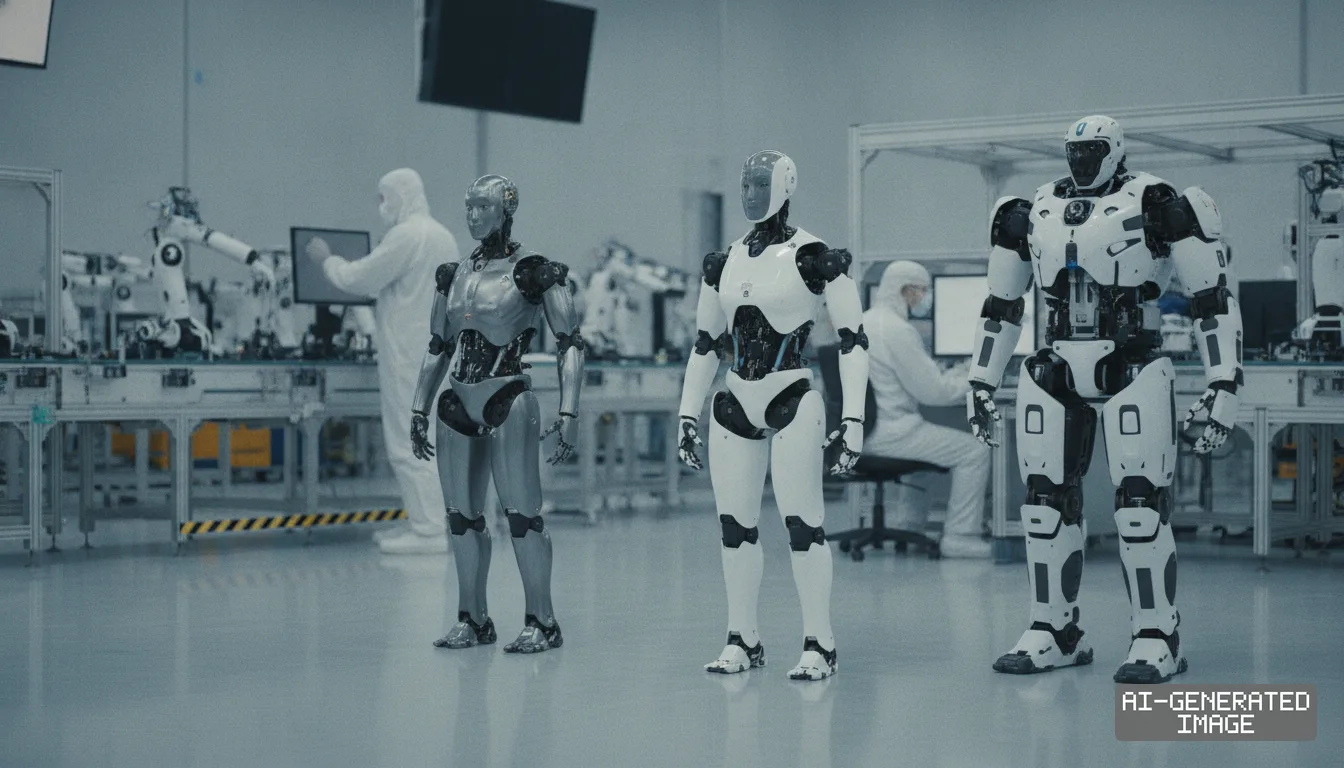
LG Electronics revamped its robotics executive leadership on Nov. 19, 2026, establishing a dedicated humanoid task force under its chief technology officer to commercialize software-driven robotics.
The restructuring marks a widening strategic split among South Korea's three largest manufacturing conglomerates. Each industrial group is pursuing a distinct technical architecture to bring bipedal machines into commercial operations.
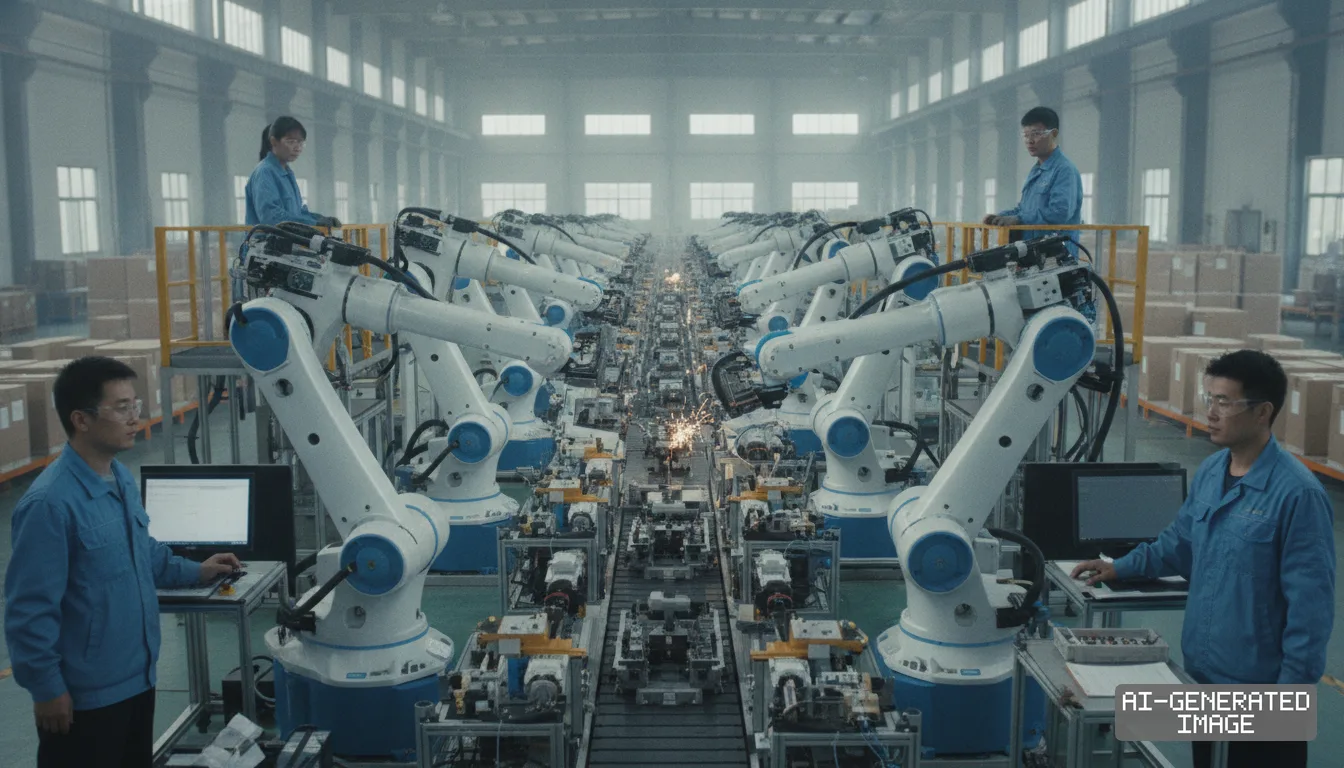
LG Electronics expanded its robot training data target to 500,000 cumulative hours across its 10,000-square-meter Yangjae facility in Seoul. The target scales fivefold from an earlier 100,000-hour benchmark to build foundational artificial intelligence models.
The company promoted the head of its Robotics Business Center to senior vice president during the management shuffle, the company said in an official notice. It also created an executive role to supervise its data factory operations.
LG Electronics is building its humanoid platform around Nvidia's open simulation tools, including Omniverse and Isaac robotics software. The system generates virtual environments that train machines to handle delicate consumer goods before physical deployment.
The group signed an agreement with the Korea Institute for Robot Industry Advancement on Nov. 13 to build humanoid safety assessment standards, the agency said. The pact establishes testing procedures for bipedal and wheeled industrial machines.
LG Electronics has tested its wheeled CLOiD robot on washing machine assembly lines at its manufacturing plant in Tennessee. The pilot collects operational motion data that will feed directly into bipedal system development, the company said.
Hyundai Motor Group is taking a different operational route centered on heavy manufacturing integration and physical artificial intelligence. The automotive group is preparing Boston Dynamics' electric Atlas humanoid for direct automotive plant work.
Hyundai Motor plans to mass-produce 30,000 humanoid units annually by 2028 through its United States subsidiary Robotics America, according to group investor presentations. The volume represents the industry's largest commercial assembly target in North America.
The automaker opened its Robot Metaplant Application Center in Georgia in June to validate humanoid tasks on simulated assembly lines. Hyundai Motor confirmed during its investor day that the facility will expand tenfold before the end of 2026.
Boston Dynamics published technical demonstrations in October and November displaying an electric Atlas equipped with a 13-degree-of-freedom hand. The hand manipulates automotive components during parts sequencing trials designed for vehicle assembly plants.
Hyundai Motor, Kia, Hyundai Mobis and Hyundai Glovis are combining logistics and factory software to build an integrated manufacturing loop. The joint effort deploys humanoids directly into repetitive component distribution tasks, the group said.
Samsung Electronics is following a third distinct trajectory focused on precision components, sensory hardware and equity partnerships. The electronics company is prioritizing internal component capability over building captive assembly-line humanoid fleets.
Samsung established a Robotics eXperience business promotion office in July under Device eXperience division head Roh Tae-moon, according to company statements. The unit coordinates robotics research across corporate component and consumer divisions.
The company holds a 35% equity stake in Rainbow Robotics, a South Korean collaborative robot manufacturer. Samsung is collaborating with Rainbow Robotics engineers to develop mechanical robotic hands capable of handling microelectronics and delicate components.
Samsung hosted Hyundai Motor Group senior executives at its Seocheon Training Center on Nov. 9 for technical discussions, according to corporate attendees. The talks examined potential supplies of high-density robot batteries, vision sensors and edge processing chips.
The diverging strategies create sharply different commercial exposures across South Korea's precision equipment and component supply chains. Motor manufacturers and reduction gear suppliers must calibrate production for either software-defined platforms or high-torque industrial limbs.
Hyundai Motor's production target concentrated in Georgia favors heavy industrial actuators capable of lifting automotive sheet metal. In contrast, LG Electronics and Samsung prioritize compact sensors and vision processors suited for home and light electronics assembly.
The companies have not published per-unit production cost projections, and Samsung Electronics has not disclosed a commercial delivery date for an integrated bipedal system. Those figures remain confidential as testing continues in domestic research facilities.
South Korea's robotics regulatory framework is evolving alongside corporate field trials, but commercial deployments remain subject to newly drafted safety certifications. KIRIA expects to outline initial evaluation benchmarks for factory humanoids next year.
LG Electronics plans to unveil a bipedal humanoid based on Nvidia's reference architecture in the first quarter of 2027. Hyundai Motor intends to deploy production-model Atlas robots at its Georgia vehicle plant starting in 2028.
Impact map
How this development propagates across the region and out to global buyers.
| Event | Korea | China | Japan | Global impact |
|---|---|---|---|---|
| Commercial humanoid platform split | Samsung and LG anchor component and software supply chains | Domestic robot makers face South Korean commercial factory validation data | Reducer and motor suppliers adjust product lines to high-torque vs precision hands | Industrial humanoid supply divides between turnkey factory robots and open software models |
In this story
- Companies
- LG ElectronicsHyundai MotorSamsung Electronics
- Tickers
- 066570.KS005380.KS005930.KS
- Exposed
- Boston DynamicsRainbow RoboticsNvidia
- Policy
- Standards
- Impact
- CapexSupply ChainOrder Book
Track every Standards development →
Related briefings
- Samsung SDI wins Boston Dynamics deal to power electric Atlas robot Also on Boston Dynamics, Hyundai Motor, Standards
- Boston Dynamics faces US supply curb on Chinese robot parts Also on Boston Dynamics, Hyundai Motor, Standards
- Hyundai Mobis scouts China robotics firms for joint hardware Also on Boston Dynamics
- Korean RaaS providers gain on Samsung and LG factory plans Also on LG Electronics, Rainbow Robotics, Nvidia
Sources
Reporting
Confidence: medium — how we grade this
The documents behind this briefing are linked above. East Asia Brief produces its English text with AI assistance under human editorial review, and does not translate or republish other outlets' articles. See our methodology and AI policy. Spotted an error? Tell us.
The Morning Brief
What changed in Korean, Chinese and Japanese industry overnight — and what it means for your supply chain. One email, weekday mornings, US time. Free.
The Morning Brief is in preparation. Leave your address and we will write to you once — when the first issue is ready. Nothing before that.