Elite Robots claims global cobot volume lead with 100,000-unit plant
The Suzhou manufacturer deployed over 20,000 arms across 50 export markets, challenging Western automation rivals in heavy factory payloads.
Elite Robots issued an industrial benchmark ranking itself first among 12 global collaborative robot makers on Nov. 18, 2026, accelerating a commercial push into heavy-payload factory automation.
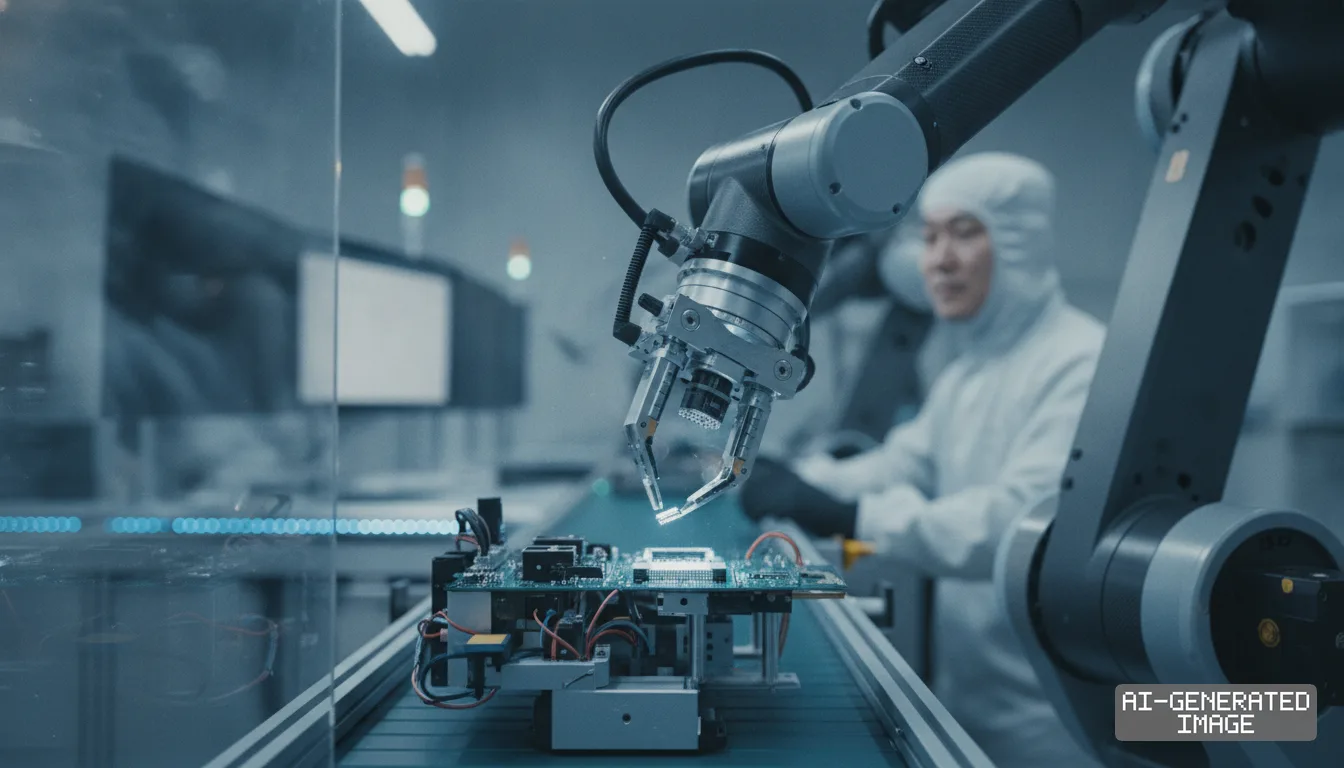
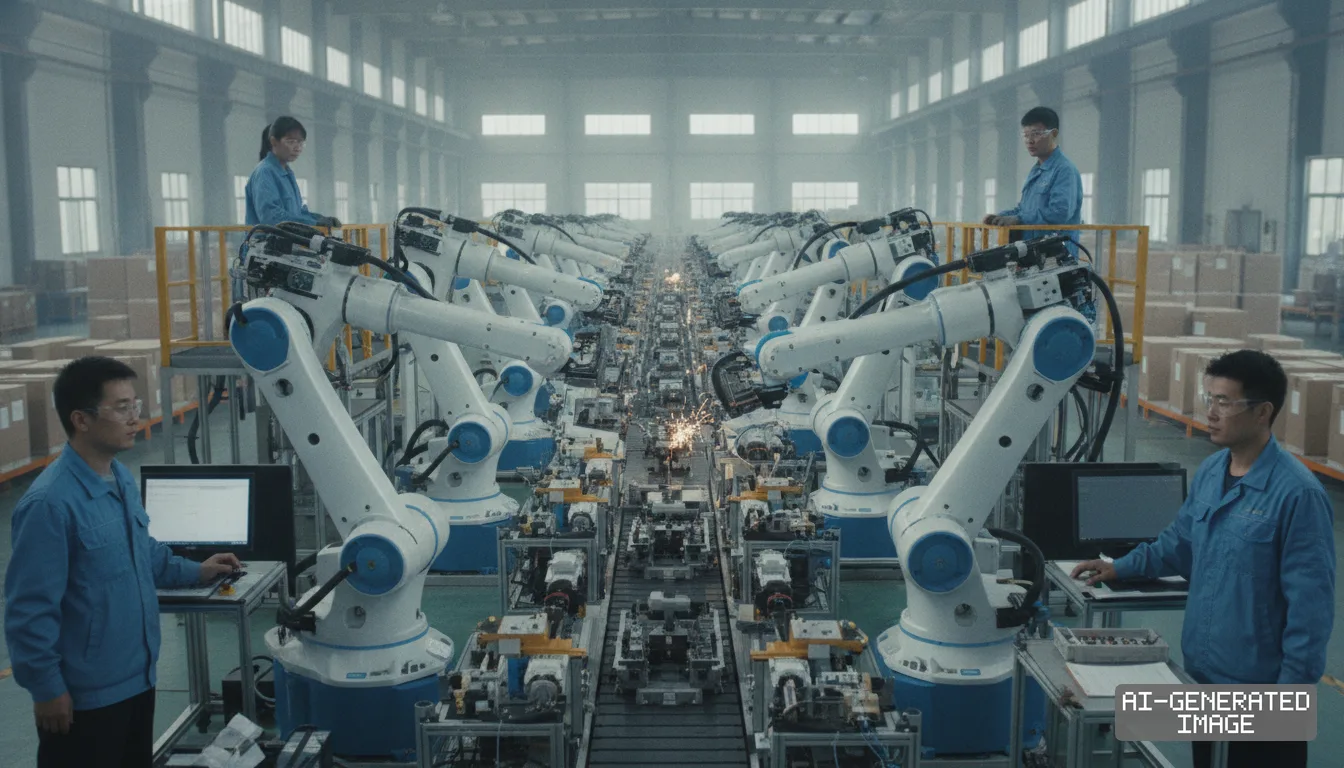
The Suzhou-based robot manufacturer operates an automated assembly facility with an annual manufacturing capacity of 100,000 units. That production base supports an aggressive global deployment across European and Asian production lines.
The firm has deployed more than 20,000 robotic arms across 50 countries, the company said. That install base targets a global collaborative robot sector projected to reach $3.31 billion in 2026.
Collaborative robots — flexible robotic arms designed to operate alongside factory personnel without safety fences — are shifting toward higher load capacities. Manufacturers are replacing fixed industrial robots with high-payload collaborative systems.
Elite Robots centered its benchmark on its CS series architecture, which spans seven distinct arm models. The hardware portfolio supports handling capacities ranging from 3 kilograms to 30 kilograms on a single operating system.
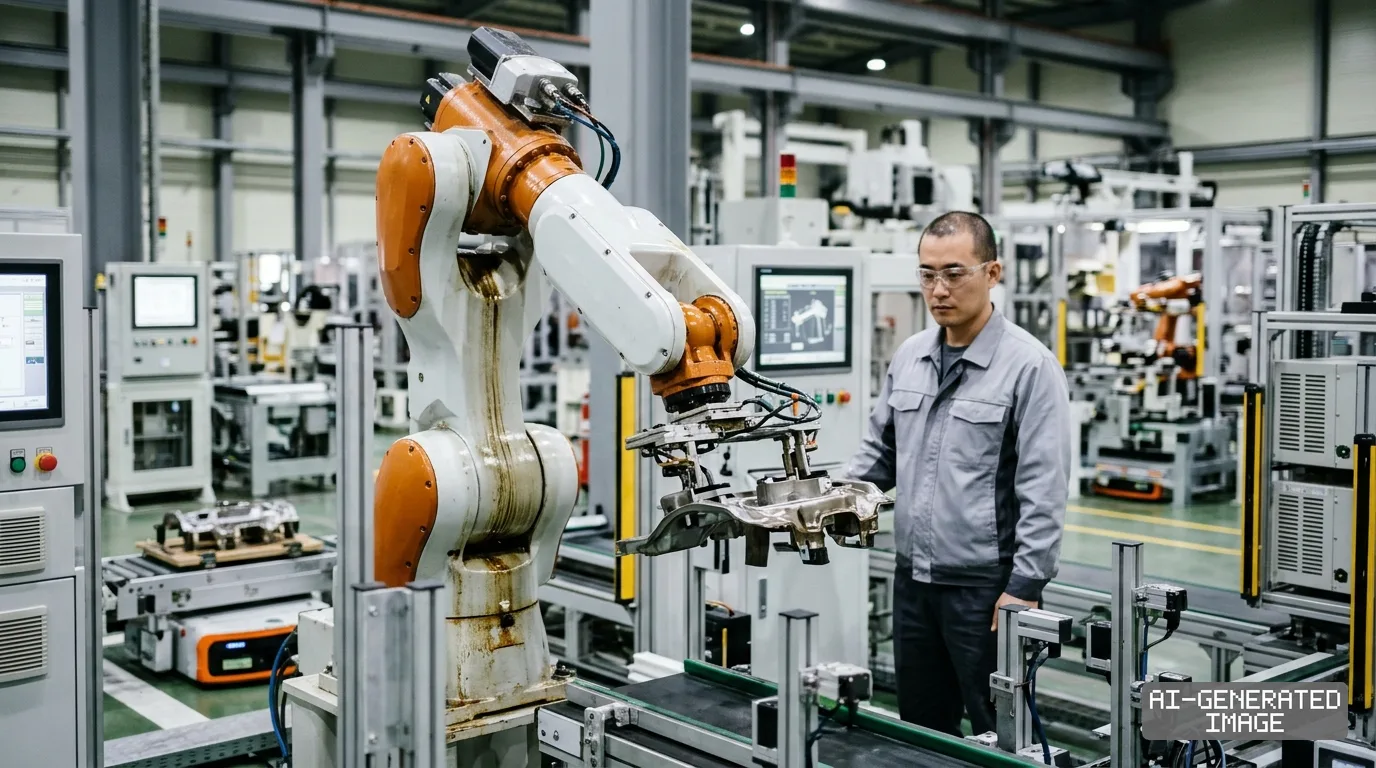
The lineup features the six-axis CS620 and CS630 models alongside the five-axis CS530H palletizing arm. These heavy systems lift up to 30 kilograms, targeting metal machining and packaging sectors, the company said.
The arms incorporate high-protection IP68 water sealing and carry a certified 100,000-hour mean time between failures. Shanghai Robot Inspection validated the operational lifespan metrics under standard factory testing protocols, according to company technical filings.
Chinese cobot builders have historically relied on imported harmonic drive reducers and precision servo motors. Elite Robots has vertically integrated joint sensors, embedded firmware and motor assemblies to suppress baseline unit manufacturing expenses.
Domestic components cut production bills by an estimated 35% compared with traditional Western supply networks. That structural cost gap allows Chinese manufacturers to offer palletizing cells at sharp purchase discounts, the company said.
Denmark-based Universal Robots, owned by Teradyne, faces direct commercial exposure to this expansion. Universal Robots generated $91 million in first-quarter 2026 revenue, representing roughly 10% of Teradyne's total corporate business.
Universal Robots established early dominance in lightweight assembly applications below 10 kilograms. Rapid capacity expansion by Chinese builders in heavy categories now limits the Danish vendor's pricing power in European metal fabrication cells.
Teradyne expanded its own high-payload UR20 and UR30 cobot line to defend key logistics accounts. Yet industrial buyers report Chinese cobots frequently retail at prices 30% below equivalent European machinery, system integrators said.
Regional competitors in East Asia are also recalibrating automated product portfolios. South Korea's Doosan Robotics maintains heavy-duty arms handling up to 30 kilograms, relying on domestic automotive and logistics installations to safeguard revenue.
In mainland China, AUBO Robotics and JAKA Robotics compete directly against Elite Robots for industrial floor space. AUBO and JAKA collectively hold more than 40% of China's domestic collaborative robot shipment volume, industry figures show.
Elite Robots has countered domestic rivalry by expanding foreign distributor networks. The firm operates regional subsidiaries in Knoxville, Tennessee, as well as branch offices in Germany and Japan to service multinational tier-one suppliers.
The company reported more than 300 registered patents and partnerships with 500 integration companies worldwide. Its open software architecture supports custom Python scripts and direct links to factory programmable logic controllers, the firm said.
Machine tending and end-of-line palletizing represent the primary growth channels for heavy-payload cobots. These applications require arms capable of handling 20 kilograms or more continuously without halting automated production cycles.
Traditional industrial robots require expensive protective cages, optical safety curtains and specialized programming technicians. In contrast, heavy cobots use integrated torque sensors to detect contact and stop instantly, lowering cell commissioning costs.
Western factory operators have nonetheless exercised caution regarding Chinese industrial control software. North American automotive plants often mandate Western safety controllers and established communication protocols before approving machine installations on production floors.
Elite Robots sought to address Western regulatory hurdles by securing international safety certifications. The company verified compliance with ISO 10218-1 industrial robot standards and American SEMI S2 environmental safety criteria across all models.
The promotional release does not state verified shipment volumes audited by independent bodies like the International Federation of Robotics. Elite Robots has not published audited financial statements detailing its actual overseas revenue.
Industry analysts caution that internal scorecard metrics based on payload breadth do not reflect real market share. Independent volume tallies still place Universal Robots as the global shipment leader across deployed commercial bases.
Teradyne and Asian robotics competitors report fourth-quarter 2026 operational shipments on Feb. 3, 2027. That reporting cycle will provide the first audited view of whether Chinese heavy-payload cobots eroded Western market share.
Impact map
How this development propagates across the region and out to global buyers.
| Event | Korea | China | Japan | Global impact |
|---|---|---|---|---|
| heavy-payload cobot commercial expansion | Doosan Robotics defends automotive welding lines against low-cost 30 kg imports | Elite Robots leverages in-house drive units to undercut Western cobot prices by 30% | Fanuc faces margin compression in standard CNC machine-tending cells | Assembly and packaging plants lower tooling overhead with fence-free 30 kg robotic arms |
In this story
- Companies
- Elite Robots
- Exposed
- TeradyneUniversal RobotsDoosan RoboticsAUBO RoboticsJAKA Robotics
- Impact
- Supply ChainPricingCost Structure
Related briefings
- Chip fab expansion drives cleanroom SCARA robot demand globally Also on Teradyne
- Doosan Robotics links cobots to peaq to verify machine logs Also on Universal Robots, Doosan Robotics
- Bigwave Robotics partners with automation suppliers to scale US physical AI Also on Universal Robots
- Doosan Robotics hires autonomous driving veteran as new CTO in AI push Also on Doosan Robotics, Pricing, Cost Structure
Sources
Reporting
Confidence: medium — how we grade this
The documents behind this briefing are linked above. East Asia Brief produces its English text with AI assistance under human editorial review, and does not translate or republish other outlets' articles. See our methodology and AI policy. Spotted an error? Tell us.
The Morning Brief
What changed in Korean, Chinese and Japanese industry overnight — and what it means for your supply chain. One email, weekday mornings, US time. Free.
The Morning Brief is in preparation. Leave your address and we will write to you once — when the first issue is ready. Nothing before that.