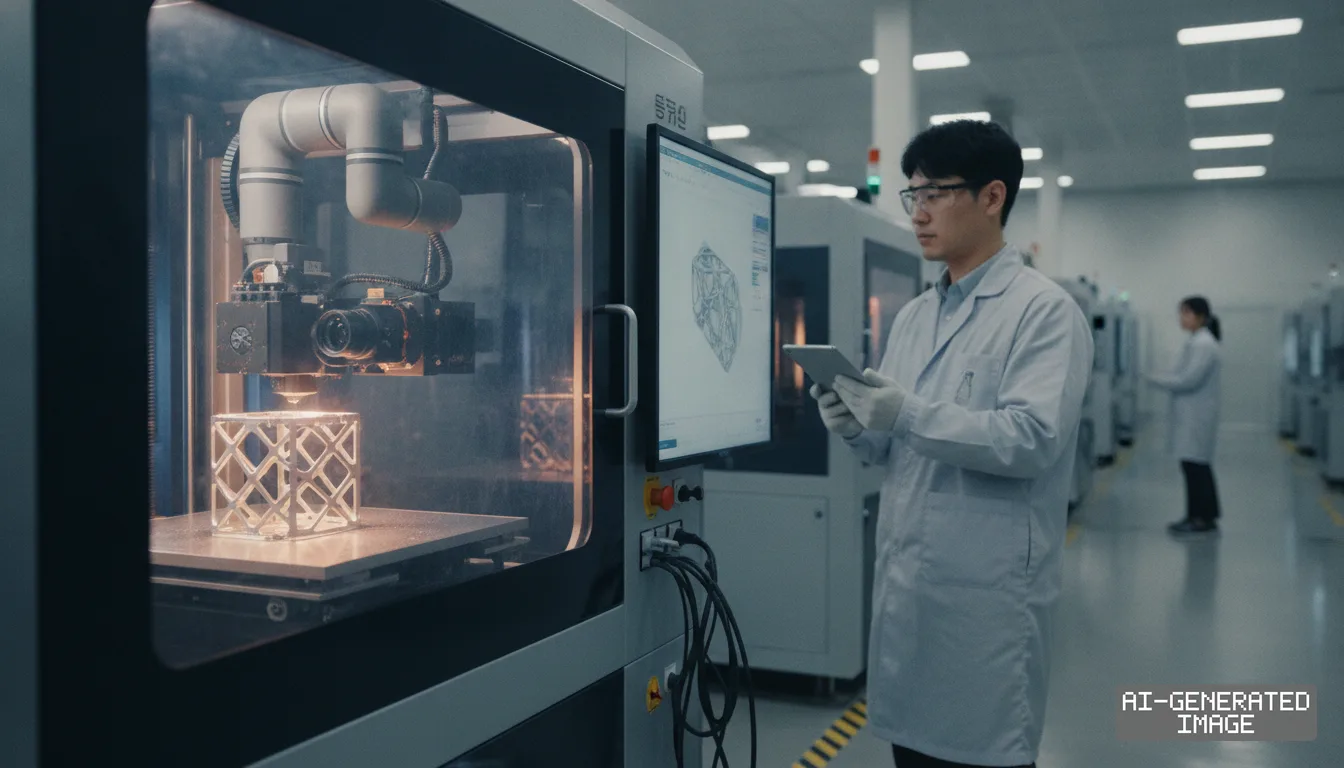
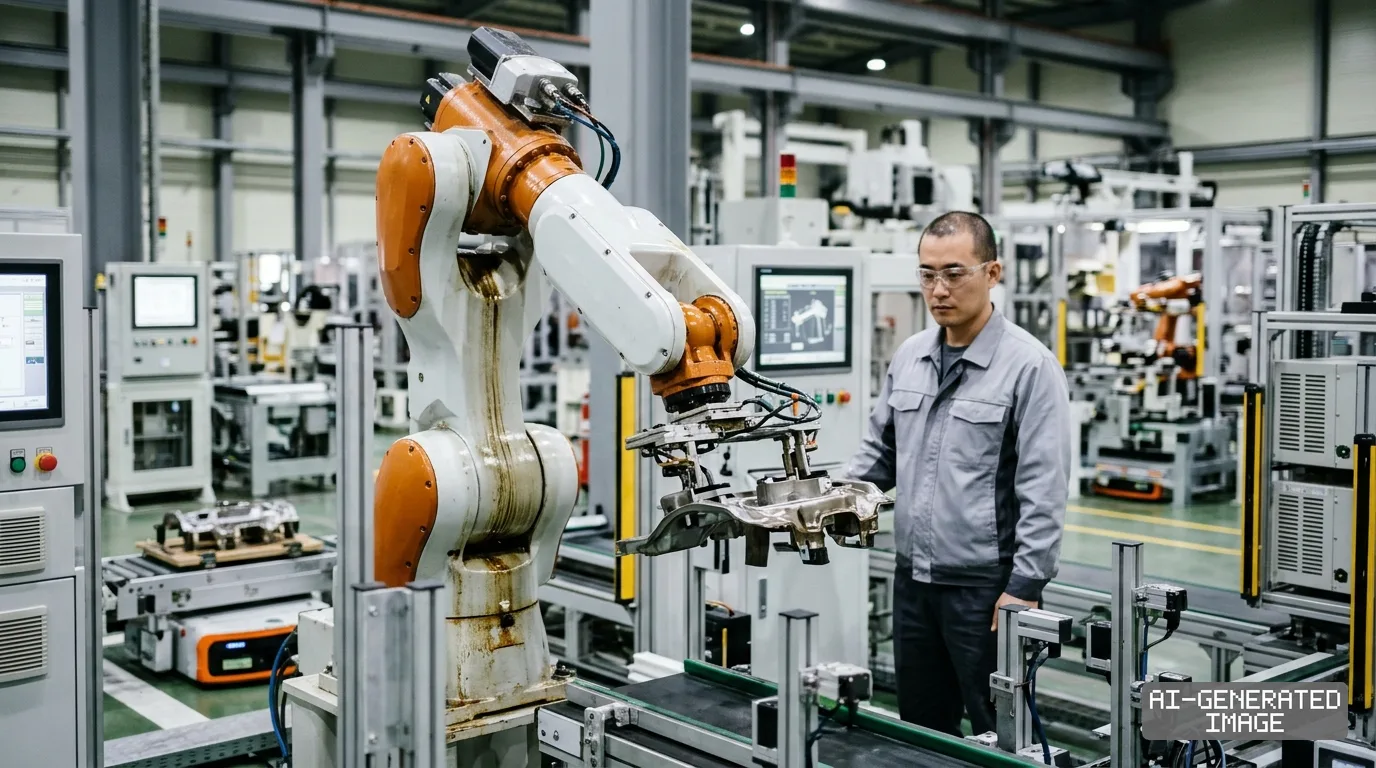
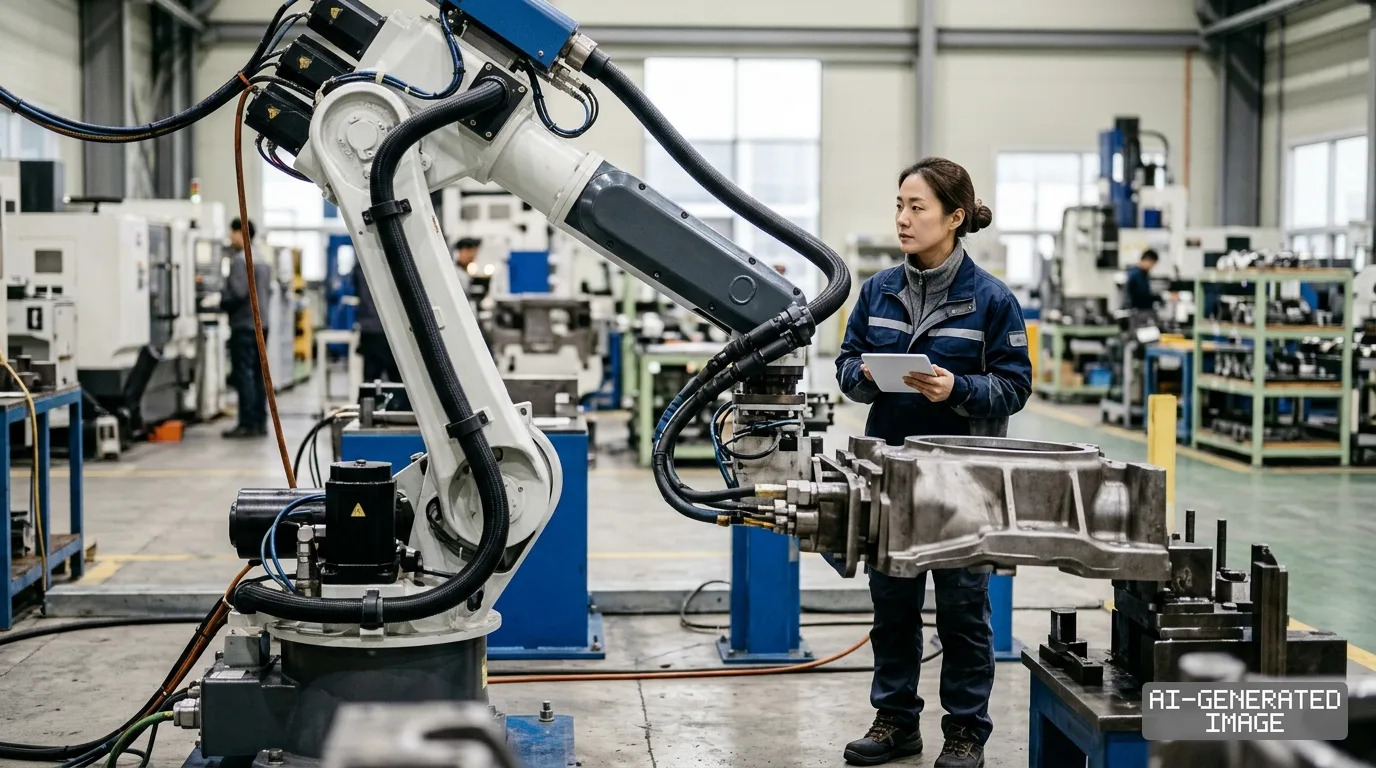
Korean RaaS providers gain on Samsung and LG factory plans
Seoul backs factory automation with 800.2 billion won for on-device chips as manufacturers lease bipedal units without upfront equipment buys.
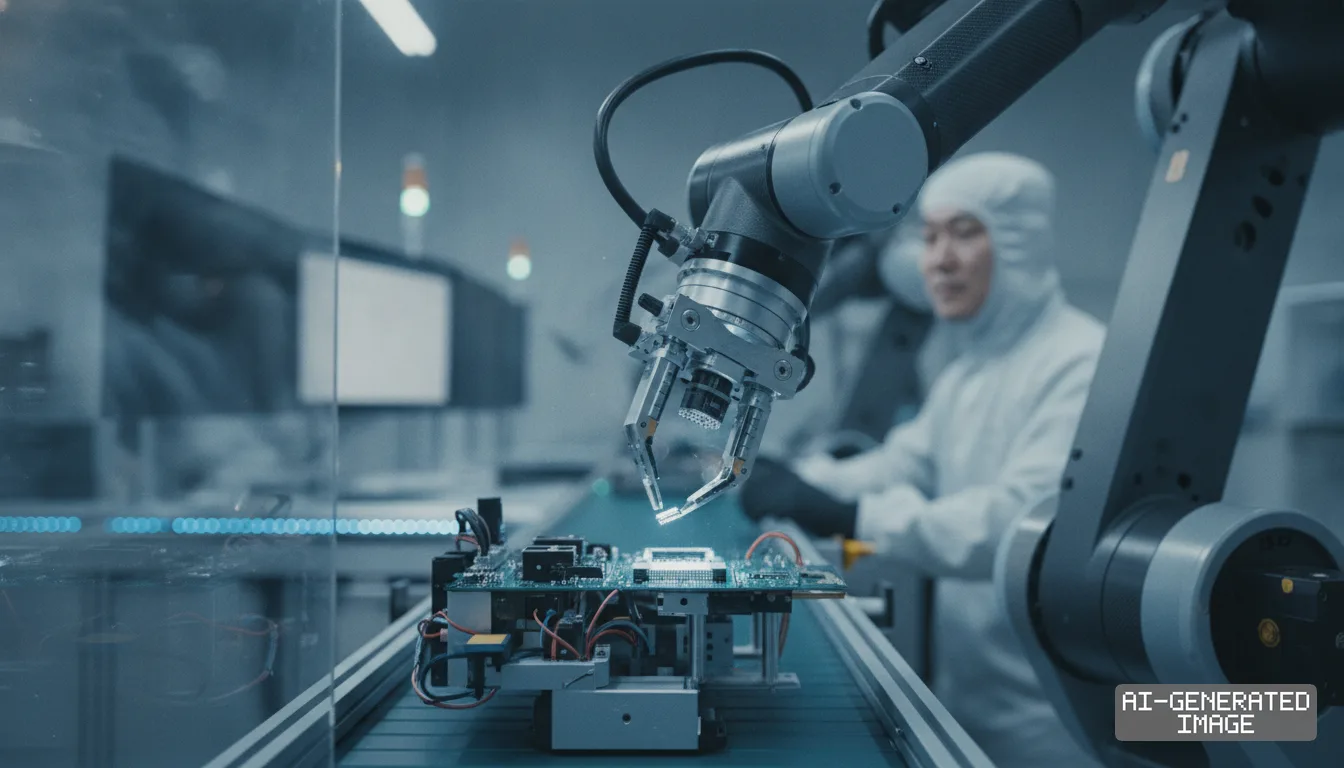
South Korean robotics platform providers logged heavy trading gains on Nov. 18, 2026, as manufacturing roadmaps from Samsung Electronics and LG Electronics accelerated factory orders for robot-as-a-service deployment.
The rally followed state backing for hardware developers, including an 800.2 billion won ($575 million) government allocation for on-device artificial intelligence chips. The trade ministry earmarked the project to develop 10 domestic AI processors by 2030.
Robot-as-a-service providers lease automated machines and integration software to factory operators without requiring upfront machinery purchases. That business model allows manufacturing plants to incorporate bipedal units into established production lines without rebuilding factory floors.
Bigwave Robotics allocated 4.2 billion won ($3.0 million) of its initial public offering proceeds to industrial humanoid development and software scaling. The company raised 28.8 billion won ($20.7 million) in gross equity financing on the Kosdaq exchange.
Humanoid automation solutions generated 21.2% of Bigwave's cumulative sales as of July 2026, establishing the segment as an operating pillar within 12 months. The provider also expanded its North American sales pipeline in Detroit past 7 billion won ($5.0 million).
Brownfield facilities account for 86% of Bigwave's manufacturing client engagements, according to company regulatory filings. A brownfield site is an existing operational factory rather than a newly constructed facility.
Bigwave operates SOLink, an orchestration software platform that coordinates more than 40 different robot models across 640 industrial client locations. The system links mobile carts, stationary arms and humanoid units into unified factory routing schedules.
Repeat customer contracts generated 55% of total platform transactions, showing continued software subscriptions among manufacturing clients. The company combines dispatch software with OmniSensor tracking units that capture manual factory workflows as structured training data.
Samsung Electronics formulated a commercialization plan featuring two bipedal models: the standard Human Reference system and the high-performance Humanoid Extreme unit. The two designs target different operational demands across logistics networks and precision factory floors.
Both Samsung models incorporate five-finger robotic hands with dedicated electric motors driving each finger joint. The design uses mechanical cable linkages to mimic human hand tendons, giving the machine fine grasp control over industrial components.
The technology group established the Robotics Experience Business Division in July 2026 under Device eXperience chief executive Roh Tae-moon. The reorganization consolidated robotics engineering teams at Samsung's central research campus in southern Seoul.
Samsung Electronics Executive Chairman Jay Y. Lee inspected prototype hardware during an on-site review at the Seoul engineering centre on Oct. 27. The company established an automated data-collection facility at its Gumi industrial complex in North Gyeongsang province.
Samsung relies on its affiliate Rainbow Robotics to supply structural joint actuators and core mechanical frames. The group plans to deploy initial humanoid prototypes into its domestic semiconductor and electronic assembly lines for operational verification before accepting third-party commercial contracts.
LG Electronics signed a cooperation agreement on Nov. 13 with the Korea Institute for Robot Industry Advancement to establish safety evaluation standards. The partnership focuses on testing protocols for humanoid machines working beside human assembly technicians.
The home appliance manufacturer will conduct pilot safety certification on its LG CLOiD bipedal system. The trial assesses mechanical shock hazards, emergency stop latency and collision prevention within confined manufacturing workstations.
LG Electronics is developing a two-legged humanoid chassis based on computing reference designs from Nvidia. The company targets an initial public demonstration of the bipedal system during the first quarter of 2027, according to corporate announcements.
The company plans an expansion into consumer home robots by 2030, but will prioritize industrial deployment at its own manufacturing facilities. Operating data from internal appliance assembly lines will feed LG's central AI training database.
South Korea's Ministry of Trade, Industry and Energy confirmed that state-backed humanoid chip developers will receive priority manufacturing slots at Samsung Electronics' two-nanometer foundry. The arrangement guarantees domestic silicon prototyping access through 2030.
The trade ministry convened its 2026 Humanoid AX Project technical conference in Busan on Nov. 17 and Nov. 18. The gathering brought together component fabricators, chip designers and system integrators to standardize robot communication protocols.
Large conglomerates build humanoid frames and proprietary chips, but manufacturing buyers depend on third-party software integrators to connect new machines with legacy equipment. Independent platform providers manage dispatch queues so walking humanoids do not interfere with automated guided vehicles.
Software platform operators also handle initial capital financing through subscription structures, absorbing balance-sheet strain for suppliers adopting automation. Mid-tier factory operators pay recurring monthly service fees rather than paying large capital outlays per physical robot.
Samsung Electronics plans to present the HR and HE humanoid robots publicly at the CES trade show in Las Vegas in January 2027. LG Electronics will introduce its Nvidia-based bipedal prototype during the first quarter of 2027.
Corporate filings and ministry statements do not state the per-unit retail prices, commercial lease rates or initial production targets for either the Samsung or LG humanoid platforms.
Impact map
How this development propagates across the region and out to global buyers.
| Event | Korea | China | Japan | Global impact |
|---|---|---|---|---|
| Conglomerate humanoid commercialization | Bigwave books 21.2% revenue in humanoids; Samsung and LG prepare 2027 trials | Unitree and Fourier face stiffer competition in industrial export channels | Harmonic Drive and Nabtesco face growing actuator competition from Korean subsidiaries | Factory integration pivots to subscription RaaS to bypass equipment capex |
In this story
- Companies
- Bigwave RoboticsSamsung ElectronicsLG Electronics
- Tickers
- 005930.KS066570.KS
- Exposed
- Rainbow RoboticsNvidia
- Policy
- Subsidies
- Impact
- Order BookCapexSupply Chain
Track every Subsidies development →
Related briefings
- Bigwave Robotics partners with automation suppliers to scale US physical AI Also on Bigwave Robotics, Rainbow Robotics, Samsung Electronics
- Korean robot makers surge as Nvidia expands physical AI ties Also on LG Electronics, Rainbow Robotics, Nvidia
- Samsung and LG recruit foreign specialists for robot automation Also on LG Electronics, Rainbow Robotics, Samsung Electronics
- LG Energy Solution wins NVIDIA DSX Ready status for AI power backup Also on LG Electronics, NVIDIA, Subsidies
Sources
Reporting
Confidence: medium — how we grade this
The documents behind this briefing are linked above. East Asia Brief produces its English text with AI assistance under human editorial review, and does not translate or republish other outlets' articles. See our methodology and AI policy. Spotted an error? Tell us.
The Morning Brief
What changed in Korean, Chinese and Japanese industry overnight — and what it means for your supply chain. One email, weekday mornings, US time. Free.
The Morning Brief is in preparation. Leave your address and we will write to you once — when the first issue is ready. Nothing before that.