Korean gearbox makers target Japanese monopoly in robot joints
SBB Tech and SPG unveiled precision planetary units priced from $50 to $300 at RobotWorld, undercutting traditional strain wave reducers.
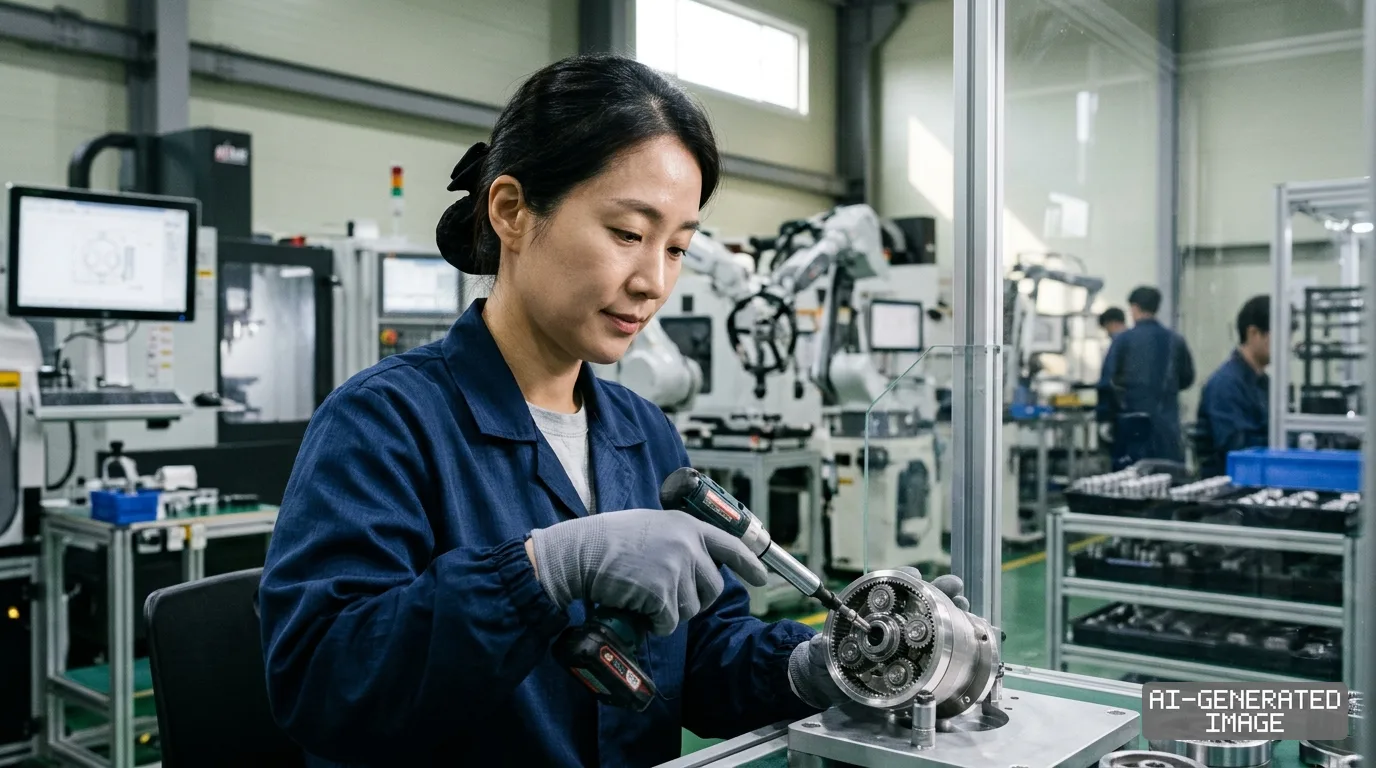
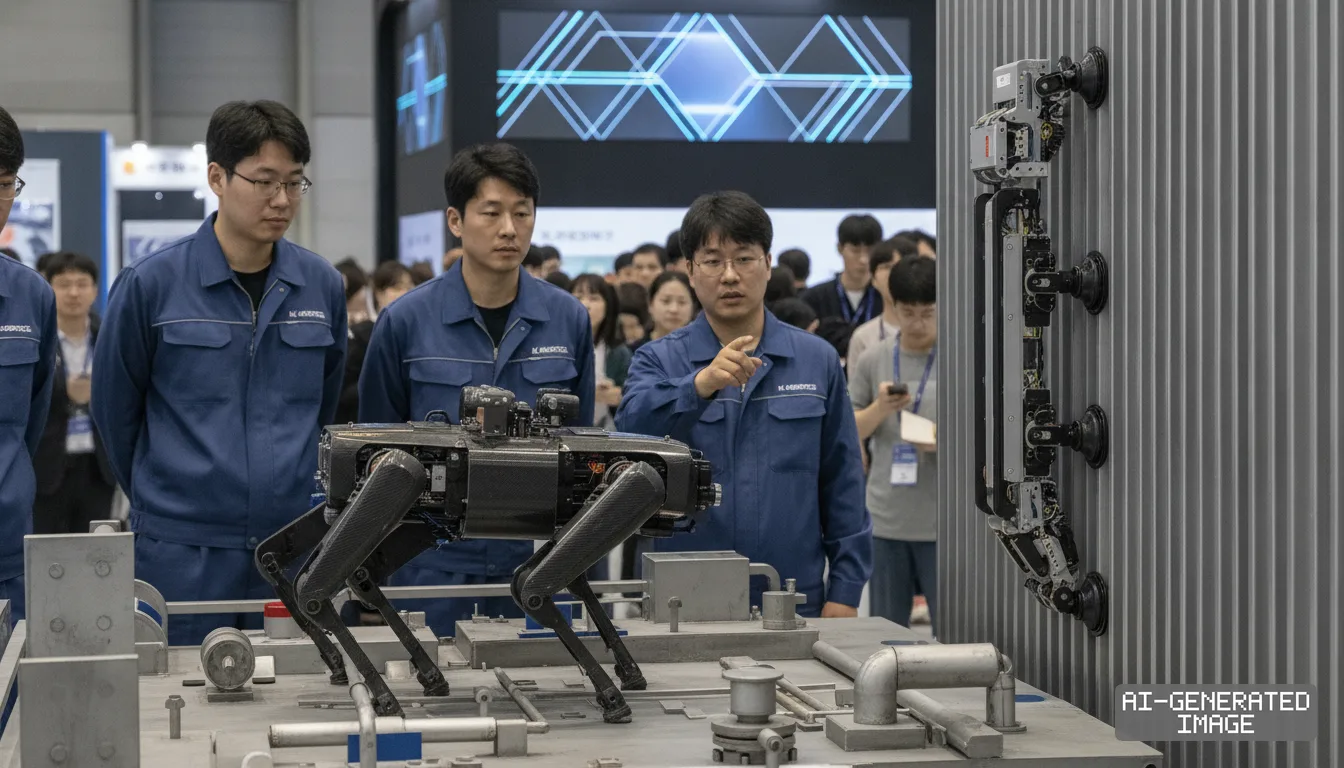
SBB Tech unveiled compact planetary reducers and integrated joint actuators for humanoid robots on Nov. 4, 2026, intensifying supply chain competition against entrenched Japanese gearbox manufacturers.
The Gimpo-based component maker expanded annual throughput to 70,000 precision reduction units, allocating 20,000 units to planetary drive systems. That expansion diversifies production away from single-architecture strain wave gears.
Precision planetary gearboxes trade between $50 and $300 per unit, compared to $800 to $3,000 for conventional strain wave reducers. Lower unit costs allow humanoid assemblers to contain bill-of-materials expenses.
Domestic peer SPG exhibited mass-produced planetary and cycloidal gearheads at the same event. The company operates precision gear cutting lines capable of supplying multiple robot platforms simultaneously, company officials said.
Harmonic Drive Systems Inc. and Nabtesco Corporation historically controlled more than 70% of global precision robot joint mechanisms. Japanese suppliers established that dominance through proprietary tooth geometry and decades of metallurgical patents.
Humanoid developers are altering that supplier balance by redesigning limb actuators around planetary architectures. Rising volume targets make the premium pricing of traditional harmonic reducers difficult to sustain across high-volume production schedules.
Planetary gearboxes — systems where planet gears rotate between a sun gear and an outer ring — deliver mechanical efficiency between 85% and 95%. Higher efficiency preserves battery reserves during continuous robot movement.
Strain wave gearheads achieve only 65% to 75% mechanical efficiency due to friction inside the flexible steel cup. That friction generates internal heat, limiting operational duty cycles during heavy continuous walking routines.
Robotics engineers allocate planetary reducers to leg, hip and knee joints where shock loads are severe. Harmonic drives remain concentrated in wrists and dexterous hands where positioning tolerances outweigh torque demands.
Planetary gearboxes carry angular backlash between three and 10 arcminutes, wider than the sub-one-arcminute accuracy of harmonic gears. Actuator builders compensate for that difference by deploying dual-encoder closed-loop software algorithms, engineers said.
Incumbent Japanese component makers face annual pricing erosion of 8% to 12% across general automation categories as alternative suppliers scale output. Korean and Chinese entries accelerate margin pressure on standardized reducer units.
Harmonic Drive Systems has marketed its own HarmonicPlanetary lineup to defend joint installations against low-cost entrants. The Tokyo-listed manufacturer relies on high-margin mechatronics modules to cushion core component pricing pressure.
Nabtesco holds roughly 60% of heavy industrial robot joint sockets worldwide through its cycloidal gearhead portfolio. Cycloidal mechanisms absorb heavy shock loads but exceed the packaging volume permitted inside slender humanoid legs.
South Korean industrial groups are accelerating domestic procurement to shield robotics assembly schedules from overseas shipping delays. Hyundai Motor Group and allied automation teams are qualifying local gearheads for commercial deployment.
SBB Tech amended a humanoid joint component supply agreement in July 2026, lifting contract value to 2.28 billion won ($1.65 million). The revision expanded deliveries of custom actuator assemblies to domestic robot builders.
South Korean robot assemblers spent years managing six-month delivery windows for Japanese strain wave gear units. Procuring planetary components domestically reduces shipment transit times to less than two weeks, purchasing managers said.
Chinese manufacturers also influence pricing across the broader region. Leaderdrive commands between 30% and 40% of China's harmonic reducer market, forcing global manufacturers to trim quotes on high-volume factory automation tenders.
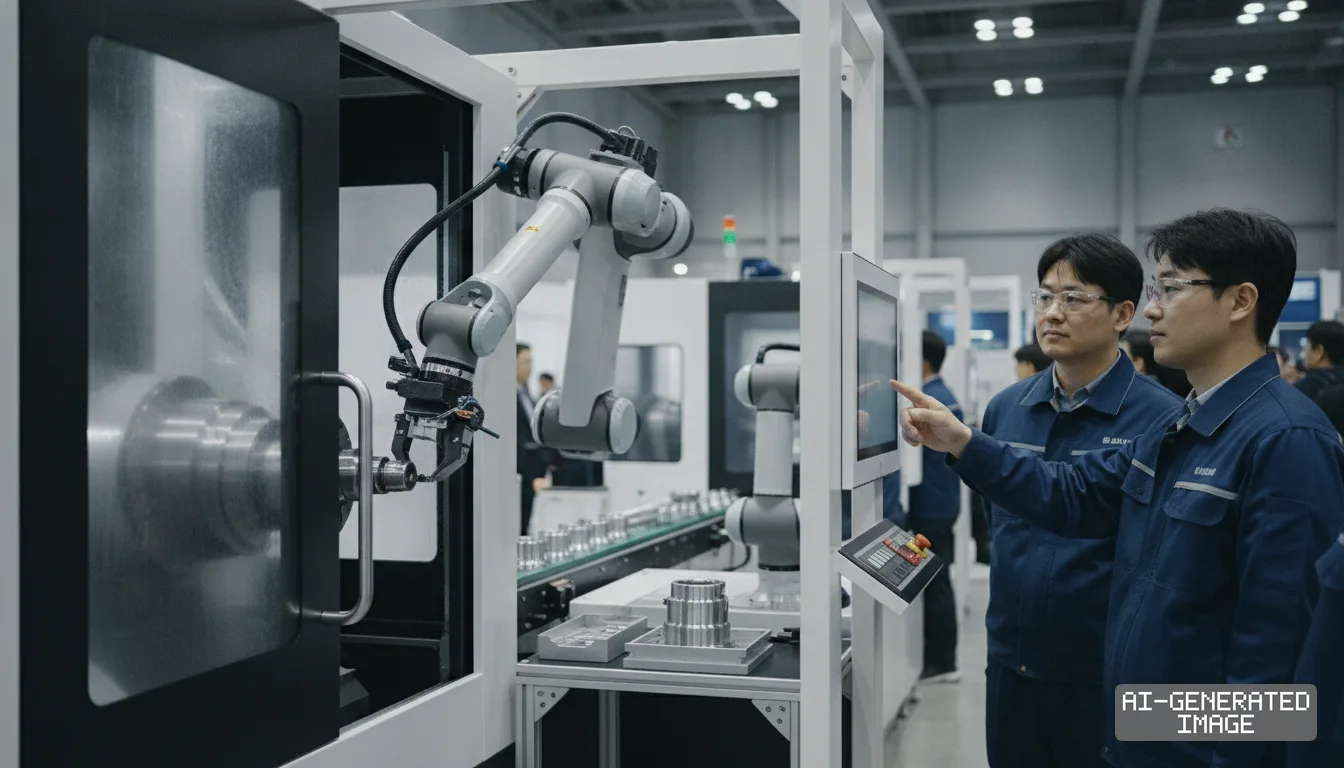
Korean suppliers are pairing planetary reducers directly with frameless torque motors and magnetic position sensors. Integrated actuator modules simplify joint design by removing external couplers and custom motor mounts.
Planetary gear assemblies withstand repeated floor impacts without structural tooth deformation. Harmonic drives can experience flexspline fatigue cracks when a humanoid robot stumbles or lands forcefully on rigid factory concrete.
The manufacturers have not published contract pricing terms or firm delivery commitments for humanoid production lines scheduled in 2027. SBB Tech and SPG declined to confirm specific joint unit allocations across upcoming commercial customer models.
The RobotWorld 2026 exhibition runs through Nov. 7 in Goyang, where commercial procurement teams conclude joint actuator evaluation agreements. Field test data from participating robotics manufacturers will determine production orders entering the spring manufacturing cycle.
Impact map
How this development propagates across the region and out to global buyers.
| Event | Korea | China | Japan | Global impact |
|---|---|---|---|---|
| Robot joint planetary reducer rollout | SBB Tech and SPG expand planetary capacity to undercut Japanese imports | Leaderdrive faces export price competition as global buyers test planetary stages | Harmonic Drive Systems and Nabtesco face 8% to 12% price erosion on standard lines | Humanoid manufacturers cut limb joint actuator costs below $300 per unit |
In this story
- Companies
- SBB TechSPGHarmonic Drive SystemsNabtesco
- Tickers
- 389500.KQ058610.KQ6324.T6268.T
- Exposed
- Hyundai Motor CompanyLeaderdrive
- Impact
- Supply ChainPricingCost Structure
Related briefings
- Korean electronics component suppliers deploy AI dual-arm robots as factory labor pool shrinks Also on SBB Tech, SPG, Nabtesco
- China absorbs 59% of world robots in factory automation push Also on SBB Tech, SPG, Harmonic Drive Systems
- Harmonic Drive Systems holds premium on robot joint demand Also on Leaderdrive, Nabtesco, Harmonic Drive Systems
- Hyundai warns Chinese robots will outpace electric vehicles Also on SBB Tech, Hyundai Motor Company, Cost Structure
Sources
Reporting
Confidence: medium — how we grade this
The documents behind this briefing are linked above. East Asia Brief produces its English text with AI assistance under human editorial review, and does not translate or republish other outlets' articles. See our methodology and AI policy. Spotted an error? Tell us.
The Morning Brief
What changed in Korean, Chinese and Japanese industry overnight — and what it means for your supply chain. One email, weekday mornings, US time. Free.
The Morning Brief is in preparation. Leave your address and we will write to you once — when the first issue is ready. Nothing before that.