Harmonic Drive Systems holds premium on robot joint demand
The Japanese precision gear maker closed at ¥5,350 on Oct. 16, supported by humanoid robot backlogs and a ¥100 billion medium-term sales target.
Harmonic Drive Systems closed higher at ¥5,350 on Oct. 16, maintaining an equity valuation premium driven by rising backlogs for humanoid and collaborative robot joint actuators.
The Tokyo-listed company targets consolidated net sales exceeding ¥100 billion ($670 million) by fiscal 2030, according to its long-term management plan. Its Hotaka and Ariake plants can generate ¥80 billion ($536 million) at full capacity.
Trading volume reached 778,100 shares on the Tokyo Stock Exchange Prime Market during the Friday session. The benchmark move followed an equity gain of ¥190, reflecting investor expectations for robotic actuator shipments across Asia and North America.
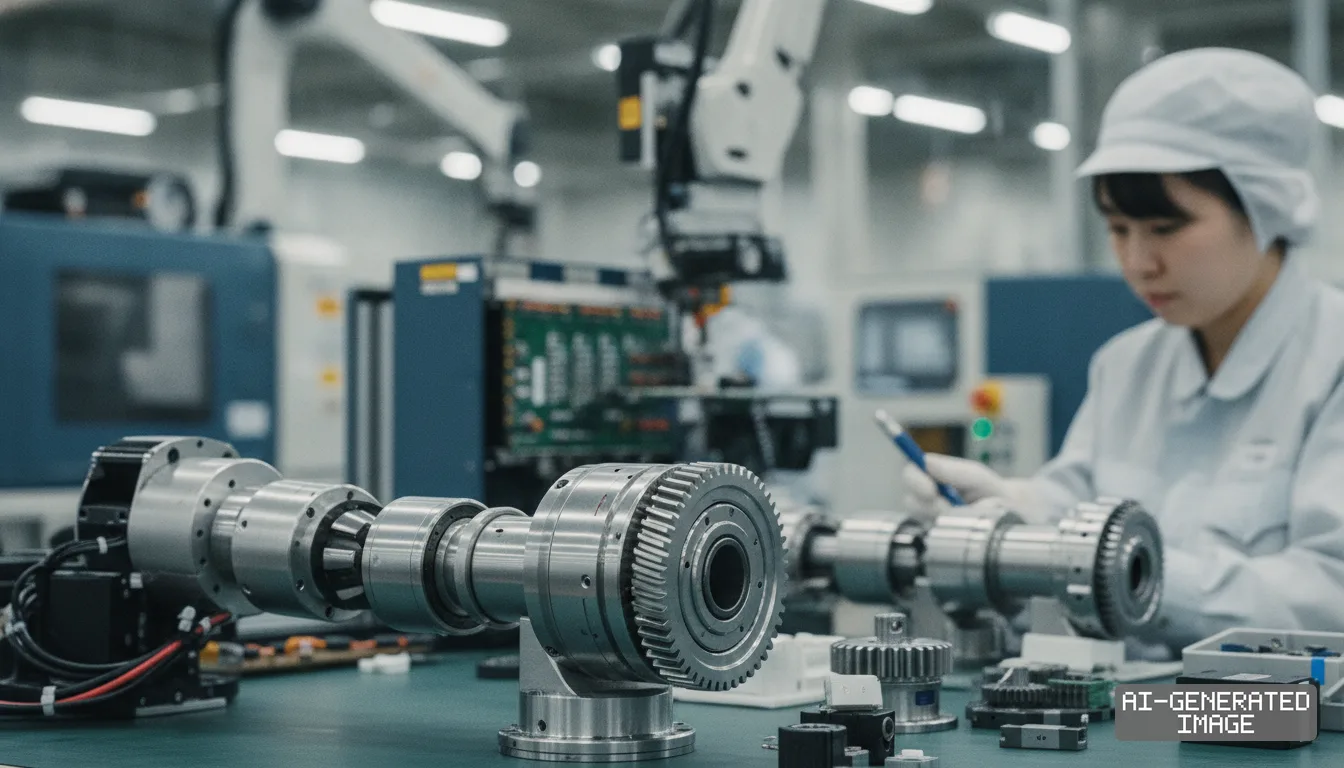
Harmonic Drive Systems manufactures strain-wave gear reducers, compact mechanisms that flex a toothed metal cup to transfer motor torque without mechanical backlash. The mechanism provides the positioning accuracy required for articulated robotic limbs and semiconductor equipment.
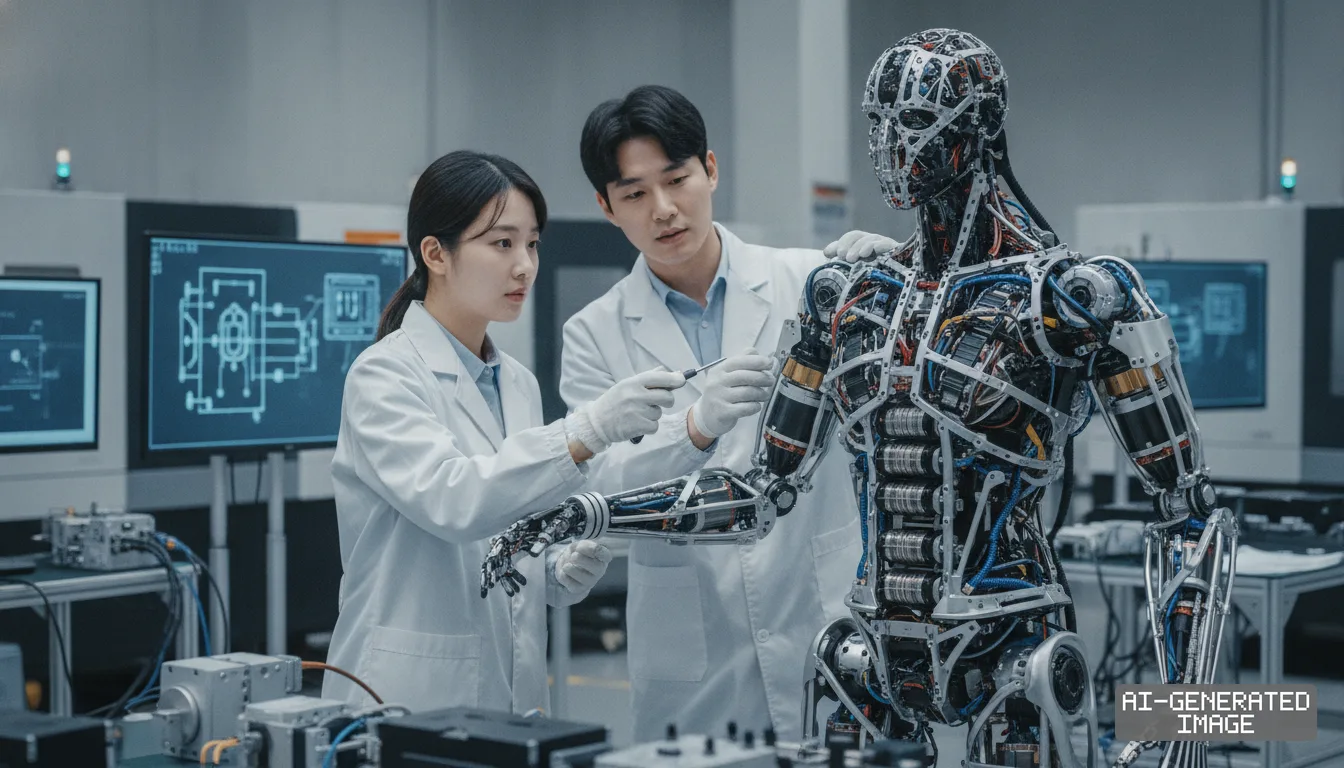
Standard industrial robots use heavier cycloidal gears, but humanoid models and lightweight collaborative arms require high torque density in tight envelopes. Rotary joints in two-legged humanoids often require more than 20 separate strain-wave reducers per unit.
Demand for physical artificial intelligence hardware has intensified pressure on precision machine shops across Japan. Humanoid developers in the United States and China are sourcing sample actuators in small batches to validate balance controls and payload limits.
Harmonic Drive Systems held its first-quarter fiscal 2027 financial briefing on Aug. 7, reporting quarterly revenue of ¥16.68 billion ($112 million). Management confirmed order inflows from humanoid research programs and emerging commercial robot builders during the conference call.
Supplying robotic joints requires extreme machining tolerances and specialized heat-treatment ovens that take years to calibrate. Incumbent manufacturers retain high production yields that prevent rapid price erosion even as new mechanical designs enter factory testing.
Rival gear maker Nabtesco previously held a stake of nearly 20% in Harmonic Drive Systems before selling down its position to pursue separate automation projects. Nabtesco concentrates heavily on heavy-payload cycloidal reducers, leaving the strain-wave segment to Harmonic Drive.
Chinese competitor Leaderdrive has expanded domestic production of strain-wave reducers to supply Chinese automation builders. Leaderdrive offers lower prices on standard components, but top-tier robotic export models continue to specify Japanese gears for endurance and operational life.
Nidec has also developed internal strain-wave gear lines through its machinery subsidiaries to capture collaborative robot accounts. Nidec targets price-sensitive assembly applications across Southeast Asia, though Harmonic Drive maintains higher market share in high-precision factory automation.
Industrial customers face procurement lead times extending beyond 16 weeks for custom robotic reducer assemblies. Factory managers must order joint units months ahead of scheduled robot chassis fabrication to avoid factory floor integration bottlenecks.
Semiconductor lithography and wafer-handling tools consume a significant portion of Harmonic Drive production output. A downturn in capital expenditure by chip foundries can squeeze component margins, offsetting volume gains from nascent humanoid development programs.
Capital investment in humanoid robotics remains dominated by prototype builds rather than high-volume commercial production lines. Most robotics developers order components in hundreds of units rather than the tens of thousands required for mass automotive assembly.
Operating margins depend heavily on factory utilization rates across Nagano prefecture manufacturing sites. Operating profit margins reached 15% during past semiconductor peaks, but fluctuating fab tool orders have exposed the business to sharp earnings volatility.
The Tokyo Stock Exchange approved the company's transfer from the Standard Market to the Prime Market on Feb. 27, 2026. The listing upgrade expanded institutional ownership requirements and boosted overseas equity coverage among global technology funds.
Collaborative robot builders rely on integrated actuator packages that combine harmonic gearsets, frameless motors and absolute encoders. Harmonic Drive supplies both standalone gear components and complete mechatronic subassemblies to global arm manufacturers.
The company did not issue a regulatory filing on Oct. 16, and Harmonic Drive Systems has not published contract order volumes broken out specifically for humanoid actuators. Industry observers note that prototype test orders do not yet equal sustained multi-year production commitments.
Customer confidentiality agreements restrict public disclosure of prototype shipments made to Silicon Valley and Chinese robotics laboratories. Suppliers deliver custom gearbox samples under strict non-disclosure terms that obscure commercial pricing per unit.
Harmonic Drive Systems is scheduled to release its second-quarter fiscal 2027 financial results on Nov. 11, 2026. The upcoming disclosure will clarify whether actuator backlog growth kept pace with capital spending commitments.
Impact map
How this development propagates across the region and out to global buyers.
| Event | Korea | China | Japan | Global impact |
|---|---|---|---|---|
| Robot reducer demand surge | robot integrators face 16-week lead times for Japanese strain-wave gears | Leaderdrive expands domestic market share in standard cobot gearsets | Harmonic Drive Systems expands Hotaka and Ariake capacity toward ¥80 billion | humanoid robot developers face component bottlenecks in high-torque rotary joints |
In this story
- Companies
- Harmonic Drive Systems
- Tickers
- 6324.T
- Exposed
- NabtescoLeaderdriveNidec
- Impact
- Supply ChainOrder BookPricing
Related briefings
- Harmonic Drive pitches integrated actuators for robot joints in 2026 Also on Leaderdrive, Harmonic Drive Systems
- METI Pools Factory Machine Data to Train Physical AI Models Also on Nidec, Order Book
- Nabtesco adapts cycloidal gearboxes for heavy logistics robots Also on Nidec, Order Book
- Harmonic Drive expands Japanese reducer capacity for humanoid robotics demand Also on Nabtesco, Harmonic Drive Systems, Order Book
Sources
Primary documents
Reporting
Confidence: high — how we grade this
The documents behind this briefing are linked above. East Asia Brief produces its English text with AI assistance under human editorial review, and does not translate or republish other outlets' articles. See our methodology and AI policy. Spotted an error? Tell us.
The Morning Brief
What changed in Korean, Chinese and Japanese industry overnight — and what it means for your supply chain. One email, weekday mornings, US time. Free.
The Morning Brief is in preparation. Leave your address and we will write to you once — when the first issue is ready. Nothing before that.