Korean electronics component suppliers deploy AI dual-arm robots as factory labor pool shrinks
Tier-1 parts makers adopt vision-guided multi-axis robotic arms for final assembly to counter industrial demographic decline.
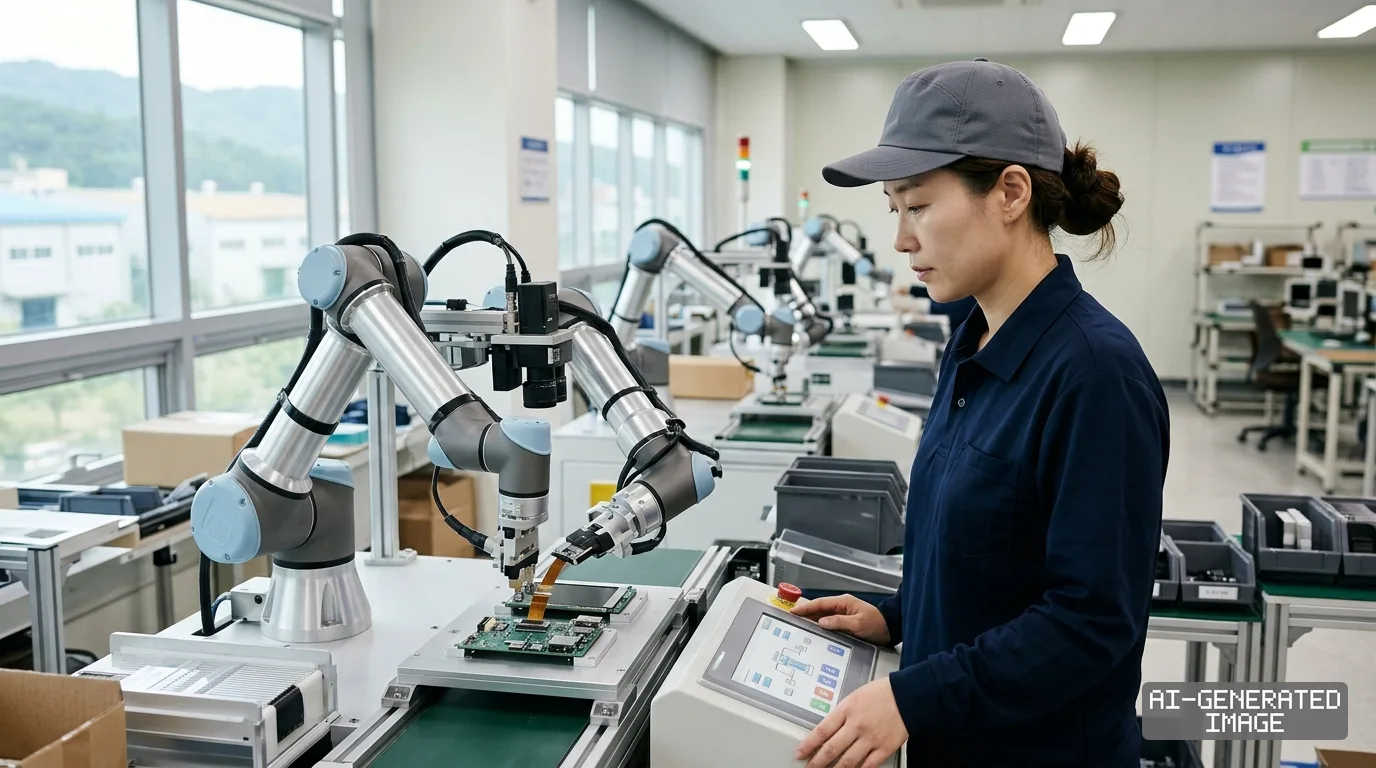
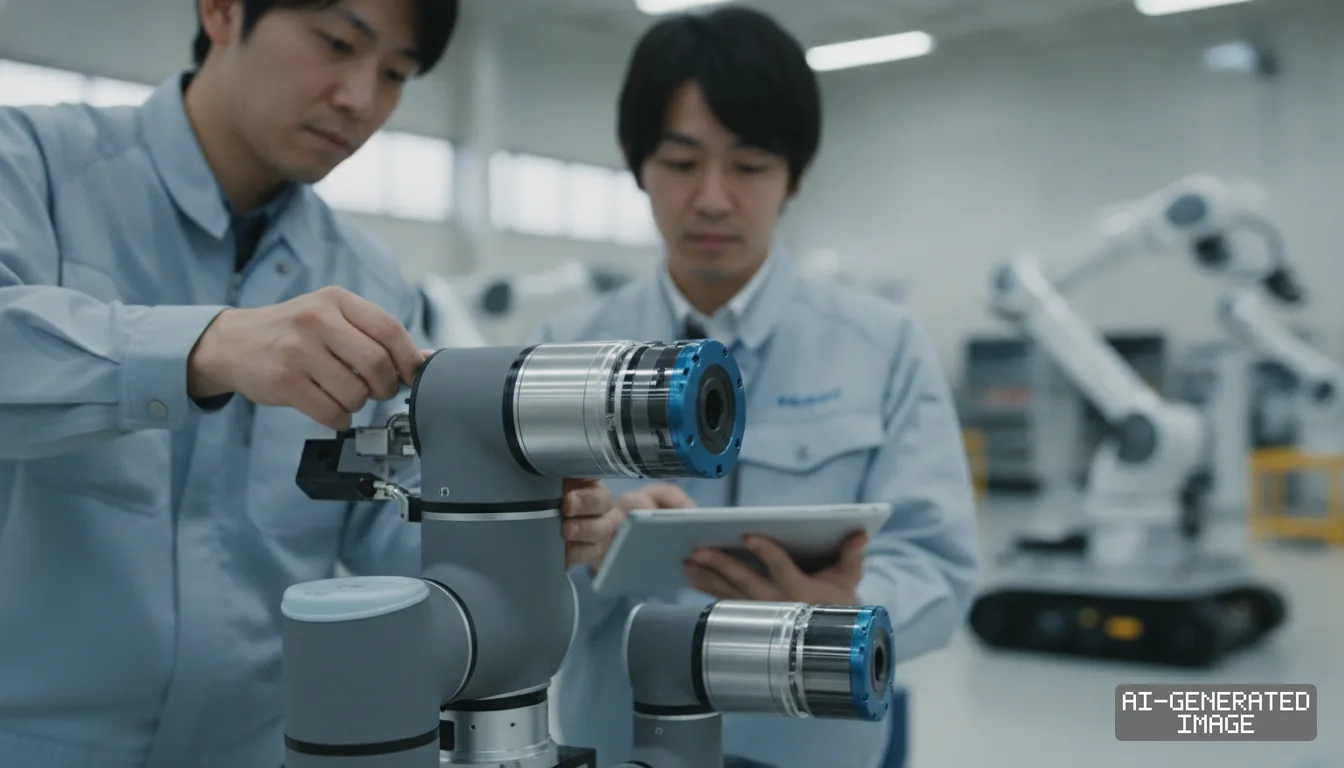
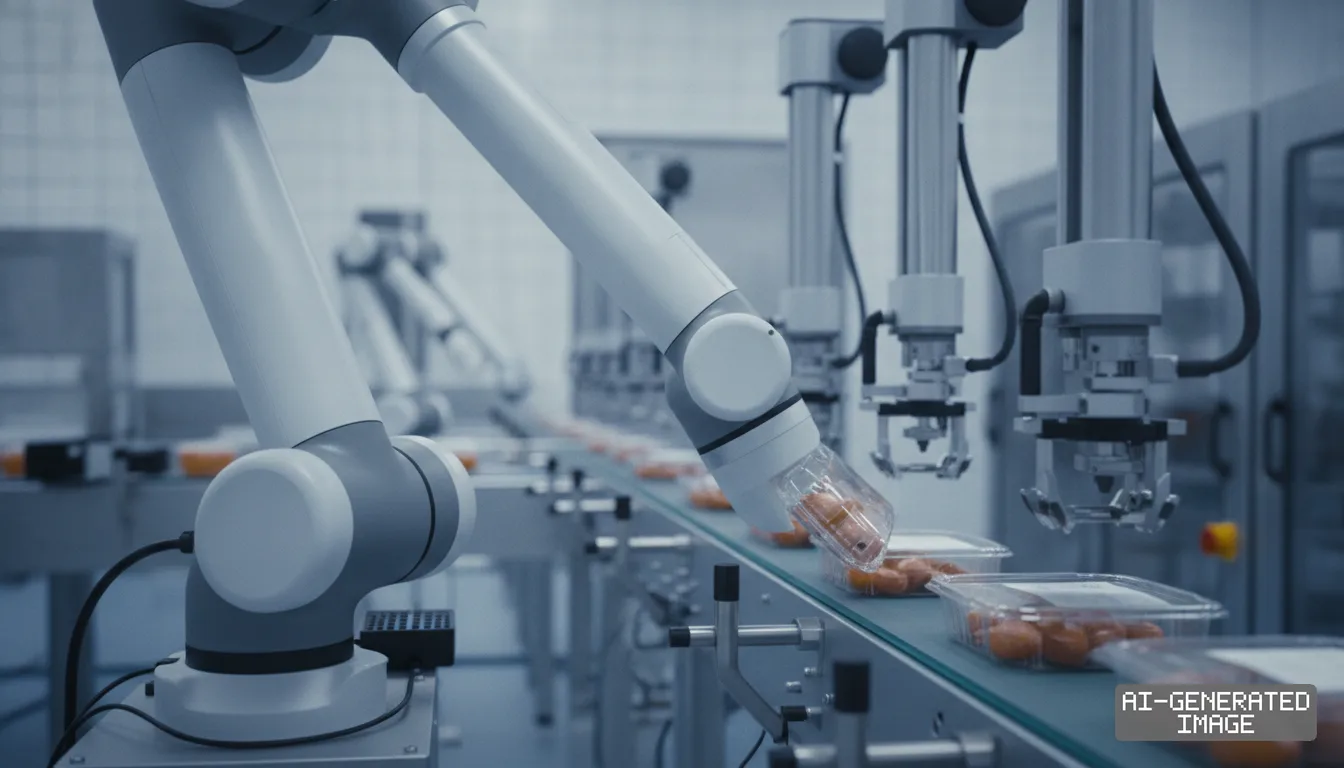
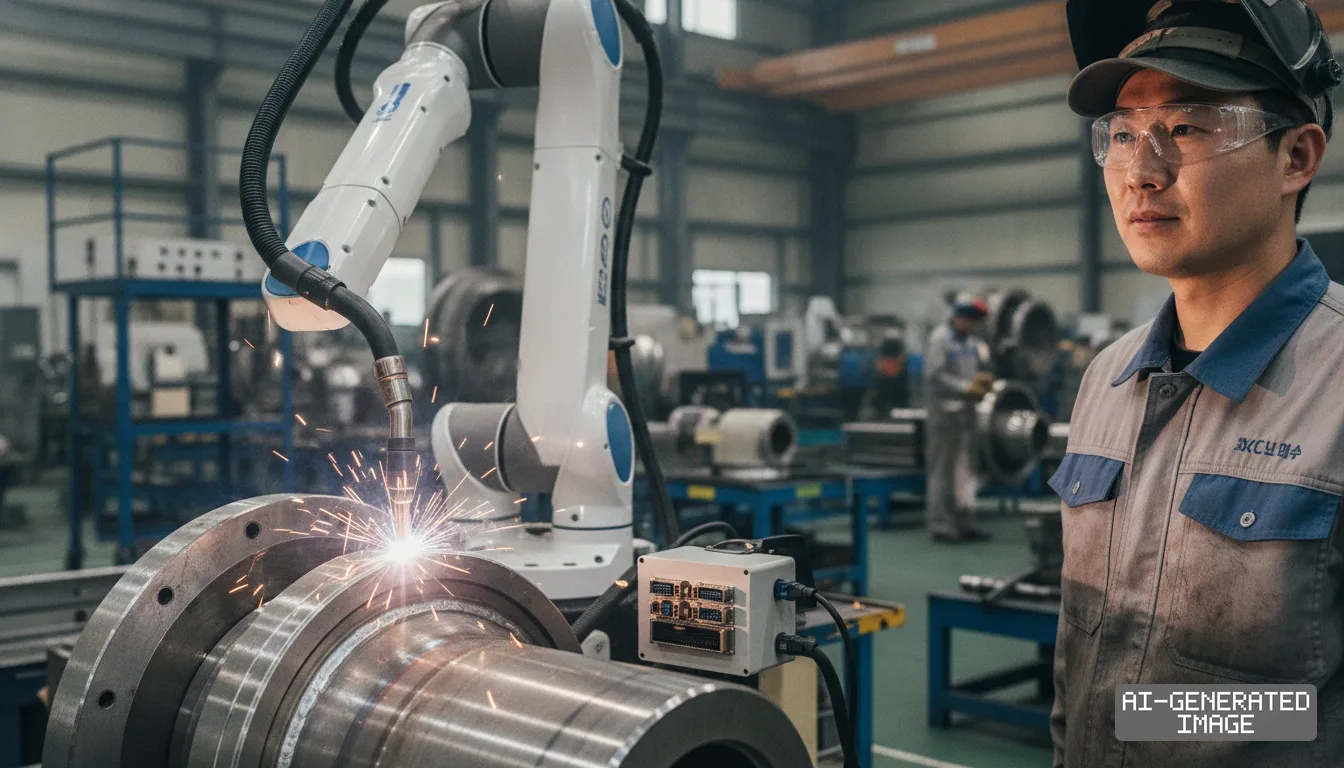
South Korean electronics component manufacturers are accelerating the deployment of vision-guided dual-arm robotic manipulators and artificial intelligence-directed robotic platforms across final-assembly operations, replacing manual workstations as structural demographic contraction reduces the industrial workforce.
The transition focuses on tier-1 and tier-2 component suppliers clustered in Gyeonggi Province and the southeastern industrial belt, which produce camera modules, display driver assemblies, multilayer ceramic capacitor arrays, and automotive electronics sub-units for major device assemblers. While primary fabrication and surface-mount technology lines have operated under full automation for more than a decade, final assembly specifically involving flexible ribbon cable insertion, connector seating, tactile quality inspection, and irregular sub-component packaging has historically relied on human line operators due to the dexterity required.
Data from South Korea's Ministry of Trade, Industry and Energy indicates that the domestic manufacturing sector faces a widening structural shortfall of technical line workers, with vacancy rates at small and medium-sized industrial suppliers exceeding 12 percent in key electronics production hubs. With the national working-age population contracting and wage rates for skilled assembly labor rising steadily, component vendors have shifted capital expenditure from incremental tooling upgrades to multi-axis autonomous robotic cells capable of replicating bimanual human motor skills.
Traditional selective compliance assembly robot arms, commonly known as SCARA robots, and conventional single-arm articulated units remain limited to rigid pick-and-place sequences along fixed coordinates. In contrast, the dual-arm systems entering deployment integrate 6-axis force-torque sensors at each wrist joint, multi-camera stereoscopic vision rigs mounted on the overhead chassis, and edge AI inference processors that calculate spatial trajectory adjustments in real time.
These multi-axis platforms handle delicate, non-rigid components that deform under variable handling pressures. In camera module integration lines, dual-arm robots hold the rigid housing with one manipulator while the secondary arm aligns and seats flexible printed circuit boards with tolerances below 20 micrometers. The integrated force sensors detect contact resistance instantly, preventing mechanical damage to micro-connectors during high-speed insertions and reducing assembly defect rates from roughly 450 parts per million under manual operation to below 30 parts per million.
Korean automation equipment developers, including Doosan Robotics, Hanwha Robotics, Rainbow Robotics, and Neuromeka, have tailored their system integration software to direct communication protocols used in tier-1 electronics plants. These platforms run vision-language-action models and spatial neural networks trained on proprietary assembly datasets, allowing the robotic arms to identify component orientation variance, compensate for bin-picking misalignments, and execute corrective grip trajectories without requiring manual re-indexing by factory technicians.
The economic threshold for dual-arm robotic implementation has compressed significantly over the past 24 months. Industrial suppliers report that the capital payback period for a fully integrated bimanual robotic cell has dropped from 36 months to approximately 16 months. This reduction reflects lower unit costs for precision strain wave gear reducers, expanded domestic production of optical vision sensors, and the escalating overhead associated with multi-shift human line staffing.
The hardware supply chain underlying this robotics buildout highlights both domestic progress and lingering upstream dependencies. South Korean precision component manufacturers such as SBB Tech and SPG have increased commercial shipments of domestic strain wave reducers and planetary gearboxes, capturing market share in standard payload categories. However, high-torque robotic joints and ultra-precision harmonic drives used in sub-10-micrometer electronics assembly continue to rely on Japanese suppliers, including Harmonic Drive Systems and Nabtesco.
To accelerate industrial adoption across lower-tier suppliers that lack internal automation engineering teams, the Ministry of Trade, Industry and Energy expanded its Smart Manufacturing Deployment Initiative under the Intelligent Robot Development and Promotion Act. The program allocates matching grants that cover up to 50 percent of the hardware integration and software licensing costs for small and medium-sized parts vendors installing AI-guided robotic platforms on active export lines.
For global electronics brands and Tier-1 procurement teams, the deployment of vision-directed robotics provides predictable output volumes and insulates supply chains from localized labor availability bottlenecks. The standardized data logs generated by edge AI processors during each assembly cycle also yield real-time yield telemetry, allowing quality control managers to trace micro-defects back to specific mechanical tolerances across intermediate supplier networks.
Equipment delivery contracts scheduled through the fourth quarter of 2026 indicate that electronics assembly plants across the Gumi, Cheonan, and Pyeongtaek industrial corridors will install more than 2,800 vision-guided collaborative and dual-arm robotic cells, establishing automated assembly baselines across high-density component lines.
Impact map
How this development propagates across the region and out to global buyers.
| Event | Korea | China | Japan | Global impact |
|---|---|---|---|---|
| Electronics assembly automation | tier-1 suppliers deploy dual-arm robots | — | precision reducer exports rise | electronics supply chains lower assembly defect rates |
In this story
- Companies
- Doosan RoboticsHanwha RoboticsRainbow RoboticsNeuromeka
- Tickers
- 454910.KS277810.KQ
- Exposed
- Harmonic Drive SystemsNabtescoSBB TechSPG
- Policy
- SubsidiesIndustrial Automation Policy
- Impact
- CapexSupply ChainCost Structure
Track every Subsidies development →
Related briefings
- SRI says robot harmonic drive reducer sales will hit $3.5B Also on SPG, Harmonic Drive Systems, Cost Structure
- IndexBox reports 12% annual growth for dual-arm chip cobots Also on Neuromeka, Rainbow Robotics, Cost Structure
- Korea tightens export licensing rules on robotics actuator technology Also on Neuromeka
- China Rare Earth pairs with Benmo on humanoid robot magnets Also on Nabtesco, Harmonic Drive Systems, Cost Structure
Sources
This briefing carries no sources block. It was written from our desks’ working knowledge of the sector rather than from documents retrieved for this piece. Read it as orientation and check any figure you intend to act on — how we source briefings.
This briefing carries no linked sources: it was written from our desks' working knowledge of the sector rather than from documents retrieved for this piece. East Asia Brief publishes no citation it cannot link. Our English text is produced with AI assistance under human editorial review. See our methodology and AI policy. Spotted an error? Tell us.
The Morning Brief
What changed in Korean, Chinese and Japanese industry overnight — and what it means for your supply chain. One email, weekday mornings, US time. Free.
The Morning Brief is in preparation. Leave your address and we will write to you once — when the first issue is ready. Nothing before that.