Hyundai warns Chinese robots will outpace electric vehicles
Municipal purchase rebates and a 40% component supply grip propel Chinese automation makers into South Korea, threatening local precision suppliers and prompting Hyundai to plan a foundry.
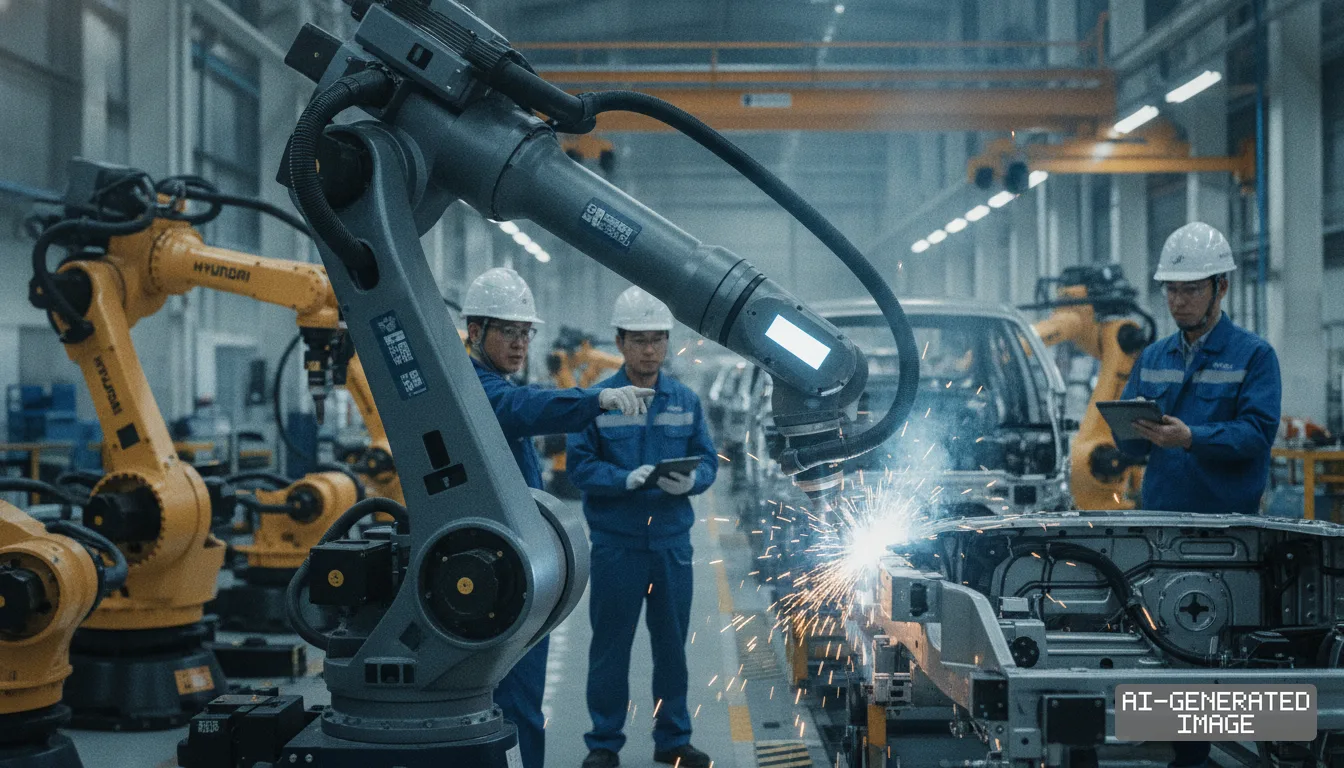
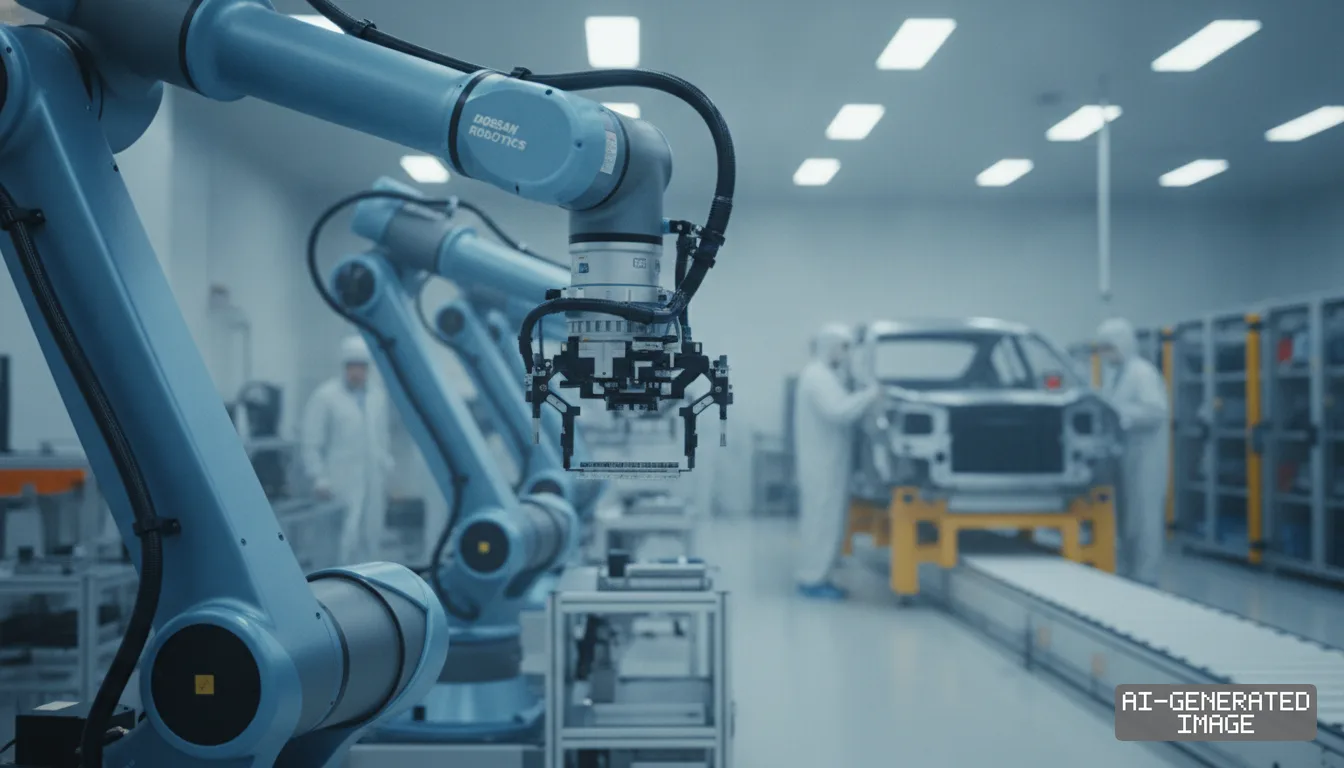
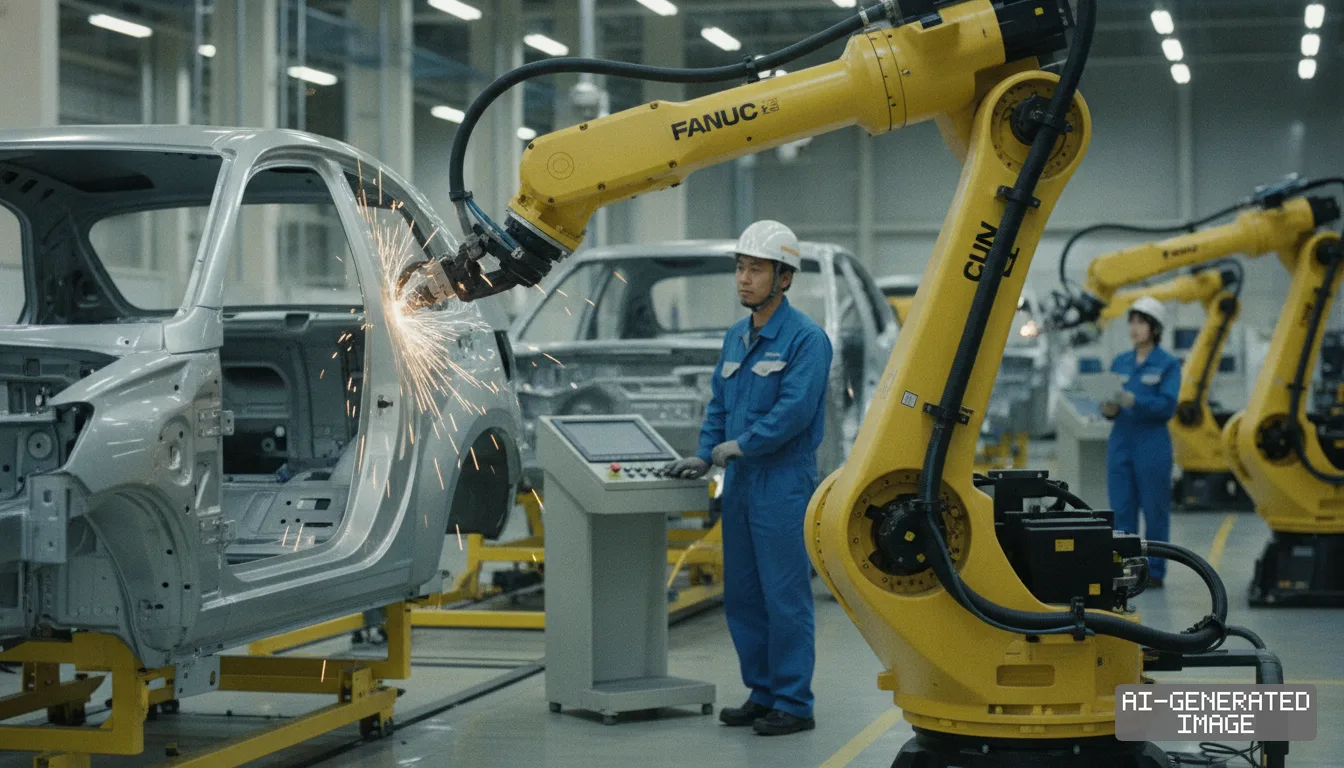
Hyundai Motor Company warned Oct. 21 that subsidized Chinese industrial robots will penetrate South Korea faster than electric vehicles did, threatening domestic manufacturing lines and precision equipment suppliers.
Chinese manufacturers now control more than 40% of the global robotics hardware supply chain. That dominance allows foreign suppliers to deliver complete factory arms at pricing domestic builders cannot match.
Beijing municipal authorities grant purchase rebates of up to 30% for localized robotics hardware. Jiangsu province reimburses up to 20%, generating rapid field data while depressing export prices.
Song Ho-deuk, senior vice president and head of robotics business planning at Hyundai Motor, delivered the assessment during a parliamentary strategy forum at the National Assembly in Seoul.
Chinese robotics specialists including Unitree Robotics, UBTECH Robotics, Agibot and automaker BYD have established corporate offices or appointed local distributors across South Korea this year.
The arrival of low-cost Chinese automation platforms will displace local suppliers faster than prior waves seen in vacuum cleaners, commercial drones, action cameras and electric vans, Song said.
South Korean small manufacturers face severe labor shortages and wage inflation. Plant operators looking to reduce automation setup costs are increasingly selecting lower-priced Chinese collaborative arms and mobile robots.
Representative Lee Un-ju said during opening remarks that domestic factories remain heavily dependent on overseas suppliers for vital motion inputs while Chinese humanoid robotics developers advance rapidly.
Domestic component self-sufficiency remains critically low across key industrial hardware. Domestic localization rates for motors, harmonic reducers, sensors and motion controllers range between 36% and 48%, industry representatives said.
Kang Deok-hyun, chief executive of motion controller specialist RS Automation, said Korean builders cannot achieve production scale without recurring purchase orders from major domestic conglomerates and state programs.
Precision reducer supplier SBB Tech faces similar commercial pressures against subsidized Chinese imports. SBB Tech builds specialized reduction gears that control robotic joint movement with sub-millimeter precision.
Domestic component firms need targeted verification funding and initial procurement guarantees rather than temporary laboratory research grants, said Ryu Jae-wan, chief executive of SBB Tech.
Park Il-woo, robotics program director at the Korea Planning and Evaluation Institute of Industrial Technology, said the state currently funds about 53 billion won ($38 million) across 14 physical artificial intelligence projects.
Hardware production expenses remain heavily concentrated in three mechanical assemblies. Motion actuators, computerized drive boards and high-voltage charging units account for the dominant share of finished robotic manufacturing costs.
Hyundai Motor plans to prioritize direct in-house localization for actuators, control boards and charging systems to shield its assembly plants from overseas supply chain choke points, Song said.
The automotive group has committed 400 billion won ($290 million) to construct its first dedicated robotics factory in Saemangeum, an industrial development zone along the west coast.
Hyundai Motor plans to operate the Saemangeum facility as a contract manufacturing foundry. The factory will build proprietary warehouse robots while assembling external platforms for third-party robotics companies.
The strategy seeks to replicate industrial clusters in China, where provincial authorities group parts vendors around large assembly hubs to eliminate shipping costs and compress iteration cycles.
Collaborative robot builders Rainbow Robotics and Neuromeka urged policymakers at the forum to deploy commercial systems across public-sector infrastructure, water utilities and defense facilities to create steady demand.
Song requested direct production subsidies, broader capital investment tax deductions and national strategic technology classification from the trade ministry to support domestic hardware builders.
The forum presentations did not disclose the text of an internal corporate warning cited by local media, and Hyundai Motor has not published the document on its regulatory newsroom.
Hyundai Motor will open a temporary project office in Gunsan on Oct. 29 to prepare construction permits and coordinate component supplier partnerships for the Saemangeum hub.
Impact map
How this development propagates across the region and out to global buyers.
| Event | Korea | China | Japan | Global impact |
|---|---|---|---|---|
| Chinese robot market entry | RS Automation and SBB Tech face margin pressure with 36-48% parts localization | Unitree and UBTECH expand Korean distribution backed by up to 30% home purchase rebates | Harmonic Drive Systems and Nabtesco face price discounting from Chinese precision reducer exporters | Factory automation costs decline as Chinese industrial arms displace legacy suppliers |
In this story
- Companies
- Hyundai Motor CompanyRS AutomationSBB Tech
- Tickers
- 005380.KS140670.KQ389500.KQ
- Exposed
- Rainbow RoboticsNeuromeka
- Policy
- SubsidiesTax Credits
- Impact
- Supply ChainCost Structure
Track every Subsidies development → Track every Tax Credits development →
Related briefings
- Korean electronics component suppliers deploy AI dual-arm robots as factory labor pool shrinks Also on SBB Tech, Neuromeka, Rainbow Robotics
- IndexBox reports 12% annual growth for dual-arm chip cobots Also on Neuromeka, Rainbow Robotics, Cost Structure
- Korea tightens export licensing rules on robotics actuator technology Also on Neuromeka
- SK On and GS Caltex Advance Immersion Cooling Packs for High-Voltage EV Fleets Also on Hyundai Motor Company, Cost Structure, Subsidies
Sources
Primary documents
Reporting
Confidence: high — how we grade this
The documents behind this briefing are linked above. East Asia Brief produces its English text with AI assistance under human editorial review, and does not translate or republish other outlets' articles. See our methodology and AI policy. Spotted an error? Tell us.
The Morning Brief
What changed in Korean, Chinese and Japanese industry overnight — and what it means for your supply chain. One email, weekday mornings, US time. Free.
The Morning Brief is in preparation. Leave your address and we will write to you once — when the first issue is ready. Nothing before that.