China absorbs 59% of world robots in factory automation push
Domestic factory installations reached 354,000 units as Chinese brands captured 55% of home demand, shifting order flows for Japanese and Korean precision gear makers.
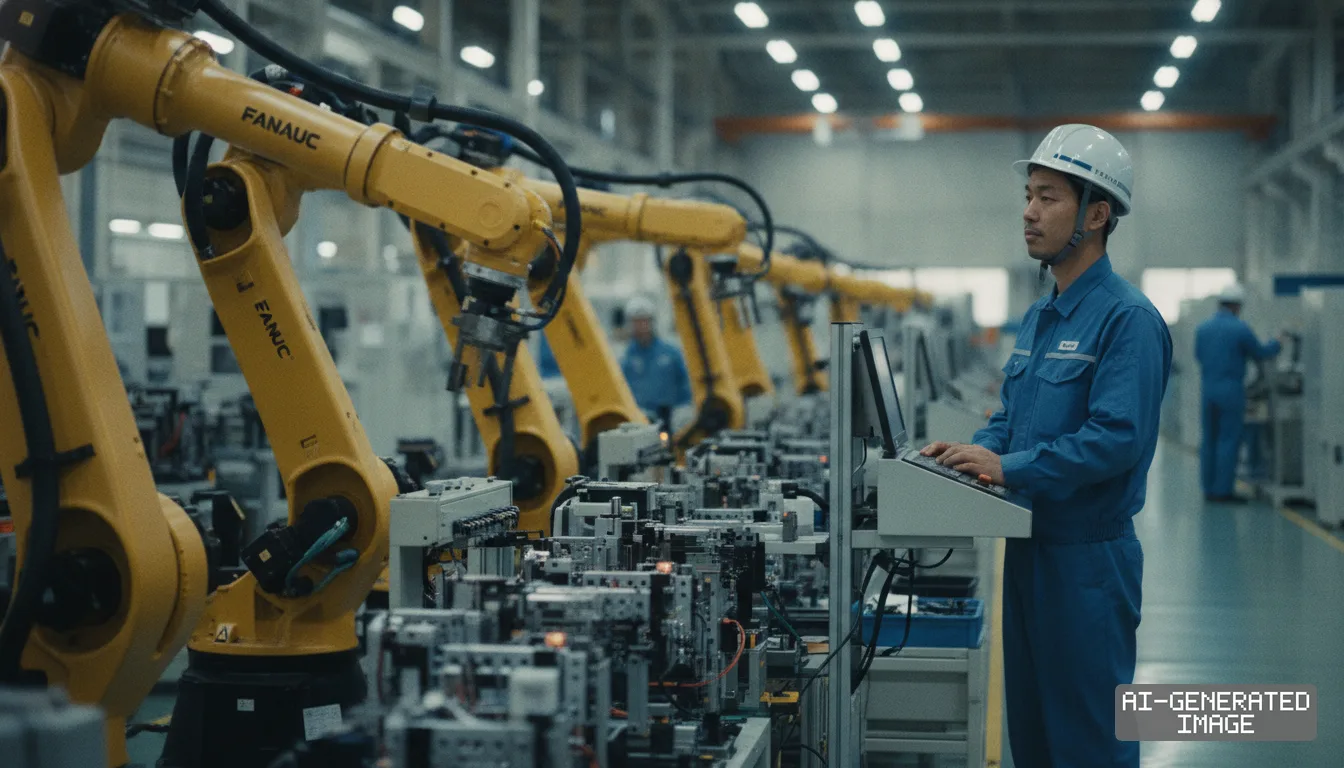
The International Federation of Robotics confirmed in operational data reviewed on Oct. 26, 2026, that factories across China deployed 354,000 industrial robots, securing 59% of worldwide installations.
The deployment marks the highest concentration ever tracked in a single manufacturing economy. Global industrial facilities installed 603,000 factory robots over the period, expanding worldwide operational stock 9% to five million units.
Annual installations in China rose 20% year-on-year, outpacing all other industrial regions combined. The 354,000 newly deployed units exceeded the country's previous annual record by almost 60,000 robots, according to federation figures.
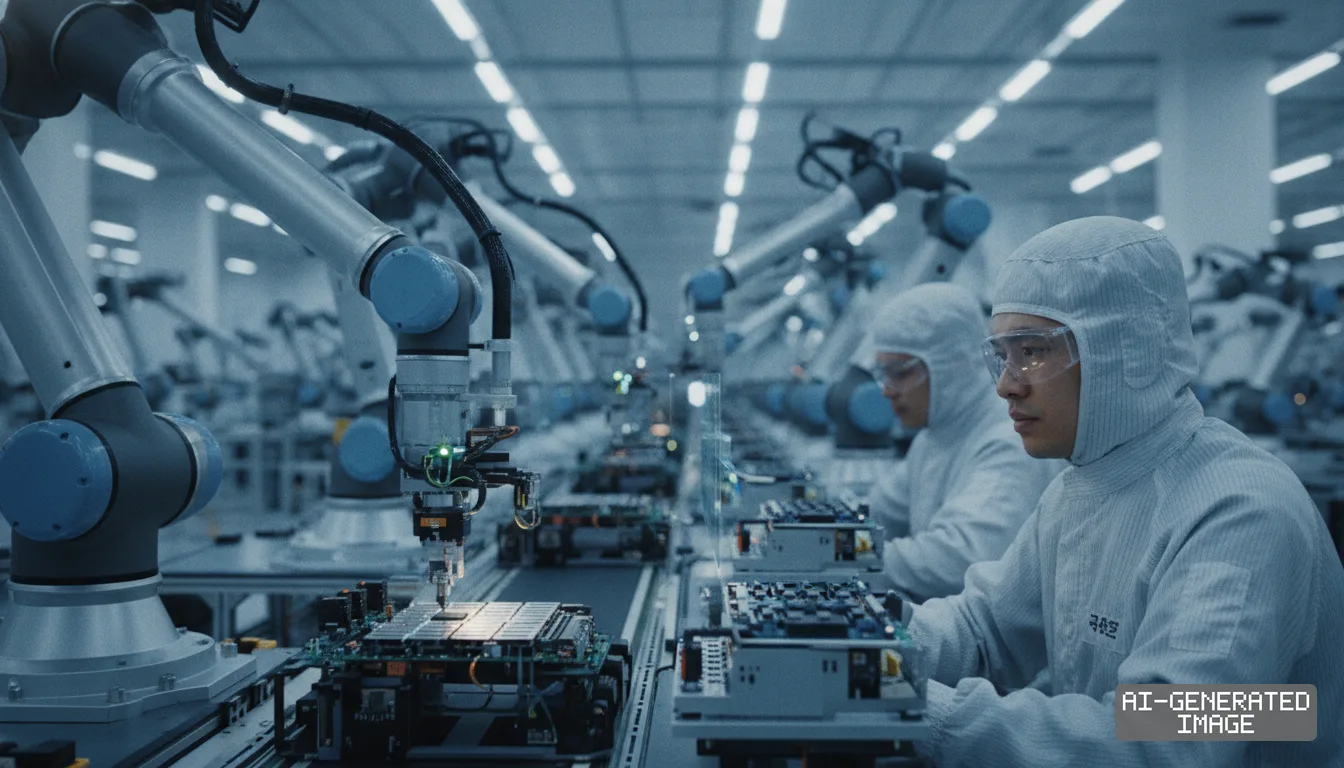
Electronics manufacturing generated the largest volume of robot intake. Facilities assembling electrical appliances and semiconductors installed 96,400 units, accounting for 27% of China's robotic intake after expanding 16% over the year.
Automakers across China accelerated assembly automation at an even faster pace. Automotive plants installed 78,900 industrial robots, reaching a record for the sector as annual deployments expanded 38% from the previous year.
Heavy manufacturing sectors mirrored that transition toward automated equipment. The metal and machinery sector absorbed 78,700 industrial robots, registering a 44% increase in annual installations across domestic fabrication facilities.
Installation volume coincided with expanding domestic machinery production. China's National Bureau of Statistics reported that domestic industrial robot output reached 794,781 sets through September, up 29.1% from the first nine months of 2025.
Factory output remained elevated into late summer. Chinese industrial enterprises above designated size manufactured 96,752 industrial robot sets in September alone, representing an 18.9% increase from the same month a year earlier.
Chinese automation builders captured most domestic equipment deliveries. Chinese manufacturers installed 195,000 units within domestic plants, securing a 55% share of the home market as unit deliveries rose 15%, federation statistics showed.
Foreign robotics manufacturers expanded deliveries by 27% in China, but their collective market share contracted. International brands supplied 159,000 units to Chinese assembly lines, accounting for 45% of total domestic installations.
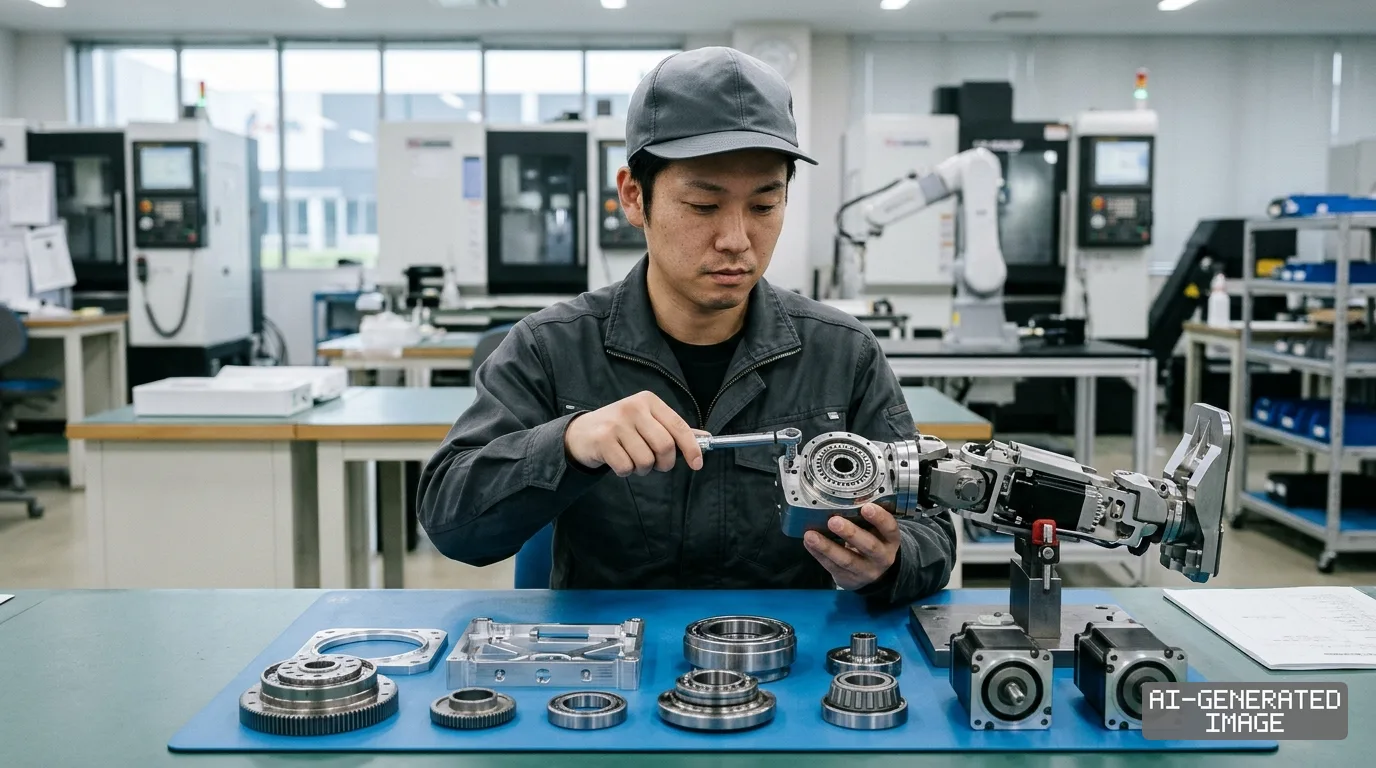
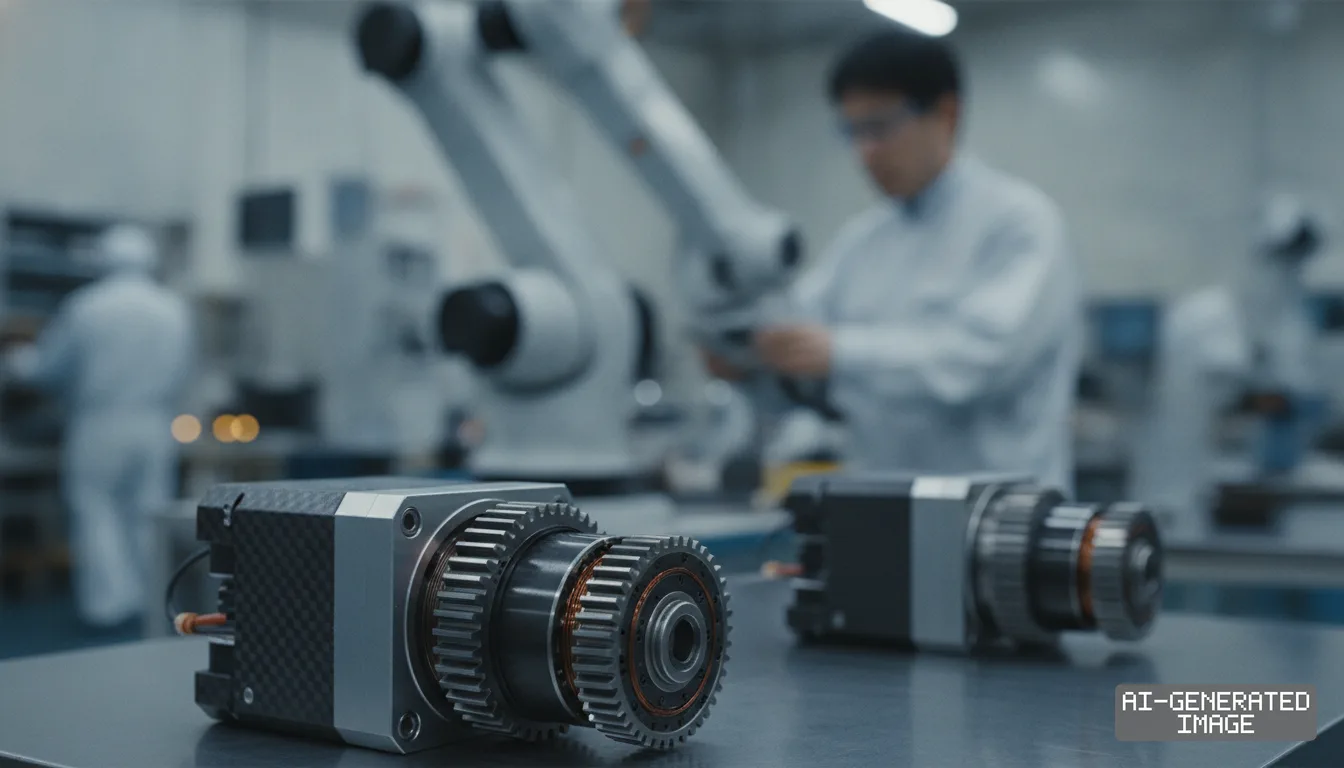
This deployment scale is altering component supply arrangements across East Asia. Industrial robots require precision speed reducers to convert high-speed motor rotation into controlled mechanical joint movement, accounting for roughly 35% of production costs.
Japan's Nabtesco Corporation commands roughly 60% of the global market for cycloidal RV precision reduction gears. The Tokyo-based supplier operates a dedicated manufacturing plant in Changzhou, China, with annual capacity of 1.2 million units.
Nabtesco uses its Changzhou operations to supply both Japanese robot makers and expanding Chinese assemblers. Cycloidal reducers absorb high shock loads and equip the primary rotating bases of heavy multi-axis articulated robots.
Harmonic Drive Systems Inc. commands the market for strain-wave gearing used in lightweight arms. The Japanese manufacturer produces flexible spline reducers for compact six-axis systems, where positional accuracy and low weight dictate component selection.
South Korean component manufacturers are accelerating efforts to enter Chinese supply chains. SBB Tech and SPG produce domestic strain-wave gears and planetary reducers, seeking qualification across assembly plants that currently rely on Japanese or Chinese alternatives.
Electric drive systems represent another critical cost center for robot manufacturers. Servo motors and motion controllers account for roughly 35% of an industrial robot's bill of materials, dictating joint response speeds and repeatability.
Shenzhen Inovance Technology Co., Ltd. has capitalized on that demand. The company books more than $5 billion in group revenue and holds the top market share in China for industrial automation servo drives and motion controllers.
Inovance has expanded from drive components into building articulated robotic arms. The company deploys small-payload and heavy-payload six-axis arms across lithium-ion battery lines, smartphone factories and automotive parts suppliers throughout China.
Despite absorbing 59% of global installations, China retains room for factory automation. Its operational robot density stands at 166 units per 10,000 manufacturing workers, ranking 22nd globally, federation records showed.
South Korea holds the world's highest automation density at 1,220 robots per 10,000 factory employees. China's enormous manufacturing employment base requires high annual deployment volumes simply to register incremental gains in national density metrics.
Central industrial planning continues to underpin domestic factory automation. The government incorporated robotics modernization into its 15th Five-Year Plan covering 2026 to 2030, targeting artificial intelligence applications across precision machining and industrial assembly lines.
Adoption momentum nonetheless exhibited severe volatility outside core industrial lines. Installations across China's food and beverage sector fell 37% after surging the prior year, while textile robot purchases dropped 92%, according to federation data.
The National Bureau of Statistics has not published an official document confirming worldwide installation market shares, which are compiled exclusively by the International Federation of Robotics rather than Chinese state statistical releases.
The bureau will publish its nationwide October industrial production metrics in Beijing on Nov. 16, 2026. The federation projects China's industrial robot market will expand at an annual pace between 5% and 10% through 2029.
Impact map
How this development propagates across the region and out to global buyers.
| Event | Korea | China | Japan | Global impact |
|---|---|---|---|---|
| Industrial robot installation shift | SBB Tech and SPG seek Chinese factory qualification against entrenched Japanese gear suppliers | Inovance takes top servo share while domestic brands supply 55% of home robot installations | Nabtesco runs 1.2 million reducer capacity in Changzhou to capture heavy-arm demand | Factory automation stock hits 5 million units as China installs 59% of worldwide supply |
In this story
- Companies
- Nabtesco CorporationHarmonic Drive SystemsShenzhen Inovance TechnologySBB TechSPG
- Tickers
- 6268.T6324.T300124.SZ389120.KQ058610.KQ
- Impact
- Supply ChainCost StructureCapex
Related briefings
- Korean electronics component suppliers deploy AI dual-arm robots as factory labor pool shrinks Also on SBB Tech, SPG, Harmonic Drive Systems
- China RV reducer makers expand heavy-duty robot market share as national testing standards take hold Also on Nabtesco Corporation, Cost Structure
- Nabtesco adapts cycloidal gearboxes for heavy logistics robots Also on Nabtesco Corporation, Cost Structure
- Fanuc and Yaskawa Expand China Motion Control Plants to Meet Local Content Rules Also on Shenzhen Inovance Technology, Harmonic Drive Systems, Cost Structure
Sources
Primary documents
Reporting
Confidence: high — how we grade this
The documents behind this briefing are linked above. East Asia Brief produces its English text with AI assistance under human editorial review, and does not translate or republish other outlets' articles. See our methodology and AI policy. Spotted an error? Tell us.
The Morning Brief
What changed in Korean, Chinese and Japanese industry overnight — and what it means for your supply chain. One email, weekday mornings, US time. Free.
The Morning Brief is in preparation. Leave your address and we will write to you once — when the first issue is ready. Nothing before that.