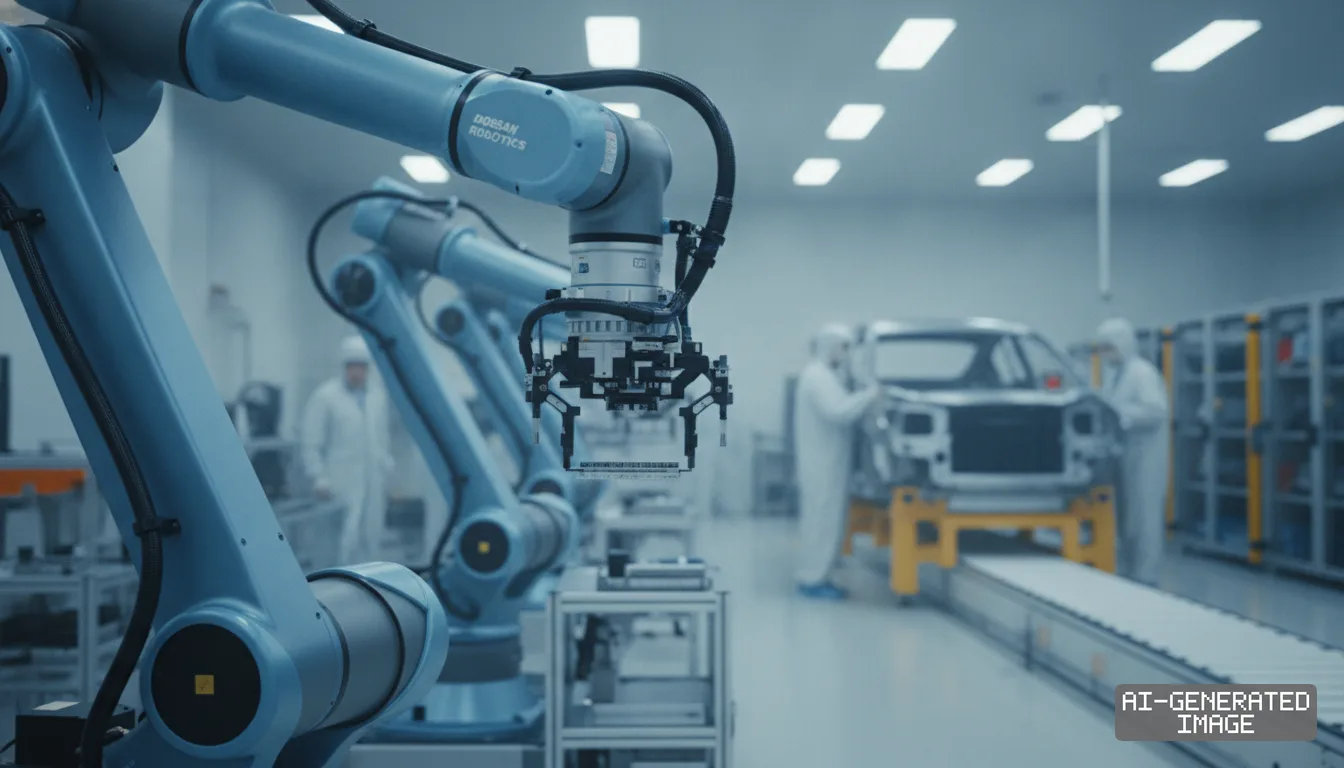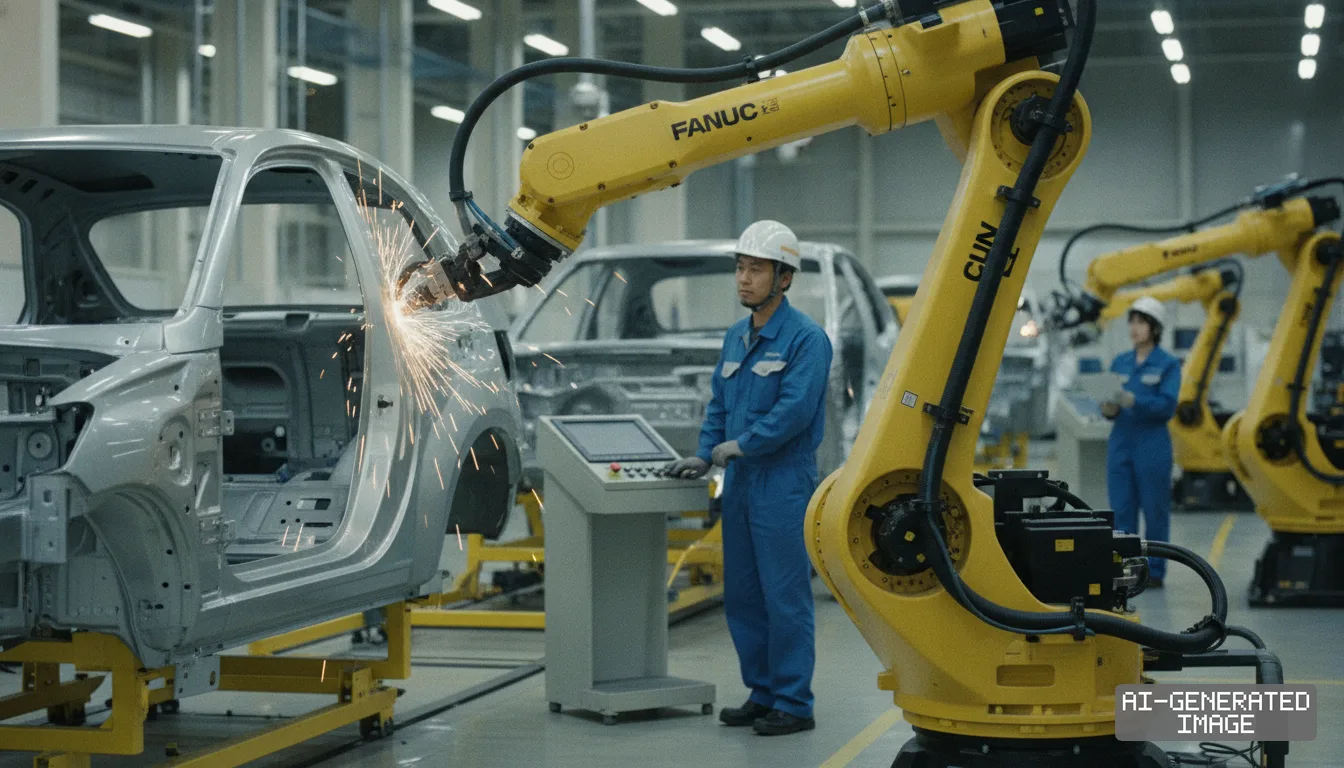
FANUC America links factory robots to Palladyne AI platform
The partnership integrates the Palladyne IQ platform into industrial manipulators to give production lines closed-loop autonomy for unmodeled tasks, with financial terms undisclosed.
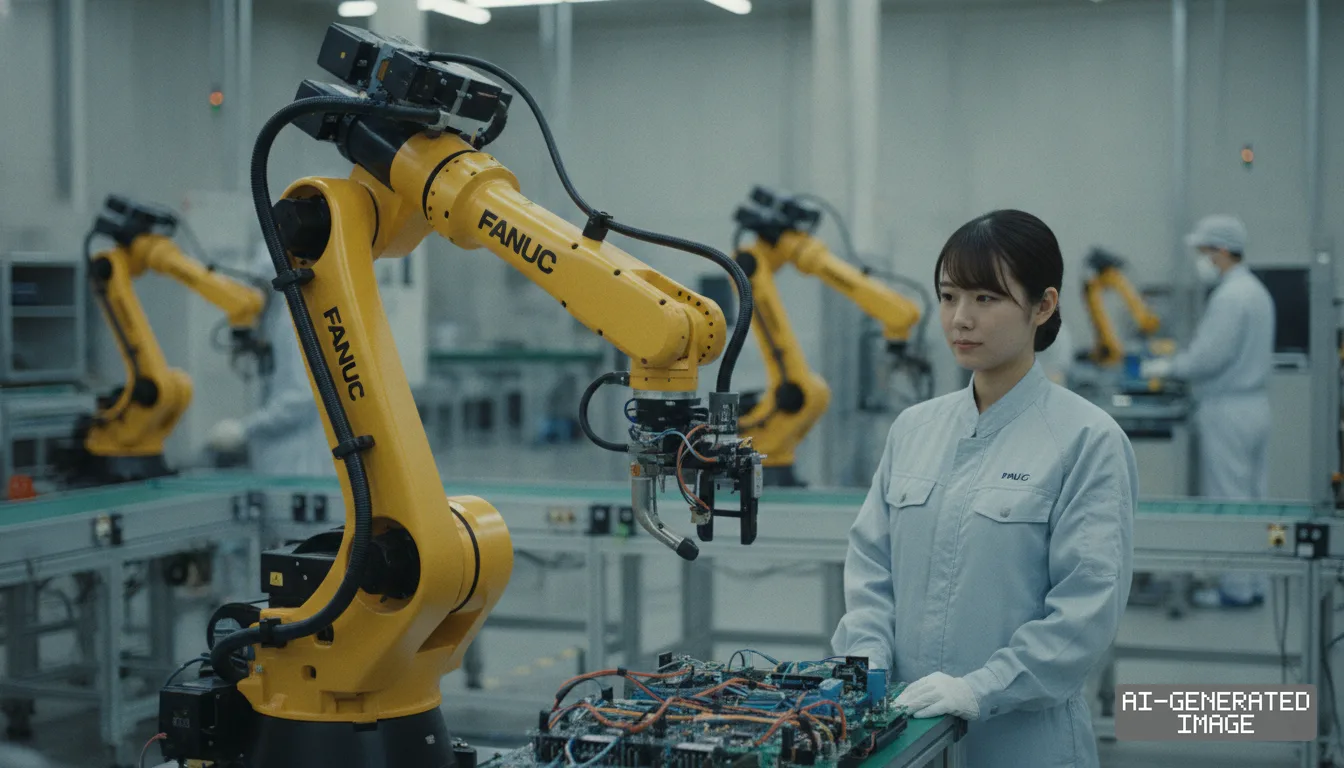
FANUC America formed a strategic collaboration with Salt Lake City software developer Palladyne AI on Sept. 8, 2026 to integrate embodied artificial intelligence software across its industrial robotic arms.
FANUC America operates as the North American unit of Japan-based FANUC Corporation, the world's largest industrial robot manufacturer by installed volume. Palladyne AI develops software platforms that allow machines to execute variable tasks without pre-programmed movement scripts.
The agreement establishes six collaborative development programs centered on embedding the Palladyne IQ platform into FANUC robot controllers. The partners did not disclose financial terms, equity investments or licensing fees in the official announcement.
Industrial robot systems traditionally execute rigid, deterministic movement sequences programmed through handheld teach pendants or offline simulation tools. That programming model requires human engineers to recalculate spatial coordinates whenever components, fixtures or warehouse bins deviate from predefined tolerances.
Palladyne IQ introduces closed-loop autonomy — an operational architecture where onboard sensors continuously evaluate environmental changes and adjust physical motions without human code updates. The software enables mechanical manipulators to grip, sort and pack unstructured objects.
Under the first technical track, software engineers will optimize Palladyne IQ to run natively across FANUC robotic controllers. Direct hardware integration minimizes processing latency between visual perception inputs and mechanical servo motors along robot joints.
A second track develops advanced artificial intelligence motion planning algorithms to govern adaptive robotic behavior on live assembly lines. Robots will recalculate operational trajectories in milliseconds when parts arrive misaligned on transport conveyors.
The third initiative adds teleoperation and human-assisted learning capabilities to simplify task instruction for factory technicians. Operators can demonstrate novel manipulation tasks through manual guidance, allowing underlying neural networks to record and generalize motion routines.
The fourth work stream focuses on accelerated physics simulation and synthetic dataset generation for artificial intelligence model training. Digital twin environments allow algorithmic models to train across thousands of edge cases before technicians commission hardware on factory floors.
A fifth program commits both companies to joint field validation across customer facilities in manufacturing, warehousing and logistics environments. Engineers will verify picking, kitting and packing accuracy under operating factory conditions alongside industrial end users.
The final initiative establishes standardized deployment workflows for third-party system integrators and industrial customers. Clear deployment standards reduce installation friction for integration firms that deliver turnkey automated production lines to commercial factories.
Manufacturing facilities across North America, Europe and East Asia face persistent shortages of skilled roboticists capable of maintaining proprietary automation scripts. High turnover among industrial programmers has increased operational maintenance overhead across automotive and electronics assembly plants.
The partnership accelerates FANUC Corporation's software modernization strategy across 2026. The Japanese automation giant previously partnered with Nvidia Corporation in March 2026 for simulation and Google Cloud in May 2026 for vision-language models.
FANUC America showcased natural-language programming and automated part kitting powered by Google Cloud models at the IMTS 2026 exhibition in Chicago on Sept. 3, 2026. Those systems translate text commands into robot instructions without conventional code authoring.
Palladyne AI brings proprietary machine learning algorithms originally engineered for defense robotics and autonomous systems. The software stack emphasizes edge computing capabilities, processing perception and motion models locally without sending proprietary plant data to off-site cloud servers.
Factory operators restrict external network access to protect intellectual property and trade secrets from security breaches. Edge-native artificial intelligence allows automated machinery to maintain autonomous operations even when factory network connections degrade.
For automated production lines, the alliance alters project economics by reducing reliance on bespoke integration engineering. System integration services and custom programming historically represent up to 60% of total capital expenditure when commissioning robotic cells.
Lower installation barriers allow mid-sized precision machining shops and component makers to automate assembly processes economically. Facilities producing small batches can reassign robotic arms between diverse tooling fixtures without hiring specialized external programmers.
The technical alliance increases competitive pressure on rival industrial robot manufacturers across East Asia and Europe. Equipment makers including Yaskawa Electric, ABB and KUKA are moving to incorporate dynamic machine learning directly into proprietary controller architectures.
Palladyne AI trades on Nasdaq under the ticker PDYN, while parent company FANUC Corporation trades on the Tokyo Stock Exchange under ticker 6954. Neither company announced formal revenue-sharing agreements, per-unit software royalties or recurring subscription rates.
The official announcement also omitted target delivery dates for commercial software availability across FANUC product lines. The companies did not disclose initial commercial customer names or identify specific legacy controller models that will support retrospective software upgrades.
Engineering teams from FANUC America and Palladyne AI will proceed with pilot testing and software optimization at customer facilities through the fourth quarter of 2026. Commercial rollout procedures will depend on validation results from those ongoing industrial trials.
Impact map
How this development propagates across the region and out to global buyers.
| Event | Korea | China | Japan | Global impact |
|---|---|---|---|---|
| Physical AI integration on industrial robots | Domestic integrators evaluate embodied AI software for high-mix battery cell and module packing | Local robot makers face wider software capabilities gap against Japanese hardware leaders | FANUC accelerates software transition to defend hardware margins against global competitors | Factory integration costs decline as closed-loop autonomy replaces custom script engineering |
In this story
- Companies
- FANUC CorporationPalladyne AI Corp.
- Tickers
- 6954.TPDYN
- Exposed
- NvidiaYaskawa ElectricABBKUKA
- Policy
- Economic Security
- Impact
- Supply ChainCost StructureCompliance
Track every Economic Security development →
Related briefings
- FANUC America taps Palladyne AI for factory robot autonomy Also on Palladyne AI Corp., KUKA, ABB
- FANUC opens $18 million Michigan robotics training academy Also on KUKA, FANUC Corporation, ABB
- FANUC UK restructures sales leadership to target aerospace and defense Also on KUKA, FANUC Corporation, ABB
- ABB targets end-of-line palletizing with heavy-payload PoWa cobots Also on KUKA, ABB, Yaskawa Electric
Sources
Primary documents
Reporting
Confidence: high — how we grade this
The documents behind this briefing are linked above. East Asia Brief produces its English text with AI assistance under human editorial review, and does not translate or republish other outlets' articles. See our methodology and AI policy. Spotted an error? Tell us.
The Morning Brief
What changed in Korean, Chinese and Japanese industry overnight — and what it means for your supply chain. One email, weekday mornings, US time. Free.
The Morning Brief is in preparation. Leave your address and we will write to you once — when the first issue is ready. Nothing before that.