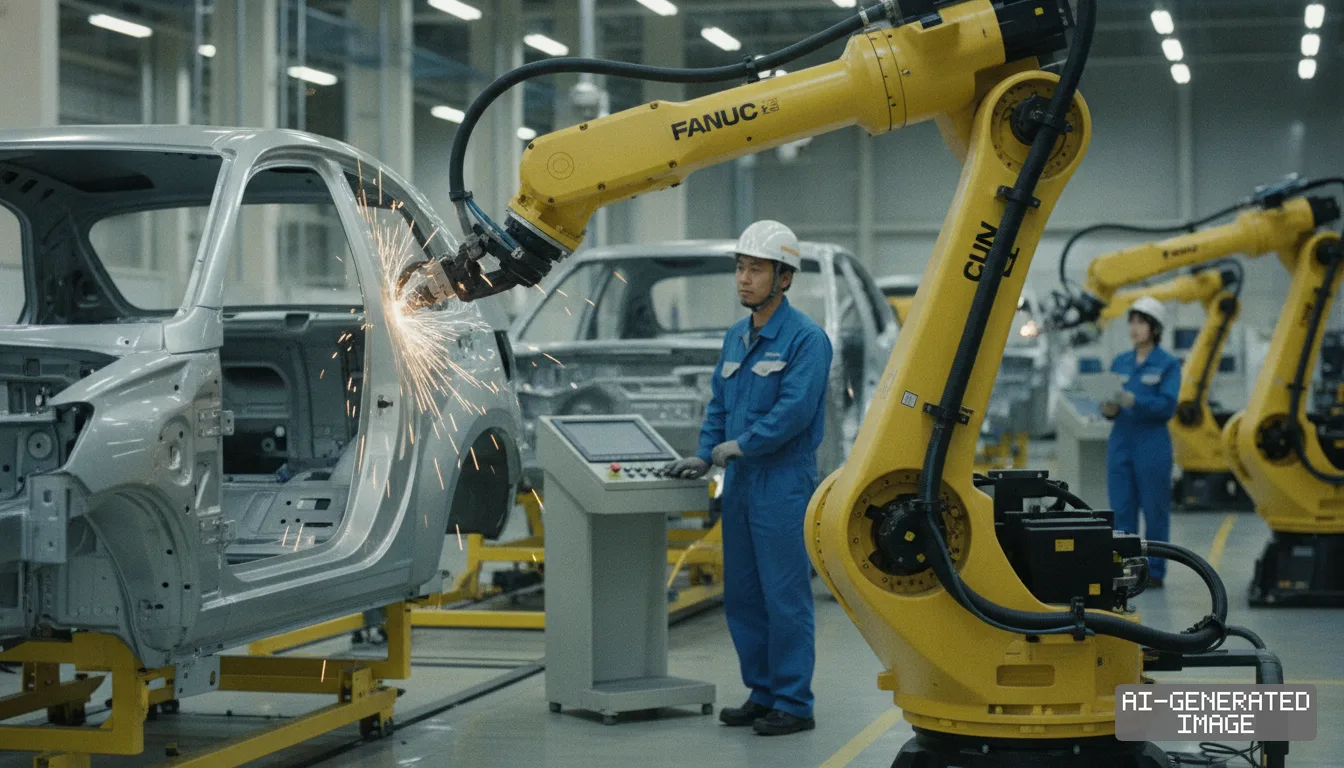
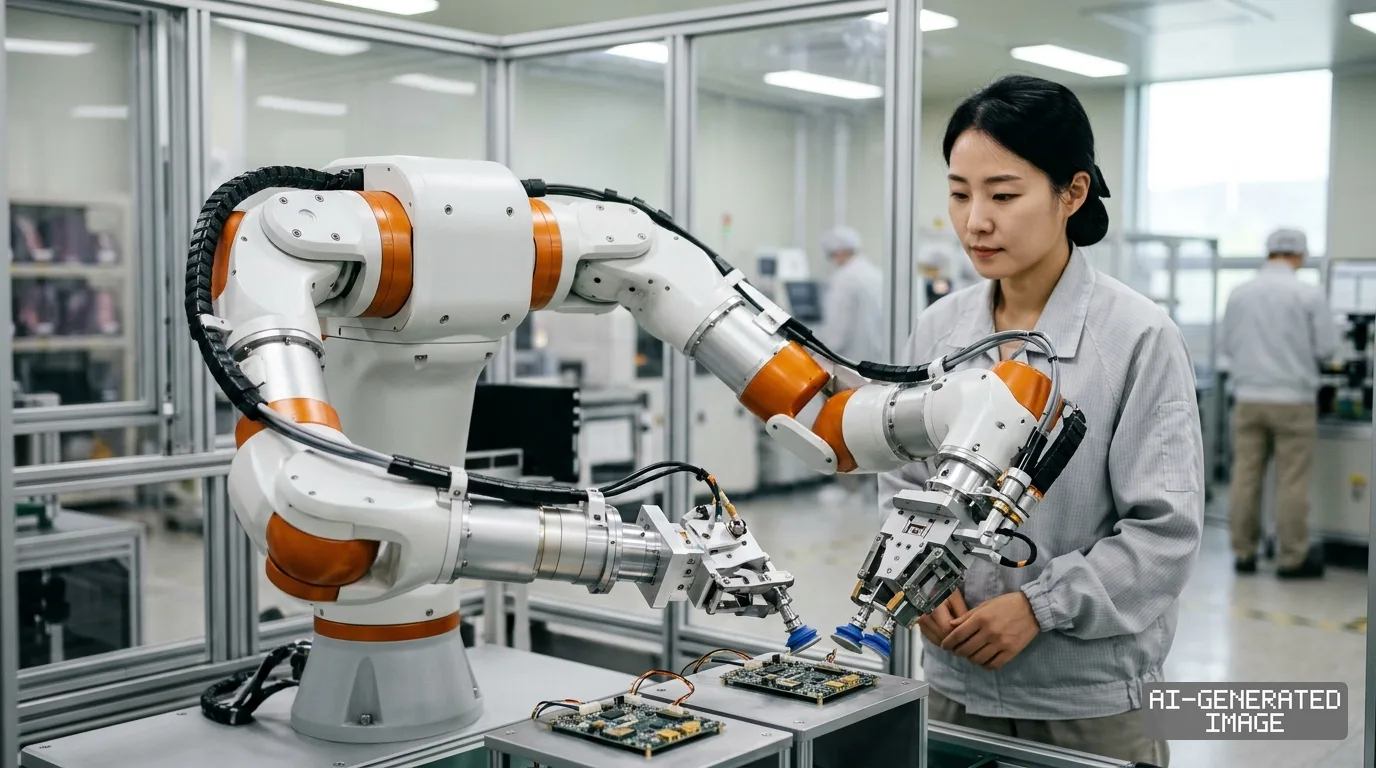
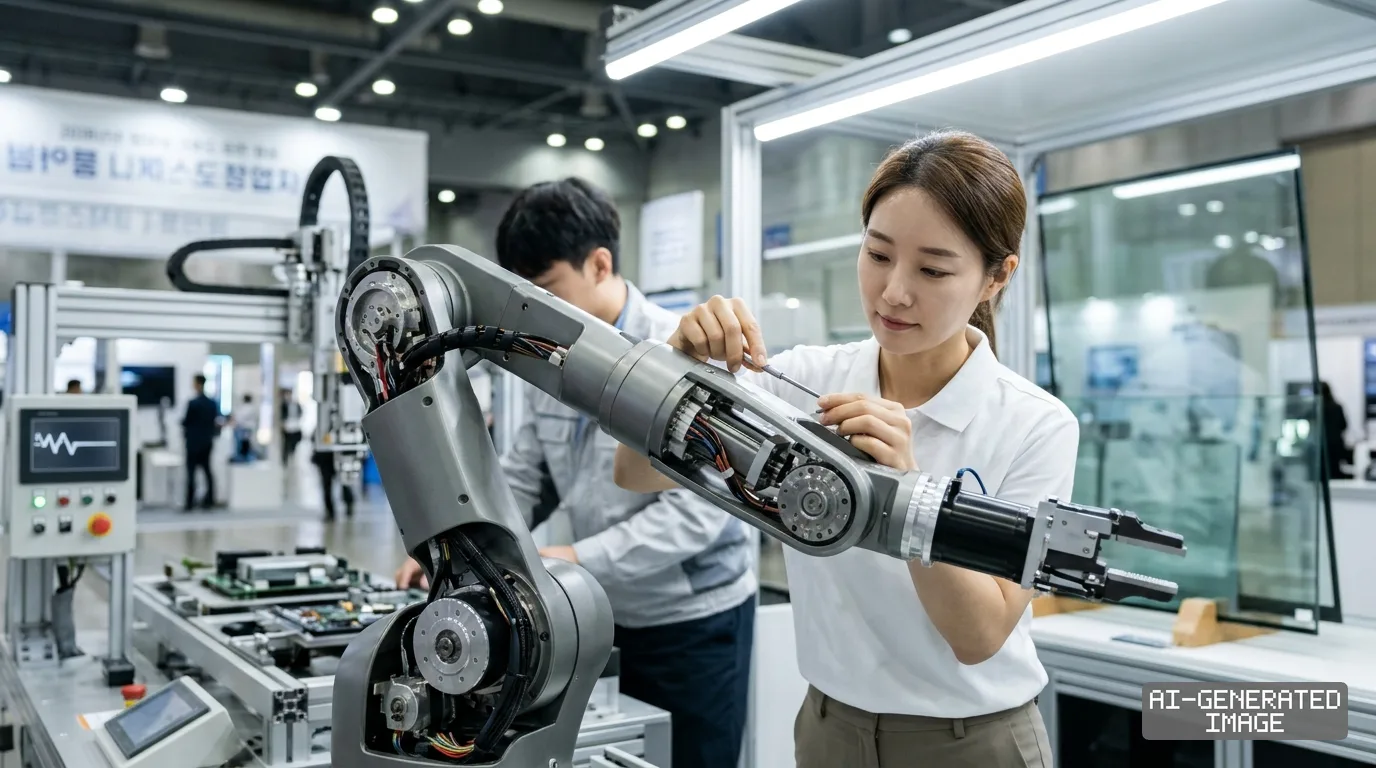
LG hires Hyundai robotics lead to direct physical AI push
The appointment places Dong Jin Hyun over humanoid systems due in the first quarter of 2027, unifying factory software across group affiliates.
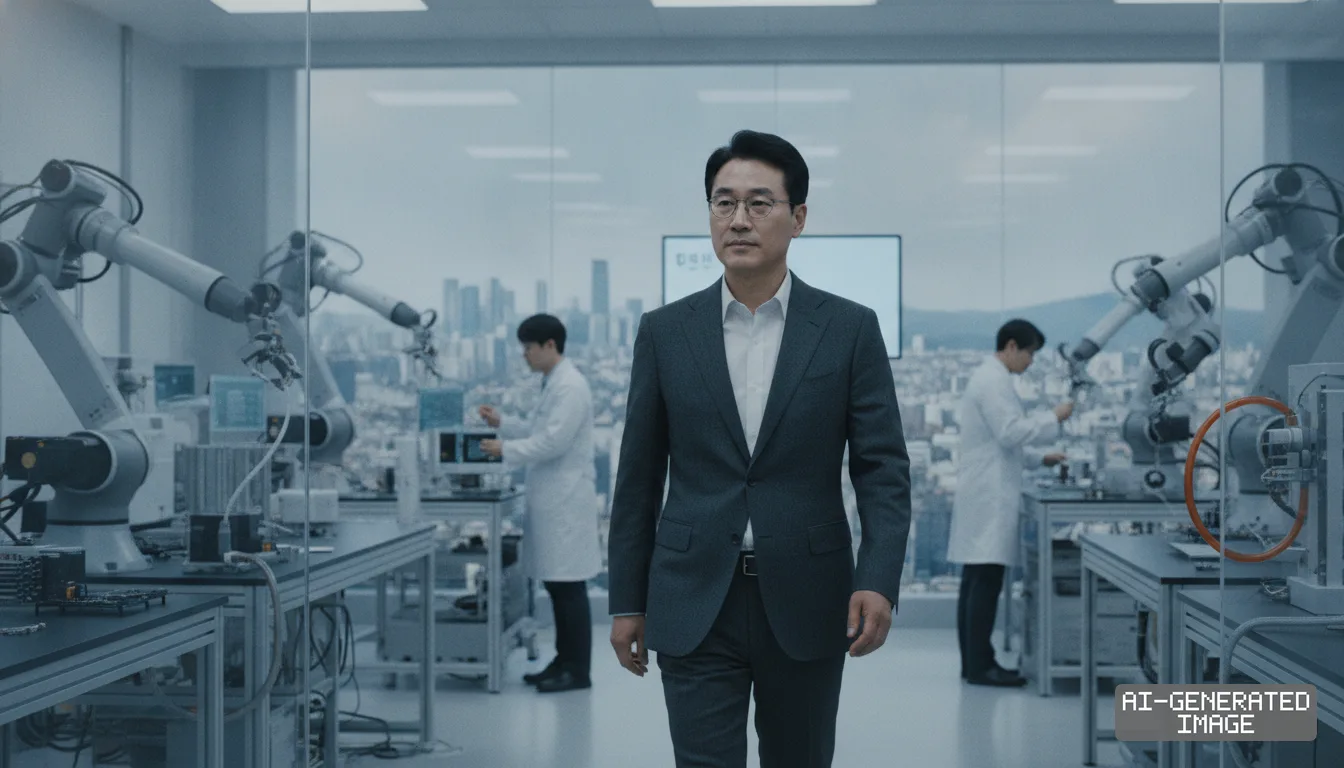
LG Group appointed Dong Jin Hyun, the former head of Hyundai Motor Group's Robotics LAB, as executive vice president of physical artificial intelligence on Oct. 23, 2026.
Hyun takes over as the central technology coordinator at LG Sciencepark in western Seoul, where the conglomerate concentrates research operations across its electronics, chemical and telecommunications units.
The group aims to unveil a next-generation bipedal humanoid robot in the first quarter of 2027, integrating foundation models directly into production lines.
Actuators and precision motion mechanisms represent over 50% of the bill of materials in advanced industrial robotics, creating intense pressure on manufacturers to pair in-house hardware with proprietary behavioral software.
Hyun previously oversaw mobile platform and exoskeleton development at Hyundai Motor, serving as vice president before resigning from the automotive group on April 29, 2026.
His engineering teams developed the Mobile Eccentric Droid, an autonomous four-wheel indoor platform, and the X-ble line of industrial wearable robotics designed to reduce physical strain on assembly workers.
At LG, Hyun will direct cross-affiliate robotics programs that combine software pipelines from LG AI Research, system integration from LG CNS and commercial hardware from LG Electronics.
The executive appointment accelerates a structural pivot that LG initiated earlier this year to counter rising competition from Chinese automation builders and domestic rivals.
LG Electronics established an independent Robotics Business Center reporting directly to Chief Executive Lyu Jae-cheol on July 1, 2026, naming smart factory specialist Siyong Song as center head.
The division operates as a consolidated business unit managing project development, overseas sales and supply chain logistics for commercial and industrial platforms.
To supply training infrastructure, LG Electronics began building a dedicated Data Factory at its Yangjae R&D Campus in southern Seoul.
The facility gathers visual, motion and tactile sensor data from automated arms to train general-purpose robot foundation models on industrial manipulation tasks.
Physical artificial intelligence represents an operational shift from virtual generative algorithms to embodied agents that manipulate tools, navigate physical clutter and react to tactile resistance.
Manufacturing groups across East Asia are deploying embodied software to automate high-mix, low-volume assembly lines that conventional fixed-path industrial robots cannot handle efficiently.
LG Group Chairman Koo Kwang-mo solidified the platform architecture on Aug. 13, 2026, during an executive meeting with Nvidia Chief Executive Jensen Huang in Santa Clara, California.
Under the partnership, LG agreed to deploy Nvidia's Isaac GR00T foundation model on its bipedal humanoid architecture ahead of the planned early 2027 showcase.
Nvidia provides the simulation tools and edge computing acceleration, while LG supplies physical test beds inside electronics and battery assembly plants.
South Korean conglomerates are simultaneously racing to resolve persistent dependencies on foreign component vendors for critical mechanical inputs.
Actuators, reduction gears and sensor boards account for most hardware manufacturing expenditures in articulated robotics, with Japanese suppliers historically dominating precision motion control.
LG Electronics plans to manufacture proprietary robot actuators domestically, using six decades of motor and inverter engineering to supply both internal production lines and merchant buyers.
The enterprise strategy splits robotics operations across three complementary market channels: consumer units, commercial service units and heavy industrial arms.
LG Electronics holds a controlling 65.5% stake in Robostar, which manufactures cleanroom robots and multi-axis Cartesian systems for flat-panel display and semiconductor production.
The company also expanded its footprint in commercial service robotics through a $60 million strategic investment in Silicon Valley-based Bear Robotics, acquiring a 51% stake.
Hyundai Motor Group has expanded its own robotics footprint through Boston Dynamics, integrating Spot quadruped inspection robots into vehicle assembly plants and developing electric Atlas humanoids.
Hyundai's Robotics LAB has simultaneously pursued localization of actuators and motor controllers, collaborating with edge-chip startup DeepX on on-device neural processing units.
Samsung Electronics joined the humanoid competition by becoming the largest shareholder of Rainbow Robotics, aiming to automate semiconductor logistics fabs using mobile dual-arm systems.
The contest among South Korea's three largest conglomerates has shifted executive recruitment from purely mechanical design toward simulation software, spatial intelligence and embedded motor control.
Engineers capable of translating synthetic simulation data from virtual environments into repeatable mechanical execution remain in critically short supply across Asia.
Hyun's transition brings deep systems integration experience from Hyundai's automotive and robotics plants into LG's smart manufacturing software stack.
LG plans to test its coordinated humanoid systems across its battery assembly lines operated by LG Energy Solution and consumer electronics facilities before offering commercial licensing.
The next milestone arrives in the first quarter of 2027, when LG presents its Isaac GR00T-powered bipedal humanoid and accompanying physical AI factory platform to industrial clients.
LG has not published an official regulatory disclosure or corporate press release detailing the appointment date or contract terms for the unregistered executive role.
Impact map
How this development propagates across the region and out to global buyers.
| Event | Korea | China | Japan | Global impact |
|---|---|---|---|---|
| physical AI robotics realignment | LG unifies affiliate software stacks and poaches talent, Hyundai accelerates hardware localization | Humanoid makers face heightened competition in high-precision factory automation algorithms | Precision motion component makers see South Korean chaebols localize high-margin actuators | Smart factory customers gain alternate humanoid platforms running Nvidia foundation models |
In this story
- Companies
- LG GroupHyundai Motor GroupLG Electronics
- Tickers
- 003550.KS005380.KS066570.KS
- Exposed
- NvidiaRobostarBear RoboticsDeepX
- Impact
- CapexSupply ChainOrder Book
Related briefings
- Doosan Robotics and DEEPX develop AI nuclear welding robots Also on DEEPX, Order Book
- Doosan Robotics picks DeepX NPU chips for on-device welding cobots Also on DEEPX, Order Book
- LG Energy Solution wins NVIDIA DSX Ready status for AI power backup Also on LG Electronics, NVIDIA, Order Book
- Mobilint tests robot AI chips with Doosan to curb Nvidia costs Also on LG Electronics, Nvidia
Sources
Reporting
Confidence: medium — how we grade this
The documents behind this briefing are linked above. East Asia Brief produces its English text with AI assistance under human editorial review, and does not translate or republish other outlets' articles. See our methodology and AI policy. Spotted an error? Tell us.
The Morning Brief
What changed in Korean, Chinese and Japanese industry overnight — and what it means for your supply chain. One email, weekday mornings, US time. Free.
The Morning Brief is in preparation. Leave your address and we will write to you once — when the first issue is ready. Nothing before that.