FANUC retains hollow-arm robot fleet for factory automation
The Japanese robotics maker registered no new hollow-axis models on Oct. 19, focusing recent automation upgrades on high-precision machining arms and shopfloor artificial intelligence.
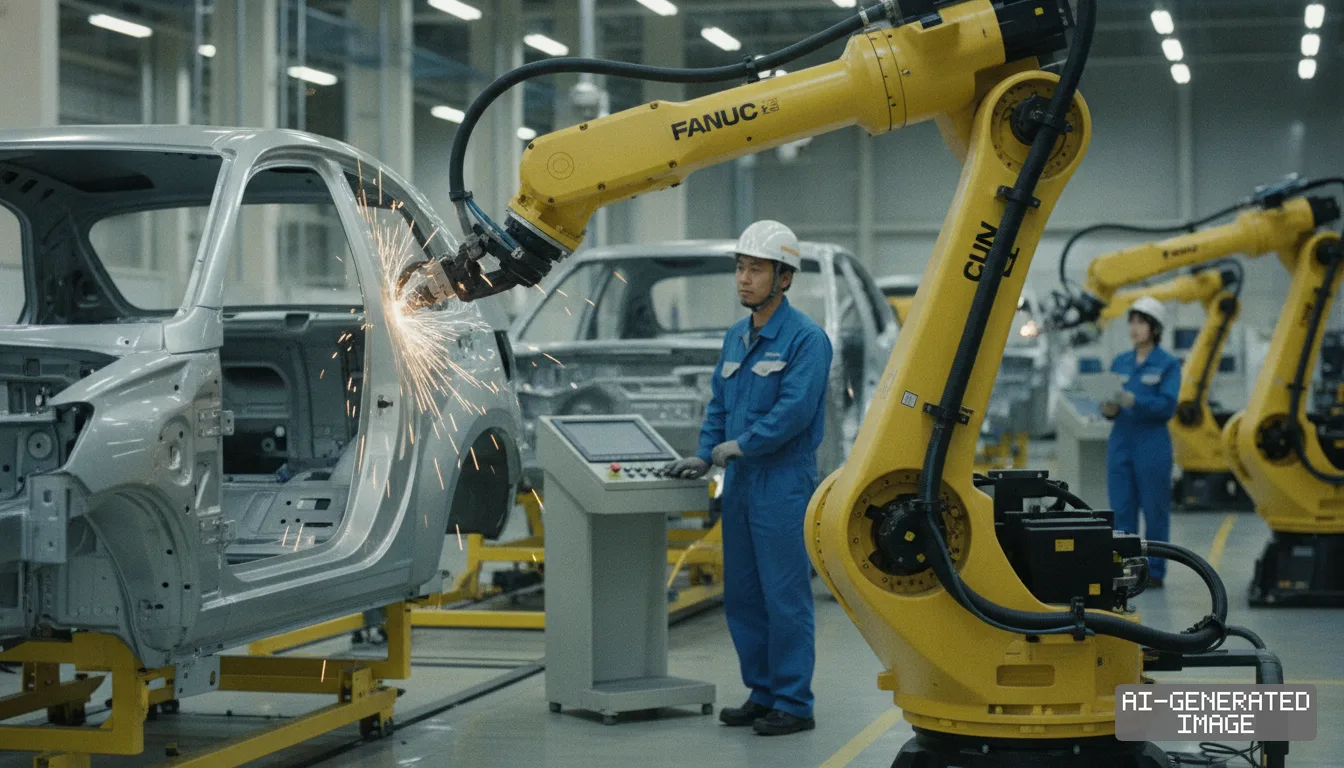
FANUC Corporation issued no new hollow-arm industrial robot models on Oct. 19, 2026, leaving its existing internal-cabling automation lineup unchanged across automotive and precision manufacturing sectors.
The Japanese automation group has delivered more than 1 million industrial robots worldwide. Hollow-arm units represent a core slice of that installed base in arc-welding, sealing and compact electronics assembly.
Market speculation had pointed to a specialized aerospace variant on that date. Official corporate registries and catalog filings in Japan show no such addition took place, the company confirmed.
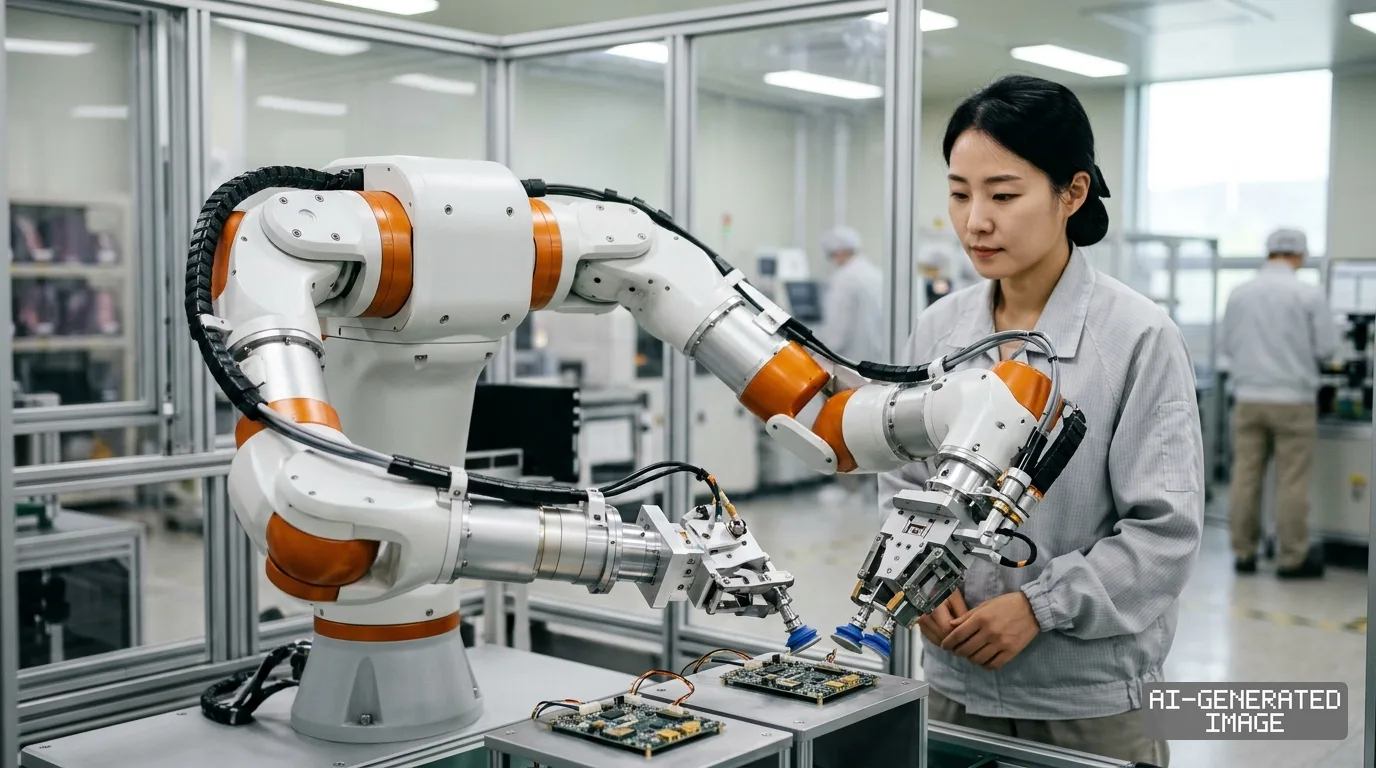
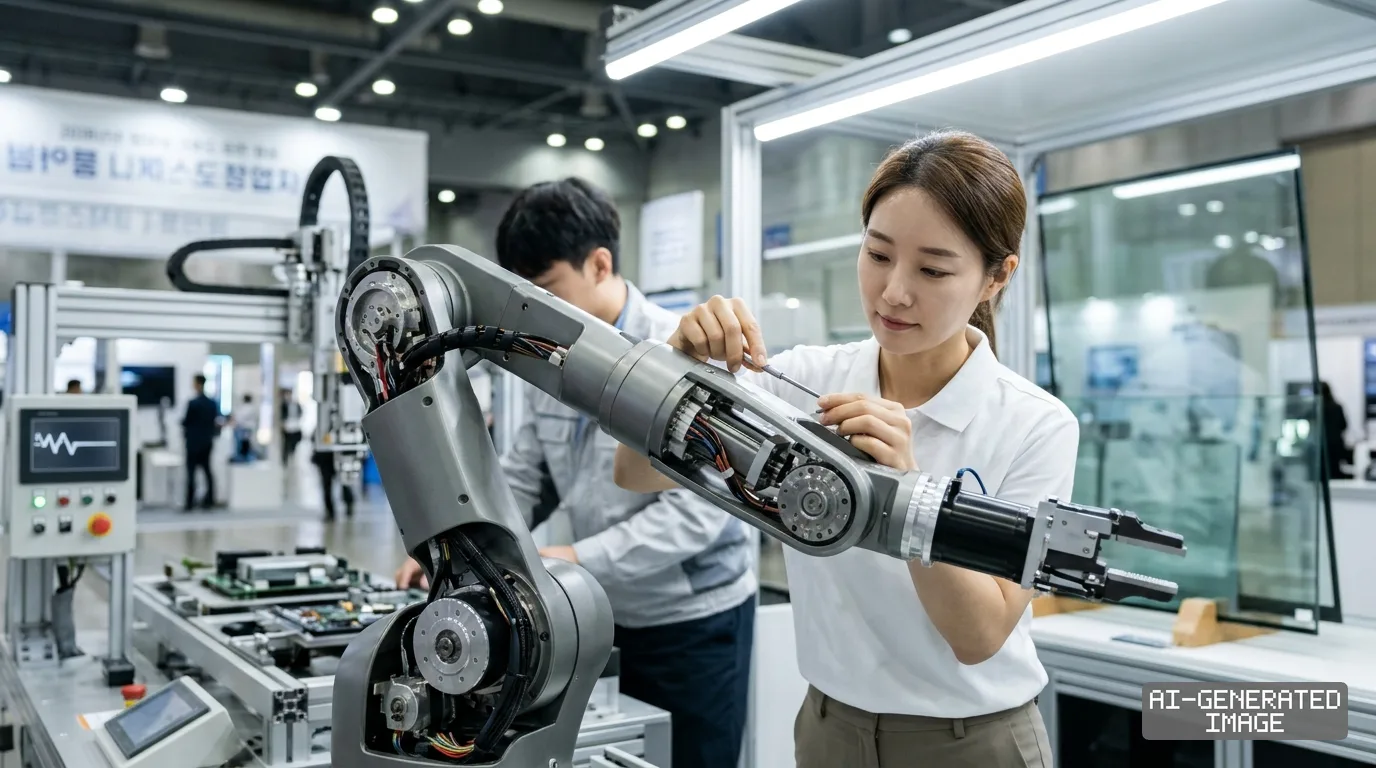
A hollow arm routes electrical cabling, air hoses and sensor lines through a hollow center at the wrist. That layout shields dresspacks from abrasive friction, snagging hazards and rotational collision during high-density manufacturing operations.
FANUC Corporation maintains that structural design across several mature lines. These include its M-10iD and M-20iD handling series, alongside heavy-payload units such as the R-2000iD family.
The architectural choice matters to factory planners building dense production lines. External wiring bundles increase the physical clearance required between adjacent arms, lowering the number of robots an integrator can cluster along an assembly track.
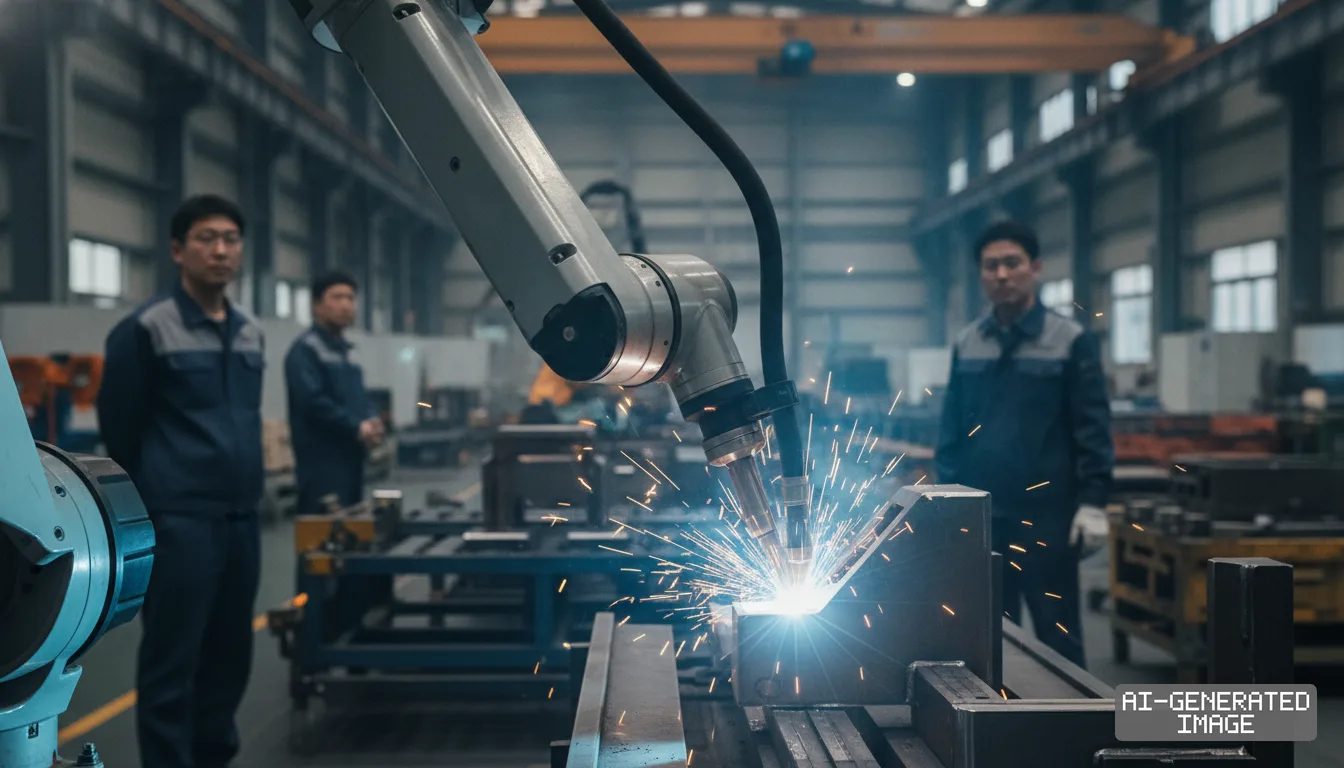
Internal routing removes cable-whip fatigue, which accounts for frequent maintenance downtime in robotic welding cells. It also cuts teaching time by allowing engineers to simulate arm movement without calculating cable swing.
South Korea’s Ministry of Trade, Industry and Energy brought those mechanical distinctions into trade policy during a tariff review earlier this year. The Korea Trade Commission handled the case under Resolution No. 23-2025-2 on March 26, 2026.
HD Hyundai Robotics filed the original trade petition, alleging injury from articulated industrial robots imported from Japan and China. The domestic builder sought import penalties across multi-axis units.
FANUC Corporation intervened in the proceeding alongside the Embassy of Japan in Korea. The Japanese manufacturer submitted technical briefs arguing that specialized units should be excluded from anti-dumping measures.
Those submissions specifically highlighted hollow-arm robots and cable-integrated units. FANUC Corporation asserted that domestic Korean builders do not supply identical mechanical profiles for ultra-dense precision tooling lines.
Rather than issuing hollow-arm revisions on Oct. 19, FANUC Corporation concentrated recent product rollouts on machining arms. The builder published updated catalog specifications for its M-800 and M-810 robot families on Oct. 21.
Those units target high-accuracy cutting, laser processing and automotive sealing. The M-800 series delivers repeatability of plus or minus 0.015 millimeters across a 60-kilogram payload class.
The heavier M-810 handles payloads between 190 and 270 kilograms with positional repeatability between plus or minus 0.02 and 0.03 millimeters, according to technical brochures. Both lines interface directly with the company’s R-50iA controller platform.
The R-50iA controller doubles sensor-tracking path resolution compared with the older R-30iB platform. It incorporates five-megapixel machine vision cameras, quadrupling optical resolution to improve part recognition without separate industrial computer towers.
Software integration has driven the rest of the company’s autumn schedule. FANUC Corporation announced a production-floor data initiative linking Microsoft Copilot with its FIELD system Basic Package on Oct. 22.
The link lets plant supervisors query machine operating telemetry and tool wear through natural language interfaces. Machine tool builders share equipment parameters across the unified edge platform, the company said.
The software push builds on a strategic partnership signed with Hitachi on Sept. 30. That agreement aims to commercialize Physical AI, using operational data from shopfloor machinery to guide autonomous robotic workflows.
Heavy machining processes received dedicated support on Aug. 24, when the company introduced a 5-Axis Integrated Technology Initiative. That program targets aerospace structural components and power-generation turbine parts requiring synchronized tool paths.
FANUC Corporation has not published any announcement or regulatory filing confirming a new hollow-arm robot product launch on Oct. 19, 2026. Official documentation does not show a specialized aerospace-line addition to that family.
Next on the industrial calendar is the JIMTOF 2026 trade show, which opens Nov. 5 in Tokyo. The company launched its dedicated exhibition portal on Oct. 20 to present physical machinery and software controllers.
Impact map
How this development propagates across the region and out to global buyers.
| Event | Korea | China | Japan | Global impact |
|---|---|---|---|---|
| Hollow-arm robot portfolio status | HD Hyundai Robotics contests Japanese import penetration under KTC anti-dumping review | Domestic robot builders expand vertical articulated shipments while Japanese hollow-arm models hold precision slots | FANUC Corporation keeps hollow-arm lineup stable, prioritizing R-50iA controllers and AI partnerships | Automotive and precision manufacturing lines maintain existing dresspack cable configurations |
In this story
- Companies
- FANUC CorporationHD Hyundai Robotics
- Tickers
- 6954.T267250.KS
- Exposed
- HitachiMicrosoft
- Policy
- Tariffs
- Impact
- Order BookCompliance
Track every Tariffs development →
Related briefings
- Hitachi and Fanuc unite on physical AI to automate factories Also on Hitachi, Order Book
- Hitachi and FANUC partner to deploy physical AI in factories Also on Hitachi, Order Book
- Hitachi and FANUC Launch Physical AI Pact to Automate Plants Also on Hitachi, Order Book
- Hitachi and Fanuc form physical AI alliance to run factories Also on Hitachi, Order Book
Sources
Primary documents
Reporting
Confidence: high — how we grade this
The documents behind this briefing are linked above. East Asia Brief produces its English text with AI assistance under human editorial review, and does not translate or republish other outlets' articles. See our methodology and AI policy. Spotted an error? Tell us.
The Morning Brief
What changed in Korean, Chinese and Japanese industry overnight — and what it means for your supply chain. One email, weekday mornings, US time. Free.
The Morning Brief is in preparation. Leave your address and we will write to you once — when the first issue is ready. Nothing before that.