FANUC opens $18 million Michigan robotics training academy
The 132,000-square-foot facility expands annual instruction capacity to 17,500 technicians as North American manufacturers accelerate factory automation investments.
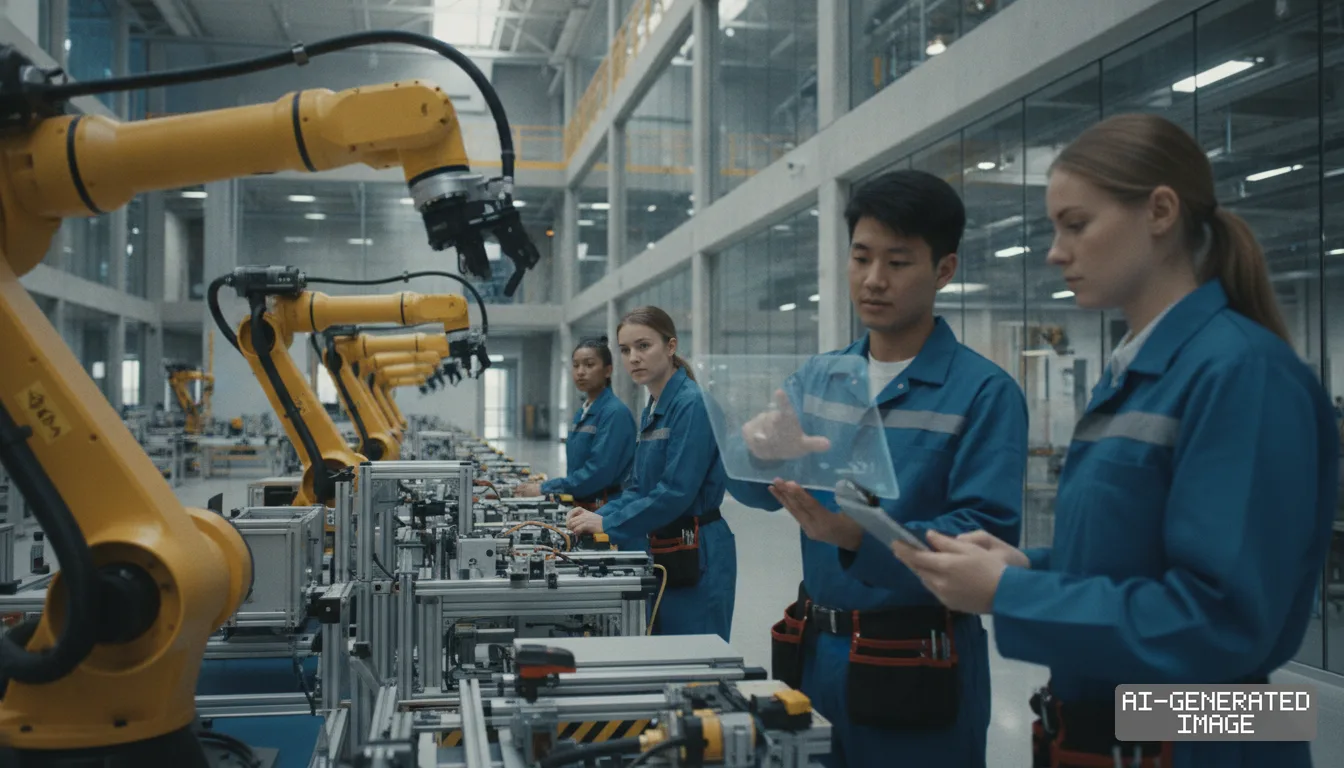
FANUC America opened an $18 million robotics and automation training academy in Auburn Hills, Michigan on Oct. 19, establishing the largest corporate technical training center in the United States.
The three-story facility occupies 132,000 square feet on the company's West Campus. It designates 56,300 square feet exclusively for technical classrooms and hands-on instructional laboratories.
The project accounts for roughly 17% of the Japanese automation builder's combined $108 million Michigan expansion pipeline announced this year, targeted at resolving chronic labor deficits across automated assembly plants.
The academy replaces an older training center located within the company's Rochester Hills headquarters. The relocation expands available instructional rooms from 13 to 28, more than doubling classroom capacity.
Across North America, FANUC now runs nine technical training hubs. The unified network holds capacity to instruct approximately 17,500 engineers, technicians and trade students each year.
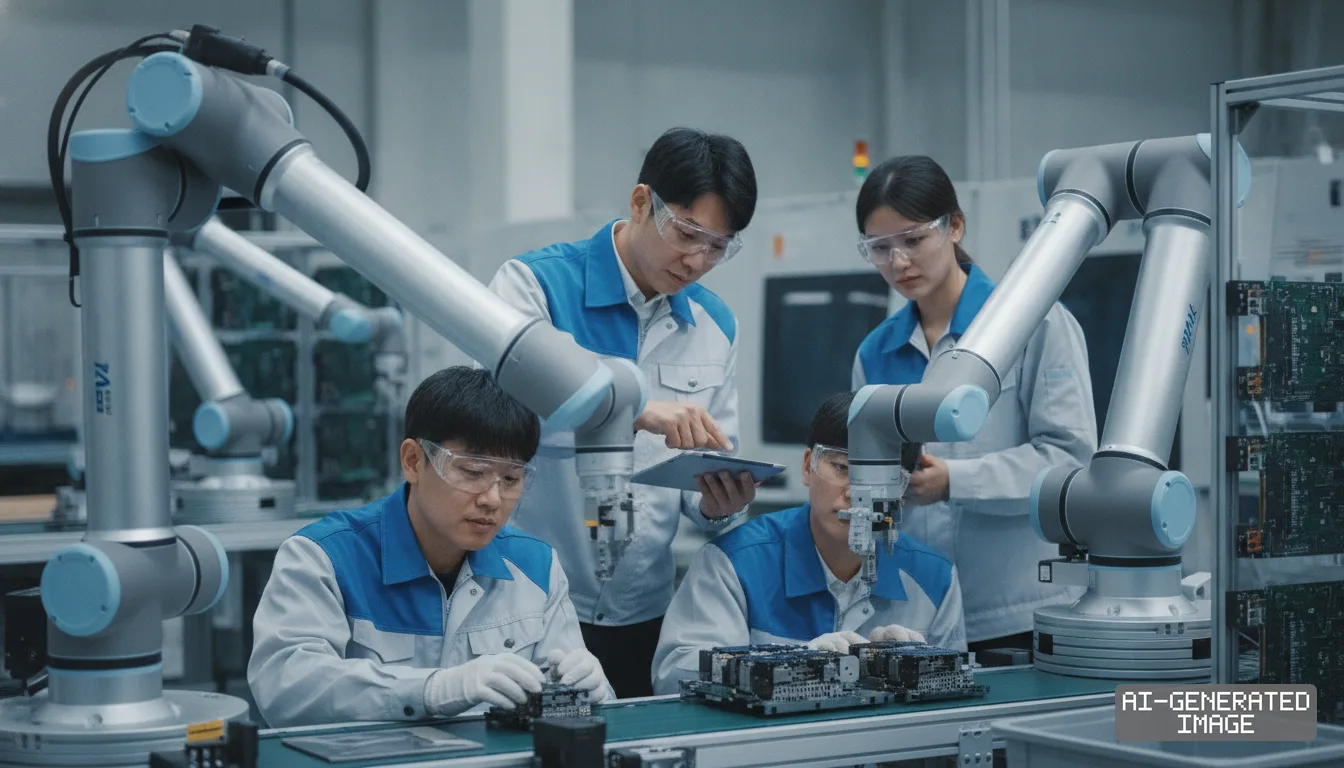
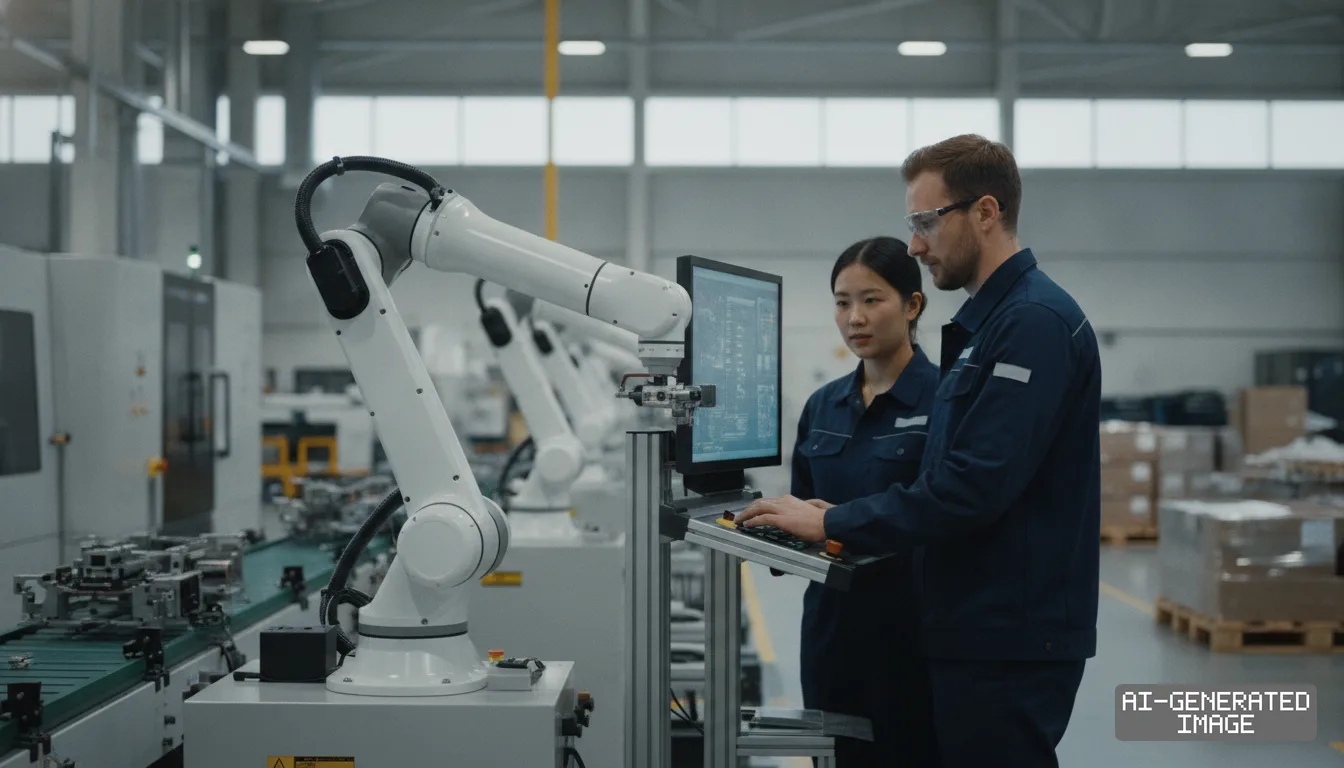
The Auburn Hills instructional floors house more than 160 operational industrial robots. Technicians also train on more than 40 computer numerical control simulators, which replicate multi-axis machine tool operations.
North American manufacturers have poured capital into automated assembly cells and logistics lines since 2022. Operating that machinery requires specialized technicians who remain scarce across major industrial corridors.
Automated factories frequently suffer commissioning delays caused by labor shortages rather than machine delivery backlogs. Plant operators struggle to hire qualified programmers for robotic work cells and multi-axis machine tools.
Manufacturers across North America are investing in robotics and automation, but skilled worker availability remains a primary bottleneck, FANUC America President and Chief Executive Officer Mike Cicco said.
The academy aims to narrow that operational gap through direct machine instruction, Cicco said. The center provides coursework for industrial customers, system integrators and vocational instructors.
Beyond corporate client instruction, the company operates its Certified Education Training program. The initiative supplies standardized robotics curriculum and training equipment to more than 1,700 high schools and trade colleges across North America.
Federal officials endorsed the training investment during site reviews. U.S. Secretary of Labor Keith Sonderling said the facility equips American workers with technical skills needed for high-wage manufacturing positions.
The instructional center occupies the former Thomas M. Cooley Law School building, which sits on 67 acres of land. FANUC acquired the property and broke ground on structural renovations in November 2022.
The training site complements an earlier manufacturing investment unveiled earlier this year. FANUC announced a $90 million capital expenditure on March 24 to acquire property and construct an 840,000-square-foot facility in Michigan.
That separate plant will provide production-ready space to expand domestic robot assembly capabilities. It will also house advanced engineering groups working on virtual commissioning and digital-twin automation software.
Together with the 650,000-square-foot West Campus facility opened in July 2024, the projects expand FANUC's operational footprint in Oakland County, Michigan past 2 million square feet. The company has invested nearly $300 million in United States facilities since 2019.
The existing West Campus site holds staging and warehouse space for more than 6,000 quick-delivery robots and replacement components. That regional depot supplies automotive body shops, packaging lines and electronics assembly plants.
The instructional catalog spans specialized machinery across FANUC's portfolio. Students work with CRX collaborative robots, ROBODRILL vertical machining centers, ROBOSHOT electric injection molding equipment and ROBOCUT wire electrical discharge machines.
Parent company FANUC Corporation, based in Oshino, Japan, leads the global market in computer numerical control systems and industrial robotics alongside European rivals ABB and KUKA and domestic peer Yaskawa Electric.
Training regional workforces creates an operational moat for equipment suppliers. Factory managers typically order robotic hardware and machine controllers that their existing maintenance technicians know how to program and repair.
System integrators face lower implementation risk when client facilities maintain certified in-house staff. Expanding local technician pipelines reinforces customer retention across automotive and advanced manufacturing supply chains.
The company release does not disclose the specific permanent instructor headcount hired to staff the Auburn Hills academy, publishing only the 225-job target attached to the separate manufacturing expansion scheduled for late 2027.
Instruction inside the Auburn Hills facility commenced immediately on Oct. 19. Contractors building the company's adjacent 840,000-square-foot production plant target structural completion in late 2027.
Impact map
How this development propagates across the region and out to global buyers.
| Event | Korea | China | Japan | Global impact |
|---|---|---|---|---|
| FANUC automation academy launch | no direct operational exposure, US-based Korean tier-1 automotive suppliers tap broader trained technician pool | no domestic impact, Chinese robot makers face entrenched vendor training moat in North America | FANUC defends US market share, locking machine tool and robot export demand to proprietary software standards | Automotive and electronics assembly lines reduce commissioning delays through certified local automation labor |
| FANUC automation academy launch | no direct operational exposure, US-based Korean tier-1 automotive suppliers tap broader trained technician pool | no domestic impact, Chinese robot makers face entrenched vendor training moat in North America | FANUC defends US market share, locking machine tool and robot export demand to proprietary software standards | Automotive and electronics assembly lines reduce commissioning delays through certified local automation labor |
In this story
- Companies
- FANUC AmericaFANUC Corporation
- Tickers
- 6954.T
- Exposed
- ABBKUKAYaskawa Electric
- Impact
- Supply ChainCapex
Related briefings
- FANUC America taps Palladyne AI for factory robot autonomy Also on FANUC America, KUKA, ABB
- FANUC America unveils packaging robotics for PACK EXPO 2026 Also on FANUC America, FANUC Corporation
- FANUC debuts welding and painting robots for FABTECH 2026 Also on FANUC America, FANUC CORPORATION
- FANUC America links factory robots to Palladyne AI platform Also on KUKA, FANUC Corporation, ABB
Sources
Reporting
Confidence: medium — how we grade this
The documents behind this briefing are linked above. East Asia Brief produces its English text with AI assistance under human editorial review, and does not translate or republish other outlets' articles. See our methodology and AI policy. Spotted an error? Tell us.
The Morning Brief
What changed in Korean, Chinese and Japanese industry overnight — and what it means for your supply chain. One email, weekday mornings, US time. Free.
The Morning Brief is in preparation. Leave your address and we will write to you once — when the first issue is ready. Nothing before that.