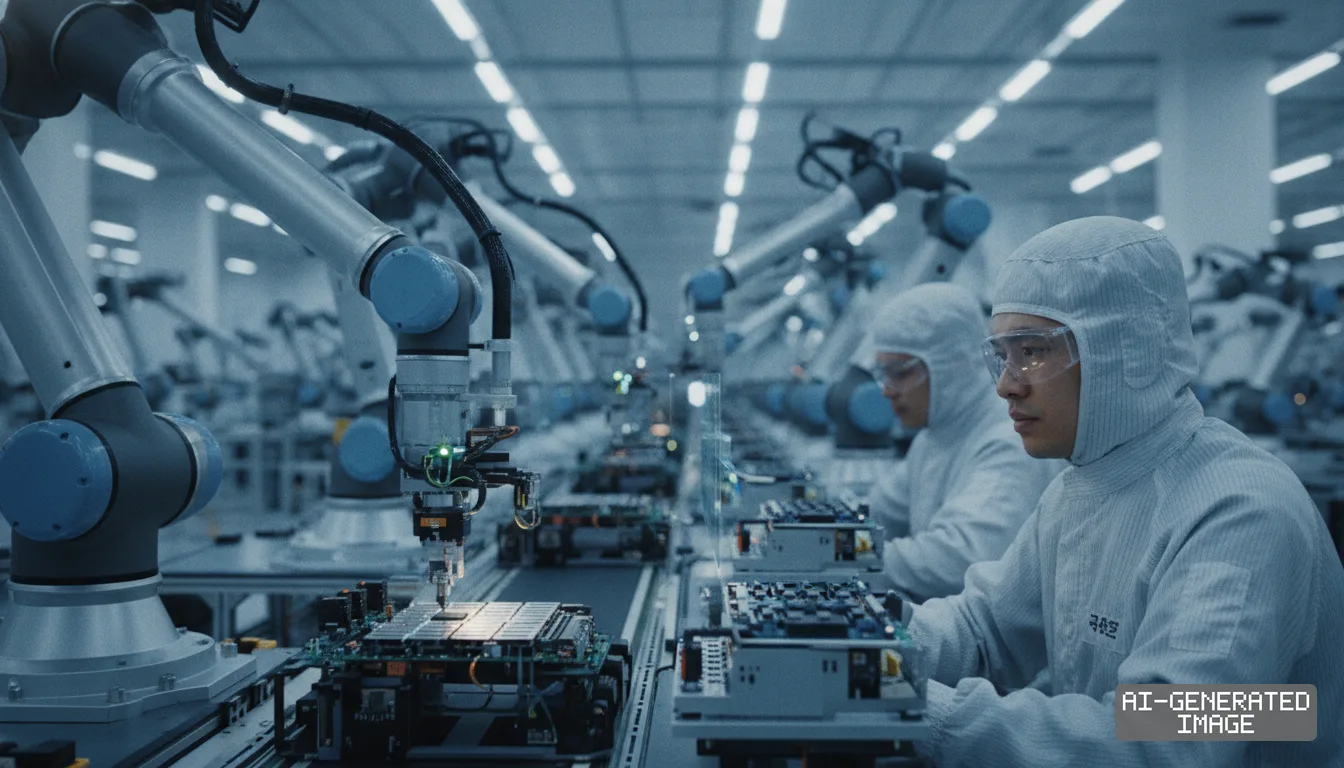
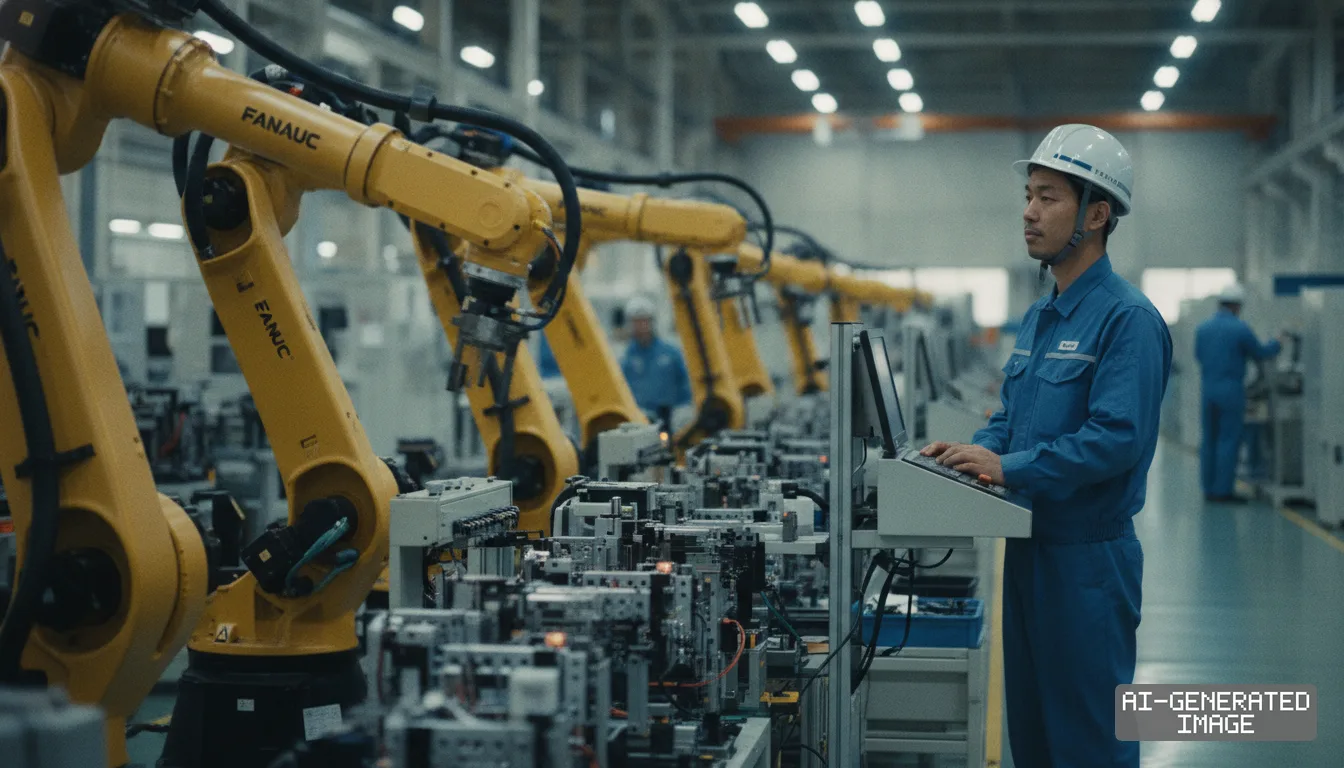
UBS maps 87 humanoid robot suppliers across hardware tiers
Chinese firms take 50 slots across mechanical and sensor categories, while American semiconductor designers control half of processing compute in a market headed for 30,000 shipments in 2026.
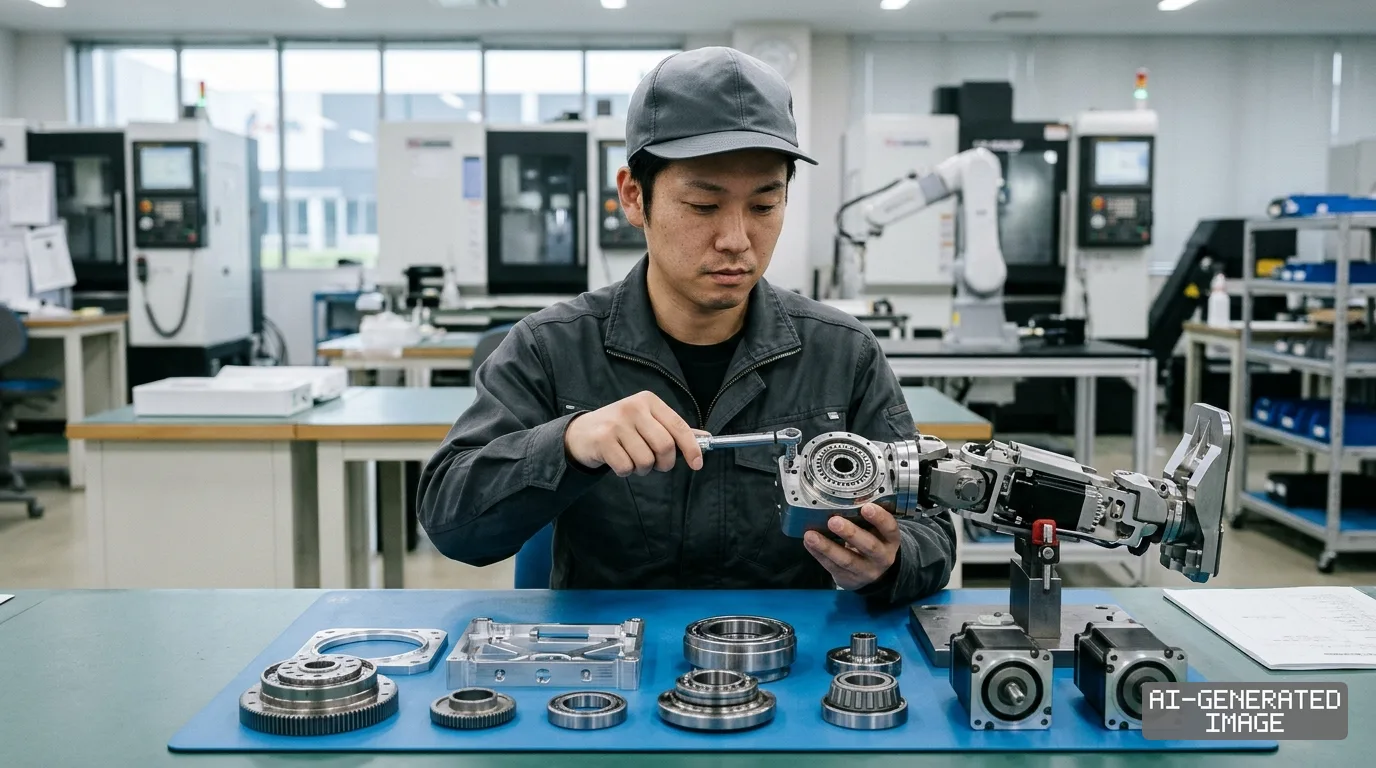
UBS Research mapped 87 companies in humanoid robotics on Oct. 25, revealing that East Asian suppliers control five of six mechanical hardware layers while American chipmakers anchor processing compute.
The research framework divides humanoid robots into six physical and computational tiers, covering 88 corporate entries across system assembly, machine perception, central computing, torso energy storage, robotic hands and joint actuators.
Chinese manufacturers account for 50 of the 87 unique corporate positions, representing 57% of all mapped suppliers, according to the bank diagram. Leadshine Technology appears across both dexterous hands and joint actuators.
The mapping sits against bank projections estimating global humanoid demand at 30,000 units in 2026, up from 18,600 units in 2025. UBS projects annual demand will reach 86 million units by 2050.
Semiconductor bill-of-materials costs for high-end humanoids run between $1,400 and $2,000 per robot, the bank estimated in related research. A primary central processor accounts for roughly $500 of that electronic content.
The document classifies 24 complete robot manufacturers, split between 13 Chinese builders and 11 foreign developers. Chinese makers include Unitree Robotics, AgiBot and UBTECH Robotics, while overseas platforms include Tesla and Boston Dynamics.
Tesla targets internal manufacturing deployments for its Optimus platform, while Boston Dynamics prepares its electric Atlas system for industrial work. China's Unitree and AgiBot each shipped roughly 5,000 units during 2025 commercial trials.
Western developers include Figure AI, Agility Robotics, Apptronik and 1X Technologies. Chinese builders include Fourier Intelligence, LimX Dynamics and Stardust Intelligence alongside industrial automation makers Estun and Dobot.
Machine perception comprises 13 sensor and camera suppliers, with Chinese firms holding seven slots and foreign specialists holding six. Hesai Group and RoboSense supply automotive lidar, while Sunny Optical Technology provides multi-camera vision clusters.
Japan's Sony Group and Keyence anchor foreign perception hardware alongside American optical inspection specialist Cognex. Complementary vision sensors come from Orbbec, OPT Machine Vision, Omnivision, drone maker DJI and Intel's RealSense unit.
Central processing is the sole architectural tier where domestic Chinese suppliers and overseas developers share equal representation. Five foreign designers match five Chinese chipmakers developing spatial intelligence processors.
Nvidia, Qualcomm, Advanced Micro Devices, Intel and Physical Intelligence lead foreign computing architectures. Nvidia provides robotic simulation frameworks and system-on-chip modules tailored for generative artificial intelligence models.
China counters with automotive and edge processor developers Horizon Robotics, Cambricon Technologies, Black Sesame Technologies, Rockchip and Huawei's Ascend unit. These chip designers build dedicated silicon for on-device neural networks.
Torso battery packs and structural enclosures encompass 10 corporate participants, where Chinese suppliers hold seven positions against three foreign battery cell manufacturers. High-drain cells must sustain continuous power delivery during balance correction.
Contemporary Amperex Technology, known as CATL, anchors domestic Chinese cell supply alongside EVE Energy and Sunwoda Electronic. South Korea's LG Energy Solution and Samsung SDI compete with Japan's Panasonic Holdings for international packs.
Humanoid platforms typically require 1.5 to 2.5 kilowatt-hour packs engineered for discharge rates exceeding 3C to absorb sudden mechanical shocks. That specification directs pack procurement toward cylindrical cell lines operating in Korea and Japan.
Torso enclosures draw structural components from Minth Group, Joyson Electronic and Lens Technology. Beijing WeLion New Energy Technology supplies high-density prototype cell chemistries for structural integration.
End-effector manipulation features 11 component makers, divided between six Chinese firms and five foreign engineering groups. Dexterous hands require miniature motors and tactile sensor arrays to manipulate industrial assembly parts.
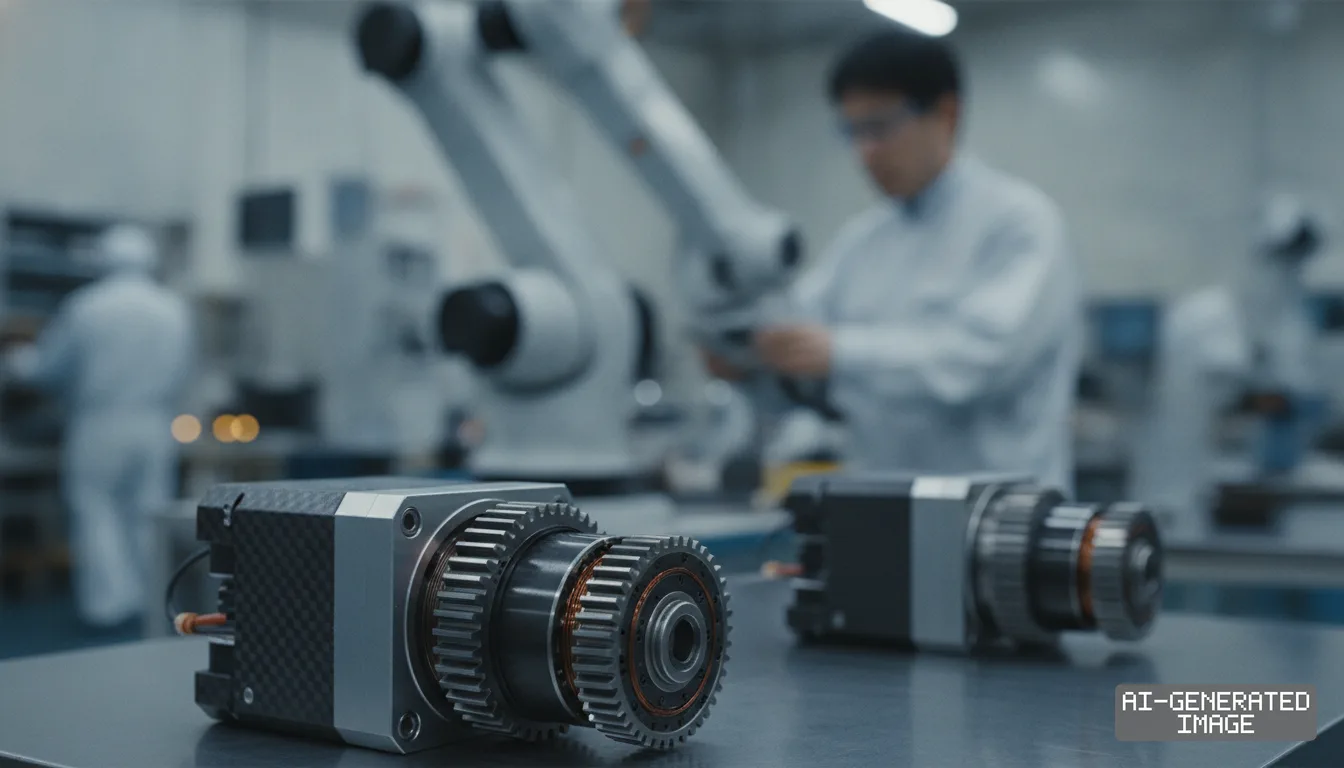
South Korea's ROBOTIS supplies cycloidal reduction gearboxes and modular actuators, which generate over 85% of corporate revenue. Switzerland's Maxon Motor, Wonik Holdings, Zhaowei Machinery, Moons' Electric, Shadow Robot Company and SCHUNK complete manipulation supply.
Actuators and joint assemblies represent the largest mechanical category, containing 20 corporate entries. Chinese component makers occupy 12 positions, while eight specialized foreign manufacturers provide precision reduction gears and motion guides.
Japan's Harmonic Drive Systems and Nabtesco provide high-ratio speed reducers, defending market shares where Japanese manufacturers control over 60% of traditional robot gear capacity. Hyundai Mobis supplies integrated actuators for sister firm Boston Dynamics.
Taiwan's Hiwin Technologies and Japan's THK and NSK supply linear motion guides and precision ball screws. Chinese gearmakers Leaderdrive and Zhejiang Sanhua Intelligent Controls contest actuator margins alongside Inovance Technology and Tuopu Group.
Industrial trials across automotive manufacturing plants expand through the second half of 2026 ahead of projected volume assembly ramps in 2027 and 2028. Automakers plan to evaluate cycle times and grip durability on live assembly floors.
The bank has not published the diagram on its institutional research portal, and the document does not state whether the mapping reflects an October client note or an extract from earlier banking research.
Leadshine Technology filed its third-quarter earnings report on Oct. 24, reporting expanding customer qualification trials for robotic joint motor assemblies.
Impact map
How this development propagates across the region and out to global buyers.
| Event | Korea | China | Japan | Global impact |
|---|---|---|---|---|
| Humanoid robot hardware mapping | ROBOTIS and Hyundai Mobis supply precision actuators; LG Energy Solution and Samsung SDI target 1.5-2.5 kWh packs | Component builders secure 50 of 87 corporate slots across actuators, sensors and 13 assembler platforms | Harmonic Drive Systems and Nabtesco defend >60% precision gear share against Chinese domestic lines | Compute bill of materials reaches |
| Humanoid robot hardware mapping | ROBOTIS and Hyundai Mobis supply precision actuators; LG Energy Solution and Samsung SDI target 1.5-2.5 kWh packs | Component builders secure 50 of 87 corporate slots across actuators, sensors and 13 assembler platforms | Harmonic Drive Systems and Nabtesco defend >60% precision gear share against Chinese domestic lines | Compute bill of materials reaches $1,400-$2,000 per robot as Nvidia and Qualcomm anchor physical AI processors |
In this story
- Companies
- Harmonic Drive SystemsROBOTISHyundai MobisLG Energy SolutionContemporary Amperex Technology
- Tickers
- 6324.T108490.KS012330.KS373220.KS300750.SZ
- Exposed
- TeslaNvidiaUnitree RoboticsLeadshine TechnologyNabtesco
- Impact
- Supply ChainCapexCost Structure
Related briefings
- Boston Dynamics faces US supply curb on Chinese robot parts Also on Unitree Robotics, Hyundai Mobis, Cost Structure
- China servo motor makers squeeze foreign rivals on cost and delivery Also on Leadshine Technology, Cost Structure
- Korea tightens export licensing rules on robotics actuator technology Also on Robotis
- South Korea faces 70% foreign reliance on humanoid robot parts Also on Hyundai Mobis, Nabtesco, Harmonic Drive Systems
Sources
Reporting
Confidence: medium — how we grade this
The documents behind this briefing are linked above. East Asia Brief produces its English text with AI assistance under human editorial review, and does not translate or republish other outlets' articles. See our methodology and AI policy. Spotted an error? Tell us.
The Morning Brief
What changed in Korean, Chinese and Japanese industry overnight — and what it means for your supply chain. One email, weekday mornings, US time. Free.
The Morning Brief is in preparation. Leave your address and we will write to you once — when the first issue is ready. Nothing before that.